Nila Kartika Wati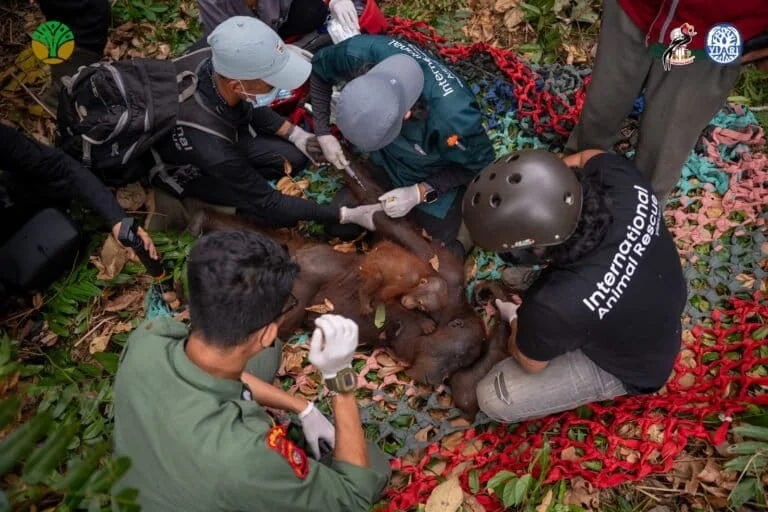
The escalating crisis of forest and land fires in Kalimantan has reached a critical tipping point, severely eroding the remaining habitats of the Bornean orangutan (Pongo pygmaeus). As massive wildfires sweep through peatlands and forests, these critically endangered primates are being forced out of their natural homes, leading to an unprecedented wave of displacement, human-wildlife conflict, and loss of biodiversity. Recent data indicates that nearly 90% of all fire hotspots detected across the island are located within established orangutan habitats, creating an ecological emergency that demands immediate intervention.
The human and environmental cost of these fires is stark. In one recent incident, an orangutan named Sampurna was successfully rescued from the village of Sungai Awan Kiri, located in the Muara Pawan district of Ketapang, West Kalimantan. This rescue is merely one of many; local conservation organizations have reported a surge in emergency operations as displaced animals wander into residential areas, often suffering from dehydration, respiratory issues caused by toxic smoke, or injuries sustained during the encroachment of fire.
A Chronology of Environmental Devastation
The surge in fire activity has been both rapid and relentless. While seasonal fires are a known challenge in Indonesia, the 2026 fire season has displayed an intensity that threatens to undo years of conservation progress. Data from the Geopix report, titled "Alerta! Borneo Lautan Api," reveals a harrowing timeline of the disaster.
Between June and early September 2026, the region saw a cumulative total of 124,655 hotspots. The trajectory of the fires began relatively slowly in June, with approximately 3,493 recorded hotspots. By July, the number of hotspots decreased slightly to 1,876. However, the situation deteriorated exponentially in August, when the island recorded 63,615 hotspots. The first five days of September alone saw an additional 55,671 hotspots, a figure that nearly matched the entire output of the previous month.
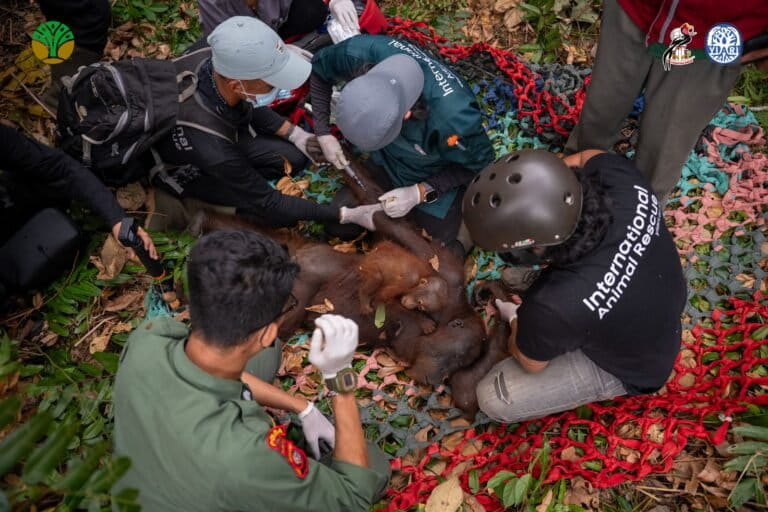
This rapid acceleration suggests that the environmental conditions—compounded by prolonged drought and unsustainable land-clearing practices—have created a "perfect storm" for uncontrollable wildfire propagation. The fact that the majority of these hotspots are concentrated within protected orangutan ranges indicates that the impact on wildlife is not incidental but systemic.
The Spatial Distribution of the Crisis
The crisis is not evenly distributed across the island. Kalimantan Tengah (Central Kalimantan) has emerged as the epicenter of the fire activity, recording 52,703 hotspots during the observation period. West Kalimantan follows closely with 51,629 hotspots. These two provinces are home to significant populations of the Pongo pygmaeus wurmbii subspecies, which is now bearing the brunt of the habitat destruction.
According to the Geopix analysis, 99,717 hotspots were identified within the habitat of P. p. wurmbii between June and September 5. By comparison, the habitats of P. p. pygmaeus and P. p. morio experienced 6,826 and 3,852 hotspots, respectively. This data underscores that P. p. wurmbii is currently the most vulnerable subspecies, facing a high probability of habitat loss, fragmentation, and subsequent population decline.
Conservationists emphasize that while "hotspots" represent thermal anomalies detected by satellite imagery and do not always equate to a verified fire on the ground, they serve as a critical proxy for heat stress and potential combustion. The persistent presence of these anomalies within the canopy cover of orangutan habitats is a clear indicator that the structural integrity of the forest is under severe duress.
Conservation Response and Institutional Challenges
The burden of responding to this disaster falls on a coalition of government agencies and non-governmental organizations (NGOs). The Ministry of Forestry, in coordination with the Natural Resources Conservation Agency (BKSDA) of West Kalimantan and the Yayasan Inisiasi Alam Rehabilitasi Indonesia (YIARI), has been working around the clock to mitigate the damage.
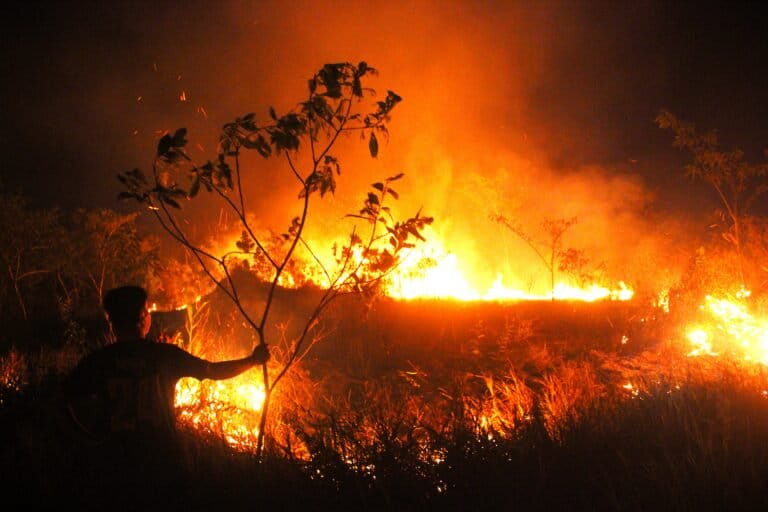
As of the latest reports, at least 23 orangutans have been successfully rescued. The rescue efforts extend beyond primates, with teams also recovering pangolins, slow lorises, proboscis monkeys, civets, and grey langurs. Despite these heroic efforts, the scale of the crisis threatens to overwhelm existing resources.
Argitoe Ranting, Director of Operations at YIARI, noted the severity of the situation, stating that nine orangutans were rescued in less than a month in the Ketapang area alone. The logistical challenges of these operations—ranging from field monitoring in hazardous, smoke-filled environments to medical treatment and eventual translocation—are immense.
Silverius Oscar Unggul, Chairman of YIARI, has highlighted that the fires create a destructive cycle that affects both nature and humanity. "The clearing of land through uncontrolled burning triggers fires that destroy the habitat of orangutans," Unggul explained. "When the forest is fragmented, orangutans lose their food sources and shelter, eventually pushing them into human-managed plantations. Conversely, local communities suffer economic losses due to crop destruction, leading to a climate of fear and retaliatory behavior toward the wildlife."
Implications for Biodiversity and Long-Term Stability
The long-term implications of these fires are profound. Orangutans are a keystone species; their presence is essential for the regeneration of tropical rainforests through seed dispersal. The loss of their habitat equates to a loss of the forest’s capacity to sequester carbon and maintain hydrological cycles.
Furthermore, the existing data on orangutan populations may be severely outdated. Much of the current management policy is based on the Population and Habitat Viability Assessment (PHVA) conducted nearly a decade ago. Given the massive habitat loss caused by the 2026 fires, experts argue that this data is no longer sufficient to guide effective conservation strategies. There is an urgent call for the government to conduct a comprehensive post-fire survey to assess the current population density, the status of remaining food sources, and the extent of corridor fragmentation.

Experts are advocating for a new "Emergency Action Plan for the Rescue of Bornean Orangutan Populations." This plan would ideally integrate several pillars:
- Intensified Wildlife Rescue and Medical Care: Sustaining 24-hour medical readiness for rescued animals.
- Habitat Protection and Restoration: Securing corridors that allow orangutans to move between fragmented patches of forest.
- Rigorous Law Enforcement: Holding both individuals and corporations accountable for the illegal use of fire in land preparation.
- Community Engagement: Providing economic alternatives to slash-and-burn agriculture to break the cycle of dependency on fire.
A Call for Accountability and Structural Reform
The frustration among environmental advocates is palpable. While the immediate focus is on firefighting and animal rescue, there is a strong demand for systemic change. The current crisis has reignited debates regarding the enforcement of environmental regulations. Critics argue that despite existing laws, the lack of uncompromising prosecution against entities that utilize fire for land expansion has allowed the practice to continue unabated.
"After this crisis ends, there is a multi-decade homework assignment that remains unfinished: breaking the chain of forest and land fires with strict law enforcement," said a representative from the conservation sector. "There should be no compromise for any corporation found to be involved or negligent in preventing these fires."
As the smoke continues to hang over the Kalimantan landscape, the international community and the Indonesian government face a moment of reckoning. The survival of the Bornean orangutan—an animal that shares nearly all of its DNA with humans—is a reflection of the health of the entire ecosystem. The current devastation serves as a stark warning that without a fundamental shift in land-use policy and a renewed commitment to the protection of critical habitats, the unique biodiversity of Borneo may face an irreversible decline.
The path forward requires more than just reactive firefighting; it requires a proactive, science-based approach to landscape management that prioritizes the health of the forest. Until the root causes—including unsustainable agricultural expansion and climate vulnerability—are addressed, the cycle of fire and displacement will continue to threaten the future of one of the world’s most iconic species. The time for a comprehensive, cross-sectoral strategy is not after the next fire, but now, while fragments of the forest still remain.