Tata Titiana
Long before it officially became an autonomous municipality in West Java on April 27, 1999, and decades prior to the proclamation of Indonesian independence, Depok held a status unlike any other region in the archipelago. Today known as a bustling satellite city neighboring Jakarta, Depok once functioned as an independent private territory governed by its own democratically elected president. This little-known chapter of Indonesian history blends colonial-era land acquisition, progressive social philanthropy, and a unique experiment in self-governance that predates the modern Indonesian republic.
To understand how a portion of West Java functioned as a quasi-independent state, historians must look back to the late 17th century. The origins of modern Depok trace directly to Cornelis Chastelein, a wealthy Dutch East India Company (VOC) merchant, a devout Catholic, and a prominent landowner. In an era defined by brutal colonial exploitation and forced labor, Chastelein pursued a remarkably different trajectory. In 1696, he purchased a vast tract of land spanning 12.44 square kilometers in the southern hinterlands of Batavia for 2.4 million guilders.
Crucially, this land acquisition operated under a private domain status (particuliere landerijen). This meant the territory fell outside the direct administrative authority of the Dutch colonial government in Batavia. When Chastelein acquired the property, the region was largely dense jungle. To transform the untamed wilderness into productive agricultural land, he assembled a workforce consisting of hundreds of enslaved people originating from various islands across the archipelago, including Bali, Sulawesi, Ambon, and different parts of Java.
Chastelein’s unique worldview heavily influenced his treatment of this labor force. As a religious man influenced by humanist ideals, he integrated his workforce, provided them with housing, and introduced them to Christianity. More importantly, he made arrangements that would fundamentally alter the destiny of the land and the people who worked it.
The Will of Cornelis Chastelein and the Birth of a Community
On June 28, 1714, shortly before his death, Chastelein drafted a historic last will and testament. In this document, he took the unprecedented step of granting freedom to his enslaved workforce. Beyond their emancipation, Chastelein bequeathed the entirety of his extensive landholdings—which stretched from modern-day Depok all the way to Pasar Minggu in South Jakarta and Gambir in Central Jakarta—to these newly freed individuals.

The bequest included not only the land itself, but also houses, livestock, agricultural tools, and provisions to ensure their self-sufficiency. Recognizing that sudden freedom without an administrative structure could lead to internal conflict or external usurpation by colonial authorities, Chastelein appointed one of his trusted former slaves, Jarong van Bali, to lead and manage the fledgling community.
Under the stewardship of Jarong van Bali and subsequent community elders, the freed population—who came to be known colloquially as the Mardijker or the "Belanda Depok" (Depok Dutch)—established a cohesive agricultural society. However, as the original generation passed away, the community leadership recognized the need for a formalized, sustainable system of governance to protect their autonomy over the private land.
The Era of the Presidents of Depok (1913–1952)
By the early 20th century, the community formalized its internal governance structure. With the legal assistance of Batavia-based attorneys, the inhabitants established a municipal administration officially known as Het Gemeente Bestuur van Het Particuliere Land Depok (The Municipal Administration of the Private Land of Depok).
In a radical departure from the autocratic colonial governance surrounding them, the citizens of Depok instituted a democratic system to elect their head of state. Every three years, eligible landowners and community members cast their ballots to elect a president, who served as both the head of state and the head of government. To maintain administrative checks and balances, the office of the vice president was omitted; instead, the president was supported by a dedicated secretary who managed civil affairs.
The political epicenter of this micro-state was established around the Kilometer 0 marker, marked by the historic Tugu Depok (Depok Monument). Adjacent to this administrative hub stood the central government building, a structure that has since been preserved and repurposed as the modern Rumah Sakit Harapan (Harapan Hospital).
Historical records identify four individuals who held the presidential office during this remarkable political experiment:
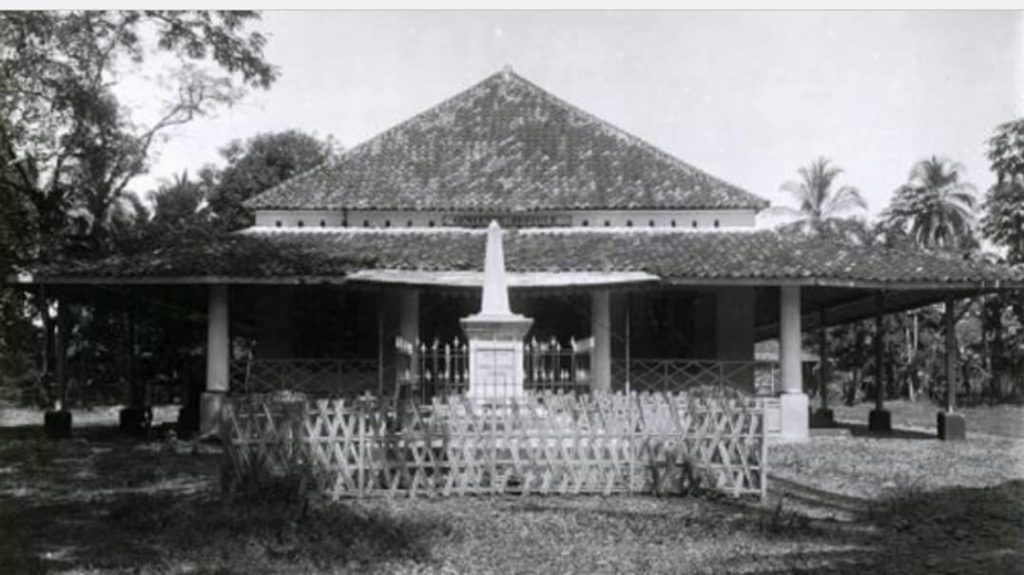
- Gerrit Jonathans (Assumed office in 1913): As the inaugural president, Jonathans laid the administrative groundwork for the municipality, establishing local laws, taxation frameworks, and community defense systems.
- Martinus Laurens (Assumed office in 1921): Laurens navigated the community through the complex socio-political shifts of the 1920s as nationalist movements began to stir across the wider Dutch East Indies.
- Leonardus Leander (Assumed office in 1930): Leander’s administration faced mounting economic pressures from the Great Depression, which impacted the agricultural output of the private land.
- Johannes Matjis Jonathans (Assumed office in 1952): Serving as the fourth and final president, Jonathans presided over the territory during the turbulent transition period following Indonesia’s declaration of independence in 1945.
Despite the fascinating nature of this governance model, historians note a persistent challenge: the scarcity of detailed daily administrative records from each presidential term. Much of what is known today survives through oral history, colonial land registry documents, and scattered genealogical archives held by descendants of the original Depok families.
Dissolution and Integration into the Republic of Indonesia
The unique status of Depok as a self-governing private enclave could not endure indefinitely in the face of a unified, newly independent Indonesian republic. Following the formal recognition of Indonesian sovereignty by the Netherlands in 1949, the pressure mounted to normalize regional administrations across the archipelago and dismantle colonial-era private land domains (particuliere landerijen).
The definitive turning point occurred in 1952. Recognizing the shifting geopolitical reality and the sovereignty of the Republic of Indonesia, the final president of Depok, Johannes Matjis Jonathans, officially surrendered the administration and the private land rights back to the Indonesian government through a formal deed of transfer. This momentous act dissolved Het Gemeente Bestuur van Het Particuliere Land Depok and integrated the territory fully into the administrative structure of West Java, initially as a district within Bogor Regency before achieving full municipal status (kotamadya) in 1999.
Historical Legacy and Modern Implications
While the city of Depok celebrated its 22nd anniversary as an autonomous municipality in 2023, historians emphasize that the true roots of the city stretch back more than three centuries. The legacy of Cornelis Chastelein and the 20th-century presidential republic of Depok remains a unique anomaly in the historiography of Southeast Asia.
Modern historians and sociologists view the Depok "state" experiment as an early, localized exercise in participatory democracy and post-colonial land reform, albeit one born from the unique legal loophole of private colonial estates. Today, physical remnants of this era—such as old colonial-style houses, historical maps, and the descendants of the original Mardijker community—serve as silent witnesses to a time when a small pocket of West Java operated as an independent republic with its own democratically elected president.