
 Chalifah Fatihah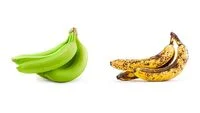
Bananas are among the most globally ubiquitous and frequently consumed fruits, valued worldwide for their portability, affordability, and rich nutritional profile. However, a widespread misconception persists that a banana’s nutritional value remains static throughout its shelf life. In reality, the chemical composition of a banana undergoes a profound transformation as it transitions from a firm, vibrant green to a bright yellow, and eventually to a heavily speckled brown. This natural ripening process alters far more than just the fruit’s external coloration, flavor profile, and physical texture; it fundamentally changes the type and structure of the carbohydrates contained within the pulp.
Understanding these biochemical shifts is increasingly important for consumers navigating specific health goals, such as blood sugar management, athletic performance, or gastrointestinal health. While a medium banana consistently provides a reliable baseline of dietary fiber, potassium, vitamin B6, and vitamin C, the biological availability of these nutrients shifts dynamically. By examining the distinct developmental stages of the fruit—green, semi-ripe, fully yellow, and brown-spotted—nutritionists and food scientists can better guide consumers on how to select the optimal ripeness stage for their individual physiological needs.
The Biochemical Transformation: From Complex Starches to Simple Sugars
The life cycle of a banana is a masterclass in plant biochemistry. When harvested, bananas are laden with complex carbohydrates known as starches. In a green, unripe banana, these starches account for roughly 70 to 80 percent of the fruit’s dry weight. The most prominent among these is resistant starch, a unique dietary fiber that behaves similarly to soluble fiber in the human digestive tract.
As the fruit matures, internal enzymes—primarily amylase and pectinase—begin to break down these dense, complex starch molecules into simpler sugars, specifically glucose, fructose, and sucrose. This enzymatic conversion accelerates exponentially once the banana is picked, driven by the release of ethylene gas, a natural plant hormone that triggers ripening. Consequently, as the fruit softens and its pigmentation shifts from green to yellow and brown, its glycemic index rises, and its sweetness intensifies. This metabolic evolution means that choosing a banana based solely on preference for taste overlooks a strategic nutritional choice, as each stage of maturity offers distinct physiological implications.
Stage One: The Green Banana and Resistant Starch Dynamics
Unripe, green bananas are often overlooked due to their firm, starchy texture, bitter flavor profile, and astringent mouthfeel. Yet, from a metabolic perspective, they possess unique advantages that make them a subject of significant interest in nutritional science. The defining characteristic of the green banana is its exceptionally high concentration of resistant starch. Unlike digestible starches that are quickly broken down in the small intestine into glucose, resistant starch resists enzymatic digestion, passing largely intact into the large intestine.
Upon reaching the colon, resistant starch undergoes fermentation by resident gut microbiota. This fermentation process yields short-chain fatty acids (SCFAs), particularly butyrate, which serves as the primary energy source for the cells lining the colon. SCFAs play a crucial role in maintaining gut barrier integrity, reducing systemic inflammation, and potentially lowering the risk of colorectal disorders. Furthermore, because the carbohydrates in green bananas are broken down much more slowly, they elicit a significantly lower and more gradual glycemic response. This blunted postprandial blood sugar spike makes unripe bananas a safer dietary option for individuals managing insulin resistance or type 2 diabetes.
Despite these compelling benefits, green bananas present certain culinary and physiological challenges. Their dense starch matrix can be difficult for individuals with sensitive digestive systems to process, occasionally leading to bloating or gas. Moreover, their lack of sweetness limits their appeal for raw consumption, leading many consumers to utilize them in cooking or blend them into green smoothies where their texture can be effectively masked.
Stage Two: The Semi-Ripe Bridge Between Gut Health and Palatability
As bananas transition from solid green to a mottled yellow-green hue, they enter a transitional phase that bridges the gap between the functional benefits of resistant starch and the sensory appeal of a ripe fruit. In this semi-ripe stage, a significant portion of the resistant starch has begun its conversion into simpler sugars, yet a measurable reserve remains intact.
This phase offers an ideal compromise for consumers who wish to harness the prebiotic benefits of resistant starch without enduring the astringency and dense texture of a completely green banana. The flesh softens perceptibly, and a mild sweetness emerges, making the fruit considerably more palatable for daily snacking. From a nutritional standpoint, semi-ripe bananas provide a balanced macronutrient profile that slowly releases energy while satisfying culinary preferences.
Dietitians frequently note that for populations monitoring their glycemic load, semi-ripe bananas require a mindful approach. While they do not spike blood sugar as aggressively as fully ripe or overripe variants, portion control remains paramount. Nutritional epidemiologists emphasize that the glycemic impact of any banana is rarely experienced in isolation; consuming a semi-ripe banana alongside a source of healthy fats or proteins—such as Greek yogurt, nut butter, or chia seeds—further moderates the rate of gastric emptying and stabilizes blood glucose trajectories.
Stage Three: The Fully Yellow Banana and Rapid Energy Delivery
When a banana achieves a uniform, vibrant yellow complexion, it reaches its culinary peak for general consumption. At this juncture, the enzymatic conversion of starches is largely complete, with the vast majority of the fruit’s complex starches transformed into free sugars, including glucose, fructose, and sucrose. This chemical shift renders the banana notably softer, sweeter, and vastly easier to digest.
The rapid breakdown of carbohydrates means that the nutrients in a yellow banana are absorbed into the bloodstream with greater velocity. Consequently, fully yellow bananas are widely recommended by sports nutritionists as an optimal pre- or post-workout fuel source. Athletes require quick-acting carbohydrates to replenish depleted muscle glycogen stores rapidly during intense physical exertion, a demand that yellow bananas meet efficiently alongside a solid dose of electrolytes.
A standard medium-sized yellow banana contains approximately 105 calories, negligible fat, and zero sodium, while delivering roughly 400 to 450 milligrams of potassium—an essential mineral crucial for maintaining proper fluid balance, nerve transmission, and muscle contraction, particularly cardiac muscle function. Additionally, the fruit remains a reliable provider of vitamin B6, which supports neurological function and hemoglobin production, and vitamin C, a potent antioxidant that bolsters immune defenses. Public health communications continually stress that the transition to a yellow banana does not diminish its nutritional value; rather, it shifts its utility from a slow-release prebiotic vehicle to an accessible, fast-acting energy source.
Stage Four: Brown-Spotted Bananas and Antioxidant Surge
The final visible stage of the banana ripening continuum is marked by the appearance of dark brown or black spots, often colloquially referred to as "sugar spots." These blemishes indicate that the fruit has reached an advanced stage of maturation, wherein nearly all remaining starches have converted into simple sugars. As a result, speckled bananas are intensely sweet, exceptionally soft, and frequently utilized in baking applications such as banana bread or smoothies.
A common consumer misconception is that a heavily spotted banana represents spoiled or nutritionally depleted food. On the contrary, advanced ripening triggers a significant upswing in certain biochemical compounds, most notably antioxidants. As the cellular structure of the fruit breaks down and chlorophyll degrades, the concentration of phenolic compounds and flavonoids increases. These bioactive molecules function as powerful scavengers of free radicals, neutralizing oxidative stress at the cellular level and potentially mitigating chronic inflammatory pathways associated with aging and cardiovascular disease.
Furthermore, Japanese scientific studies conducted by academic researchers on fruit maturation have suggested that fully ripened bananas with dark spots exhibit higher concentrations of tumor necrosis factor (TNF) antagonists compared to their green counterparts, pointing toward potential immune-modulating properties. However, this elevated sugar density requires caution from specific demographic groups. Individuals diagnosed with diabetes, metabolic syndrome, or those adhering to strict carbohydrate-restricted diets must account for the rapid glycemic spike associated with spotted bananas. For these individuals, consuming overripe bananas necessitates careful carbohydrate counting and strategic pairing with fiber- or protein-dense foods to prevent adverse metabolic consequences.
Comparative Nutritional Profile Across Ripeness Stages
To better understand the practical implications of these biochemical shifts, it is instructive to examine how the primary macronutrients and micronutrients distribute across the four primary stages of banana maturation:
- Green Bananas: Dominated by resistant starch (up to 70-80% of total carbohydrates). Offers low glycemic impact, high prebiotic potential for colon health, but lower palatability and slower digestibility.
- Semi-Ripe Bananas: Features a balanced mix of declining resistant starch and emerging simple sugars. Provides a middle-ground texture and moderate glycemic response, appealing to consumers seeking a compromise between gut health and taste.
- Fully Yellow Bananas: Characterized by fully converted simple sugars (glucose, fructose, sucrose). Delivers rapid energy absorption, high digestibility, and stable levels of potassium, vitamin B6, and vitamin C, making it ideal for athletic performance.
- Brown-Spotted Bananas: Exhibits peak sugar concentration alongside an elevated density of phenolic antioxidants and flavonoids. Offers enhanced sweetness and immune-modulating properties, offset by a higher glycemic index requiring cautious intake for metabolic patients.
Implications for Public Health and Dietary Planning
The absence of a universal "healthiest" stage of banana maturity highlights a broader truth in nutritional science: optimal dietary choices are highly contextual and dependent upon individual health status, metabolic health, and lifestyle demands. Public health agencies and clinical dietitians advocate for a personalized approach to fruit consumption rather than rigid dietary dogmas.
For individuals prioritizing metabolic control, weight management, or gastrointestinal support through prebiotic fiber, incorporating green or semi-ripe bananas into the diet offers tangible physiological benefits. Conversely, endurance athletes, growing children, or individuals requiring rapid caloric replenishment immediately following physical exertion will derive superior utility from fully yellow or speckled bananas.
Ultimately, the humble banana serves as a dynamic functional food whose nutritional virtues adapt to the needs of the consumer. By recognizing how ripeness dictates biochemical behavior, individuals can intentionally leverage these changes to optimize their daily nutrition, support digestive wellness, and align their dietary habits with their long-term health objectives.








