
 Tyo Susilo
The rapid evolution of generative artificial intelligence has fundamentally transformed digital media creation, shifting the creative landscape from static image generation to complex video synthesis. Today, users across the globe can produce dynamic, cinematic video clips simply by typing a descriptive text prompt—a process often perceived as a digital sleight of hand. While tools like OpenAI’s Sora, Google’s Imagen Video, and Runway Gen-2 appear to effortlessly weave pixels into cohesive narratives, the underlying mechanics represent a monumental leap in machine learning, computer vision, and neural network architecture. Understanding how these systems operate requires a deep dive into the intersection of vast data ingestion, temporal consistency models, and diffusion technology.
The Genesis of Video AI: From Static Pixels to Temporal Dynamics

To comprehend video generation, one must first examine its predecessor: text-to-image AI. Generative image models are trained on billions of parameters linking descriptive text to visual representations, allowing them to map linguistic tokens to spatial arrangements of color and light. Video AI builds directly upon this foundation, incorporating an additional dimension: time.
A video is essentially a sequence of still images—known as frames—displayed at a high enough frequency to trick the human eye into perceiving continuous motion. Consequently, video generation models must be trained on massive datasets comprising millions of video clips paired with descriptive metadata. During the training phase, the neural network does not merely analyze what objects look like; it observes how those objects transform, interact, and move across sequential frames.
For instance, when analyzing thousands of video clips of human locomotion, the AI maps the subtle, progressive shifts in skeletal posture, joint rotation, and foot placement. It learns the physical laws governing momentum, gravity, and anatomy. Consequently, when a user inputs a prompt requesting a character to walk, the AI draws upon internalized kinematic patterns rather than generating disconnected, random permutations of a human figure.

The Mechanics of a Prompt: Text-to-Video Processing Pipeline
The workflow begins the moment a user submits a prompt, such as, "A golden retriever bounding through a sunlit meadow during the golden hour." The system initiates a multi-stage computational process designed to break down the request into actionable parameters.
First, Natural Language Processing (NLP) modules analyze the semantic meaning of the text. The model identifies key entities (golden retriever), actions (bounding), settings (meadow), and lighting conditions (sunlit, golden hour). Advanced multimodal architectures can also accept reference images, allowing creators to anchor the AI’s output to a specific visual starting point rather than relying solely on text.

Once the parameters are established, the diffusion model takes over. Diffusion models work by starting with pure, static noise and progressively refining it—denoising the image step-by-step—until it matches the target description. In video generation, however, this process is exponentially more complex. The AI cannot simply generate a single high-quality frame; it must generate dozens or hundreds of frames simultaneously, ensuring that light sources remain constant, backgrounds do not flicker inexplicably, and object physics remain plausible from the first second to the last.
Why Generative Video Still Struggles: The Challenge of Temporal Consistency
Despite remarkable breakthroughs, anyone who has experimented with commercial AI video generators has likely encountered surreal anomalies: a character’s face morphing mid-sentence, extra fingers appearing on a hand, or clothing seamlessly changing color between consecutive cuts. These visual glitches highlight the primary technical hurdle facing developers today: maintaining temporal consistency.
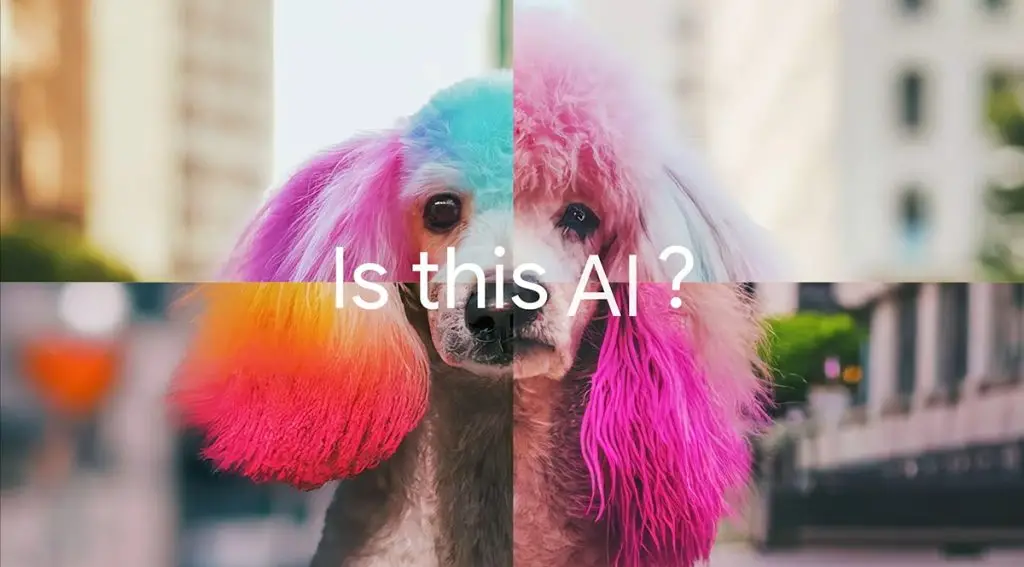
Unlike human animators who sketch keyframes and painstakingly fill in the in-between movements, AI models predict frames based on probabilistic statistical weights. If the model’s confidence drops regarding how an object should occlude, rotate, or reflect light across time, it hallucinates missing details. This often results in the uncanny, dreamlike distortions frequently observed in early-generation AI video clips. Researchers refer to this as a breakdown in temporal coherence—the inability of the neural network to sustain a unified physical reality across the timeline of the video.
Industry Implications and the Future of Media Production
The maturation of video generation technology carries profound implications for the media, entertainment, and advertising industries. On one hand, it democratizes video production, allowing independent creators, marketers, and educators to conceptualize high-end visual content without the prohibitive costs of traditional film crews, rendering farms, or extensive animation pipelines. Proponents argue that AI will serve as an indispensable co-pilot for human directors, accelerating storyboarding and rapid prototyping.

Conversely, the rapid advancement of hyper-realistic video generation has ignited intense debates regarding copyright law, data scraping ethics, and the proliferation of deepfakes. Major regulatory bodies, including the European Union through its landmark Artificial Intelligence Act, are increasingly demanding stringent transparency measures from tech giants regarding the datasets used to train these models. Creators whose copyrighted works were harvested without consent to train video algorithms continue to push for legal protections and compensation frameworks.
As research laboratories refine diffusion transformers and temporal attention mechanisms, the fidelity of AI-generated video is projected to improve dramatically, narrowing the gap between synthetic media and live-action cinematography. For now, understanding the underlying mechanisms—the fusion of spatial image synthesis with temporal motion modeling—demystifies the technology, recasting it not as magic, but as the pinnacle of modern statistical computing.








