
 Chalifah Fatihah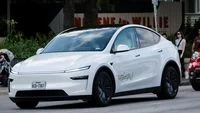
Tokyo, the sprawling and hyper-efficient capital of Japan, is preparing to take a monumental leap into the future of urban mobility. By 2027, the metropolis is scheduled to launch Asia’s first commercial driverless taxi, or robotaxi, service. This ambitious technological rollout aims to seamlessly integrate advanced autonomous vehicles into the city’s already world-class public transportation network. The initiative is not merely a showcase of futuristic engineering; it represents a critical structural adaptation to a rapidly evolving socio-economic landscape defined by a shrinking workforce and an aging demographic.
The realization of this groundbreaking project is the result of a high-profile strategic partnership. Waymo, the American autonomous driving technology firm and subsidiary of Alphabet Inc., has joined forces with GO, Japan’s leading taxi-hailing application provider, alongside Nihon Kotsu, one of the country’s most prominent and historically established taxi operators. Subject to the final clearance and full regulatory approval from Japanese transportation authorities, the upcoming fleet will operate entirely without human safety drivers behind the wheel, positioning Tokyo at the absolute forefront of global smart-city innovation.
The Demographic Catalyst: Addressing Japan’s Labor Crisis
At the core of Tokyo’s push toward full vehicle automation lies a pressing socioeconomic reality. Japan is currently confronting a severe demographic crisis characterized by a rapidly aging population and a steadily declining birth rate. This profound shift has triggered a severe labor shortage across numerous service sectors, with the traditional transportation and logistics industries bearing a heavy burden.
For decades, the Japanese taxi industry has relied on a dedicated, highly professional workforce of drivers. However, as veteran drivers retire and fewer younger workers enter the profession, taxi companies are finding it increasingly difficult to maintain adequate staffing levels to meet passenger demand. The shortage has become particularly acute in densely populated urban centers like Tokyo, where daily commuter traffic, tourism, and business travel generate immense pressure on mobility networks.
Industry analysts note that autonomous vehicle technology is no longer viewed as a speculative luxury or a Silicon Valley novelty in Japan; rather, it has become an essential economic strategy. By introducing commercial robotaxis, stakeholders hope to supplement the dwindling workforce, ensure the continuous operation of essential transit services, and maintain the high standard of mobility that residents and international visitors have come to expect.
A Calculated Timeline: From Mapping Phase to Commercial Reality
The path toward the 2027 launch has been methodically planned through a multi-year phased approach. Prior to the commercial announcement, intensive preparatory work began in earnest. In 2025, a critical phase of real-world testing commenced on the streets of Tokyo.
During this testing period, Waymo’s specialized autonomous vehicles have been navigating designated routes across seven distinct districts within the capital. To ensure safety and compliance with local standards, these trial runs have been conducted with experienced human drivers from Nihon Kotsu sitting behind the wheel. The primary objective of this phase is twofold: to gather comprehensive topographical data for high-definition digital mapping and to rigorously train Waymo’s proprietary driving software to adapt to the unique nuances of driving on the left side of the road.
Tokyo’s urban environment presents a notoriously complex set of navigation challenges. Unlike the wide, grid-patterned streets found in many American cities, Tokyo features an intricate labyrinth of ultra-narrow residential lanes, highly complex multi-layered intersections, and dense volumes of vulnerable road users, including high concentrations of pedestrians and cyclists. The machine learning algorithms powering Waymo’s system must process these hyper-dynamic variables in real time to ensure absolute safety.
Following the data collection and testing phase, the rollout will proceed incrementally. The consortium plans to initiate the service on a small scale, deploying an initial fleet of autonomous vehicles to monitor performance under live commercial conditions. Over time, this fleet is projected to expand to approximately 100 autonomous units strategically positioned in high-demand, critical commercial and residential zones throughout Tokyo.
Collaborative Synergy: Breaking Down the Partnership Roles
The success of the Tokyo robotaxi initiative hinges on a highly collaborative framework, with each partner leveraging its core competencies to build a seamless operational ecosystem.
Waymo contributes its world-class, battle-tested autonomous driving technology. This includes the proprietary hardware suite—consisting of LiDAR, radar, and high-resolution cameras—alongside the sophisticated software stack that acts as the vehicle’s virtual driver, managing perception, planning, and control. Furthermore, Waymo is responsible for overall fleet management systems.
On the local consumer front, GO brings its massive, widely adopted ride-hailing application to the table. As Japan’s dominant digital taxi booking platform, GO will serve as the primary interface for everyday commuters and tourists wishing to summon a driverless vehicle. This integration ensures that the new technology does not require users to download unfamiliar software, but instead plugs directly into an ecosystem they already trust and use daily.
Meanwhile, Nihon Kotsu anchors the physical operations on the ground. Operating a fleet of autonomous vehicles requires rigorous daily maintenance, cleaning, sensor calibration, and physical infrastructure management. Nihon Kotsu applies its decades of logistical expertise in fleet management to ensure that every vehicle meets Japan’s stringent safety and maintenance standards before returning to the road.
User Experience and Operational Mechanics
When the service officially goes live in 2027, the passenger experience is designed to be frictionless and intuitive. Customers will be able to book a ride using either the dedicated Waymo application or the familiar GO mobile platform.
Upon requesting a vehicle, the user will input their destination, and a driverless car will arrive at the designated pickup point. Once inside, passengers can settle in without the customary small talk associated with traditional taxi rides, offering an appealing option for travelers seeking absolute privacy or quiet transit. The vehicle’s interface will provide clear status updates on the route, estimated time of arrival, and interactive controls for climate and in-cabin entertainment.
Behind the scenes, remote operations centers will monitor the fleet continuously, ready to provide high-level guidance or intervention should a vehicle encounter an unprecedented road obstruction or construction zone that exceeds its onboard algorithmic parameters.
Broader Implications for Global Urban Mobility
The introduction of commercial robotaxis to Tokyo carries significant implications that extend far beyond Japan’s borders. As one of the world’s most technologically advanced and densely populated urban centers, Tokyo serves as an ultimate stress test for autonomous vehicle technology.
If Waymo, GO, and Nihon Kotsu successfully deploy and scale a driverless fleet in Tokyo’s notoriously intricate traffic environment, it will establish a powerful benchmark for other aging, highly urbanized nations facing similar demographic pressures. Countries across East Asia and Europe, which are grappling with shrinking labor pools and congested city centers, are watching the Tokyo project closely.
Furthermore, this venture marks a milestone in international tech partnerships, demonstrating how Silicon Valley software expertise can successfully merge with legacy transportation operators in highly regulated foreign markets. As regulatory frameworks continue to evolve in tandem with technological advancements, the 2027 Tokyo launch may well be remembered as the moment autonomous public transport transitioned from a regional experiment into a globally viable urban infrastructure standard.








