Bambang Pamungkas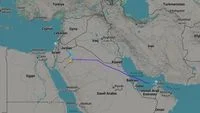
Australian federal authorities have launched a formal investigation into potential domestic security links following a harrowing mid-air incident in which a Flydubai copilot allegedly attacked the aircraft commander with an axe. The attack occurred during a commercial flight from Dubai to Tel Aviv, carrying over 170 passengers into airspace that quickly became the center of an international security crisis. While the primary criminal investigation is being spearheaded by legal authorities in the United Arab Emirates, where the airline is based, the Australian Federal Police have confirmed they are examining the suspect’s historical footprint in Australia, specifically focusing on his residency, educational timeline, and potential exposure to radicalization networks during his stay in the country.
The incident has triggered widespread alarm across the global aviation sector, raising critical questions regarding cockpit security protocols, pilot vetting procedures, psychological evaluations, and the persistent vulnerability of commercial airliners to insider threats. As intelligence agencies across multiple jurisdictions—including Australia, the United Arab Emirates, Oman, and Israel—piece together the puzzle of the suspect’s background, aviation safety regulators are facing renewed pressure to overhaul how commercial airlines screen and monitor flight deck crew members.
Chronology of a Mid-Air Crisis
The dramatic events unfolded on September 30 during a scheduled Flydubai service transporting more than 170 passengers from Dubai International Airport to Ben Gurion Airport in Tel Aviv. The flight proceeded routinely for the initial phase of the journey, with the aircraft cruising at standard altitude under the command of Captain Smit Machchhar and the unnamed copilot, who has been identified by regional media outlets as Hamam al-Hammami. Israeli Prime Minister Benjamin Netanyahu later publicly identified the suspect as a citizen of the Sultanate of Oman.
Approximately two and a half hours into the flight, while traversing Middle Eastern airspace, the situation inside the cockpit deteriorated catastrophically. According to statements released by the Attorney General of the United Arab Emirates, the Omani copilot launched a sudden and violent assault on Captain Machchhar, utilizing an axe that had been illicitly brought into the flight deck.
The surprise attack left the captain severely injured and incapacitated. In the ensuing struggle, the aircraft experienced a sudden and alarming loss of altitude, plunging approximately 17,000 feet—equivalent to roughly 5,200 meters—within a terrifyingly brief window. The violent turbulence and sudden descent alerted both the cabin crew and passengers in the main cabin that a critical emergency was underway.
Recalling the harrowing moments, Captain Machchhar later described regaining a degree of consciousness while lying injured on the cockpit floor, realizing with horror that the aircraft was dangerously unmoored and banking erratically. Before the attacker could successfully lock out the remaining flight crew or achieve total control of the aircraft’s flight management systems, alert passengers and off-duty crew members managed to breach the cockpit door. Displaying extraordinary courage, the passengers subdued the copilot and physically removed him from the controls.
Fortunately, the flight deck was equipped with relief personnel. Two backup pilots, who had been resting in the cabin crew quarters, rushed to the cockpit to assist. Working under immense pressure, the relief crew stabilized the rapidly descending aircraft, regained full operational control, and diverted the flight safely. The plane made an emergency landing at an airport in Saudi Arabia, where local security forces took the incapacitated suspect into custody. Medical personnel immediately rushed the injured captain and traumatized passengers to local hospitals for urgent treatment.
Background and Australian Connections
In the wake of the thwarted hijacking and assault, international investigators quickly expanded their operational scope to examine the suspect’s background, travel history, and ideological affiliations. The Australian Federal Police (AFP) formally confirmed to international media outlets that they are investigating the suspect’s historical ties to Australia.
According to investigative sources and immigration records, the Omani copilot originally entered Australia in 2014 after securing a student visa. He subsequently resided in the country to pursue educational courses between 2015 and 2017 before eventually departing. Australian Broadcasting Corporation (ABC) reports indicate that his student visa was formally canceled by immigration authorities in 2019 due to non-compliance with enrollment conditions, as he was no longer actively participating in an approved educational program, thereby forfeiting his legal residency eligibility.
Counter-terrorism officials in Australia are now leading a focused inquiry to determine whether the individual was exposed to extremist ideologies or underwent a process of radicalization while residing in the country. Investigators are scrutinizing his social circles, digital footprints, and any institutional affiliations he maintained during his multi-year stay. While authorities have emphasized that the investigation is still in its early stages and no definitive conclusions have been reached, the inquiry highlights the growing anxiety surrounding the phenomenon of "homegrown" or foreign-resident radicalization and its cross-border security implications.
Official Responses and International Cooperation
The incident has prompted swift and coordinated diplomatic and law enforcement responses across the Middle East and Oceania. The government of the United Arab Emirates, through its public prosecutor’s office, announced that a comprehensive criminal investigation is underway to determine the exact motive behind the cockpit assault. Prosecutors are examining whether the attack was an act of politically motivated terrorism, the result of acute psychological distress, or a combination of various personal and ideological factors.
In Israel, Prime Minister Benjamin Netanyahu addressed the incident, confirming the nationality of the perpetrator and highlighting the grave security implications of the attack given the flight’s destination. Israeli security services have coordinated closely with regional intelligence partners to analyze the security gaps that permitted an axe to be smuggled past pre-flight security checkpoints at Dubai International Airport—one of the busiest and most technologically advanced aviation hubs in the world.
Meanwhile, Flydubai has maintained active communication with international aviation regulators and law enforcement agencies. In preliminary statements, the airline expressed profound shock at the incident, commended the extraordinary bravery of the passengers and relief crew whose intervention prevented a catastrophic disaster, and pledged full cooperation with the ongoing investigations. Aviation safety experts note that Flydubai, as a major regional carrier, will likely face stringent internal audits concerning its security protocols, crew background checks, and cabin baggage screening procedures.
Implications for Global Aviation Security
The Flydubai incident has sent shockwaves through the global commercial aviation industry, reopening difficult conversations regarding cockpit safety that have largely remained dormant since the implementation of post-9/11 security enhancements.
For over two decades, the primary focus of cockpit security has been hardening the physical barrier between the passenger cabin and the flight deck. Reinforced, bulletproof cockpit doors equipped with sophisticated locking mechanisms, video surveillance systems, and strict entry protocols were universally adopted to prevent unauthorized intruders from seizing control of commercial aircraft. However, the September 30 incident starkly demonstrates the limitation of these measures when the threat originates from inside the cockpit—namely, a rogue pilot or co-pilot who already possesses legitimate authorization to occupy the flight deck.
Aviation security analysts point out that while pilot vetting processes typically include rigorous background checks, psychological evaluations, and recurring medical examinations, detecting latent psychological instability, sudden ideological radicalization, or personal grievances remains an immensely complex challenge for human resources and security departments. Unlike baggage screening, which relies on advanced imaging technology and metal detectors, monitoring the mental health and ideological trajectory of flight crew members depends heavily on self-reporting, peer observation, and organizational culture.
Furthermore, the presence of weapons or heavy tools inside the flight deck has drawn intense scrutiny. Investigators are attempting to determine how an axe was introduced into the secure environment of a commercial cockpit. While certain aircraft carry emergency crash axes as part of mandatory safety equipment, strict protocols dictate their storage and access. If the weapon used in the attack was brought aboard surreptitiously, it represents a severe breach of airport and airline security protocols.
As aviation authorities evaluate the fallout from the attempted takeover, industry stakeholders are calling for a multi-layered approach to future security reforms. Potential policy adjustments being discussed across international forums include enhanced psychological monitoring programs, mandatory two-person occupancy rules in the cockpit at all times (ensuring that if one pilot leaves or is incapacitated, a flight attendant enters to maintain dual presence), and more rigorous international intelligence-sharing regarding aviation personnel.
The investigation into the Omani copilot’s time in Australia, alongside the broader judicial proceedings in the United Arab Emirates, will undoubtedly shape the regulatory landscape of commercial aviation for years to come. As global airlines grapple with the evolving nature of modern security threats, the heroism displayed aboard the Dubai-to-Tel Aviv flight serves as both a testament to human resilience and a stark reminder of the perpetual vigilance required to safeguard the skies.