
 Azin Asro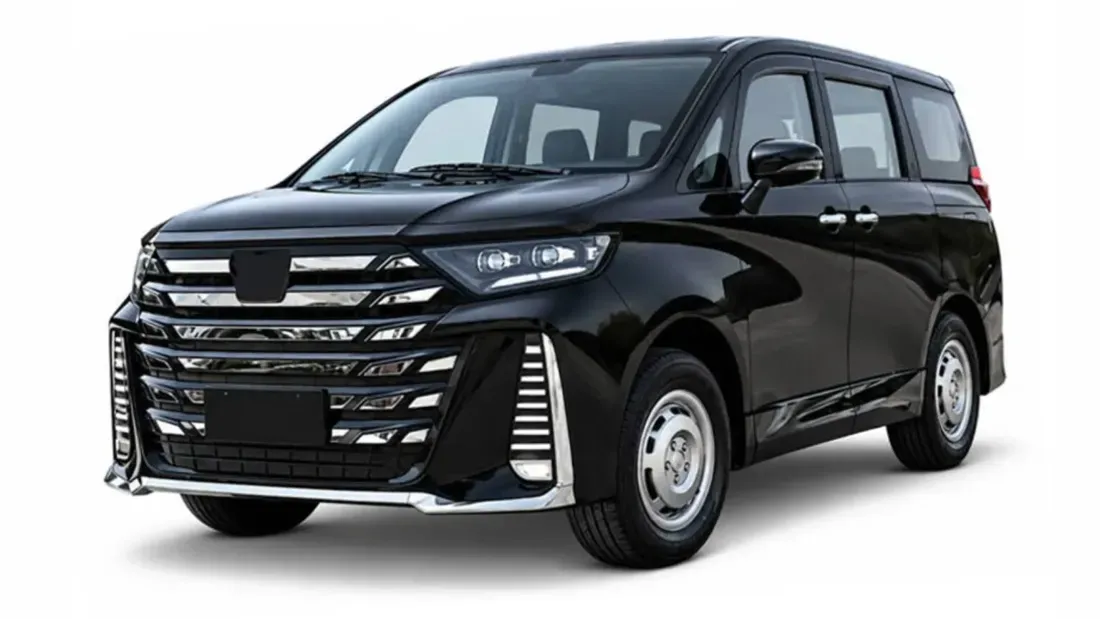
The global automotive landscape is undergoing a profound transformation as electrification reaches virtually every segment and geographic market. While the transition to battery-electric vehicles (BEVs) has been heavily concentrated in major economic hubs such as China, Europe, and North America, emerging markets are increasingly developing localized solutions to meet their unique mobility and economic demands. The latest development in this global shift comes from Pakistan, where an automotive startup has introduced an innovative, budget-friendly electric vehicle designed to democratize access to personal zero-emission transportation.
Nora, an emerging Pakistani automotive manufacturer, has officially unveiled its maiden product: the Metro EV. Billed as a subcompact multi-purpose vehicle (MPV), the Metro EV has immediately drawn international attention for its striking aesthetic resemblance to the luxury Japanese MPVs, the Toyota Alphard and Toyota Vellfire. However, beneath its premium-inspired exterior lies a pragmatic, highly affordable urban commuter designed for the socioeconomic realities of South Asia. With an anticipated price point beneath 3 million Pakistani Rupees—translating to approximately Rp 194 million—the vehicle is poised to disrupt entry-level automotive markets by offering distinctive styling, functional interior space, and modern electric mobility at a fraction of the cost of traditional luxury MPVs.
Evolution of MPV Design Influence and Market Context
The Toyota Alphard and its corporate sibling, the Vellfire, have maintained an unassailable reputation across Asian markets as the definitive symbols of executive transport and family luxury. Originally conceived for the demanding domestic Japanese market, these large-scale MPVs quickly transcended their borders, capturing substantial market share throughout East and Southeast Asia. Their commanding road presence, characterized by massive chrome grilles, vertical lighting signatures, and boxy, utilitarian proportions designed to maximize interior volume, has profoundly influenced automotive design language globally.
Over the past decade, various regional manufacturers have sought to emulate the psychological appeal and spatial efficiency of the Alphard. However, Nora’s approach with the Metro EV represents a novel application of this design philosophy. Rather than building a full-sized luxury liner, the company has scaled down the iconic design cues of the Alphard into a subcompact footprint. This design strategy aims to deliver the prestige and visual weight of a high-end luxury vehicle to budget-conscious consumers who would otherwise be restricted to traditional, conventional hatchbacks or entry-level sedans.
Exterior Styling and Dimensional Engineering
A detailed visual examination of the Nora Metro EV reveals a fascinating juxtaposition of grand design elements applied to micro-scale dimensions. At the front fascia, the vehicle adopts the aggressive, chrome-heavy aesthetic popularized by the Toyota Vellfire. While the primary headlight assemblies feature a simplified, cost-effective housing architecture, the towering vertical air intakes and the prominent central grille pay clear homage to the Japanese flagship MPV.
The rear profile similarly echoes the design ethos of the Alphard, featuring a distinctive roof-mounted spoiler, a flat vertical tailgate, and triangular light clusters that mimic the distinctive illumination pattern of its much larger inspiration. Despite these exterior stylistic borrowings, functional differences highlight the vehicle’s budget-oriented engineering. Most notably, while the Alphard and Vellfire rely on sophisticated, power-operated sliding doors to facilitate rear-cabin ingress and egress, the Metro EV utilizes traditional, conventional hinged doors for its second-row passengers. This mechanical simplification reduces production costs, lowers long-term maintenance requirements, and enhances overall structural durability for rougher road conditions.
Dimensionally, the Metro EV occupies a significantly smaller physical footprint than standard European or Asian hatchbacks, let alone full-sized MPVs. Measuring just 3,900 millimeters in total length, the vehicle is remarkably compact, allowing it to navigate congested urban thoroughfares and tight parking spaces with exceptional agility. The vehicle rides on standard 14-inch wheels—a sizing convention traditionally associated with Japanese "kei cars"—which are optimized for replacement affordability and structural resilience against road imperfections.
Interior Architecture, Comfort, and Technology Integration
Inside the cabin, the Nora Metro EV balances cost-saving measures with targeted attempts to elevate perceived quality. Naturally, the sumptuous leather upholstery, Ottoman seating, and advanced ambient lighting systems found within a Toyota Alphard are absent. Nevertheless, Nora has engineered the interior to punch above its weight class.
The cabin features a five-seater configuration, utilizing seat designs and dual-tone color schemes explicitly inspired by premium passenger vehicles. The dashboard layout presents a modern optical illusion: at first glance, it mimics the sweeping, continuous expanse of high-end digital cockpits such as the Mercedes-Benz Hyperscreen. In reality, this visual effect is achieved through a large, unified housing bezel that integrates a straightforward, centrally mounted touchscreen infotainment display.
Connectivity and convenience features within the Metro EV are tailored to contemporary urban expectations. The vehicle includes essential digital infrastructure such as Bluetooth connectivity, standard USB charging ports, a push-button start ignition system, electronic climate control, power windows, and a reverse-view camera to aid maneuvering. These provisions ensure that despite its economy positioning, the vehicle does not feel overly austere to modern drivers accustomed to baseline digital integration.
Chassis Development and Engineering Adaptations for South Asia
Underpinning the Nora Metro EV is a foundational chassis architecture sourced from China, a common practice among emerging electric vehicle startups seeking to bypass the prohibitive capital expenditure of ground-up platform development. However, company engineers have emphasized that this imported structural framework has not been adopted wholesale.
Instead, Nora subjected the chassis to an intensive re-engineering program specifically calibrated for the operating environments of South Asia. This localization process involved reinforcing structural stress points to withstand uneven road surfaces, deep potholes, and severe weather conditions commonly encountered in the region. Furthermore, ergonomic adjustments were implemented within the cabin architecture to ensure adequate headroom and legroom for taller passengers—a critical design consideration given the demographic profile of local consumers.
Powertrain Specifications, Battery Options, and Performance Metrics
Propulsion for the Metro EV is delivered by a compact single-electric-motor setup boasting a power output of 4,000 Watts (4 kW). While modest by Western automotive standards, this output is specifically tuned for low-to-medium-speed urban transit, stop-and-go traffic dynamics, and efficient energy consumption within dense metropolitan environments.
Energy storage is addressed through a modular approach, with Nora offering three distinct battery capacity tiers to suit varying consumer budgets and operational requirements:
- Entry-Level Tier: 9 kWh capacity, optimized for short-distance daily commuting and lowest initial acquisition cost.
- Mid-Range Tier: 15 kWh capacity, balancing extended range capabilities with moderate charging times.
- Long-Range Tier: 23.1 kWh capacity, capable of delivering an estimated driving range between 250 and 300 kilometers on a single charge.
To address infrastructure anxiety and reduce operational downtime—particularly critical for commercial or high-utilization drivers—Nora has outlined plans to implement a battery-swapping ecosystem for the Metro EV. This technology would allow drivers to exchange a depleted energy storage unit for a fully charged one in a matter of minutes, effectively neutralizing the long charging times traditionally associated with budget electric vehicles.
Economic Positioning and Pricing Strategy
The cornerstone of the Nora Metro EV’s market strategy lies in its aggressive and accessible pricing structure. While final, official retail figures remain subject to minor market adjustments, the manufacturer has committed to keeping the vehicle’s price tag comfortably below the 3 million Pakistani Rupee threshold.
Converted directly into international currency benchmarks, this pricing places the vehicle at approximately Rp 194 million based on prevailing exchange rates (where 1 Pakistani Rupee equals roughly Rp 64.89). By undercutting traditional internal combustion engine (ICE) vehicles and establishing parity with high-end electric two-wheelers and motorized rickshaws, Nora aims to capture a massive demographic of first-time car buyers, small business operators, and fleet managers seeking sustainable operational cost reductions.
Industry Implications and Future Outlook for Regional EVs
The introduction of the Nora Metro EV carries significant analytical implications for the broader automotive sector in developing economies. As governments across South Asia implement policy frameworks to curb urban air pollution, reduce dependency on imported fossil fuels, and encourage domestic industrial manufacturing, low-cost electric vehicles are transitioning from conceptual novelties to vital economic instruments.
By merging aspirational design cues—such as the luxury aesthetic of the Toyota Alphard—with hyper-rational, cost-efficient engineering, startups like Nora are effectively redefining consumer expectations in the entry-level segment. The success of the Metro EV will likely serve as a litmus test for the viability of localized EV adaptation, chassis re-engineering, and battery-swapping infrastructure in emerging markets. If consumer adoption aligns with corporate projections, vehicles of this class could accelerate the electrification of secondary and tertiary transportation networks across the developing world, permanently altering the competitive dynamics of the global automotive industry.








