Azin Asro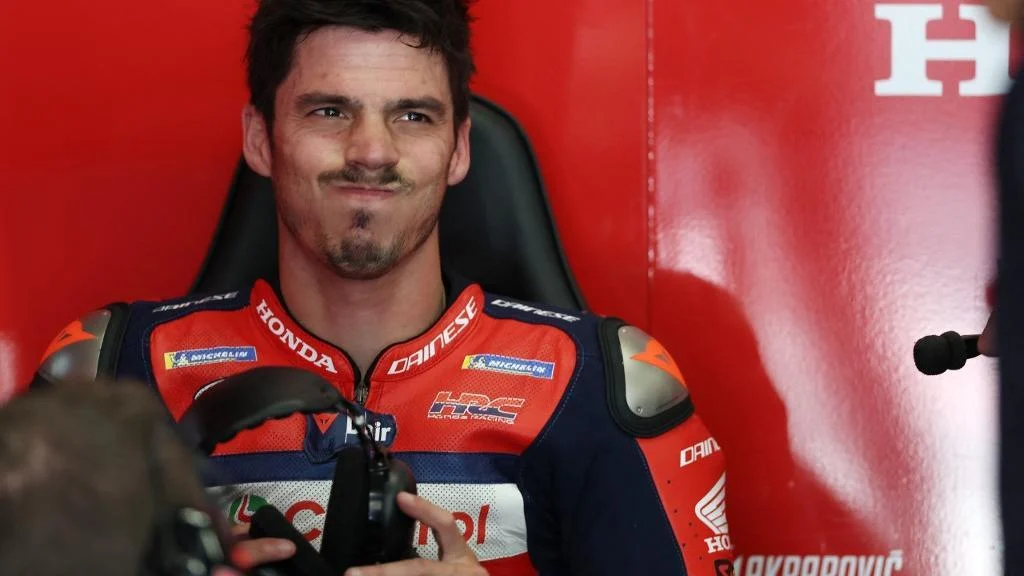
The landscape of premier-class motorcycle racing is undergoing a continuous evolution, and independent powerhouse Gresini Racing has positioned itself at the forefront of the upcoming regulatory era. In an official announcement that has sent ripples through the paddock, the Italian outfit confirmed its rider lineup for the 2027 MotoGP World Championship, opting for a high-stakes blend of seasoned pedigree and explosive youthful potential. Former World Champion Joan Mir and rising star Daniel Holgado will spearhead Gresini’s campaign starting next season, taking over the seats previously occupied by Mir and Fermin Aldeguer in a redesigned roster meant to maximize both immediate competitiveness and long-term development.
The disclosure, made during a media gathering in Jakarta on Monday, October 5, 2026, sheds light on the meticulous planning required to navigate the fiercely competitive MotoGP grid. Carlo Merlini, the Commercial and Marketing Director of Gresini Racing, detailed the rigorous evaluation process that guided the team’s upper management and technical staff to their final conclusion. According to Merlini, the selection was not merely a reaction to short-term market availability, but rather the result of a comprehensive analytical framework encompassing sporting achievements, engineering requirements, and overall trajectory.
Strategic Vision and Selection Criteria
Building a successful MotoGP satellite team in the modern era requires a delicate balance of financial sustainability, technical alignment with factory partners, and optimal rider performance. Merlini emphasized that Gresini evaluates potential candidates through a multifaceted lens that weighs raw speed against technical feedback capabilities—a vital component when working with high-performance machinery.
"When choosing a rider, it is based on several analyses from a sporting and technical perspective," Carlo told reporters in Jakarta.
The strategy behind the 2027 pairing reflects a classic yet effective formula: coupling a proven winner who understands the immense pressures of fighting at the front of the premier class with a hungry, highly adaptable rookie or sophomore talent capable of exponential growth. By securing Joan Mir, Gresini inherits a wealth of developmental knowledge harvested from years inside factory-backed environments. Conversely, in Daniel Holgado, the team has invested in a dynamic asset whose career trajectory points toward long-term viability in the premier class.
"We also take the importance of the background of experienced riders or, for example, young talents that we can explore for the premier class into account," Merlini explained. "So, those are some of the things we considered. And finally, we came to the conclusion that Joan Mir and Daniel Holgado are the best riders for our lineup next year—one experienced rider and one talented young rider."
The Profiles: Proven Pedigree Meets Fresh Ambition
The acquisition of Joan Mir represents a major coup for Gresini Racing. The Spanish rider is widely respected for his smooth riding style, analytical approach to race weekends, and, above all, his championship-winning credentials. Mir famously clinched the 2020 MotoGP World Championship with Suzuki, displaying remarkable consistency and racecraft during an unpredictable season.
However, Mir’s recent tenure with the Repsol Honda Team proved to be a challenging chapter. Plagued by the well-documented developmental struggles of the Japanese manufacturer’s RC213V prototype, Mir found himself fighting further down the order than a world champion of his caliber prefers. After four arduous seasons enduring the trials of Honda’s rebuilding phase, Mir’s decision to transition to Gresini marks a crucial career pivot. At Gresini, he will not only seek to revitalize his race-winning form but also benefit from competitive machinery that has consistently proven capable of fighting for podiums and race victories in recent years.
Mir’s career statistics in the premier class underline his enduring value. With 15 podium finishes and a world title to his name, he brings a level of institutional knowledge that few independent team riders possess. His ability to guide the technical direction of the team will be invaluable as MotoGP approaches a massive technical overhaul.
On the other side of the garage, Daniel Holgado represents the vibrant future of Grand Prix motorcycle racing. The young Spaniard has steadily built a reputation as one of the most tenacious and naturally gifted talents climbing through the junior categories. Having honed his craft and showcased race-winning brilliance in Moto2, Holgado caught the watchful eyes of Gresini’s talent scouts. His promotion to the premier class is viewed internally not as a temporary gamble, but as a calculated investment in a multi-year project designed to unearth the next generation of MotoGP superstars. Holgado’s debut season in 2027 will undoubtedly feature a steep learning curve, but the structured environment at Gresini is expected to cushion the transition and foster his rapid adaptation to heavier, more powerful machines equipped with complex aerodynamics and Michelin tires.
Continuity and Factory Support: The Ducati Partnership
Beyond the rider lineup, a critical factor underpinning Gresini Racing’s long-term strategy is the continuation of its successful technical alliance with Ducati. Despite the shifting tides of the rider market and looming major regulation changes scheduled for the 2027 season, Gresini has locked in its machinery supply, ensuring it remains an integral part of the Borgo Panigale manufacturer’s racing ecosystem.
As part of this continued collaboration, Joan Mir is slated to receive a factory-specification Ducati Desmosedici. This guarantees that the 2020 World Champion will have access to top-tier equipment capable of challenging factory-backed entries week in and week out. Providing a factory bike to an experienced rider of Mir’s stature signals Gresini’s serious intent to remain a formidable force at the sharp end of the grid, rather than settling for a purely developmental role.
The technical stability offered by Ducati provides a strong foundation for the team as it integrates two completely new riders into its structure. While the entire MotoGP paddock will face a massive technological reset when new engine and chassis regulations take effect in 2027, having a proven bike architecture leading up to that transition minimizes variables and allows engineers to focus entirely on rider adaptation and setup optimization.
Chronology of the Team’s Evolution
To understand the weight of this announcement, it is necessary to examine Gresini Racing’s recent trajectory in the premier class. Founded by the late, legendary Fausto Gresini, the team has successfully transformed from a traditional independent structure into one of the most coveted landing spots in the MotoGP paddock.
Following its transition to Ducati machinery in recent years, the team achieved remarkable success, serving as a springboard for riders looking to prove their championship potential on competitive equipment. The team’s ability to attract elite talent was highlighted by high-profile stints and race-winning campaigns that firmly established the squad as a race-winning threat at every grand prix.
The decision to completely overhaul the rider lineup for 2027 is part of a deliberate multi-year planning cycle. Discussions regarding the 2027 grid have accelerated across the paddock far earlier than in previous eras, driven by contract cycles and the impending technical regulations. Gresini’s management moved decisively during the middle months of the 2026 season to secure their preferred targets before the rider market reached a saturation point. By locking in Mir and Holgado well ahead of the upcoming winter break, the team has eliminated internal distraction, allowing both management and technical crews to focus entirely on closing out the current championship campaign while laying the groundwork for the future.
Implications for the 2027 MotoGP Landscape
The confirmation of Mir and Holgado at Gresini carries significant broader implications for the competitive ecosystem of MotoGP.
First, it marks another high-profile departure from Honda’s traditional talent pool, underscoring the ongoing shift in power dynamics within the premier class. As European manufacturers—specifically Ducati, KTM, and Aprilia—continue to dominate the technical landscape, experienced riders from Japanese factories increasingly view independent European-backed teams as viable pathways back to the podium.
Second, the pairing highlights the industry-wide trend of fast-tracking elite lightweight and intermediate-class talent into the premier class. With teams recognizing that adaptation to modern MotoGP machines requires youth, physical adaptability, and fearlessness, rookies and sophomores are being trusted with premier-class seats earlier than ever before. Holgado’s arrival will be closely watched by rival manufacturers looking to identify the next breakout star of the sport.
Finally, for Joan Mir himself, the move to Gresini is a career-defining moment. At this stage, a strong campaign aboard factory-spec Ducati machinery could re-establish him as a title contender and silence any doubts regarding his competitiveness outside of his former championship-winning environment. If Mir can harness the proven performance of the Desmosedici while providing the steady leadership Gresini values, the Italian squad could emerge as a dark horse for the 2027 championship.
As the 2026 season marches toward its climax, all eyes in the paddock will inevitably begin looking ahead. With its 2027 roster officially locked in, Gresini Racing has drawn its battle lines, combining the wisdom of a world champion with the raw ambition of a rising star in a bold bid for future glory.