Azin Asro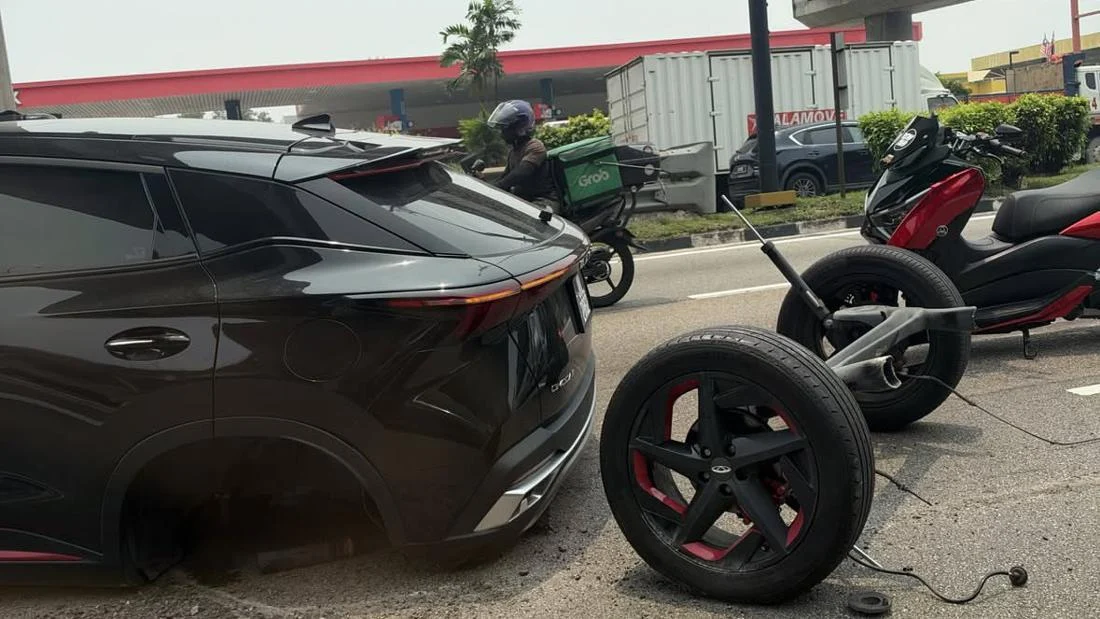
The automotive industry and consumers alike are closely monitoring recent developments concerning the Chery Omoda 5, following a viral incident in Malaysia where the vehicle’s rear axle seemingly detached while in motion. The alarming event has triggered widespread discussions across digital platforms and prompted an official response from Chery’s regional and local operations, including PT Chery Sales Indonesia. As safety concerns resurface regarding this popular crossover SUV, stakeholders are demanding greater transparency, thorough investigations, and robust quality assurance protocols to ensure vehicle integrity on global roads.
The incident in Malaysia came to light after photographic and video evidence circulated rapidly across various social media channels. The viral imagery depicted a black Chery Omoda 5 with its rear axle and wheel assembly completely separated from the vehicle body. Additional video footage revealed a dented rear-right door, alongside a motorcycle stopped immediately behind the stricken automobile. While initial speculation grew online regarding a potential collision with the motorcycle, official confirmation detailing whether the two incidents were directly linked has not yet been conclusively established by local authorities or the manufacturer.
Nevertheless, the sight of a critical structural component detaching from a modern passenger vehicle is inherently alarming to motorists, amplifying anxieties surrounding manufacturing consistency and component reliability. In response to the growing public concern and media inquiry, PT Chery Sales Indonesia swiftly issued a formal statement to address the situation and reassure its customer base in the domestic market.
Official Responses and Ongoing Investigation
Addressing the unfolding situation in neighboring Malaysia, Chery’s Indonesian subsidiary emphasized its active involvement in monitoring the developments. The company noted that its Malaysian counterpart has initiated a comprehensive investigation to ascertain the exact chronology and root causes of the structural failure. Simultaneously, PT Chery Sales Indonesia is maintaining close coordination to evaluate whether proactive measures or preventive checks are warranted for vehicles distributed within the Indonesian archipelago.
"Menanggapi perhatian publik terkait insiden pada OMODA 5 di Malaysia, Chery Indonesia terus memantau perkembangan situasi," the company stated in an official release. "Saat ini, Chery Malaysia tengah melakukan investigasi menyeluruh untuk mengetahui kronologi dan penyebab kejadian, sementara Chery Indonesia terus berkoordinasi untuk memastikan langkah antisipasi yang diperlukan di Indonesia."
Furthermore, the manufacturer took the opportunity to urge vehicle owners to remain diligent regarding routine maintenance schedules. Chery strongly recommends that consumers consistently bring their vehicles to authorized service centers to undergo regular inspections, thereby ensuring that all mechanical and structural components remain in optimal operating condition.
Historical Context: The 2024 Rear Axle Recall Precedent
The anxiety surrounding the recent Malaysian incident is heavily compounded by historical precedent. For industry observers and automotive analysts, this is not an isolated mechanical scare for the Omoda 5 nameplate. Archival data from automotive reporting indicates that a similar structural failure involving a fractured rear axle occurred in 2024, affecting Omoda 5 users and generating significant regulatory and consumer scrutiny.
In response to the 2024 component failures, Chery executed a proactive safety recall impacting approximately 600 units of the Omoda 5. This recall served as a critical risk-mitigation measure aimed at identifying and rectifying potential vulnerabilities within the rear axle assembly. At the time, the manufacturer promised a comprehensive remediation process for all affected vehicle owners, guaranteeing full component replacements at no cost to the consumer.
"Kami telah segera mengatasi masalah ini dengan mengganti komponen as gandar belakang dan melakukan tes kontrol kualitas yang komprehensif pada kendaraan yang terkena dampak," Chery asserted during the initial recall campaign. "Kami dapat mengonfirmasi bahwa masalah ini telah berhasil diselesaikan."
Transparency and Supply Chain Accountability
Following the 2024 incidents, Chery Auto Malaysia and its parent corporate entities conducted extensive internal audits and supplier evaluations to pinpoint the origin of the structural defects. Investigations revealed that the anomaly was traced back to specific batches of parts linked to facility upgrades and manufacturing adjustments implemented by external component vendors.
By engaging directly with part suppliers and conducting rigorous stress analyses, the automaker sought to restore consumer confidence through full accountability. "Chery Auto Malaysia memandang masalah ini dengan serius karena keselamatan pelanggan adalah prioritas utama kami," the company declared during the prior remediation phase. "Untuk memastikan bahwa kami memberikan transparansi dan akuntabilitas penuh, kami telah menghubungi vendor suku cadang dan telah melakukan analisis mendalam. Kami sekarang dapat mengonfirmasi bahwa 600 kendaraan berpotensi terkena dampak karena kegiatan peningkatan fasilitas."
Despite these past assurances and the implementation of corrective actions, the recurrence of a rear-axle-related incident in Malaysia has reignited questions regarding the long-term effectiveness of the previous recall fixes and the stringency of Tier-1 and Tier-2 supplier quality controls.
Implications for the Global Omoda 5 Market
The Chery Omoda 5 has rapidly established itself as a cornerstone of the brand’s international expansion strategy, capturing significant market share across Southeast Asia, Latin America, South Africa, and parts of Europe. Positioned as a stylish, technologically advanced, and competitively priced crossover, the vehicle is vital to Chery’s ambition of challenging established legacy automakers in the global volume segments.
However, in the highly competitive modern automotive landscape, brand reputation is inextricably linked to vehicle safety, durability, and crisis management. Structural integrity failures—particularly those involving fundamental components like axles, steering, and braking systems—carry disproportionate reputational risks. Even isolated incidents can disproportionately influence consumer perception, potentially impacting sales trajectories and brand equity in emerging export markets.
For the Indonesian market, where the Omoda 5 has also enjoyed a warm reception among urban motorists and tech-savvy families, the prompt communication from PT Chery Sales Indonesia represents an essential public relations strategy. By acknowledging the incident transparently, distancing current domestic inventory from the affected batches, and emphasizing authorized service network checks, the brand aims to insulate its local operations from unwarranted panic.
Industry Analysis: Quality Control and Rapid Scaling Pressures
Automotive manufacturing experts note that rapid international expansion often places immense pressure on supply chains and quality assurance frameworks. As automakers scale up production facilities across multiple regions to meet surging demand for export-heavy models, maintaining uniform manufacturing tolerances across every assembly plant and component supplier becomes a complex logistical challenge.
The recurring nature of the Omoda 5 axle concern underscores the critical importance of rigorous end-of-line testing and metallurgical verification. Suspension components, particularly rear axles subjected to dynamic torsional loads, uneven road surfaces, and varying payload weights, must possess high fatigue strength and structural resilience. Any deviation in material composition, welding integrity, or heat treatment protocols during component manufacturing can introduce microscopic stress concentrations, ultimately leading to premature fatigue failure under real-world driving conditions.
Moving forward, regulatory bodies in export destinations such as Malaysia, Indonesia, and other regional markets will likely maintain heightened vigilance. Should the ongoing investigation by Chery Malaysia reveal systemic vulnerabilities or manufacturing defects extending beyond the previously identified 600-unit batch, regulatory authorities may mandate broader inspection directives or expanded recalls.
Consumer Guidance and Next Steps
As the formal investigation into the Malaysian incident proceeds, automotive safety advocates continue to advise motorists to prioritize defensive driving habits, remain alert to unusual mechanical noises or handling anomalies, and strictly adhere to manufacturer-mandated maintenance intervals. Vehicle owners experiencing vibrations, structural squeaks, or unusual rear-end behavior are strongly encouraged to visit authorized service centers immediately for comprehensive diagnostic evaluations.
Chery has reiterated its commitment to consumer safety and transparency, promising to release further updates as the technical findings of the Malaysian investigation are finalized. Until concrete data regarding the root cause of the latest incident is officially published, industry stakeholders urge the public to rely on verified manufacturer communications rather than unverified online speculations.