
 Chalifah Fatihah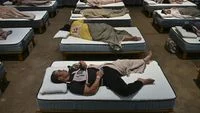
In an era defined by relentless hustle culture, chronic sleep deprivation, and the glorification of overwork, the Japanese capital recently served as the backdrop for an extraordinary public spectacle that turns a biological necessity into a high-stakes competitive sport. Dozens of participants gathered in Tokyo, Japan, to compete in a highly unusual tournament designed to measure not endurance, speed, or intellectual prowess, but the sheer ability to fall asleep the fastest and achieve the deepest, most restorative slumber possible. At stake was a grand prize equivalent to approximately 250 million Indonesian Rupiah, a substantial financial incentive that drew contestants from various walks of life, all united by a common goal: mastering the art of resting.
This quirky yet culturally poignant event highlights a growing global fascination with sleep optimization. While competitions centered around physical exhaustion, mental agility, or gaming endurance are commonplace worldwide, a contest rewarding superior sleep hygiene and physiological relaxation underscores the profound societal anxiety surrounding chronic fatigue. As modern populations grapple with escalating stress levels, digital hyper-connectivity, and demanding work schedules, the Tokyo sleep competition transcends mere novelty, acting as a mirror reflecting contemporary struggles with rest and recovery.
The Genesis and Cultural Context of Sleep Competitions in Japan
To understand the significance of this event, one must examine the socio-cultural landscape of Japan, a nation long associated with a rigorous work ethic that has historically prized dedication to the office above personal well-being. Terms such as "karoshi," meaning death by overwork, and "inemuri," the socially accepted practice of sleeping on duty as a sign of exhaustion from working hard, are deeply embedded in the nation’s lexicon. Against this backdrop, public discourse surrounding sleep has shifted dramatically in recent years.
The Tokyo sleep competition did not emerge in a vacuum. It represents a calculated effort by wellness brands, lifestyle organizations, and public health advocates to draw attention to sleep poverty in a engaging manner. Japan has consistently ranked among the most sleep-deprived nations in the developed world. According to data compiled by the Organisation for Economic Co-operation and Development (OECD), Japanese adults sleep an average of less than seven hours and twenty-two minutes per night, trailing significantly behind the global average and recording the lowest duration among surveyed member countries.
In response to this persistent public health challenge, Japanese society has seen a burgeoning "sleep tech" and wellness industry. From sophisticated nap cafes in business districts to advanced biometric mattresses equipped with artificial intelligence, the country is actively commercializing and redefining rest. The sleep championship serves as an extension of this cultural pivot, transforming a private, vulnerable act into a public demonstration of physiological mastery.
Chronology and Mechanics of the Championship
The day of the competition was marked by meticulous planning and clinical precision. Organizers transformed a brightly lit Tokyo exhibition space into a controlled, serene environment designed to isolate contestants from external stimuli while simultaneously monitoring their vital signs.
Preparation and Calibration
The event commenced in the early afternoon, a deliberate choice defying the natural nocturnal cycle to test the contestants’ ability to bypass circadian rhythms and induce sleep on demand. Upon arrival, participants underwent a comprehensive health screening and were fitted with advanced medical-grade biometric sensors. These devices were engineered to track multiple physiological markers simultaneously, including electroencephalogram (EEG) brainwave activity, heart rate variability, skin temperature, and respiratory rates.
The Competition Phase
Once the arena was declared quiet, contestants were instructed to lie down on identical, neutral-grade bedding provided by the event organizers to ensure absolute fairness. At the sounding of a gentle chime, the clock started. The primary objective was twofold: register the shortest sleep latency—the precise duration required to transition from a fully conscious state to stage one non-rapid eye movement (NREM) sleep—and subsequently maintain a deep, undisturbed sleep state for a designated testing period.
Judges and sleep specialists monitored real-time telemetry screens, analyzing brain activity transitions. While some participants struggled with the performance anxiety of attempting to sleep under observation, others utilized specialized breathing techniques, meditation practices, and mental visualization strategies honed over weeks of preparation. Within minutes, the initial waves of contestants successfully crossed the threshold into unconsciousness, verified by the flattening of alpha brainwaves and the emergence of synchronized delta waves on the monitoring equipment.
Physiological Data and Scientific Evaluation
The determination of the winner relied entirely on objective data rather than subjective impressions. Sleep medicine experts oversaw the evaluation process, ensuring that the competition adhered to strict polysomnographic standards, albeit in a portable format.
Sleep latency serves as a primary diagnostic metric in clinical sleep medicine. An average healthy adult typically requires between ten and twenty minutes to fall asleep. However, individuals suffering from chronic stress or insomnia may take significantly longer. Conversely, contestants in the Tokyo tournament demonstrated extraordinary physiological regulation, with top contenders achieving sleep onset in under three minutes.
Furthermore, the depth of sleep was measured by the duration and continuity of slow-wave sleep (SWS), commonly known as deep sleep. During this phase, the body repairs tissues, builds bone and muscle, and strengthens the immune system. Contestants who not only fell asleep rapidly but also successfully maintained a stable deep sleep profile without micro-arousals scored the highest cumulative points. The data captured during the event offered researchers a unique dataset regarding the human body’s capacity for rapid parasympathetic nervous system activation under high-stimulus conditions.
Reactions from Participants and Health Experts
The announcement of a 250 million Rupiah cash prize attracted a diverse demographic, ranging from overworked corporate employees and frantic gig-economy workers to professional wellness coaches and university students.
Interviews conducted immediately following the conclusion of the event revealed mixed emotional responses. Several contestants expressed genuine surprise at their ability to relax amidst the cameras and medical apparatus. One finalist, a thirty-four-year-old project manager based in Tokyo, noted that the experience forced him to confront his daily exhaustion. "We spend our entire lives running from one obligation to the next, treating sleep as an inconvenient interruption rather than a priority," he remarked. "Participating today made me realize just how starved my body was for genuine rest."
Medical professionals and public health advocates have offered nuanced perspectives on the event. While applauding the initiative for raising public awareness regarding sleep hygiene, specialists caution against trivializing clinical sleep disorders. Insomnia and related conditions are complex neurological and psychological challenges that cannot be resolved merely through willpower or competitive drive.
Nevertheless, sleep epidemiologists have praised the tournament for shifting cultural narratives. By attaching substantial monetary value to sleep, the event effectively challenges the deeply ingrained corporate valorization of sleep deprivation. For decades, logging excessive hours at the desk was viewed as the ultimate badge of honor in urban East Asia. A competition that rewards the exact opposite—complete physiological surrender and rest—signals a profound ideological shift among younger generations.
Broader Economic and Societal Implications
The implications of the Tokyo sleep championship extend far beyond the confines of a single weekend event, touching upon corporate productivity, public health economics, and the burgeoning global wellness market.
Economic Costs of Sleep Deprivation
The economic toll of insufficient sleep is staggering. Independent studies conducted by economic research institutions indicate that sleep deprivation costs major economies hundreds of billions of dollars annually in lost productivity, absenteeism, and workplace accidents. In Japan, academic estimates suggest that fatigue-related productivity losses account for a substantial percentage of the national gross domestic product. By spotlighting the necessity of rest, events like the Tokyo championship indirectly advocate for systemic workplace reforms, including the normalization of daytime napping and flexible working hours.
The Rise of Sleep Tourism and Optimization
On a consumer level, the event mirrors the explosive growth of the global wellness tourism sector. Consumers are increasingly investing disposable income into sleep-centric hospitality, biometric monitoring gadgets, customized mattresses, and specialized nutritional supplements. The willingness of sponsors to fund a 250 million Rupiah prize pool illustrates the high commercial stakes involved in capturing the attention of consumers desperate for better rest.
Future Outlook for Public Health Initiatives
As urban centers worldwide continue to densify and digital distractions proliferate, the preservation of natural sleep patterns becomes increasingly difficult. Public health authorities are beginning to recognize that traditional educational campaigns regarding sleep hygiene often fail to capture public imagination. Engaging, gamified public spectacles such as the Tokyo sleep competition may well serve as a blueprint for future health interventions, utilizing entertainment and financial incentives to communicate vital medical messages to a broader audience.
Ultimately, while the image of dozens of people competing to sleep in a public arena carries a touch of surreal irony, the underlying message remains profoundly serious. In a world that rarely stops moving, the ability to rest has transformed from a biological given into a coveted luxury—and, as demonstrated in Tokyo, a championship-level achievement.








