Tata Titiana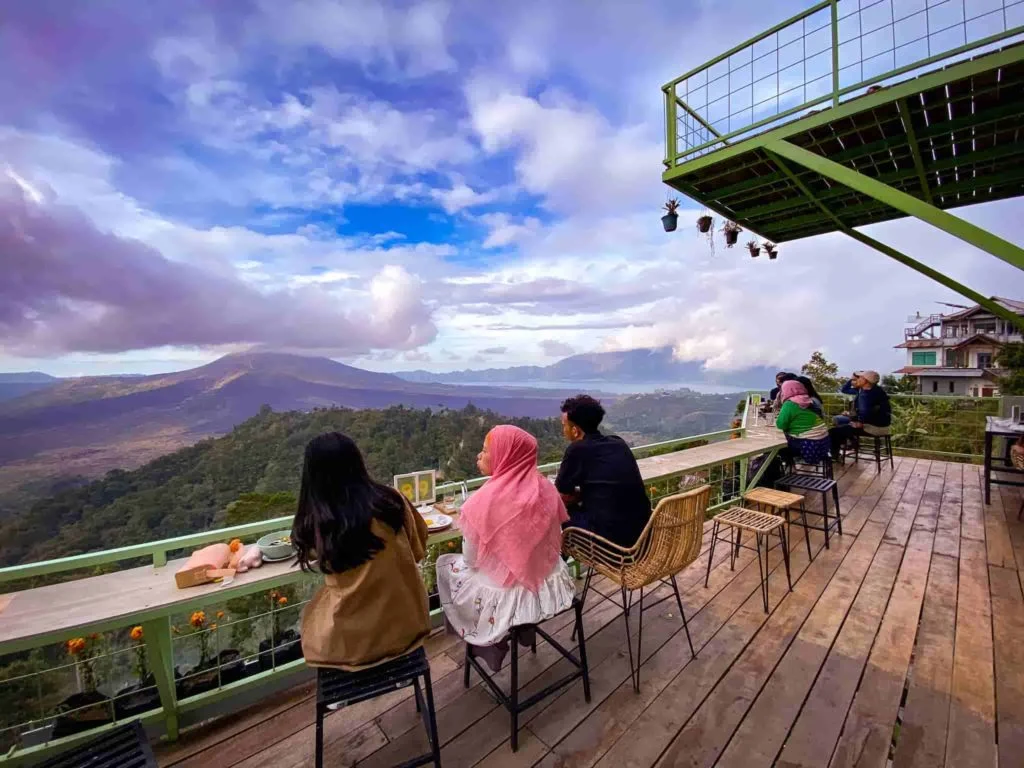
Bali has long held its reputation as Indonesia’s premier tourism crown jewel, renowned globally for its vibrant coastal culture, world-class surf breaks, and bustling beach clubs in areas such as Seminyak, Canggu, and Uluwatu. However, beyond the sun-drenched shores and southern beach resorts lies a completely different side of the island—one characterized by dramatic volcanic landscapes, cool mountain breezes, and serene highland plateaus. In recent years, the tourism paradigm on the island has steadily shifted, drawing increasing numbers of domestic and international travelers away from the sea and up toward the majestic central highlands.
At the epicenter of this highland tourism boom is Kintamani, a rugged volcanic region situated within the Bangli Regency. Nestled along the rim of an ancient caldera, Kintamani has transformed from a traditional agricultural community and a sporadic stopover for volcano-gazers into one of the country’s most dynamic lifestyle and culinary destinations. The region’s unique geography—featuring soaring peaks, fertile volcanic soil ideal for specialty coffee cultivation, and crisp alpine air hovering between 17 and 18 degrees Celsius—has provided an ideal backdrop for a new wave of architectural and hospitality ventures.
The proliferation of modern, design-forward cafes along the Penelokan ridge has redefined how visitors experience the area. Rather than merely viewing the landscape from roadside viewpoints, travelers can now linger for hours, enjoying artisanal coffee and gourmet dining while immersed in panoramic vistas of Mount Batur, Mount Abang, Mount Agung, and the crescent-shaped Lake Batur. This architectural and economic evolution has injected new life into the local economy, creating sustainable tourism opportunities that leverage the region’s natural assets. For friends, solo travelers, and couples seeking romantic getaways away from the tropical heat of the coast, these highland establishments offer an unmatched sensory experience. Below is an in-depth look at five of the most exceptional cafes in Kintamani, each offering distinct architectural designs, sweeping vistas, and unique atmospheres tailored for modern travelers.
1. Tegu Kopi: Pioneering Modern Highland Hospitality
Officially opening its doors in December 2019, Tegu Kopi stands as one of the early pioneers that helped catalyze the café boom along the Jalan Raya Penelokan ridge in Kintamani. Strategically positioned on an elevated tract of the caldera rim, the venue was purposefully designed to maximize its commanding vantage point over the surrounding geography.
From its terraces, patrons are treated to unobstructed sightlines encompassing four major geographical landmarks: Mount Batur, Mount Abang, Mount Agung, and the shimmering expanse of Lake Batur below. The café capitalizes on Kintamani’s natural microclimate, where daytime temperatures frequently hover around a refreshing 17 to 18 degrees Celsius, offering a stark and welcome contrast to Bali’s tropical coastal humidity.
Tegu Kopi’s design philosophy emphasizes open-air viewing platforms that seamlessly integrate indoor seating with the dramatic outdoor environment. As daylight transitions into late afternoon, the venue offers a front-row seat to one of the region’s most striking meteorological phenomena: the dramatic descent of dusk behind the jagged silhouettes of the central mountain range. This combination of cooling alpine air, dramatic topography, and accessible comfort has made Tegu Kopi a foundational destination for travelers looking to understand the modern appeal of the Kintamani highlands.
2. Eco Bike Coffee: Integrating Agriculture, Accommodation, and Architecture
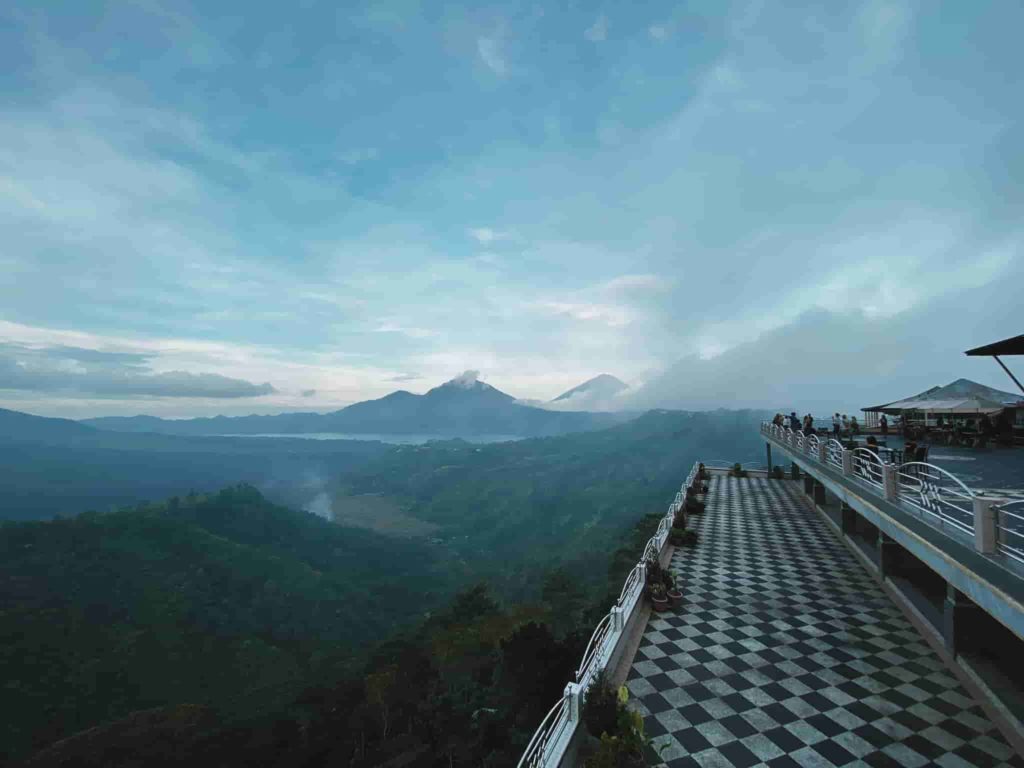
Rising across three distinct structural levels, Eco Bike Coffee distinguishes itself as one of the largest hospitality complexes operating along the Kintamani cliffside. Unlike single-level establishments, Eco Bike Coffee utilizes a multi-tiered spatial strategy to diversify the visitor experience while maintaining a deep connection to the local agricultural landscape.
The infrastructure of the property is functionally segmented to serve various aspects of sustainable tourism. The ground floor, or the first level, is integrated directly with active coffee plantations and functional accommodation facilities, allowing guests to observe the lifecycle of Kintamani’s famed Arabica coffee beans from agricultural production to final processing. This agricultural integration provides an educational layer to the visitor experience, bridging the gap between consumer culture and local farming traditions.
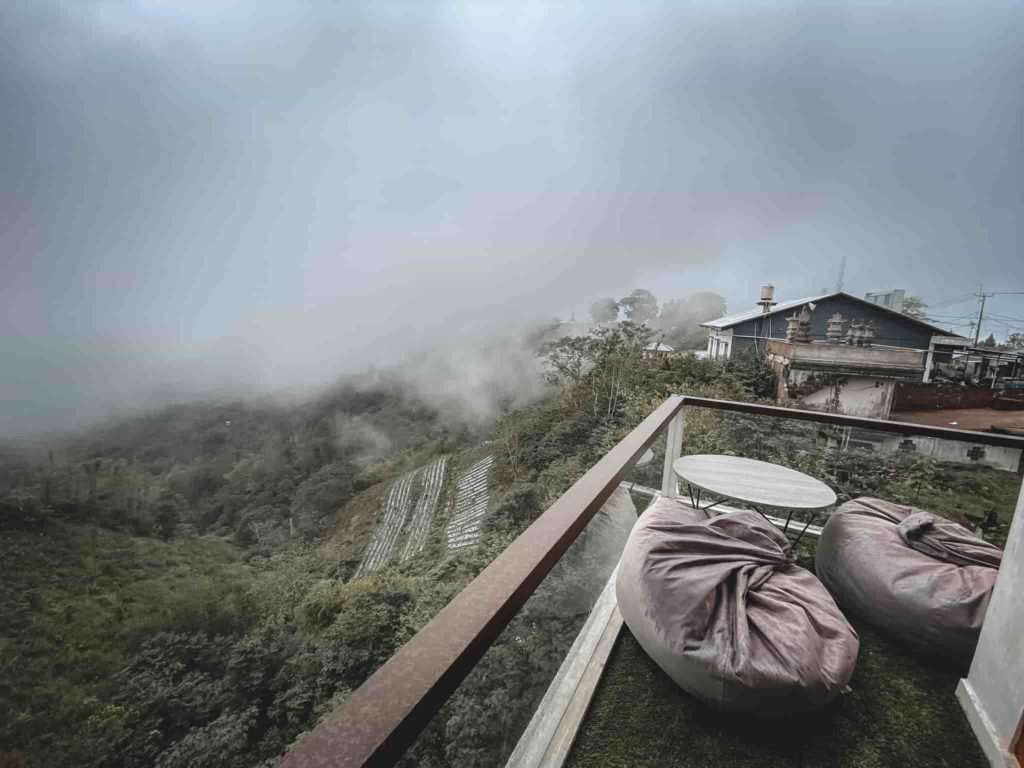
Ascending to the third level reveals a sweeping rooftop outdoor terrace designed for uninterrupted horizon viewing. However, industry experts and local operators frequently advise prospective visitors to monitor regional weather patterns before making the journey to upper-tier venues like Eco Bike Coffee. Because of Kintamani’s high altitude, rapid cloud formations and heavy mountain mists can sweep across the caldera with little warning. When these mist layers descend, visibility drops significantly, occasionally obscuring the iconic silhouettes of Mount Batur entirely. Despite this, visiting during clear-weather windows offers an expansive, panoramic immersion into the volcanic caldera that few other locations can replicate.
3. Akasa Coffee: Premium Elevation and Atmospheric Comfort
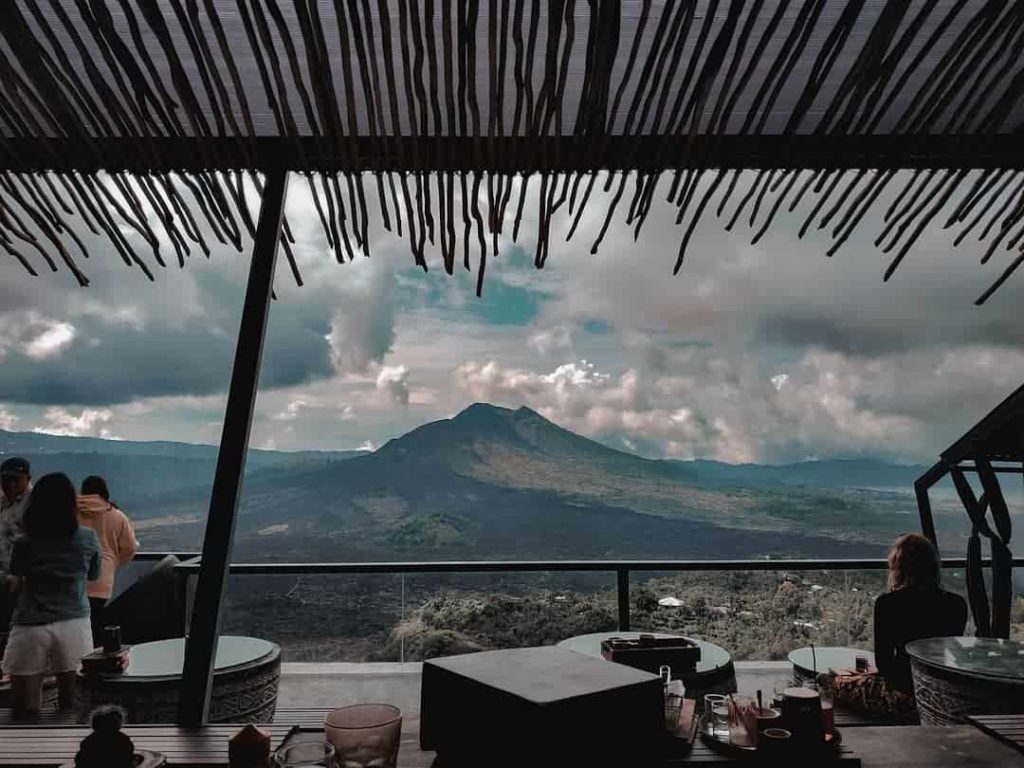
Positioned along the upper ridges of the Kintamani highlands, Akasa Coffee has established a reputation as a premier sanctuary for travelers seeking both comfort and dramatic visual stimuli. The venue leverages its elevated positioning to deliver sweeping, theater-style vistas of Mount Batur and the surrounding caldera valley.
Operating in an environment where ambient temperatures demand more than light tropical attire, Akasa Coffee provides a cozy interior ambiance complete with thoughtful architectural detailing and comfortable seating arrangements. Industry recommendations consistently advise visitors—particularly those sensitive to cold mountain air—to arrive equipped with proper outerwear, as temperatures drop rapidly, especially during early morning and late evening hours.
The establishment caters to a diverse clientele by offering an extensive menu that bridges local flavors with international culinary standards. From comprehensive breakfast selections and artisanal coffee preparations to specialty teas and curated beverage options, the establishment caters to the refined tastes of modern culinary tourists. With an average pricing tier hovering around IDR 150,000 per person, Akasa Coffee positions itself within the upper-mid scale bracket of regional dining. Local tourism analysts note that establishments of this caliber have successfully elevated the average spending per visitor in Bangli Regency, contributing significantly to regional economic diversification away from traditional agriculture alone.
4. Batur 1926: Architectural Heritage and Sunrise Vistas
For travelers willing to brave the pre-dawn mountain chill, Batur 1926 offers a specialized operational schedule centered around the highland sunrise. Opening its doors in the early hours of the morning, the venue welcomes visitors around 05:30 local time to witness the slow emergence of dawn over the volcanic landscape—a visual and auditory experience characterized by deep silence and shifting light across the mountain faces.
Beyond its early morning appeal, Batur 1926 distinguishes itself through a deliberate architectural fusion of contemporary structural design and traditional Balinese aesthetics. The rooftop terrace features prominent architectural elements such as traditional Balinese gateways (candi bentar), which serve both as cultural structural motifs and highly sought-after focal points for photography.
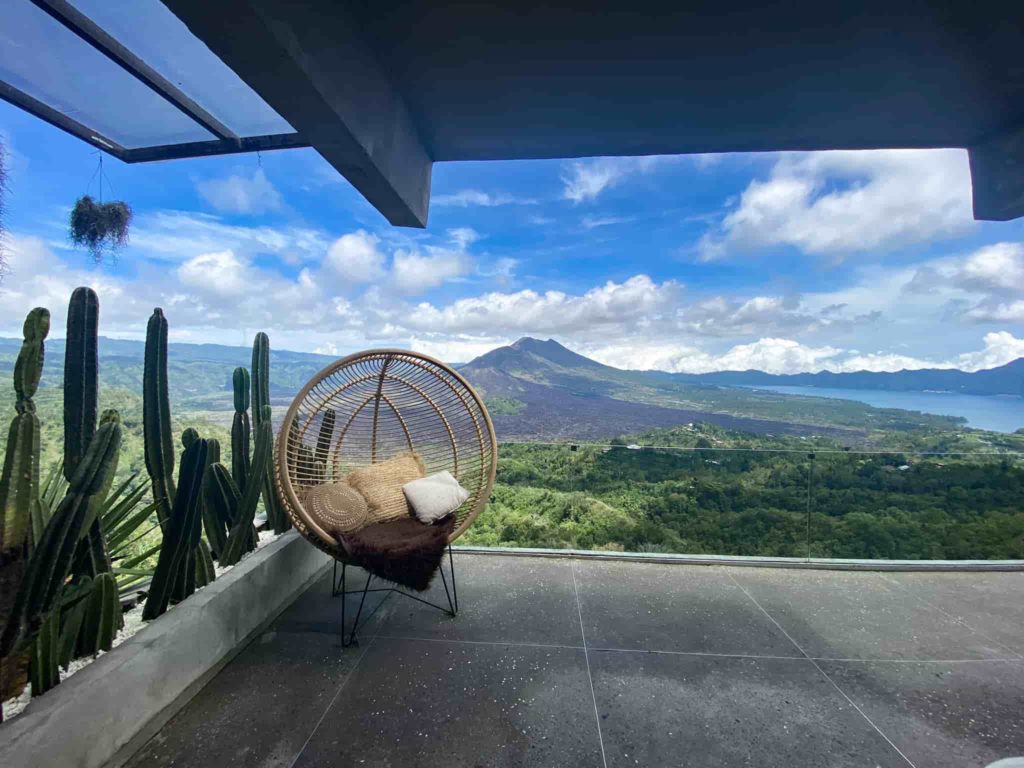
When weather conditions remain clear and free of cloud cover, the vantage point from Batur 1926 provides a rare simultaneous sightline of three major sacred peaks: Mount Batur, Mount Abang, and the towering silhouette of Mount Agung—Bali’s highest volcano. This alignment of cultural architecture and multi-peak visibility has made the venue a favored subject among travel photographers, digital creators, and lifestyle journalists documenting the evolving visual culture of interior Bali.
5. Kava Coffee: Seamless Indoor-Outdoor Design on Lake Batur’s Edge
Situated lower along the slopes closer to the legendary perimeter of Lake Batur, Kava Coffee offers a distinct perspective compared to its ridge-top counterparts. Rather than looking down from an extreme altitude, Kava Coffee places patrons in closer visual proximity to the lake’s water level while maintaining a commanding view of the surrounding volcanic trio: Mount Batur, Mount Abang, and Mount Agung.
The interior architecture of Kava Coffee reflects a meticulous approach to spatial design, utilizing expansive floor-to-ceiling glass paneling and semi-outdoor configurations. Long communal tables and ergonomic seating arrangements invite extended social interaction among groups of friends and couples. Crucially, the extensive use of transparent glass walls ensures that even indoor patrons are never detached from the external landscape, allowing natural light to flood the interior while framing the rugged topography outside like a living painting.
Economic Implications and the Future of Highland Tourism in Bali
The rapid expansion of lifestyle cafes throughout Kintamani represents a significant structural shift in Bali’s broader tourism economy. Historically, regional economic development was heavily concentrated in the southern districts of Badung and Denpasar, leaving rural agricultural regions like Bangli with lower per capita tourism revenues.
According to regional economic analyses, the proliferation of high-end cafes and boutique hospitality ventures in Kintamani has generated multiple positive macroeconomic outcomes:
- Job Creation: Local employment has diversified, shifting from purely agrarian labor to roles in hospitality, culinary arts, hospitality management, and sustainable tourism logistics.
- Agricultural Synergy: Establishments frequently source local agricultural products—most notably Kintamani Arabica coffee beans and regional produce—thereby creating a direct economic feedback loop between the tourism sector and local farming cooperatives.
- Geographic Deconcentration: By attracting visitors to the central highlands, these venues play a crucial role in alleviating tourist density and traffic congestion in saturated southern coastal corridors.
However, rapid infrastructure development in ecologically sensitive highland zones also brings challenges that require careful regulatory oversight. Environmental experts emphasize the necessity of sustainable waste management, strict adherence to spatial planning zoning laws, and water conservation measures to protect the integrity of the Lake Batur watershed and prevent ecological degradation.
Ultimately, the rise of Kintamani’s café culture demonstrates the changing demands of the modern traveler. Today’s visitors increasingly seek destinations that combine aesthetic sophistication, culinary excellence, and profound engagement with raw natural environments. Whether witnessing the quiet dawn at Batur 1926, sipping artisanal coffee amid the crisp mountain air at Akasa Coffee, or enjoying the expansive glass-walled vistas of Kava Coffee, travelers exploring Bali’s interior are discovering a refreshing, tranquil dimension of the island that exists far beyond its famous golden shores.