Nila Kartika Wati
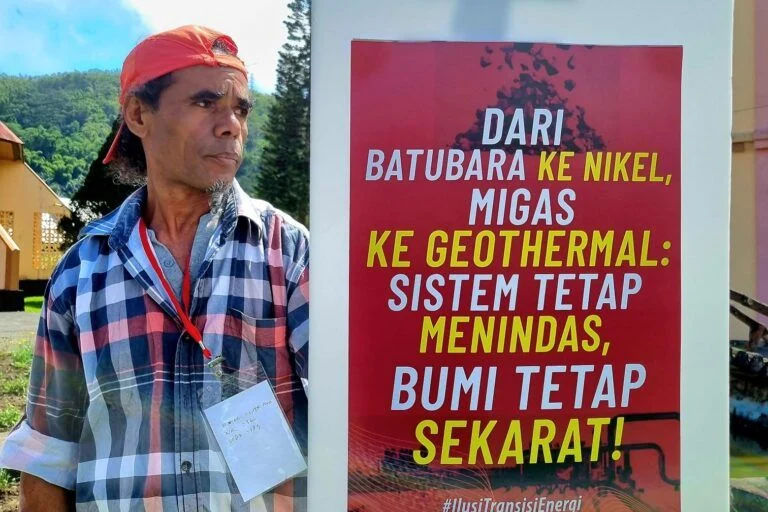
For the people of Flores, the island’s mountainous terrain is more than a geographic feature; it is a vital lifeline. The interconnectedness of volcanic soil, forest-covered watersheds, and reliable water sources forms the bedrock of their daily existence, supporting everything from subsistence agriculture to livestock grazing. However, as the Indonesian government accelerates its push for geothermal energy to meet national renewable energy targets, this delicate equilibrium is being tested. A growing resistance, now crystallized into a high-stakes legal battle at the Supreme Court, has emerged as residents and civil society groups challenge the state’s designation of Flores as a "Geothermal Island."
The conflict centers on three specific sites: Sokoria, Mataloko, and the broader designation of the island as a geothermal hub. On September 4, 2026, the Archdiocese of Ende officially filed a petition for judicial review with the Supreme Court, challenging three Ministerial Decrees issued by the Ministry of Energy and Mineral Resources (ESDM). The petition represents a culmination of years of mounting frustration over transparency, ecological degradation, and the perceived marginalization of local communities in the face of national energy infrastructure projects.
The Chronology of Discontent
The roots of the current legal impasse trace back several years, exacerbated by operational experiences in existing geothermal fields. In Mataloko, residents have long complained of the direct impact of geothermal exploration on their land. Reports from local communities, including individuals like Antoni, describe a deteriorating environment characterized by the contamination of local water sources and the appearance of uncontained hot mud eruptions on private property. While project developers have frequently categorized these eruptions as "natural disasters" or geologically inevitable phenomena, residents point to the correlation between drilling activities and the degradation of their agricultural plots.
In Desa Laja, Manggarai, the narrative is equally fraught. The use of the Tiwu Bala River for geothermal operations has sparked fears among farmers who already struggle with seasonal water shortages. As the government continues to advance the installation of infrastructure, including extensive pipeline networks, the perception among villagers is that their right to water is being sacrificed for electricity generation—a service that many feel does not adequately benefit the communities bearing the brunt of the environmental cost.
The legal strategy led by the Archdiocese of Ende, supported by counsel Azas Tigor Nainggolan, argues that the current geothermal policy framework is fundamentally flawed due to a lack of meaningful public participation. According to the plaintiffs, the state’s failure to provide access to critical documents, such as comprehensive environmental impact assessments (AMDAL) and the specific details of the ministerial decrees, has rendered informed consent impossible.
Legal Arguments and the Demand for Transparency
The core of the judicial review petition rests on three pillars: the lack of transparency in the decision-making process, the inadequacy of environmental impact studies, and the violation of the public’s right to participate in policies that fundamentally alter their living spaces. Azas Tigor Nainggolan has been vocal in asserting that "without access to documents, meaningful participation cannot exist."
The petitioners are requesting that the Supreme Court declare the three ministerial decrees invalid and mandate their revocation. They argue that any policy involving large-scale changes to headwaters, land-use patterns, and ecosystems must be strictly governed by scientific transparency and community consensus. By pushing for a judicial intervention, the Archdiocese is essentially asking the state to prove that its "green" energy projects are not, in fact, creating more harm than the carbon-intensive alternatives they seek to replace.
Environmental Vulnerability and the "Geothermal Island" Label
The designation of Flores as a "Geothermal Island" is a centerpiece of the national energy roadmap, yet critics argue this label ignores the island’s unique topography. Archbishop Paulus Budi Kleden has been a vocal critic of the scale of these projects, noting that the geological makeup of Flores is not suited for high-density, large-scale industrial geothermal extraction.
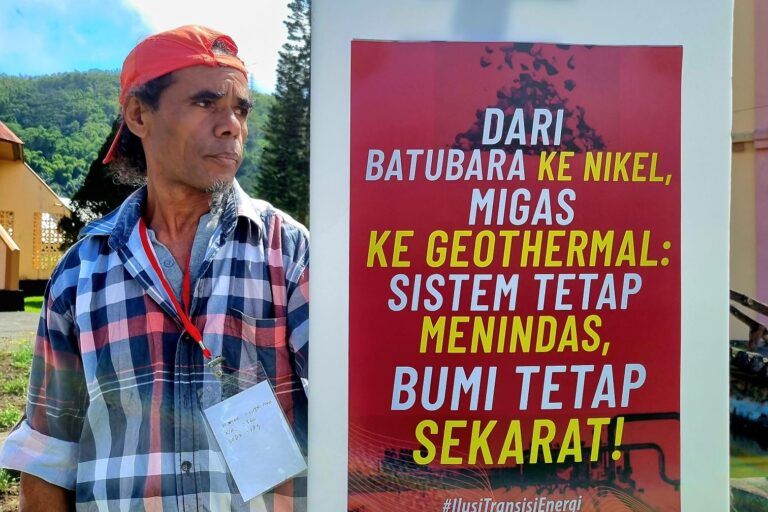
The concern is not merely about the loss of land, but the hydrological impact. Geothermal drilling requires vast quantities of water, both for cooling and for the drilling process itself. In an environment where water scarcity is already a growing concern due to climate change and deforestation, the extraction of groundwater for industrial purposes creates a direct competition between the needs of the energy sector and the needs of the agricultural sector. "Water that is already scarce is being used for geothermal, and that will lead to severe suffering for the community," Archbishop Kleden stated in a recent address.
The Role of Civil Society and Amicus Curiae
The legal challenge gained significant momentum on October 8, 2026, when a coalition of civil society organizations filed an amicus curiae (friend of the court) brief. Organizations such as the Legal Aid Institute (YLBHI), Walhi (Friends of the Earth Indonesia), and Trend Asia have rallied behind the local communities, emphasizing that the label of "renewable energy" does not grant the state a "blank check" to bypass environmental and human rights standards.
Edy Kurniawan of YLBHI argued that the case serves as a litmus test for the country’s commitment to "just energy transitions." The argument is that for a project to be considered truly sustainable, it must be socially just. In the context of Flores, this means respecting the autonomy of local villages, ensuring the integrity of the watersheds, and guaranteeing that the safety of the local population is not compromised by industrial risks.
Broader Implications for Indonesia’s Energy Policy
The standoff in Flores carries profound implications for Indonesia’s broader energy policy. As the nation aims to reach net-zero emissions by 2060, geothermal energy is viewed as a "baseload" power source that is essential for stability. However, the Flores case highlights a recurring tension: how does the state balance national infrastructure requirements with the rights of local communities residing in high-risk volcanic zones?
The case also brings to light the limitations of the current regulatory framework governing renewable energy. Often, projects are fast-tracked under the guise of "National Strategic Projects" (PSN), which can inadvertently limit the scope for local judicial or administrative opposition. If the Supreme Court rules in favor of the Archdiocese, it could set a major precedent, forcing the Ministry of ESDM to adopt more rigorous, transparent, and participatory protocols for all future renewable energy developments across the archipelago.
Furthermore, the operational failures reported at the Mataloko and Sokoria sites suggest that current monitoring mechanisms are inadequate. When residents report environmental damage, the lack of an independent, accessible grievance mechanism leaves them with few options other than protracted litigation. This lack of a "feedback loop" between project operators and local stakeholders is arguably the greatest barrier to the social acceptance of geothermal power in Indonesia.
Moving Toward a Resolution
As the Supreme Court considers the petition, the situation on the ground remains tense. Residents in Manggarai and Mataloko continue to monitor the progress of pipe installations and site expansions with apprehension. The fundamental question remains: can the state harmonize its industrial ambitions with the ecological reality of the island?
For the communities of Flores, the answer lies in a fundamental shift in how the government approaches energy. It is a call for a decentralized approach that prioritizes the health of local watersheds and agricultural lands over centralized energy quotas. As the judicial process unfolds, the eyes of the environmental law community remain fixed on this case, which may ultimately determine the threshold for what constitutes "sustainable" development in Indonesia’s rapidly changing energy landscape.
Whether or not the court orders the revocation of the decrees, the Flores experience serves as a stark reminder that the energy transition cannot be imposed from the top down. True sustainability requires not just the absence of carbon emissions, but the presence of social justice, transparency, and a profound respect for the ecosystems upon which human life depends. The outcome of this legal battle will likely define the future of geothermal policy in Indonesia for decades to come, signaling whether the nation will prioritize technological output or the well-being of its most vulnerable citizens.