Tata Titiana
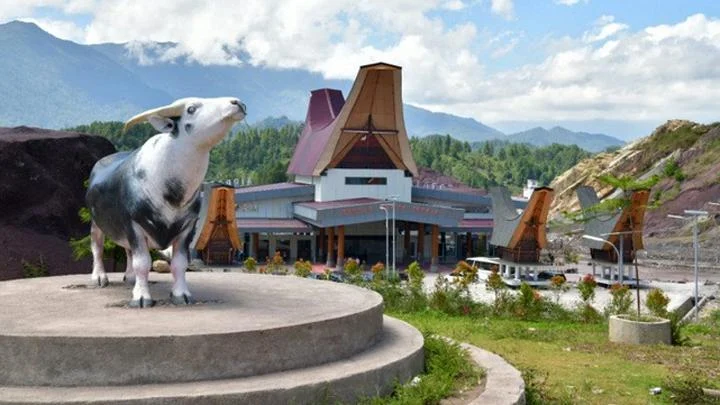
The inauguration of Toraja Airport, formerly known as Buntu Kunik Airport, in Tana Toraja Regency, South Sulawesi, marks a significant milestone in Indonesia’s ongoing infrastructure development under the administration of President Joko Widodo. On Thursday, March 18, 2021, the head of state formally opened the aviation facility, a project that carries profound implications for the socio-economic landscape of the mountainous region. Broadcasted live via the official YouTube channel of the Presidential Secretariat, the inauguration underscored the central government’s commitment to bridging geographical divides in the archipelago, enhancing regional connectivity, and unlocking the immense tourism potential of the Toraja highlands.
For decades, the distinct culture, unique architecture, and breathtaking landscapes of Tana Toraja have drawn international and domestic travelers. However, the region’s rugged topography historically presented substantial logistical challenges, often limiting accessibility and slowing economic integration. By establishing a modern commercial airport right in the heart of Tana Toraja, the government aims to alleviate these barriers, facilitating smoother logistics for goods and passengers alike, and ultimately catalyzing new centers of economic activity in South Sulawesi.
A Decades-Long Chronology of Perseverance and Engineering Feats
The realization of Toraja Airport was far from straightforward, serving as a testament to perseverance through changing political and administrative landscapes. The conceptualization and initial construction of the airport began in 2011, intended to replace the aging and geographically constrained Pongtiku Airport located in Ratentayo. However, early progress was severely hampered by technical complexities, budgetary constraints, and the immense engineering hurdles posed by the local terrain.
For several years, the project stalled, leaving local residents and stakeholders uncertain about its completion. A major turning point arrived in 2018 when President Joko Widodo’s administration prioritized the revival of the stalled infrastructure project. The central government injected renewed momentum and funding into the development, executing Phase I of the construction plan. Through concerted efforts by the Ministry of Transportation and various contractors, Phase I was successfully completed by mid-2020, paving the way for initial commercial operations.
Following the completion of the primary infrastructure, air connectivity to the region was swiftly established. Two major domestic carriers, Wings Air and Citilink, commenced regular scheduled flights connecting Toraja with the provincial capital of Makassar, and vice versa. This operational milestone drastically cut down travel time. Previously, travelers journeying overland from Makassar to Tana Toraja had to endure a grueling road trip lasting between eight to ten hours through winding mountain passes. With the inauguration of the airport, flight time between the two destinations was reduced to roughly 50 minutes, fundamentally transforming travel convenience for business and leisure passengers.
Technical Specifications and Challenging Topography
Constructing an airport in a region defined by dramatic peaks and valleys required extraordinary engineering interventions. Minister of Transportation Budi Karya Sumadi frequently highlighted the unprecedented difficulties encountered during the construction process, noting that the terrain’s steep topography made standard airport development methods unfeasible.
To create a viable runway, heavy machinery and specialized engineering teams had to literally reshape the landscape. Most notably, three distinct hills within the Tana Toraja area were systematically leveled and trimmed to establish a flat corridor for the runway. President Joko Widodo himself highlighted this remarkable feat on his official social media channels, emphasizing that three hills were strategically carved away to construct a runway measuring 2,000 meters in length and 30 meters in width.
Spanning a total land area of approximately 141 hectares, Toraja Airport was designed and constructed in distinct phases to accommodate progressive increases in passenger volume and aircraft size. During the initial operational phase, the airport featured a 1,600-meter runway capable of accommodating turboprop aircraft such as the ATR 72. Accompanying this was an apron measuring 94.5 by 67 meters and a taxiway spanning 124.5 by 15 meters.
Subsequent development phases pushed the runway length to 2,000 meters, enabling the facility to handle larger, narrow-body jet aircraft such as the Boeing 737, which significantly expands the potential for direct, larger-scale tourist charters and domestic commercial flights. On the ground, the airport features a modern terminal building covering 1,000 square meters, engineered with a designed passenger capacity of up to 150 visitors at any given time, ensuring a comfortable transit experience for arriving and departing guests.
The Cultural Significance Behind the Renaming to Toraja Airport
Beyond its physical infrastructure and engineering triumph, the renaming of the facility from Buntu Kunik Airport to Toraja Airport carries deep cultural and civic significance. The change was not implemented unilaterally by the central or local government; rather, it was the culmination of an inclusive consensus-building process involving local government authorities and traditional customary leaders representing 19 distinct sub-districts (kecamatan) across Tana Toraja.
Once community leaders and regional stakeholders reached a unified agreement regarding the name change, the formal proposal was submitted to the Regional House of Representatives (DPRD) for official ratification during a plenary session. Following regional legislative approval, the proposal traveled upward to the provincial government before receiving final legal and administrative sanction from the Ministry of Transportation. This careful consultative approach ensured that the official designation of the airport honored the collective identity and cultural heritage of the indigenous Torajan population while projecting a globally recognizable brand for the region’s tourism sector.
Economic Implications and Strategic Regional Impact
The official inauguration of Toraja Airport is expected to serve as a powerful economic multiplier for South Sulawesi. Government officials, economists, and tourism industry analysts agree that improved accessibility is the single most critical catalyst for regional development in remote or topographically isolated areas.
During his inaugural address, President Joko Widodo articulated a clear vision for the facility, stressing that the primary objective of building such infrastructure extends beyond mere transportation convenience. The President expressed his strong expectation that local communities, micro, small, and medium-sized enterprises (MSMEs), and regional cooperatives will actively leverage the airport to stimulate local commerce. By lowering the friction of travel and cargo transport, the administration anticipates the creation of numerous employment opportunities across the hospitality, culinary, agriculture, and handicraft sectors.
Furthermore, the airport is poised to invigorate new economic centers outside the traditional tourism hubs. Tana Toraja is globally renowned for its rich cultural traditions, unique burial customs, traditional Tongkonan houses, and scenic highlands. With faster and more reliable air transport, tourism operators expect a surge in visitor arrivals, prompting increased investments in hotels, resorts, restaurants, and tour guide services. This influx of capital is expected to generate sustainable livelihoods for local residents, helping to reduce economic disparity between urban centers like Makassar and outlying regencies.
Future Outlook and Ongoing Infrastructure Enhancements
Even as the formal inauguration marks the official operational readiness of Toraja Airport, development is slated to continue. Transport authorities have outlined subsequent phases of civil works scheduled throughout 2021 and beyond. These future interventions include addressing remaining geographical obstacles, specifically cutting down surrounding hilltops and obstacles situated near the runway approaches to guarantee absolute compliance with international aviation safety standards.
As these technical refinements proceed, aviation authorities and regional administrations remain optimistic about expanding route networks. While initial connectivity relies heavily on routes to and from Makassar operated by Wings Air and Citilink, discussions continue regarding the potential introduction of direct flights from other major Indonesian economic hubs, such as Jakarta, Surabaya, or Balikpapan, as passenger demand normalizes and grows.
Ultimately, Toraja Airport stands as a modern monument to infrastructural tenacity and national integration. By successfully overcoming daunting geographical obstacles through advanced engineering, collaborative governance, and sustained federal commitment, Indonesia has successfully unlocked the gateway to one of its most treasured cultural and historical landscapes. As flights touch down on the newly carved plateau of Tana Toraja, the region steps firmly into a new era of connectivity, economic vitality, and global visibility.