 Azin Asro
Honda Motor Co. is reportedly laying the groundwork to revive one of its most eccentric and beloved classic two-wheelers, the Honda Motra. Originally introduced to the Japanese domestic market in 1982, the Motra carved out a distinct niche for itself as a rugged, utility-focused mini-bike designed to handle demanding everyday chores with utilitarian flair. Recent patent filings discovered within the industry suggest that the Japanese manufacturing giant is exploring a modern reimagining of this iconic workhorse. More intriguingly, documentation indicates that Honda is developing a versatile modular platform capable of accommodating both traditional internal combustion engines and cutting-edge electric propulsion systems, bridging a four-decade heritage with the future of sustainable mobility.
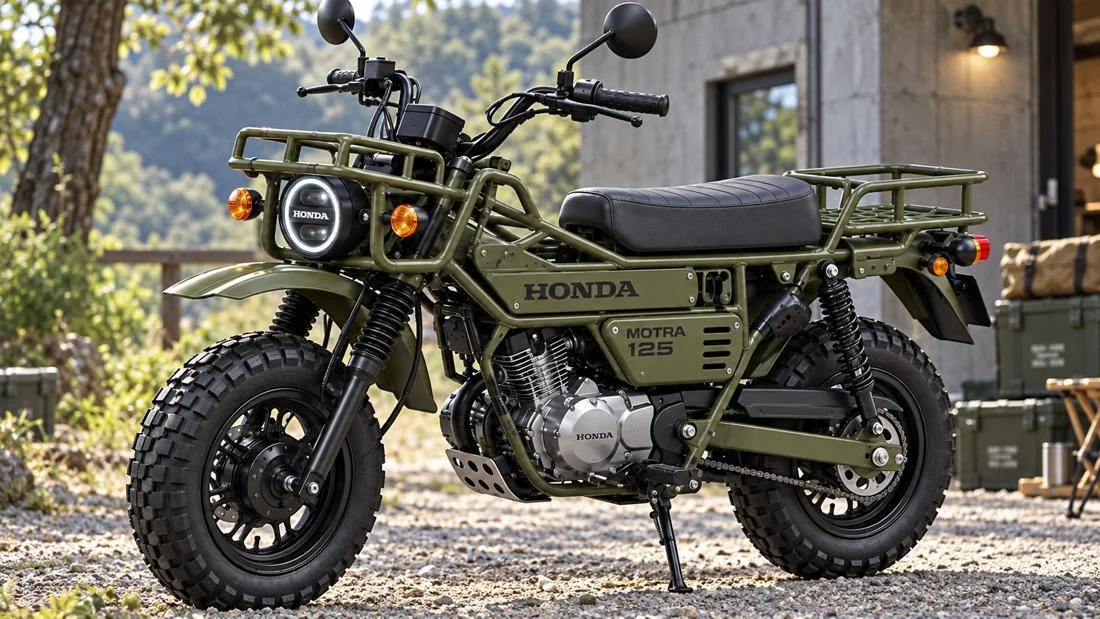
The emergence of these patent illustrations has ignited immense enthusiasm among motorcycle enthusiasts, vintage collectors, and industry analysts alike. The leaked design schematics reveal a compact, boxy silhouette that pays direct homage to the unmistakable aesthetic of the original 1980s machine. Features such as the exposed heavy-duty steel skeleton frame, wide off-road-capable tires, and prominent front and rear cargo racks—hallmarks of the original Motra’s rugged utility—are prominently displayed in the blueprints. By blending nostalgic design cues with forward-looking powertrain flexibility, Honda appears poised to capture a growing demographic of riders who value both vintage charm and modern ecological responsibility.
A Journey Back to 1982: The Origins of the Original Honda Motra

To understand the significance of a potential Motra revival, one must examine the unique circumstances surrounding its initial debut. During the early 1980s, Honda was riding a wave of immense success with its mini-bike lineup, most notably the legendary Z-series Monkey and the CT series trail bikes. However, the company recognized a distinct gap in the market for a small-displacement vehicle tailored specifically for heavy-duty utility and industrial or agricultural transport on a micro scale.
Launched in late 1982, the Honda Motra (a portmanteau of "Motorcycle" and "Truck") was engineered from the ground up to be a two-wheeled pack mule. Unlike its leisure-oriented stablemates, the Motra featured a robust, box-shaped steel frame designed to withstand punishing workloads. It was powered by a modest 49cc four-stroke, single-cylinder engine mated to a unique automatic centrifugal clutch paired with a sub-transmission system. This secondary gearbox offered a dual-range selection—low and high ratios—allowing the tiny machine to crawl up steep inclines with heavy loads or cruise efficiently on flat surfaces.
Despite its brilliant engineering and undeniable charm, the original Motra had a surprisingly short production run. Marketed primarily for the Japanese domestic market, it was discontinued after just a few years due to shifting consumer preferences and stricter emissions regulations of the era. Consequently, production numbers were relatively low compared to mass-market models like the Super Cub. This brevity has turned the original Motra into a prized holy grail for motorcycle collectors worldwide, with pristine examples commanding high prices at specialty auctions and being proudly displayed in institutional archives such as the Honda Collection Hall at Twin Ring Motegi.
Decoding the Latest Patent Filings: Design and Powertrain Versatility
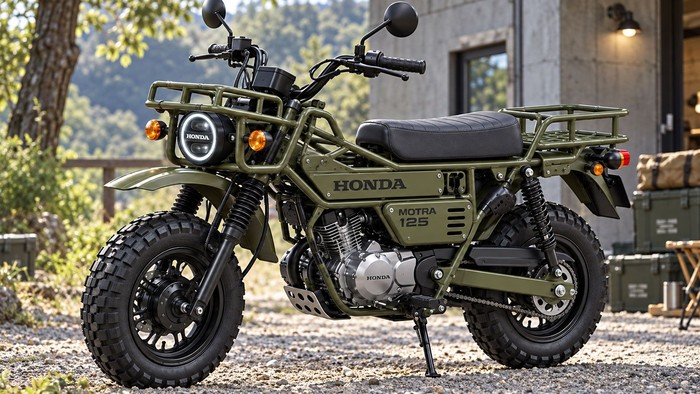
The excitement surrounding the potential comeback stems from detailed patent documents that outline a completely new structural framework. While the overarching design retains the boxy, no-nonsense architecture of the 1982 model, the underlying engineering has been thoroughly modernized to meet contemporary manufacturing and safety standards.
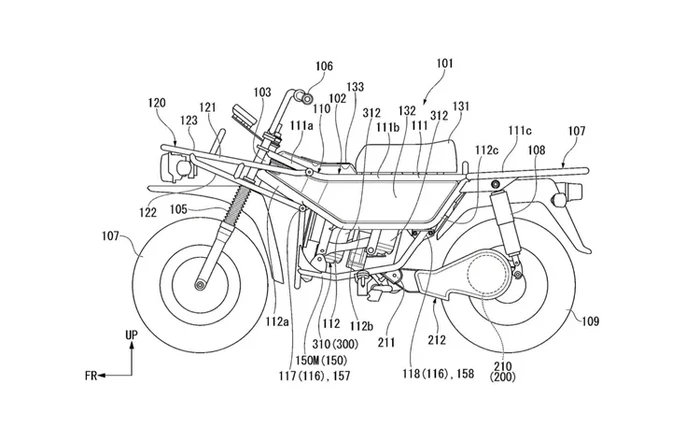
The most compelling revelation within the patent documentation is the chassis architecture. Rather than designing two entirely separate frames for different types of engines, Honda’s engineers have devised a flexible, shared platform. This modular approach allows the chassis to house either a compact internal combustion engine—likely a fuel-injected, clean-burning four-stroke unit compliant with global emission standards—or an electric motor powered by a swappable or fixed lithium-ion battery pack.
This dual-powertrain strategy aligns perfectly with Honda’s broader corporate electrification roadmap. As urban centers around the globe implement stricter zero-emission zones and consumers increasingly embrace alternative energy vehicles, offering a model in both petrol and electric variants provides maximum market adaptability. For dense urban environments, an electric Motra offers silent, torque-rich, and emission-free operation, making it an ideal last-mile delivery vehicle or a trendy commuter toy. Conversely, a petrol-powered variant appeals to traditionalists and riders in regions where charging infrastructure remains sparse, ensuring that the spirit of adventure remains unhindered by geographical limitations.
Ergonomics, Utility, and Practicality Re-Engineered
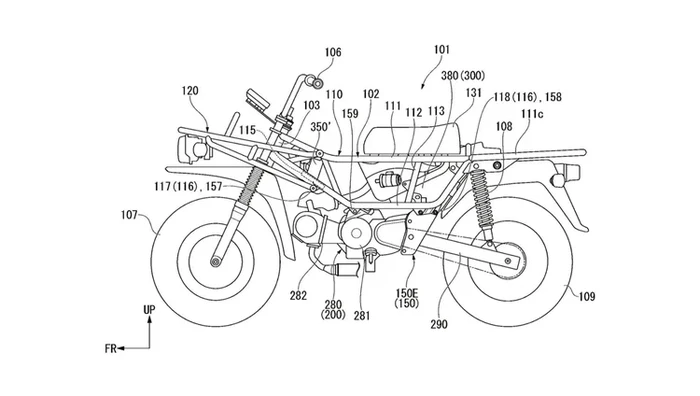
The appeal of the Honda Motra has always rested on its uncompromising focus on utility. The new patent drawings indicate that Honda is retaining this functional ethos while upgrading every component for modern usability. The large front and rear cargo racks, which defined the silhouette of the original model, are engineered with sturdier mounting points to accommodate modern storage containers, camping gear, or commercial delivery boxes.
Furthermore, the seating position and overall ergonomics appear slightly optimized to accommodate a broader range of rider heights compared to the cramped confines of the 1982 version. The wide tires shown in the renderings suggest that Honda intends to maintain the mini-bike’s light off-road capabilities, allowing riders to traverse unpaved farm tracks, gravel paths, and sandy beaches with stability and confidence. The suspension system is expected to feature robust telescopic front forks and twin rear shock absorbers, tuned to absorb harsh impacts while carrying substantial payloads.
Industry Implications and Market Positioning
Analyzing the broader implications of a resurrected Motra reveals a calculated strategic move by Honda. Over the past decade, the resurgence of retro-styled small-displacement motorcycles has proven to be a highly lucrative market segment. Models like the Honda Monkey 125, Super Cub C125, Dax 125, and Trail 125 (CT125) have demonstrated that modern consumers are willing to pay a premium for nostalgic vehicles backed by reliable, modern engineering and social-media-friendly aesthetics.
Introducing a modern Motra into this lifestyle-oriented mini-bike family would fill a specific role. While the Monkey focuses on playful fun, the Dax on urban cruising, and the Trail 125 on light cross-country trekking, the Motra would claim the mantle of the ultimate practical packhorse. Its introduction would tap directly into the booming outdoor recreation market, appealing to campers, van-life enthusiasts, and urban dwellers seeking an eye-catching, highly functional runabout.
Moreover, the commercial delivery sector represents an untapped frontier for a vehicle of this size. With the exponential growth of e-commerce and food delivery services in congested metropolitan areas worldwide, a nimble, durable, and easily parked mini-vehicle—especially an electric variant—could serve as an efficient fleet option for local couriers.
Timeline, Official Stance, and Future Outlook
As is standard corporate practice, Honda Motor Co. has not yet issued an official production confirmation or a definitive commercial release timeline in response to the leaked patent filings. Patent publications frequently reflect ongoing research and development phases, and not all patented concepts transition immediately to assembly lines. However, industry insiders note that Honda’s aggressive filing pattern for this specific dual-platform architecture indicates a high level of corporate commitment rather than a mere exploratory exercise.
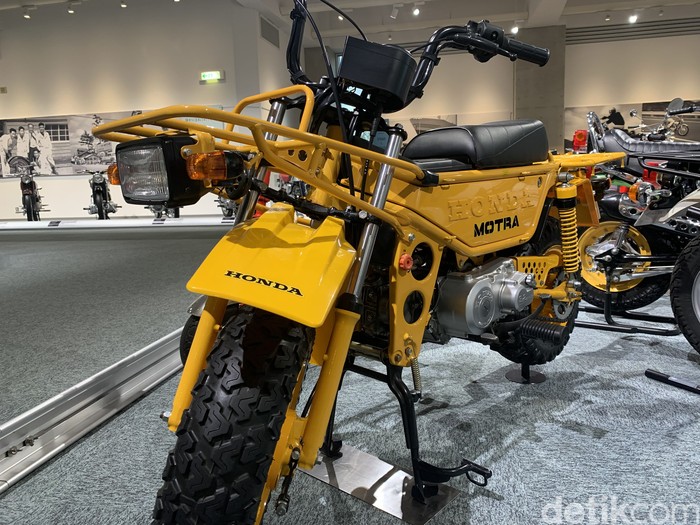
If the development timeline follows typical automotive and motorcycle industry trajectories, automotive analysts speculate that Honda could choose to debut a near-production concept vehicle at major international motorcycle exhibitions—such as EICMA in Milan or the Osaka/Tokyo Motorcycle Shows—within the next twelve to eighteen months. A commercial launch could subsequently follow, positioning the new Motra as a headline model for the upcoming model years.
Conclusion
The potential revival of the Honda Motra represents a masterclass in leveraging corporate heritage for the modern era. By taking a beloved, albeit obscure, 1980s cult classic and updating its architecture to support both internal combustion and electric powertrains, Honda is demonstrating remarkable foresight. Whether it ultimately hits showroom floors as a petrol-sipping weekend explorer or a silent electric urban workhorse, the modern Motra is poised to capture the imagination of a new generation of riders who appreciate where heritage meets innovation.