 Nila Kartika Wati
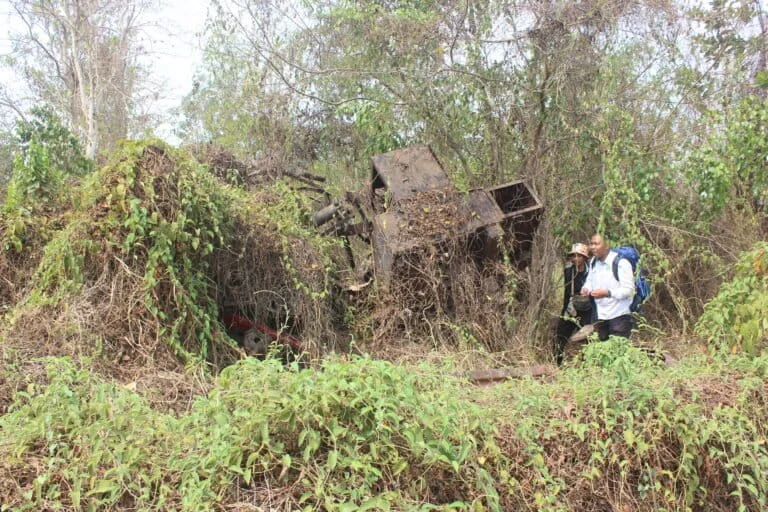
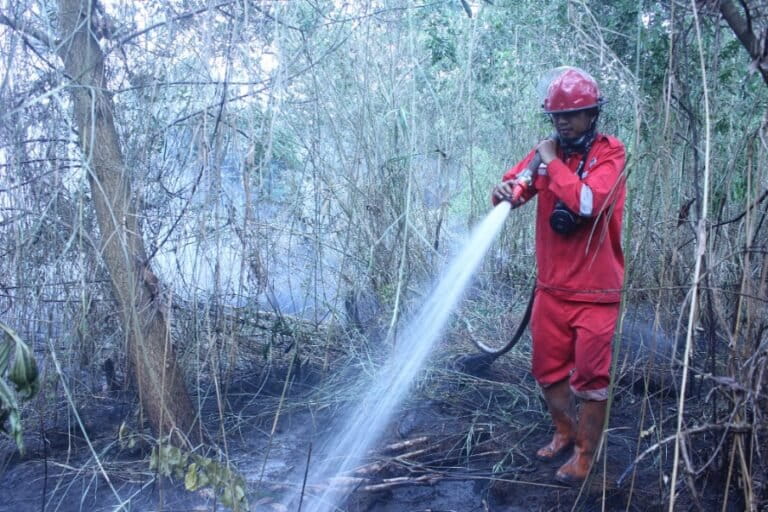
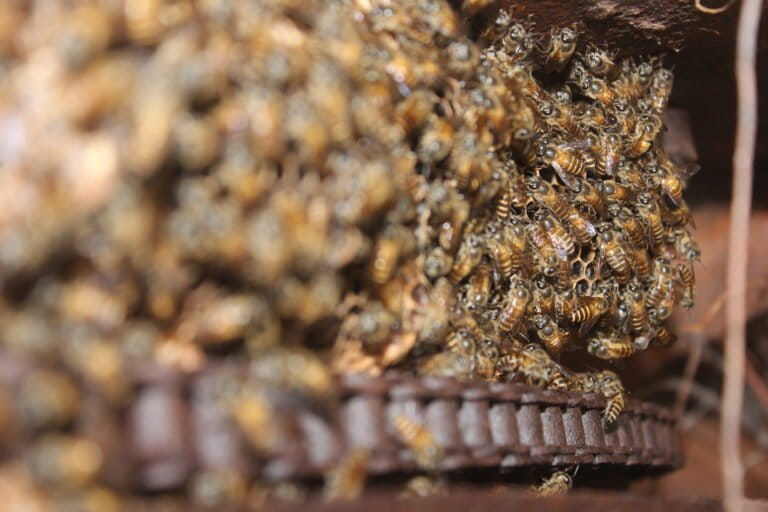
The catastrophic surge in forest and land fires across South Kalimantan has transcended human health concerns, triggering an ecological crisis that is forcing native pollinator species to abandon their traditional habitats and adapt to increasingly hostile environments. Between January 1 and October 14, 2026, the region recorded 4,926 fire incidents, scorching approximately 27,202 hectares of land. As the haze settles over the province, the plight of the eastern honey bee (Apis cerana) serves as a poignant indicator of a broader environmental collapse, with colonies now seeking refuge in the most unlikely of places: the rusting skeletons of abandoned heavy machinery in the Banjarbaru region.
The Anatomy of a Displacement Crisis
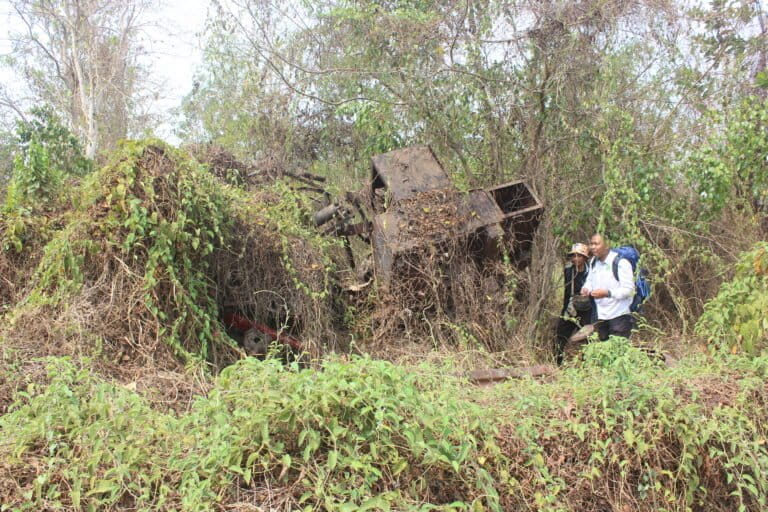
The transition of Apis cerana colonies from their natural arboreal homes to the jagged, metallic interiors of discarded industrial equipment is not merely a quirk of nature; it is a desperate survival strategy. Local observers, including residents like Fauzan in the Liang Anggang district of Banjarbaru, report that these bees previously inhabited tall trees located just 50 meters from the current industrial ruins. Over the last three months, however, the colonies have been forced to migrate.
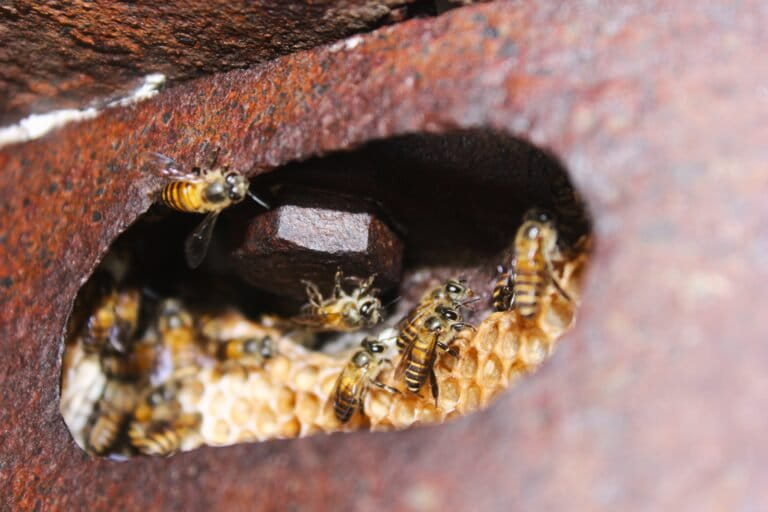
Professional honey hunters from the local organization Madu Hutan Kaum, Husni Naparin and Ismu, have been monitoring these displaced colonies. By tracking flight paths from major roads, they located hives tucked deep within the rusted chains and metal plating of heavy equipment. Upon inspection, the bees appear to be struggling to maintain their typical productivity levels. While the hives contain honey, the survival of these colonies is precarious. Naparin notes that under normal conditions, Apis cerana requires one to four weeks to produce a harvestable yield of nectar, provided that floral resources are abundant. In the current scorched landscape, those resources are vanishing.
Chronology of an Escalating Disaster
The 2026 fire season in South Kalimantan has been characterized by an unrelenting dry spell. Meteorological data from the BMKG (Meteorological, Climatological, and Geophysical Agency) highlights a grim reality: the province has been trapped in a cycle of extreme drought. As of October 10, 2026, ten specific regions had endured more than 60 consecutive days without rainfall. The district of Tamban, located in the Barito Kuala regency, suffered a staggering 118-day dry period.
This prolonged drought provided the perfect ignition conditions for fires to spread rapidly across peatlands. By mid-October, the smoke had reached such density that the ASEAN Specialised Meteorological Centre (ASMC) maintained an Alert Level 3 status for the southern ASEAN region. The transboundary haze, a recurring nightmare for Southeast Asia, has extended its reach to Sarawak, the Malay Peninsula, and Singapore, underscoring the regional scale of the environmental degradation occurring in the Indonesian archipelago.
Entomological Implications: Navigating Through Smoke
The impact of fire on insect populations is multifaceted, encompassing direct mortality, habitat loss, and the disruption of biological mechanisms. Ramadhani Eka Putra, an entomologist from the Bandung Institute of Technology (ITB), emphasizes that the damage is far more extensive than simple vegetation loss.
“The fires cause direct destruction of nests and the decimation of floral sources,” Putra explains. Beyond the physical loss of shelter, the chemical composition of the smoke poses a silent threat. Particulate matter, specifically PM2.5, can contaminate honey stores, while the thermal intensity of the fires results in immediate bee mortality. More critically, the dense haze interferes with the insects’ sophisticated navigation systems. Bees rely on the polarization patterns of light in the sky to orient themselves and locate food sources. The thick, grey blanket of smoke produced by the peat fires effectively blinds them, leading to disorientation and the eventual abandonment of hives that can no longer be efficiently serviced.
The Ripple Effect on Food Security and Ecosystems
The decline of the bee population is not merely a concern for conservationists; it is a direct threat to agricultural productivity and food security. Trisnu Satriadi, a senior researcher specializing in non-timber forest products at the University of Lambung Mangkurat (ULM), warns that the loss of pollinators creates a bottleneck in the ecosystem.
“Bees are essential pollinators. When their population decreases, the pollination process slows significantly,” Satriadi stated. Many of the crops essential to the regional diet—including various fruits and vegetables—rely on these insects to achieve optimal yields. If the current trend of habitat destruction and colony migration continues, the region may witness a significant drop in crop quality and quantity. The migration of bees to higher elevations or toward the Meratus Mountains, while a logical response to the heat and smoke, does not guarantee the survival of the species. As Satriadi points out, migration is a temporary fix; if the underlying habitat remains degraded, the pollinators cannot return, and the local ecosystem will remain in a state of arrested development.
Official Responses and Future Projections
The provincial government of South Kalimantan has remained under the "Emergency Alert for Forest and Land Fires" status, yet the meteorological outlook for the remainder of the year remains challenging. Klaus Johannes Apoh Damanik, Coordinator of the BMKG in South Kalimantan, notes that while there is hope for a return to normal weather patterns, it will be a gradual process.
"We expect the transition to normal rainfall conditions to begin in mid-November," Damanik told reporters. "By December, we anticipate that 60 percent of the region will experience high rainfall, which should help to stabilize the landscape." However, for the millions of insects and animals currently displaced, the damage may be irreversible. The 2026 fire season has been one of the most severe in recent memory, leaving behind a scarred landscape where the "normal" timing of the rainy season may be too little, too late for many colonies.
The Long-term Environmental Cost
The image of Apis cerana building hives in the wreckage of rusted machinery is a haunting metaphor for the Anthropocene. It illustrates the resilience of nature in the face of human-induced disaster, but also the limitations of that resilience. When the natural architecture of a forest is replaced by the debris of industrial progress and the aftermath of climate-induced fire, the biological services we take for granted—such as the pollination of our food crops—begin to fail.
The broader implications for South Kalimantan are profound. The region must grapple with a dual crisis: the immediate need to combat active fires and the long-term necessity of restoring the ecological corridors that support pollinators. Without a concerted effort to prevent the recurrence of such widespread fire events, the loss of these vital insects could trigger a cascade of ecological failures. The survival of the bees is not just about the honey; it is a fundamental pillar of biodiversity that supports the entire agricultural economy of the province.
As the community looks toward the end of the year, the hope is that the coming rains will wash away the smoke and allow the landscape to breathe. Yet, the lessons of 2026 are clear: the environmental cost of unchecked fire is measured not only in hectares of burned land but in the silent, empty hives of the pollinators that are essential for the future of our food systems. Whether the forests of Kalimantan can recover their ability to host these vital species will depend entirely on the success of future fire mitigation strategies and a radical rethinking of how the region manages its precious peatland ecosystems. Until then, the bees will continue their precarious existence, clinging to the iron remnants of a landscape that is struggling to survive.