Nila Kartika Wati
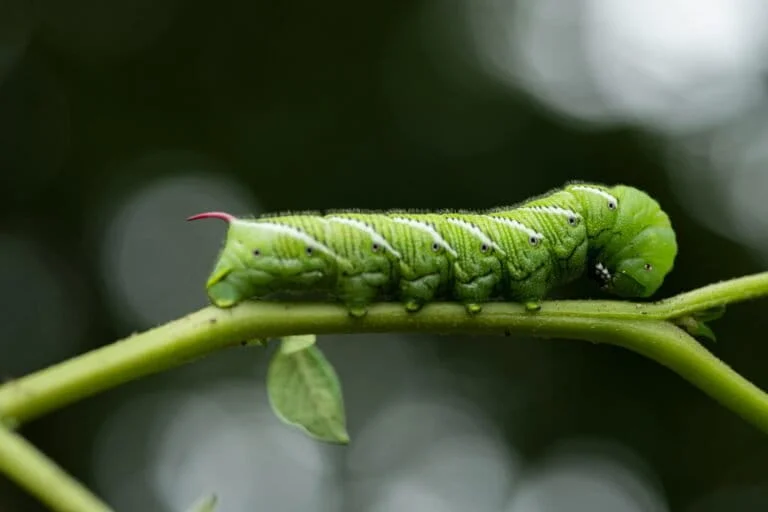
The biological world has long operated under the assumption that for an organism to "hear," it must possess specialized structures such as ears, tympanic membranes, or complex auditory organs. However, groundbreaking research led by scientists at Binghamton University has dismantled this conventional wisdom, revealing that caterpillars—creatures seemingly devoid of auditory apparatus—possess a sophisticated, hair-based sensory system capable of detecting sound waves traveling through the air. This discovery not only provides a deeper understanding of invertebrate survival strategies but also offers a blueprint for the next generation of biomimetic acoustic technology.
The Anatomy of Silent Perception
For years, biologists observed that caterpillars displayed sudden, reflexive movements when exposed to certain sounds, such as human voices or the approach of predatory wasps. Because these insects lack the traditional anatomy required to process sound, these observations were often attributed to the detection of vibrations transmitted through solid surfaces, such as the leaves or stems upon which they feed.
However, the team at Binghamton University, spearheaded by Professor Carol Miles, hypothesized that there was more to the story. To isolate the variables, the researchers conducted a series of controlled experiments within an anechoic chamber—a specialized environment designed to absorb all sound reflections. By eliminating environmental "noise" and vibrations transmitted through solid substrates, the researchers were able to confirm that the caterpillars were reacting specifically to sound waves traveling through the air.
The data yielded a startling result: the caterpillars exhibited a response magnitude 10 to 100 times greater to airborne sounds than to mechanical vibrations. This discovery shifted the focus of the study toward the dense, fine hairs covering the caterpillar’s thorax and abdomen, known as setae.
The Mechanism of Setae: Nature’s Microphones
The setae are not merely passive structures for protection or tactile sensation; they are, in effect, high-sensitivity acoustic receptors. These hairs function by detecting the movement of air particles that accompany sound waves. As a sound wave propagates, it causes air particles to oscillate back and forth. When these moving particles strike the setae, the hairs vibrate, creating mechanical energy that is converted into neural signals.
This mechanism allows the caterpillar to bypass the need for a traditional ear. To validate this theory, the research team performed selective hair-removal experiments. When the setae were removed, the caterpillars’ ability to detect and respond to airborne sounds dropped precipitously, providing definitive proof that these hairs are the primary components of their auditory system.
Chronology of the Discovery and Experimental Rigor
The path to this discovery was one of methodical scientific inquiry. The initial observation occurred during field studies, where the erratic behavior of larvae in response to external stimuli caught the attention of the biological team. Following these field observations, the study transitioned into the laboratory phase:
- Phase I: Behavioral Observation. Researchers documented consistent "startle responses" in caterpillars when subjected to human speech and simulated predator sounds.
- Phase II: Controlled Isolation. The move to an anechoic chamber allowed the team to differentiate between airborne sound and substrate-borne vibration.
- Phase III: Comparative Analysis. By comparing the behavioral responses of caterpillars with intact setae against those with removed setae, the team established a causal link between the hairs and sound detection.
- Phase IV: Frequency Mapping. The researchers identified that the caterpillars were most sensitive to frequencies between 100 and 200 hertz.
This frequency range is highly significant, as it corresponds directly to the acoustic signature produced by the wing beats of parasitic wasps—the caterpillar’s most formidable natural predator.
Evolutionary Implications for Survival
The ability to detect a predator before it makes physical contact is a critical survival advantage. For a slow-moving, soft-bodied larva, the window of time between detecting a threat and the onset of an attack is often measured in milliseconds.

When a caterpillar detects the 100–200 Hz frequency of an approaching wasp, it initiates a defensive response. Depending on the species and the perceived proximity of the threat, the caterpillar may suddenly cease feeding, remain perfectly still to avoid visual detection, or drop abruptly from the leaf to the forest floor. By sensing the predator while it is still in flight, the caterpillar gains a vital tactical advantage that can mean the difference between life and death.
This sensory capability suggests that the "sensory world" of the caterpillar is significantly more complex than previously hypothesized. While they are often viewed as simple "eating machines," the presence of this auditory system implies that they are highly attuned to their acoustic landscape, allowing them to navigate a dangerous environment with surprising efficiency.
Broader Impact: Biomimetics and Future Engineering
The implications of this study extend well beyond the field of entomology. Ronald Miles, a professor of mechanical engineering at Binghamton University, has identified the caterpillar’s setae as a potential model for the development of modern acoustic sensors.
Current microphone technology—such as those found in smartphones and hearing aids—typically relies on membrane-based systems, which can be power-hungry and bulky. In contrast, the caterpillar’s system is based on particle velocity sensing. By mimicking the structure and sensitivity of setae, engineers could potentially develop micro-electro-mechanical systems (MEMS) that are far more energy-efficient and sensitive than current market standards.
The engineering potential of this discovery lies in the concept of biomimetics—the practice of learning from and mimicking the strategies found in nature to solve human design challenges. If a tiny, non-vertebrate creature can detect low-frequency airborne threats using simple, hair-like structures, there is no technical reason why human-made sensors cannot achieve similar results.
Critical Analysis: The Intersection of Biology and Engineering
The collaboration between biologists and mechanical engineers in this study represents a growing trend in interdisciplinary research. By treating the caterpillar not just as a specimen, but as a biological "device" that has been perfected by millions of years of evolution, the research team was able to bridge the gap between evolutionary biology and practical mechanical application.
However, researchers note that this is still in the early stages of development. Translating the biological efficiency of setae into a scalable, industrial-grade sensor will require significant advancements in material science. The challenge lies in creating synthetic hairs that match the material properties—specifically the flexibility and mass—of the natural setae while maintaining the durability required for electronic integration.
Conclusion: A New Perspective on Invertebrate Life
The revelation that caterpillars possess an advanced auditory system challenges the long-standing anthropocentric view that hearing requires complex internal structures. By recognizing that setae serve as sophisticated acoustic receptors, scientists have gained a new appreciation for the survival mechanisms of one of nature’s most common insects.
As we look toward the future, the lessons learned from the caterpillar’s "hair-based" hearing may prove instrumental in the development of next-generation sensing technology. Whether it is in the field of acoustic monitoring, robotics, or hearing assistive devices, the humble caterpillar has provided a profound reminder that the most elegant engineering solutions are often those already perfected by nature.
This research serves as a reminder of the vast, untapped knowledge hidden within the natural world. Every insect, every movement, and every biological structure carries with it a story of evolutionary trial and error that, when examined with the right tools, can illuminate the path toward human innovation. As the team at Binghamton University continues their work, the scientific community eagerly anticipates how these findings will shape the future of sensory technology and our broader understanding of the natural world.