Nila Kartika Wati
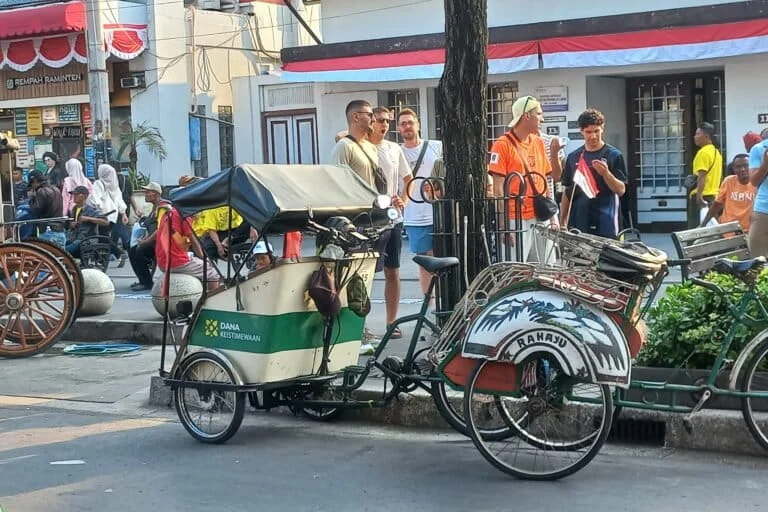
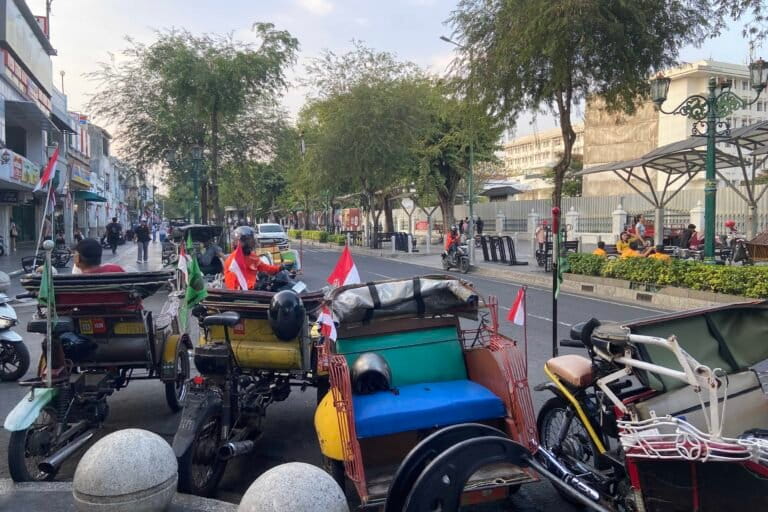
The transition toward green transportation in Yogyakarta’s iconic Malioboro district has become a cautionary tale of how top-down policy implementation, lacking grassroots consultation and technical rigor, can undermine the livelihoods of those it is intended to support. As the municipal government pushes for a "low-emission zone" status in the historic corridor, the mandatory shift from motorized becaks to electric-assisted variants has been marred by structural failures, mechanical breakdowns, and a deepening socio-economic divide. For the traditional drivers who have served Malioboro for generations, the program represents not a leap into a sustainable future, but a burdensome shift into a cycle of debt, equipment failure, and operational anxiety.
The Genesis of a Flawed Initiative
The project, which gained significant momentum in the early 2020s, was designed to modernize the city’s informal transport sector while simultaneously tackling local air quality issues. The objective was to replace noisy, polluting gasoline-powered motorized becaks with clean electric units. However, the implementation strategy suffered from a critical oversight: the exclusion of the drivers—the primary stakeholders—from the design and procurement process.
According to Giyono, a veteran becak driver in the district, the consultative process was largely performative. "There was no genuine dialogue," Giyono states. "We were presented with a finished product and told to accept it. When you are a driver facing officials, you do not have the bargaining power to challenge the specifications; you simply nod in compliance."

This lack of input resulted in a disconnect between the engineering specifications provided by vendors and the practical realities of the job. Drivers, who previously owned and maintained their own motorized units, were suddenly transitioned to state-provided electric models without receiving adequate training or technical documentation.
Technical Failures and Engineering Negligence
The mechanical issues plaguing the fleet are, according to experts, symptomatic of a systemic failure in the manufacturing process. Abdullah, founder of E-Clont Yogyakarta, a workshop specializing in electric vehicle (EV) maintenance, describes the current state of the fleet as a consequence of "sectoral ego" and an utter absence of standardization.
"We are not just repairing these vehicles; we are essentially re-engineering them," Abdullah notes. "The cables used in the factory designs are often insufficient to handle the daily load, leading to melting and electrical shorts. The manufacturers treated these vehicles as light-duty bicycles, while the drivers—who need to navigate traffic and haul passengers—operate them as heavy-duty, autonomous-style vehicles."
The failure to account for basic engineering principles, such as Current Carrying Capacity (KHA), has led to recurring issues with the Battery Management Systems (BMS). For drivers, a single battery failure represents a financial catastrophe. A replacement unit costs approximately IDR 4.8 million (roughly USD 300)—a sum that is often equivalent to several months of net income for an average driver.
The Human Cost: A Chronology of Disenfranchisement
The timeline of this transition has been marked by a series of hasty implementations that ignored the expertise of those who know the streets best. Professor Jayan Sentanuhady, a mechanical engineering expert from Universitas Gadjah Mada (UGM), has been conducting research on electric mobility for becaks since 2018. His findings, which involved extensive interviews with drivers, identified that the primary requirement for a Malioboro-based electric becak is not top speed, but high torque for stop-and-go maneuvers and climbing inclines.
"You cannot design a vehicle for the working class by sitting in a boardroom," Professor Sentanuhady asserts. "The current fleet’s inability to handle the terrain and the load is a direct result of designers who lack an understanding of the end-user’s reality. If you see cables melting, it is clear the manufacturer does not understand the electrical requirements of the load being carried. This is a safety hazard that never should have reached the streets."
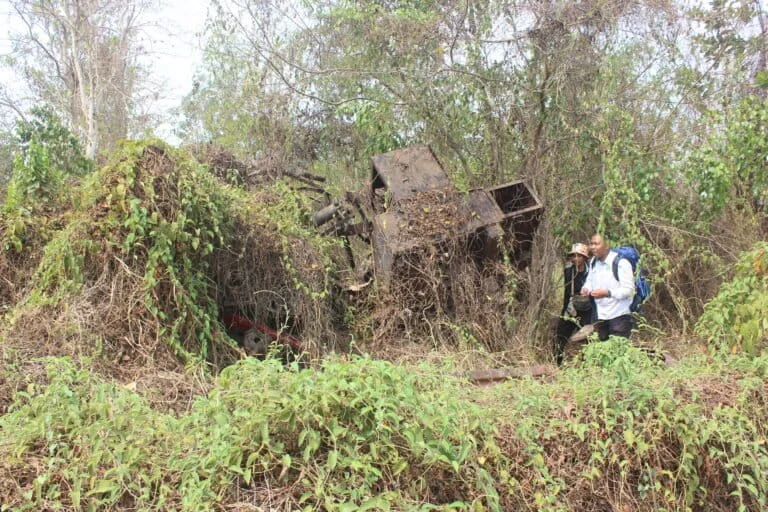
The shift has effectively stripped the drivers of their agency. Many were coerced into surrendering their functional, albeit polluting, motorized becaks to be dismantled, only to receive electric units that are fundamentally unreliable. The result is a paradox: a green initiative that has created a high-waste environment characterized by broken, abandoned machinery and impoverished workers.
Infrastructure and Bureaucratic Hurdles
The logistical framework supporting the electric fleet is equally inadequate. Currently, there is only one primary charging station located in the Ketandan parking facility, hidden from the main tourist routes. This centralization forces drivers to plan their routes around the availability of electricity, significantly restricting their mobility and potential earnings.

Petrus Juli, head of the local Becak Cooperative, highlights the psychological burden placed on the drivers. "We often have to decline passengers who want to visit locations further afield because we are terrified of the battery dying in the middle of the road," he explains. "The fear of running out of power is a daily stressor that we never had with gasoline."
When questioned about the sustainability of the charging infrastructure, government representatives have signaled a desire to offload the responsibility. Agha Perdana Putro, an official from the Transportation Agency of the Special Region of Yogyakarta, admitted that the government intends to transition the charging infrastructure to private sector management. "It is not sustainable for the government to subsidize the charging costs indefinitely," he stated, suggesting that the long-term goal is to turn the charging process into a commercial enterprise. For the drivers, this implies that the cost of "green" operations will eventually be passed down to them, further eroding their already thin profit margins.
The Myth of the "Clean" Transition
The environmental credentials of the project are also being challenged by climate activists and researchers. Melky Nahar, coordinator of the National Mining Advocacy Network (Jatam), argues that labeling these becaks as "green" is a form of greenwashing that ignores the environmental destruction caused by the battery supply chain.
"The heart of these vehicles is the battery, which relies heavily on nickel," Nahar explains. "The extraction of this mineral, often occurring in the eastern regions of Indonesia, is deeply exploitative. Furthermore, the global supply chain—where raw materials are exported to be processed abroad before returning as finished products—means that the carbon footprint of these ‘clean’ vehicles is significant."

The energy used to charge these batteries in Yogyakarta is still largely derived from coal-fired power plants. Consequently, the transition is merely shifting the location of pollution from the Malioboro tailpipes to the smokestacks of industrial power plants elsewhere in the archipelago.
A Call for Equitable Reform
Beyrra Triasdian, an energy transition campaigner from Trend Asia, emphasizes that a true transition must be holistic. "If the energy source powering these vehicles is not clean, then the logic of the entire program is flawed," she says. "True energy transition is not just about replacing an internal combustion engine with a battery; it is about addressing the entire system, from the source of the power to the social welfare of the workers."
The path forward, according to experts, requires a complete pivot in strategy. Rather than imposing top-down mandates, the government should engage in genuine dialogue with the driver cooperatives, prioritize the construction of accessible and decentralized charging infrastructure, and ensure that the hardware provided is built to withstand the rigors of daily commercial use.
Ultimately, the Malioboro electric becak project serves as a critical lesson for policymakers worldwide. When "sustainability" is treated as a branding exercise rather than a structural commitment to human and environmental well-being, it inevitably fails. For the drivers in Yogyakarta, the dream of a cleaner city has, thus far, been a costly lesson in the difference between genuine progress and the superficial pursuit of a green image. Unless the structural failures are addressed through inclusive and transparent governance, the program risks becoming a permanent monument to wasted public funds and the marginalization of the very community it was meant to empower.