Bambang Pamungkas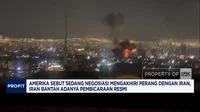
Tensions between the Islamic Republic of Iran and the United States have once again flared, reaching a critical juncture marked by contradictory public statements regarding the potential for negotiations to de-escalate the persistent conflict in the Middle East. While Iranian officials vehemently deny any formal discussions are underway or planned, the President of the United States has indicated the opposite, suggesting that diplomatic channels are either open or being explored. This diplomatic dissonance underscores the deep mistrust and complex geopolitical dynamics that continue to define one of the world’s most volatile relationships, sending ripples of uncertainty across international markets and regional security frameworks. The conflicting narratives highlight a significant chasm in how both nations perceive the current state of engagement, raising questions about the true intent behind their public pronouncements and the future trajectory of their fraught interactions.
The immediate genesis of this latest round of public disagreement stems from a series of statements made in late March 2026. On Thursday, March 26, 2026, as reported by CNBC Indonesia’s "Profit" program, Iranian authorities firmly reiterated their long-held position that there are no official negotiations with Washington. This assertion came in direct response to comments attributed to the US President, who reportedly suggested that pathways for dialogue were being pursued to address the broader regional instability. Such a stark contradiction from two key global actors not only fuels speculation but also complicates efforts by international mediators and allies to foster a more stable environment in a region already grappling with multiple overlapping crises. The stakes are particularly high given the historical backdrop of antagonism, the ongoing proxy conflicts, and the critical importance of the Middle East to global energy security.
Historical Context: Decades of Distrust
The relationship between Iran and the United States has been largely adversarial since the 1979 Islamic Revolution, which saw the overthrow of the US-backed Shah and the establishment of an anti-Western Islamic republic. The subsequent hostage crisis at the US embassy in Tehran cemented a deep-seated animosity that has persisted for over four decades. This foundational mistrust has been exacerbated by a series of significant events and policy shifts.
In the 1980s, the US quietly supported Iraq during the Iran-Iraq War, further alienating Tehran. The 1990s and early 2000s saw Iran’s nuclear program emerge as a central point of contention, leading to international sanctions and a concerted effort by world powers to prevent Iran from developing nuclear weapons capabilities. This culminated in the landmark 2015 Joint Comprehensive Plan of Action (JCPOA), a multilateral agreement that saw Iran limit its nuclear activities in exchange for sanctions relief. However, this period of cautious détente was short-lived.
In 2018, the Trump administration controversially withdrew the US from the JCPOA, re-imposing and expanding a "maximum pressure" campaign of economic sanctions aimed at crippling Iran’s economy and forcing it to renegotiate a more restrictive deal. This move was widely condemned by European allies and UN officials, who argued it undermined international diplomacy and emboldened hardliners in Iran. The withdrawal led to Iran gradually rolling back its commitments under the JCPOA, intensifying concerns about its nuclear ambitions.
The period following the US withdrawal from the JCPOA has been characterized by heightened military confrontations in the Persian Gulf, including attacks on oil tankers, drone incidents, and strikes on oil facilities attributed to Iran or its proxies. The assassination of Iranian Quds Force commander Qassem Soleimani by the US in January 2020 brought the two nations to the brink of a full-scale war.
More recently, the eruption of the Israel-Hamas conflict in October 2023 significantly amplified regional tensions. Iran-backed groups, including Hezbollah in Lebanon, various militias in Iraq and Syria, and the Houthi rebels in Yemen, increased their activities, targeting Israeli interests, US bases, and international shipping in the Red Sea. The US responded with retaliatory strikes in Iraq, Syria, and Yemen, aiming to deter these groups and protect its personnel and maritime trade routes. By early 2026, this cycle of action and reaction had created an extremely fragile security environment, making any potential for direct or indirect dialogue between Washington and Tehran critically important, yet incredibly difficult.
The Chronology of Contradiction (Leading to March 2026)
The public disagreement on negotiations did not emerge in a vacuum but followed a period of escalating rhetoric and low-level military confrontations throughout late 2025 and early 2026.
Late 2025:
- October-November: Persistent reports of drone and rocket attacks on US military installations in Iraq and Syria, attributed to Iran-aligned militias, see a significant uptick. These attacks cause minor injuries to US personnel and damage to infrastructure.
- December: The US conducts targeted airstrikes against facilities in eastern Syria and western Iraq, identified as command and control centers or weapons depots used by Iran-backed groups. The US Central Command (CENTCOM) issues strong warnings, emphasizing its right to self-defense. Simultaneously, Iranian naval forces conduct exercises in the Strait of Hormuz, showcasing new missile capabilities.
Early 2026:
- January: A major incident occurs in the Red Sea where a commercial vessel, suspected of having links to Israel or the US, is severely damaged by a missile attack, widely attributed to Houthi rebels in Yemen. This prompts stronger naval deployments by the US and its allies in the region. Iran issues statements condemning US military presence in the Gulf and reaffirming its support for "resistance groups."
- February: European diplomatic sources begin to cautiously hint at the possibility of back-channel communications between Washington and Tehran, potentially facilitated by Oman or Qatar, aiming to de-escalate Red Sea tensions and address the broader regional conflict. These rumors are neither confirmed nor denied by either Washington or Tehran initially.
- March (Early): A senior US official, speaking off the record, suggests to several media outlets that while no "formal" talks are occurring, "lines of communication" are open with Iran to prevent miscalculation. This sets the stage for the President’s subsequent public remarks.
- March (Mid): During a press briefing, the US President, in response to a question about regional stability, makes an unprompted remark about the necessity of diplomatic solutions and mentions that his administration is "always looking for ways to talk" with adversaries, specifically referencing efforts to engage Iran to stabilize the Middle East. While not explicitly stating "talks are happening," the implication is clear.
- March 26, 2026: Iranian Foreign Ministry spokesperson, speaking to state media, categorically denies any official or unofficial negotiations with the United States regarding the regional conflict. The spokesperson emphasizes that Iran’s policy remains consistent: the US must lift all sanctions and cease its interference in regional affairs before any meaningful dialogue can commence. This direct rebuttal creates the current diplomatic deadlock and public contradiction.
Supporting Data and Geopolitical Analysis
The implications of this diplomatic impasse are far-reaching, affecting global energy markets, regional stability, and the trajectory of Iran’s nuclear program.
Global Energy Markets: The Middle East accounts for a significant portion of the world’s oil and natural gas supply, with the Strait of Hormuz being a critical choke point for over 20% of global oil consumption. Heightened US-Iran tensions historically translate into increased volatility in crude oil prices. Futures markets for Brent and WTI crude often see spikes on news of naval incidents or confrontational rhetoric. In March 2026, following the conflicting statements, energy analysts noted a modest but perceptible upward pressure on oil prices, driven by renewed uncertainty about potential disruptions to shipping lanes or energy infrastructure in the Gulf. Investors are particularly sensitive to any signs of escalation that could threaten the flow of oil, recalling past incidents that have sent prices soaring. Prolonged tension without a clear diplomatic path could lead to sustained higher energy costs globally, impacting inflation and economic growth.
Economic Impact on Iran: The US "maximum pressure" campaign has severely impacted Iran’s economy. Sanctions have targeted its oil exports, banking sector, and key industries, leading to high inflation, currency depreciation (the Iranian Rial has seen significant devaluation against major currencies), and reduced foreign investment. The Iranian government’s official denial of talks, while aimed at maintaining a strong posture, also reflects internal political pressures from hardline factions who view negotiations under sanctions as a sign of weakness. For any negotiations to be politically palatable domestically, significant sanctions relief would likely be a prerequisite, a condition the US has been reluctant to grant without substantial concessions from Tehran. The current stalemate ensures continued economic hardship for the Iranian populace, potentially fueling domestic discontent.
Military Posturing and Capabilities: Both sides maintain a significant military presence in the region. The US has military bases and naval assets across the Gulf, including the Fifth Fleet in Bahrain. Iran, in turn, has invested heavily in asymmetric warfare capabilities, including a formidable missile program, drone technology, and a network of proxy forces. The Iranian Revolutionary Guard Corps (IRGC) routinely conducts military exercises, showcasing its ability to close the Strait of Hormuz and target regional adversaries. The constant military posturing and close proximity of forces increase the risk of miscalculation, where a minor incident could rapidly escalate into a broader conflict, potentially involving regional allies.
Public Opinion and Internal Politics: In both countries, domestic political considerations heavily influence foreign policy pronouncements. For the US President, asserting an openness to dialogue could be aimed at portraying a commitment to diplomacy and de-escalation, especially in an election year or leading up to one. It might also be an attempt to reassure allies worried about regional instability. In Iran, the denial of talks serves to rally support among hardline factions and within the broader population against perceived US aggression. Any hint of capitulation to US demands without sanctions relief would be politically costly for the ruling establishment. This internal dynamic often leads to public statements designed more for domestic consumption than for genuine diplomatic signaling.
Official Responses and International Reactions
The contradictory statements have prompted a range of reactions from various stakeholders:
Iranian Foreign Ministry: Beyond the initial denial, Iranian diplomatic channels have consistently emphasized that any dialogue must be based on mutual respect and the removal of all "illegal and oppressive" sanctions. They reiterate that Iran will not negotiate under duress and that the US must first demonstrate a tangible commitment to its international obligations. Sources close to the Foreign Ministry suggest that Tehran views the US President’s statement as an attempt to project an image of diplomatic engagement without genuine intent, possibly to placate international concerns or to manage domestic perceptions.
US State Department: Following the President’s remarks, the State Department has often sought to clarify, without directly contradicting, the nuances of US policy. While acknowledging that direct, formal, high-level talks are not currently happening, officials emphasize that the US maintains various channels for communication, including through third parties, to convey messages and de-escalate tensions. They typically reiterate the US commitment to preventing Iran from acquiring nuclear weapons and to countering Iran’s destabilizing regional activities, while also expressing a preference for diplomatic solutions over military confrontation. The implicit message is that while the US is open to diplomacy, the onus remains on Iran to change its behavior.
Regional Allies (e.g., Saudi Arabia, UAE, Israel): Key US allies in the Gulf, such as Saudi Arabia and the UAE, have expressed cautious concern. While generally preferring stability, they are wary of any potential US-Iran rapprochement that might come at their expense or fail to address Iran’s regional proxy networks. Israel, a staunch opponent of the Iranian regime, consistently warns against any negotiations that do not fully dismantle Iran’s nuclear program and curb its ballistic missile capabilities. Israeli officials often express skepticism about Iran’s sincerity in negotiations and urge the international community to maintain maximum pressure. These allies will be closely monitoring any actual diplomatic developments, fearing either abandonment or a weak deal.
International Bodies (UN, EU): The United Nations Secretary-General and the European Union have consistently called for de-escalation and a return to diplomacy between Washington and Tehran. The EU, particularly, has long advocated for the revival of the JCPOA and has actively sought to mediate between the two sides. Figures like the EU High Representative for Foreign Affairs have emphasized the dangers of miscalculation and the urgent need for direct communication to prevent further regional destabilization. They view the current public contradiction as an impediment to building the trust necessary for meaningful engagement.
Broader Impact and Implications
The current state of public contradiction and diplomatic ambiguity carries significant implications for regional and global security.
Risk of Miscalculation: The lack of clear, consistent communication channels, coupled with escalating military activities in the region, dramatically increases the risk of miscalculation. An accidental encounter, a misidentified target, or an overly aggressive response to a perceived threat could quickly spiral out of control, triggering a broader conflict that neither side explicitly desires but finds itself drawn into. This "fog of war" in diplomacy is particularly dangerous in an already volatile environment.
Undermining Diplomatic Credibility: The conflicting statements from the highest levels of government erode trust and make future diplomatic efforts more challenging. If one side publicly denies what the other claims, it complicates the task of mediators and makes it harder for either party to commit to a process that might be disavowed later. This can lead to a cycle of suspicion that perpetuates the standoff.
Prolonged Regional Instability: Without a clear diplomatic pathway, the underlying issues fueling regional conflict—Iran’s nuclear program, its support for proxy forces, and its ballistic missile development—will remain unaddressed. This ensures continued proxy warfare, attacks on shipping, and threats to critical infrastructure, perpetuating a cycle of violence and instability that impacts millions of lives and hinders economic development across the Middle East.
Global Energy Security: The ongoing tensions will keep global energy markets on edge, contributing to price volatility and potentially diverting resources from other critical global challenges. Nations reliant on Middle Eastern oil will continue to face supply uncertainties and higher costs, which could impact global economic recovery and stability.
Future of the JCPOA: The current impasse further complicates any potential return to the JCPOA. Iran’s demands for sanctions relief before talks, and the US’s demands for behavioral changes, create a seemingly intractable chicken-and-egg scenario. As Iran continues to advance its nuclear program in the absence of the deal, the window for a diplomatic resolution that restores the original agreement becomes increasingly narrow.
In conclusion, the escalating tensions between Iran and the United States, underscored by their conflicting statements on negotiations, represent a critical juncture in a deeply troubled relationship. The absence of a clear, unified message on diplomatic engagement not only exacerbates regional instability but also heightens the risk of miscalculation and further entrenches mistrust. As the world watches, the path forward remains fraught with challenges, demanding careful diplomacy, credible signaling, and a concerted effort from international actors to prevent a dangerous escalation in one of the world’s most sensitive geopolitical flashpoints. The implications for global security and economic stability necessitate a clearer, more coherent approach from both Washington and Tehran to navigate these turbulent waters.