Bambang Pamungkas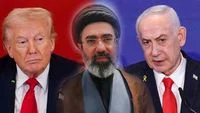
In a surprising diplomatic overture that sent ripples across global capitals, then-President of the United States Donald Trump declared on June 5, 2026, his readiness to meet with Iran’s newly appointed Supreme Leader, Ayatollah Mojtaba Khamenei. This unprecedented announcement came amidst intense, high-stakes negotiations aimed at forging a comprehensive peace agreement to de-escalate the four-month-long war between the United States and Iran, a conflict that had already severely destabilized global markets and geopolitics.
Speaking to reporters in the Oval Office of the White House following an official announcement regarding coal commodities, President Trump affirmed his openness to a direct, face-to-face encounter with the new leader in Tehran, contingent upon the successful conclusion of a peace deal. "If we make a deal, there’s a chance I would meet. I wouldn’t mind that at all," Trump stated, signaling a potential shift in the deeply entrenched animosity between the two nations. The proposal emerged against a backdrop of ongoing diplomatic efforts to broker a lasting ceasefire and lay the groundwork for a broader resolution, even as both sides continued to exchange mixed signals from the negotiation table.
The Escalation of Conflict and a New Leadership in Tehran
The current protracted conflict between the United States and Iran, which commenced four months prior to Trump’s statement, had its roots in decades of escalating tensions, exacerbated by the U.S. withdrawal from the Joint Comprehensive Plan of Action (JCPOA) in 2018 and the subsequent re-imposition of stringent sanctions. The situation reached a critical inflection point with a series of retaliatory actions, culminating in direct military confrontations that rapidly spiraled into full-scale war.
A pivotal event in this timeline was the death of Iran’s long-serving Supreme Leader, Ayatollah Ali Khamenei, who was reportedly killed on the first day of fierce fighting. Reports indicated that a combined U.S. and Israeli strike was responsible for his death, along with other members of the Khamenei family. This act of targeted aggression, though disputed by some international observers, ignited a firestorm of outrage in Iran and propelled Mojtaba Khamenei, Ali Khamenei’s son, into the vacant position of Supreme Leader.
Mojtaba Khamenei, previously a less public figure but influential within the clerical establishment and the Islamic Revolutionary Guard Corps (IRGC), inherited a nation in profound crisis, grappling with war, international isolation, and internal dissent. Despite the U.S. involvement in his father’s death, President Trump expressed a surprising degree of pragmatism regarding the new Iranian leader. "In certain circles, he actually has a very good reputation," Trump remarked, suggesting a willingness to overlook past grievances in pursuit of a peace accord. This perspective, however, was met with skepticism by some analysts who questioned the sincerity of such a claim given the gravity of the circumstances.
Economic Fallout and the Strait of Hormuz Crisis
The ongoing conflict had catastrophic consequences for the global economy, primarily manifesting through severe disruptions in energy markets. Iran, a major oil producer and strategically located nation, had closed a significant portion of the Strait of Hormuz since the war’s inception. This critical shipping lane, a chokepoint through which approximately one-fifth of the world’s total oil supply, or about 21 million barrels per day, typically transits, became a flashpoint of the conflict. The closure led to an immediate and dramatic surge in global crude oil prices, impacting industries worldwide and placing immense pressure on consumer economies.
The disruption in the Strait of Hormuz, a narrow waterway connecting the Persian Gulf to the open ocean, forced shipping companies to reroute vessels, incurring higher costs and longer transit times. For crude oil and refined products, this meant increased freight charges, insurance premiums, and delays, all of which ultimately translated into higher prices at the pump for consumers. Data from the American Automobile Association (AAA) on Thursday, June 4, 2026, indicated that the national average price for gasoline in the United States had soared to approximately $4.24 per gallon (equivalent to Rp 76,320), representing a significant increase that eroded household budgets and fueled inflationary pressures. This figure marked one of the highest national averages recorded in recent history outside of major economic crises, underscoring the severity of the conflict’s economic reverberations.
Beyond energy, the conflict threatened to unravel intricate global supply chains. Shipping disruptions, increased geopolitical risk premiums, and uncertainty about future trade routes began to affect the movement of various commodities and manufactured goods, raising concerns about a potential global economic recession if the conflict were to persist or escalate further.
The Demands and Delicacy of Negotiations
The peace negotiations, described as "very fragile" even during periods of supposed ceasefire, were characterized by deeply entrenched positions and a wide chasm between the demands of the two principal belligerents. The United States, through its negotiating team, laid out several non-negotiable conditions for a lasting peace. Foremost among these was Iran’s unequivocal agreement never to develop, produce, or possess nuclear weapons. This demand reflected long-standing international concerns regarding Iran’s nuclear program and the imperative of non-proliferation. Additionally, Washington insisted on the immediate and unconditional reopening of the Strait of Hormuz for international shipping, recognizing its vital role in global energy security and commerce.
Iran, for its part, presented its own set of firm demands. The immediate cessation of hostilities across all battlefronts was paramount, aiming to halt the bloodshed and destruction that had plagued the nation for months. Furthermore, Tehran demanded an end to the U.S. naval blockade on Iranian ports, which had severely crippled its economy and access to essential goods. This blockade, implemented as part of the broader U.S. strategy to isolate Iran, was viewed by Tehran as an act of economic warfare.
The negotiation process was fraught with peril and subject to abrupt shifts in sentiment. On Monday, June 1, 2026, Iranian state media reported a dramatic development, stating that Iran’s negotiating team would halt all talks and enforce a complete closure of the Strait of Hormuz. This hardline stance threatened to derail the entire peace process and further exacerbate global economic woes. However, just two days later, on Wednesday, June 3, 2026, President Trump unilaterally claimed that Iran had softened its position and agreed not to possess nuclear weapons. This statement, while offering a glimmer of hope, lacked independent confirmation from Iranian officials, leaving observers cautious about its veracity and the true state of the negotiations. The lack of transparent communication from both sides added to the complexity and uncertainty surrounding the peace efforts.
Background of US-Iran Relations and the Path to Conflict
The roots of the current conflict extend deep into the history of US-Iran relations, marked by periods of alliance, revolution, and profound mistrust. Following the 1979 Islamic Revolution, which overthrew the U.S.-backed Shah, relations deteriorated sharply. Decades of sanctions, proxy conflicts, and mutual accusations solidified a state of animosity. The 2015 JCPOA, a multilateral agreement that saw Iran limit its nuclear program in exchange for sanctions relief, represented a brief period of de-escalation. However, President Trump’s decision in 2018 to withdraw from the deal, citing its imperfections and Iran’s continued destabilizing activities in the region, reignited tensions.
The "maximum pressure" campaign launched by the Trump administration, involving increasingly severe economic sanctions, aimed to compel Iran to negotiate a more comprehensive deal addressing its ballistic missile program and regional influence. Instead, this policy led to a series of escalations: attacks on oil tankers in the Gulf, drone incidents, and proxy conflicts in Iraq, Syria, and Yemen. The assassination of Qasem Soleimani, commander of the IRGC’s Quds Force, in early 2020, brought the two nations to the brink of war. While direct military confrontation was averted then, the underlying grievances festered, eventually erupting into the full-scale conflict witnessed in 2026. The death of Ayatollah Ali Khamenei, whether a direct assassination or a casualty of intensified fighting, served as the ultimate catalyst for the current phase of warfare and the dramatic shift in Iranian leadership.
Global Reactions and Implications
President Trump’s offer to meet Mojtaba Khamenei elicited a range of reactions globally. U.S. allies in Europe, who had largely advocated for diplomatic solutions and remained signatories to the JCPOA, likely viewed the move with cautious optimism, seeing any potential for de-escalation as positive, though wary of the unpredictable nature of Trump’s diplomacy. Regional allies such as Saudi Arabia and Israel, traditional adversaries of Iran, would have likely expressed deep apprehension. For Israel, the prospect of a U.S. rapprochement with Iran, especially under a new, potentially less predictable leader, would have raised significant security concerns, particularly regarding Iran’s nuclear ambitions and support for proxy groups. Saudi Arabia, locked in a regional power struggle with Iran, would have viewed any U.S. overtures as potentially undermining its own security interests and regional standing.
Internally, Iran’s political landscape would be complex. Mojtaba Khamenei, having ascended to power in a time of war and national mourning, would face immense pressure from hardliners within the IRGC and conservative clerical factions to maintain a strong stance against the U.S. Any perceived weakness in negotiations could undermine his legitimacy. Conversely, a war-weary populace, grappling with economic hardship and the human cost of conflict, might welcome an end to hostilities, creating internal divisions that the new Supreme Leader would need to navigate carefully.
The implications of a potential peace deal, or its failure, are profound. A successful agreement could usher in a period of unprecedented stability in the Middle East, alleviate global energy crises, and foster economic recovery. However, the deep mistrust, the unresolved grievances, and the conflicting demands suggest an arduous path ahead. The U.S. demand for Iran to abandon nuclear weapons development permanently, coupled with Iran’s insistence on an end to blockades and hostilities, highlights the complexity. Furthermore, the question of reparations for war damages, the future of U.S. military presence in the region, and the role of international verification mechanisms would all need to be addressed in any comprehensive deal.
President Trump’s readiness to engage directly with Mojtaba Khamenei, despite the tragic circumstances of his father’s death, represents a high-stakes gamble. It underscores the desperation to end a conflict that has exacted a heavy toll on human lives, regional stability, and the global economy. Whether this diplomatic gambit will pave the way for a lasting peace or merely add another chapter to the volatile US-Iran saga remains to be seen, but the world watches with bated breath as the negotiations continue to unfold.