Bambang Pamungkas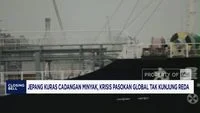
Japan has commenced the release of its national strategic petroleum reserves (SPRs) on or around March 26, 2026, a move underscoring the ongoing and multifaceted global energy supply crisis that continues to destabilize markets and exert inflationary pressures worldwide. This action, reported by CNBC Indonesia, represents a proactive measure by Tokyo to contribute to market stabilization efforts and mitigate the economic impact of persistently high energy prices. The decision to tap into these critical reserves reflects a deepening concern over the durability of the current energy crunch, which has shown little sign of abating despite various international interventions and policy adjustments over the preceding years.
Background of Japan’s Energy Security Strategy and Global Reserves
Japan, a nation heavily reliant on imported energy resources, particularly fossil fuels, maintains one of the world’s most robust strategic petroleum reserve systems. The country’s energy security strategy is predicated on diversifying supply sources, promoting energy efficiency, and maintaining substantial stockpiles to cushion against unforeseen supply disruptions. These reserves, managed by the Japan Oil, Gas and Metals National Corporation (JOGMEC) and supplemented by mandatory private sector stockpiles, typically hold crude oil and petroleum products equivalent to several months of national consumption. The primary purpose of these reserves is to provide a buffer during emergencies such as natural disasters, geopolitical conflicts, or significant supply chain disruptions, ensuring continuity of economic activity and public services. Globally, the concept of strategic reserves gained prominence after the 1973 oil crisis, leading to the formation of the International Energy Agency (IEA) in 1974, which mandates its member states, including Japan, to hold at least 90 days of net oil imports in reserve. Coordinated releases by IEA members are often employed as a collective tool to address severe market imbalances or supply shocks, demonstrating international solidarity and aiming to stabilize prices. Japan’s participation in such coordinated actions has been a consistent feature of its energy diplomacy.
A Chronology of Persistent Global Energy Volatility Leading to 2026
The global energy landscape has been characterized by significant volatility since the early 2020s, culminating in the current protracted crisis that necessitates Japan’s latest reserve release. The initial shocks emerged from the COVID-19 pandemic, which saw an unprecedented collapse in demand in 2020, followed by a rapid and uneven recovery in 2021 that strained supply chains and production capacities.
- 2022: The Ukraine War and Initial Market Upheaval: The full-scale invasion of Ukraine by Russia in February 2022 served as a pivotal moment, triggering an immediate and sharp spike in global oil and natural gas prices. Western sanctions on Russian energy exports, coupled with Russia’s retaliatory supply curtailments, fundamentally altered global energy trade flows. In response, the IEA coordinated multiple large-scale strategic petroleum reserve releases throughout 2022, totaling over 200 million barrels, with Japan contributing significantly to these efforts. These releases, while providing temporary relief, highlighted the structural vulnerabilities of the global energy system.
- 2023: OPEC+ Policy and Geopolitical Tensions: As 2023 progressed, market dynamics continued to be shaped by OPEC+ decisions to cut oil production, citing concerns about global demand slowdowns and aiming to support prices. Simultaneously, geopolitical tensions in various key oil-producing regions, particularly the Middle East, remained elevated, creating a constant risk premium in crude oil prices. Investments in new upstream capacity lagged, partly due to investor pressure for decarbonization and partly due to policy uncertainties, further tightening the long-term supply outlook.
- 2024: Supply Chain Disruptions and Renewed Demand Growth: The year 2024 saw continued geopolitical friction, including significant disruptions to critical shipping lanes such as the Red Sea, impacting global maritime trade and driving up freight costs. While global economic growth showed resilience, particularly in emerging markets, oil demand continued its upward trajectory, occasionally outpacing the supply additions from non-OPEC+ producers. This period also witnessed a series of refinery outages and maintenance cycles that temporarily tightened product markets, impacting gasoline and diesel prices.
- 2025: Inflationary Pressures and Exhaustion of Earlier Measures: By 2025, the cumulative effect of these factors led to persistent inflationary pressures across major economies, with energy costs being a primary driver. Central banks struggled to tame inflation, leading to prolonged periods of higher interest rates, which in turn threatened global economic stability. Earlier strategic reserve releases had provided some breathing room, but their impact was largely absorbed by the continuous demand growth and supply constraints. The global market entered 2026 with a fragile balance, susceptible to any new shock. It is against this backdrop of sustained instability and the perceived inadequacy of previous measures that Japan’s latest independent action to release reserves on March 26, 2026, must be understood.
Details of Japan’s Current Reserve Release
The specific details of Japan’s current strategic petroleum reserve release, initiated around March 26, 2026, involve a multi-pronged approach designed to maximize market impact and domestic relief. While precise figures are subject to ongoing adjustments, initial reports suggest that the release will involve several million barrels of crude oil and refined products. The mechanism for this release is expected to primarily utilize competitive auctions, allowing market participants to bid for the released oil, ensuring transparency and efficient distribution. A portion may also be released through direct sales to refiners and distributors facing immediate supply shortfalls, particularly those critical for essential services. The reserves targeted for release typically include both government-held stockpiles and those mandated to be held by private companies under national law. The government’s decision signals a proactive stance beyond merely participating in IEA-coordinated actions, indicating a specific national imperative to address the economic ramifications of high energy prices. This measure aims to inject additional supply into the market, thereby easing crude oil prices and subsequently reducing the cost of refined products such as gasoline, diesel, and kerosene for Japanese consumers and industries. The Ministry of Economy, Trade and Industry (METI) is overseeing the operational aspects, coordinating with JOGMEC and private sector entities to ensure a smooth and effective deployment of the reserves.
Supporting Data and Market Context
The decision by Japan to release its reserves in March 2026 is underpinned by a constellation of economic and energy market data indicating a sustained period of elevated prices and supply concerns.
- Japan’s Energy Dependency: Japan imports nearly 90% of its total energy requirements, with crude oil accounting for approximately 40% of its primary energy supply. A significant portion, over 85%, of its crude oil imports originate from the Middle East, making the country highly vulnerable to geopolitical instability in the region and fluctuations in global oil prices.
- Strategic Reserve Capacity: As of early 2026, Japan’s strategic petroleum reserves, including both state and private sector holdings, are estimated to be sufficient for approximately 200-220 days of domestic consumption. While robust, continued drawdowns raise questions about long-term reserve adequacy.
- Global Oil Price Trends: Following the initial surge in 2022, benchmark crude oil prices, such as Brent and WTI, have remained stubbornly high throughout 2023, 2024, and into early 2026. After peaking above $120 per barrel in mid-2022, prices experienced some moderation but consistently traded in the $80-$100 range, with occasional spikes driven by supply disruptions or geopolitical events. For instance, in late 2025 and early 2026, renewed concerns over Middle East stability and persistent underinvestment in conventional oil production contributed to Brent crude hovering near $95-$100 per barrel.
- Impact of Past Releases: Previous IEA-coordinated releases, such as the 120 million barrels released in April 2022, did provide a temporary dampening effect on prices, often causing a short-term dip of a few dollars per barrel. However, their long-term impact was limited in the face of persistent supply-demand imbalances and geopolitical risks. This suggests that the current Japanese release is likely intended to provide immediate relief rather than fundamentally alter market fundamentals.
- Inflationary Pressures in Japan: High energy costs have been a significant contributor to inflation in Japan. Consumer Price Index (CPI) data in late 2025 and early 2026 consistently showed energy components as primary drivers, pushing headline inflation rates above the Bank of Japan’s 2% target, even as core inflation remained sticky. This has eroded household purchasing power and increased operational costs for businesses, making the reserve release a targeted effort to alleviate these economic pressures.
- Global Supply-Demand Balance: According to IEA forecasts in early 2026, global oil demand is projected to continue its gradual rise, driven by economic growth in non-OECD countries, while supply additions from non-OPEC+ sources struggle to keep pace. OPEC+ production policies, which have prioritized market stability over maximizing output, further contribute to a tight supply-demand balance, leaving little room for error or disruption.
Statements and Reactions from Related Parties
The decision by Japan to release its strategic petroleum reserves has elicited a range of reactions from key stakeholders, reflecting the complex interplay of national interests and global energy dynamics.
- Japanese Government Officials: Officials from the Ministry of Economy, Trade and Industry (METI) and the Prime Minister’s office have emphasized the necessity of the measure. A spokesperson for METI, speaking anonymously to a national newspaper, reportedly stated, "This action underscores Japan’s unwavering commitment to market stability and the protection of our domestic economy from the adverse impacts of prolonged high energy prices. While we continue to advocate for international cooperation, national measures are sometimes required to address specific domestic challenges." Prime Minister Kishida’s administration is understood to view this as a crucial step in supporting industries and households grappling with inflationary pressures.
- International Energy Agency (IEA): The IEA is likely to view Japan’s action as a constructive contribution to global energy security, especially if it aligns with the agency’s broader calls for member countries to ensure adequate supply in a volatile market. While not an IEA-coordinated release, the move by a major IEA member reinforces the spirit of collective action. IEA Executive Director Fatih Birol has, in prior instances, commended countries for utilizing their reserves to address market tightness, reiterating the importance of all available tools to stabilize the energy landscape.
- Market Analysts and Experts: Energy market analysts have offered varied perspectives. Some analysts from major financial institutions have suggested that "Japan’s release, while numerically significant for its domestic market, may only offer limited, transient relief to global crude oil prices, which remain fundamentally driven by geopolitical factors and OPEC+ policy." Others have noted that "the symbolic weight of Japan’s decision is considerable, signaling to both producers and consumers that major importing nations are prepared to intervene to mitigate price shocks, even independently." There is a consensus that the move reflects the severity of the ongoing energy crisis.
- OPEC+ Countries: Responses from OPEC+ nations, particularly major producers like Saudi Arabia and Russia, are anticipated to be more reserved, possibly emphasizing that market fundamentals and global demand outlooks are the primary drivers of oil prices, rather than the temporary injection of strategic reserves. OPEC+ statements have historically stressed the importance of sustainable investment in production capacity and a balanced market, sometimes implying that reserve releases are short-term fixes that do not address underlying structural issues. They might reiterate their commitment to "market stability" through managed supply, which often translates to maintaining price levels beneficial to producers.
Broader Impact and Implications
Japan’s decision to release its strategic petroleum reserves on March 26, 2026, carries significant implications, both domestically and internationally, extending beyond immediate price stabilization.
- Domestic Impact: Domestically, the primary goal is to provide relief to Japanese industries and consumers. By injecting additional supply, the government aims to temper the rise in gasoline, diesel, and utility costs, which have been a major contributor to inflationary pressures. This could offer some respite for household budgets and reduce operational costs for energy-intensive sectors such as manufacturing and transportation. The measure is also designed to bolster consumer confidence and support economic activity, which has been challenged by the persistent high cost of living. However, the extent of this relief will depend on the volume of the release and the prevailing global market conditions.
- International Market Impact: On the international stage, Japan’s independent release, while unlikely to cause a dramatic shift in global oil prices given the scale of the worldwide market, serves as a significant signal. It demonstrates that a major G7 economy and a key IEA member is willing to take decisive action to address perceived market imbalances. This could put subtle pressure on oil-producing nations, particularly OPEC+, to consider their supply policies, and it reinforces the message that consuming nations will utilize all available tools to ensure energy security. It might also encourage other nations with substantial reserves to consider similar actions if the crisis deepens, potentially leading to a cumulative, though still limited, impact on global supply.
- Geopolitical Implications: The move underscores Japan’s role as a responsible stakeholder in global energy security. By actively participating in efforts to stabilize the market, Japan enhances its diplomatic standing and reinforces its commitment to international economic stability. It also signals to its allies and trade partners that it is prepared to act robustly in the face of shared economic challenges. The action could also be interpreted as a subtle message to geopolitical rivals, demonstrating resilience and preparedness in a volatile global environment.
- Strategic Reserve Policy and Future Outlook: This latest release prompts a re-evaluation of the effectiveness and long-term sustainability of strategic petroleum reserve policies. While crucial for short-term emergencies, repeated drawdowns in response to protracted market volatility raise questions about the adequacy of existing reserve levels and the appropriate triggers for their deployment. It may also intensify debates within Japan and among IEA members about the need for greater energy diversification, accelerated adoption of renewable energy sources, and potential reconsideration of nuclear power generation as long-term solutions to reduce fossil fuel dependency and enhance energy resilience. The incident highlights the enduring challenge of balancing energy security with decarbonization goals in a world prone to supply shocks.
In conclusion, Japan’s decision to initiate the release of its national strategic petroleum reserves in late March 2026 is a critical, albeit tactical, response to a global energy supply crisis that has shown persistent resilience. Stemming from a confluence of geopolitical tensions, supply chain disruptions, and evolving demand dynamics over several years, this action by Tokyo aims to stabilize domestic prices, protect its economy, and contribute to broader international efforts to manage market volatility. While offering immediate relief and signaling strong national resolve, the long-term efficacy of such measures remains dependent on underlying market fundamentals and the eventual resolution of the complex factors driving the enduring global energy crunch, underscoring the imperative for comprehensive and sustainable energy policies worldwide.