Bambang Pamungkas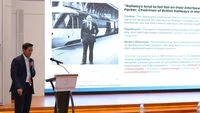
PT Wijaya Karya Beton Tbk (WIKA Beton) has firmly asserted its readiness to serve as a pivotal partner in the ambitious development of railway projects across Indonesia and the wider Southeast Asian region. This declaration was made before a discerning audience of regional industry stakeholders at the 3rd Edition Thailand Rail 2026 conference, held in Bangkok on March 30, 2026, marking a significant strategic move by the Indonesian state-owned enterprise to solidify its regional footprint in critical infrastructure. The event, a cornerstone for railway industry professionals, investors, and policymakers in ASEAN, provided a crucial platform for WIKA Beton to showcase its advanced capabilities, extensive experience, and innovative partnership models tailored for complex, large-scale railway undertakings.
The Regional Imperative: Driving Railway Development in ASEAN
Southeast Asia is currently experiencing an unprecedented surge in demand for modern, efficient, and integrated transportation infrastructure. With rapid urbanization, burgeoning populations, and a concerted push for regional economic integration through initiatives like the ASEAN Economic Community (AEC), robust railway networks are no longer a luxury but a fundamental necessity. Governments across the region are committing significant investments to expand and upgrade their rail systems, ranging from urban mass rapid transit (MRT) and light rail transit (LRT) to inter-city and high-speed rail lines designed to connect major economic hubs and facilitate trade. Thailand Rail 2026, as a premier gathering, underscores this regional commitment, bringing together key players to discuss technological advancements, financing strategies, and collaborative frameworks essential for future projects. For a company like WIKA Beton, with its specialized expertise in precast concrete solutions and railway systems, the conference represented an unparalleled opportunity to engage directly with potential partners and decision-makers shaping the region’s infrastructure landscape. The overarching theme of sustainability and efficiency in project delivery resonated throughout the discussions, aligning perfectly with WIKA Beton’s stated vision.
WIKA Beton’s Strategic Vision and Proven Track Record
During a pivotal conference session titled "Lessons Learned from Strategic Alliance Schemes in the Metro Manila Subway Project and Jakarta MRT Project Phase 2," WIKA Beton presented a compelling narrative of its strategic alliance experiences in two of Southeast Asia’s most significant urban infrastructure endeavors: the Metro Manila Subway Project (MMSP) in the Philippines and the Jakarta MRT Phase II CP205 project in Indonesia. Representing WIKA Beton, Yomil Ravianda, Regional Manager for Overseas, Jakarta Greater Area, and Railway Systems, articulated the company’s deep understanding of the intricacies involved in such mega-projects. Ravianda emphasized a critical insight: project failures in railway construction often do not stem from deficiencies in individual technologies or standalone infrastructure components, but rather from inadequacies at the interfaces where various sub-systems are meant to connect and integrate seamlessly. This perspective highlights the complex, multi-faceted nature of railway development, which requires a holistic approach rather than fragmented execution.
The MMSP, a flagship project for the Philippines, aims to create a 36-kilometer underground railway connecting Quezon City to Ninoy Aquino International Airport, significantly easing traffic congestion in Metro Manila. With an estimated cost exceeding $7 billion, its scale demands meticulous planning and execution across various disciplines. Similarly, the Jakarta MRT Phase II CP205, an extension of Indonesia’s pioneering urban rail system, involves complex underground tunneling and elevated structures, connecting the city’s northern and central districts. This phase alone represents a substantial investment, with its CP205 segment focusing on crucial railway systems integration. WIKA Beton’s involvement in these projects has provided invaluable insights into managing multi-stakeholder environments, coordinating diverse technical teams, and delivering high-quality precast concrete components essential for structural integrity and rapid construction.
Ravianda further elaborated that executing railway projects demands a broad spectrum of cross-disciplinary expertise, which no single organization can realistically possess in its entirety. This fundamental reality positions strategic alliances as the primary catalysts for success, not only during the planning phases but crucially throughout the implementation stage. Through the detailed examples of MMSP and MRT Jakarta CP205, WIKA Beton illustrated how it prioritizes leveraging its "intellectual capital" – encompassing project management acumen, engineering prowess, and advanced precast concrete manufacturing capabilities. This approach is realized through profit-sharing and scope-sharing models, which stand in contrast to relying solely on full equity-based expansion. This strategic pivot allows WIKA Beton to participate in projects requiring substantial capital investment while mitigating direct financial exposure, focusing instead on its core competencies and collaborative strengths.
A Decade of Rail Business Milestones: WIKA Beton’s Chronology of Success
WIKA Beton’s presentation also meticulously chronicled its significant milestones in the rail business over the past decade, underscoring a consistent trajectory of growth and expertise accumulation. This timeline of achievements includes:
- LRT Jakarta Phase 1A (2016-2019): WIKA Beton played a crucial role in providing precast concrete solutions for the first phase of Jakarta’s Light Rail Transit system, which became operational in 2019. This project marked an early entry for the company into modern urban rail infrastructure, demonstrating its capability to deliver high-quality components for elevated structures.
- LRT Jakarta Phase 1B (Ongoing): Building on the success of Phase 1A, WIKA Beton continues its involvement in the extension of the LRT Jakarta network. This ongoing project further solidifies its position as a reliable supplier for urban rail expansion.
- MRT Jakarta CP205 Railway Systems (Ongoing): This contract represents a significant advancement for WIKA Beton, moving beyond just structural components to encompass more complex railway systems integration. Their involvement here showcases a deepening of their technical capabilities and a broader scope of services offered.
- Metro Manila Subway Project (MMSP) (Ongoing): WIKA Beton’s strategic partnership in the MMSP, a project of immense scale and technical complexity, highlights its international expansion and ability to collaborate on world-class infrastructure. Its role in supplying critical precast elements, such as tunnel segments and viaducts, for this underground marvel has been instrumental.
These projects collectively underscore WIKA Beton’s commitment to delivering high-quality, sustainable concrete solutions and its unwavering focus on strategic partnerships and sustainable practices. The company’s evolution from a supplier of basic construction materials to a comprehensive solution provider for railway systems demonstrates its adaptability and forward-thinking approach.
The Power of Strategic Alliances: A Blueprint for Success
The core of WIKA Beton’s message at Thailand Rail 2026 revolved around the transformative power of strategic alliances. In an era where infrastructure projects are becoming increasingly complex, capital-intensive, and technologically demanding, the traditional model of a single entity undertaking the entire project is often unsustainable. Railway projects, in particular, involve a multitude of specialized disciplines – civil engineering, mechanical systems, electrical systems, signaling, telecommunications, and rolling stock – each requiring specific expertise. Failures in one sub-system or, more commonly, at the interfaces between them, can lead to significant delays, cost overruns, and operational inefficiencies.
WIKA Beton’s model of emphasizing "intellectual capital" through profit-sharing and scope-sharing arrangements is a strategic response to these challenges. Instead of attempting full equity-based expansion, which would require immense capital outlay and carry higher financial risks, WIKA Beton opts for a collaborative framework. This allows them to bring their specialized expertise in project management, advanced engineering, and efficient precast concrete manufacturing to the table, partnering with other entities that complement their strengths, whether in financing, specific technological solutions, or local market access. This approach fosters a symbiotic relationship where risks and rewards are shared, leading to more resilient project delivery and optimal resource allocation. The success of this model in projects like MMSP and MRT Jakarta CP205 serves as a compelling case study for other industry players seeking efficient and sustainable ways to execute complex railway developments across Southeast Asia.
Bridging Technical Prowess and Investment Capital: The WIKA Beton-Danantara Synergy
A notable point of inquiry from conference participants centered on the relationship between WIKA Beton and Danantara Indonesia, and their combined potential to act as catalysts for investors interested in urban railway projects within Indonesia and the broader region. Ravianda provided a clear explanation, positioning WIKA Beton and Danantara as a crucial bridge. WIKA Beton brings the formidable technical strength in engineering and construction management, underpinned by its expertise in precast concrete manufacturing. Danantara, on the other hand, fulfills the critical need for developing sustainable investment schemes for global investors.
This synergy is designed to unlock opportunities by connecting technical feasibility with financial viability. Many large-scale infrastructure projects struggle to secure funding despite their technical merit, often due to complex financing structures, perceived risks, or a lack of clarity in investment returns. Danantara’s role as an investment catalyst is to streamline these processes, structure attractive investment packages, and consolidate the interest of global investors. This collaborative model means that WIKA Beton can focus on its core competencies in engineering and construction, while Danantara handles the intricate financial structuring and investor relations. This division of labor creates a powerful proposition for governments and project developers seeking integrated solutions that cover both the technical and financial aspects of urban railway development. The potential for this collaboration to translate into concrete business partnerships for urban rail development in Indonesia and globally is significant, with WIKA Beton handling engineering, system management, and construction, and Danantara serving as the architect for investment structures and global investor consolidation.
Indonesia’s Railway Ambitions: A Pipeline of Opportunities
WIKA Beton’s presence at Thailand Rail 2026 was not merely an exercise in sharing past successes; it also served as a strategic signal that Indonesia is actively preparing a robust pipeline of urban railway projects. These forthcoming projects are characterized by demands for "long trajectories," "system integration," and "mature alliance schemes," indicating a sophisticated approach to infrastructure development. Indonesia, as the largest economy in Southeast Asia, has made infrastructure development a cornerstone of its national agenda. The government has aggressively pushed for an expansion of its railway network, aiming to improve connectivity, reduce logistics costs, and support economic growth across its vast archipelago.
Beyond Jakarta’s existing MRT and LRT systems, plans are underway for similar urban rail networks in other major Indonesian cities like Surabaya and Bandung. Furthermore, inter-city rail improvements, including potential high-speed rail links connecting Java’s economic powerhouses, remain a key focus. The phrase "long trajectories" suggests multi-phase, extensive networks that will evolve over decades, requiring sustained commitment and adaptable partnerships. "System integration" points to the need for seamless operation across different modes of transport and various technological components, from signaling to ticketing. Finally, "mature alliance schemes" reinforces WIKA Beton’s core message: future projects will increasingly rely on well-structured, collaborative partnerships that leverage the best capabilities from both local and international players. This proactive stance positions Indonesia as a major hub for railway investment and development in the coming years, offering immense opportunities for companies with the right expertise and partnership approach.
The Future of Sustainable Concrete in Rail Infrastructure
WIKA Beton’s vision extends beyond mere construction to encompass a commitment to becoming a sustainable concrete solutions company. This vision is particularly pertinent in the context of railway infrastructure, which has a long operational lifespan and significant environmental impact during both construction and use. Sustainable concrete practices involve several key aspects:
- Eco-friendly materials: Utilizing recycled aggregates, supplementary cementitious materials (SCMs) like fly ash or slag, and low-carbon cement to reduce the carbon footprint of concrete production.
- Energy efficiency in manufacturing: Implementing more energy-efficient production processes at precast concrete plants.
- Waste reduction: Minimizing waste generation during manufacturing and construction through optimized design and precise production.
- Durability and longevity: Producing highly durable concrete structures that require less maintenance and replacement over their lifetime, thereby reducing resource consumption.
- Innovation in design: Developing precast concrete solutions that facilitate faster, safer, and more efficient construction, minimizing disruption to surrounding environments.
WIKA Beton’s focus on sustainable concrete solutions aligns with global trends in green infrastructure and environmental responsibility. By integrating these practices, the company not only contributes to environmental protection but also offers a competitive advantage to projects seeking to meet stringent sustainability criteria. This commitment resonates with international investors and development banks increasingly prioritizing projects with strong environmental, social, and governance (ESG) credentials.
Reactions and Market Outlook
The discussions initiated in Bangkok are expected to pave the way for new collaborations with international investors and partners in future railway projects across Indonesia and the wider ASEAN region. The positive reception to WIKA Beton’s presentation underscores the industry’s recognition of its expertise and the validity of its strategic alliance model. Participants at Thailand Rail 2026, representing a diverse array of railway operators, technology providers, financiers, and government agencies, would likely have found WIKA Beton’s pragmatic approach to project delivery and its emphasis on shared intellectual capital to be highly compelling.
The implications of WIKA Beton’s proactive engagement are far-reaching. For WIKA Beton itself, it strengthens its brand as a regional leader in railway infrastructure, opening doors to new markets and larger projects. For Indonesia, it showcases the country’s growing capacity to contribute not just as a recipient of infrastructure but as a provider of expertise and innovative solutions. More broadly, for the ASEAN region, it highlights the increasing trend towards collaborative, multi-national partnerships as the preferred model for tackling complex, large-scale infrastructure challenges. The success of these alliances will be critical in realizing the vision of a seamlessly connected Southeast Asia, fostering economic growth, and enhancing the quality of life for millions.
In conclusion, WIKA Beton’s impactful presence at Thailand Rail 2026 marks a significant step in its journey to become a key enabler of railway development in Southeast Asia. By championing strategic alliances, showcasing its proven track record, and articulating a clear vision for sustainable concrete solutions, the company is well-positioned to capitalize on the region’s burgeoning infrastructure needs, driving innovation and fostering critical partnerships for a more connected future.