Nila Kartika Wati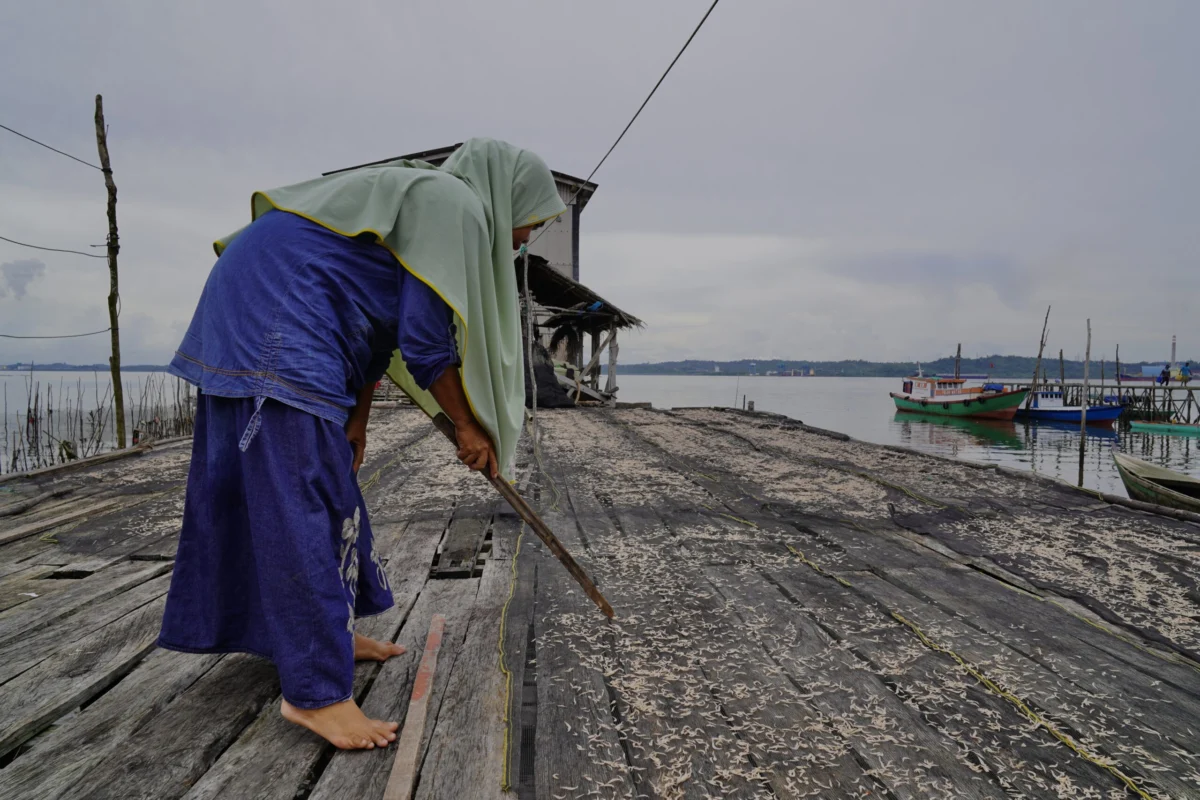
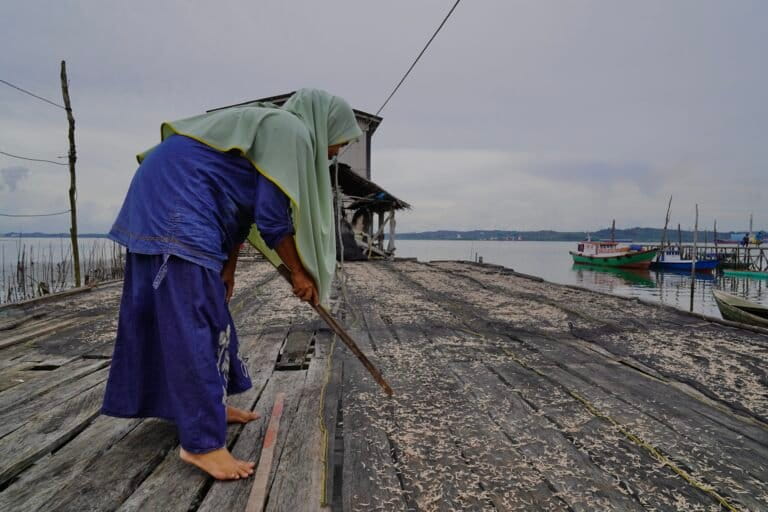
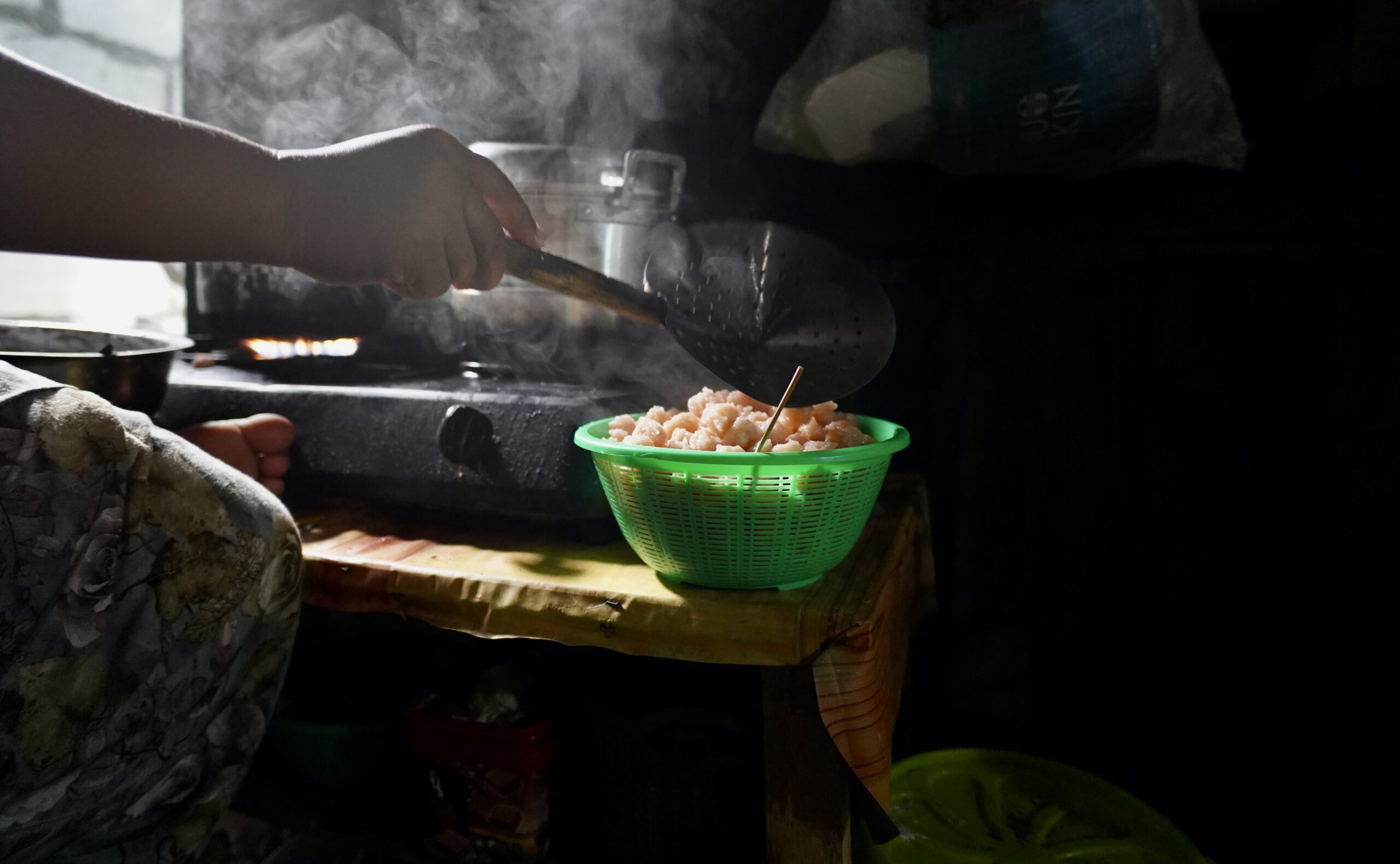
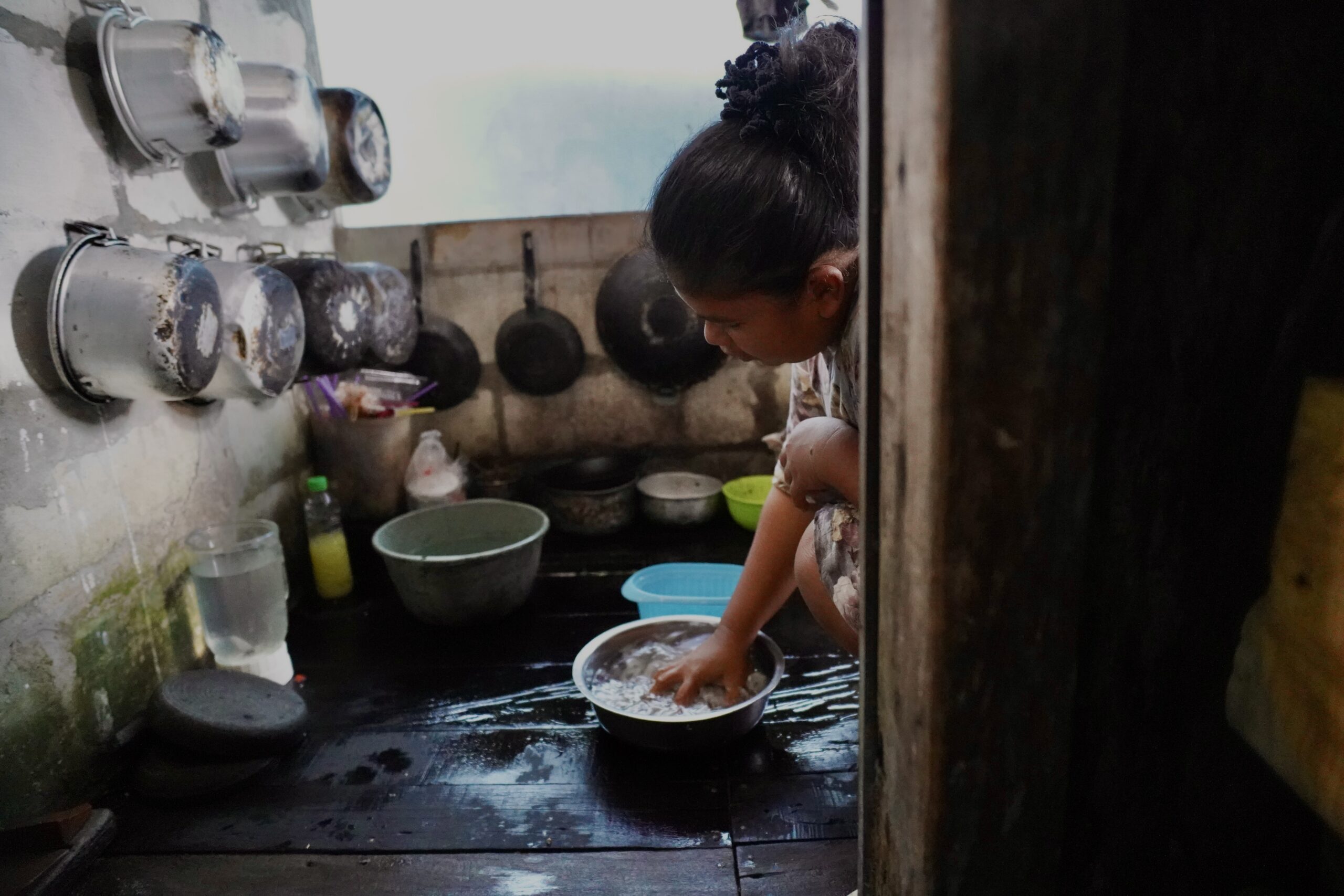
Under a leaden sky in Kampung Jenebora, East Kalimantan, a woman named Ani carefully selects shrimp from a local vendor. For over a year, this has been her ritual—preparing salome, a popular local snack similar to cilok, to sell around her neighborhood. Ani, now 31, has known this delicacy since she was ten years old. In Jenebora, located in the Penajam District of North Penajam Paser, salome is more than just a snack; it is a staple of the local economy. However, for Ani and many women like her, the production of this shrimp-based treat is no longer a matter of tradition, but a desperate survival strategy in an increasingly hostile economic landscape.
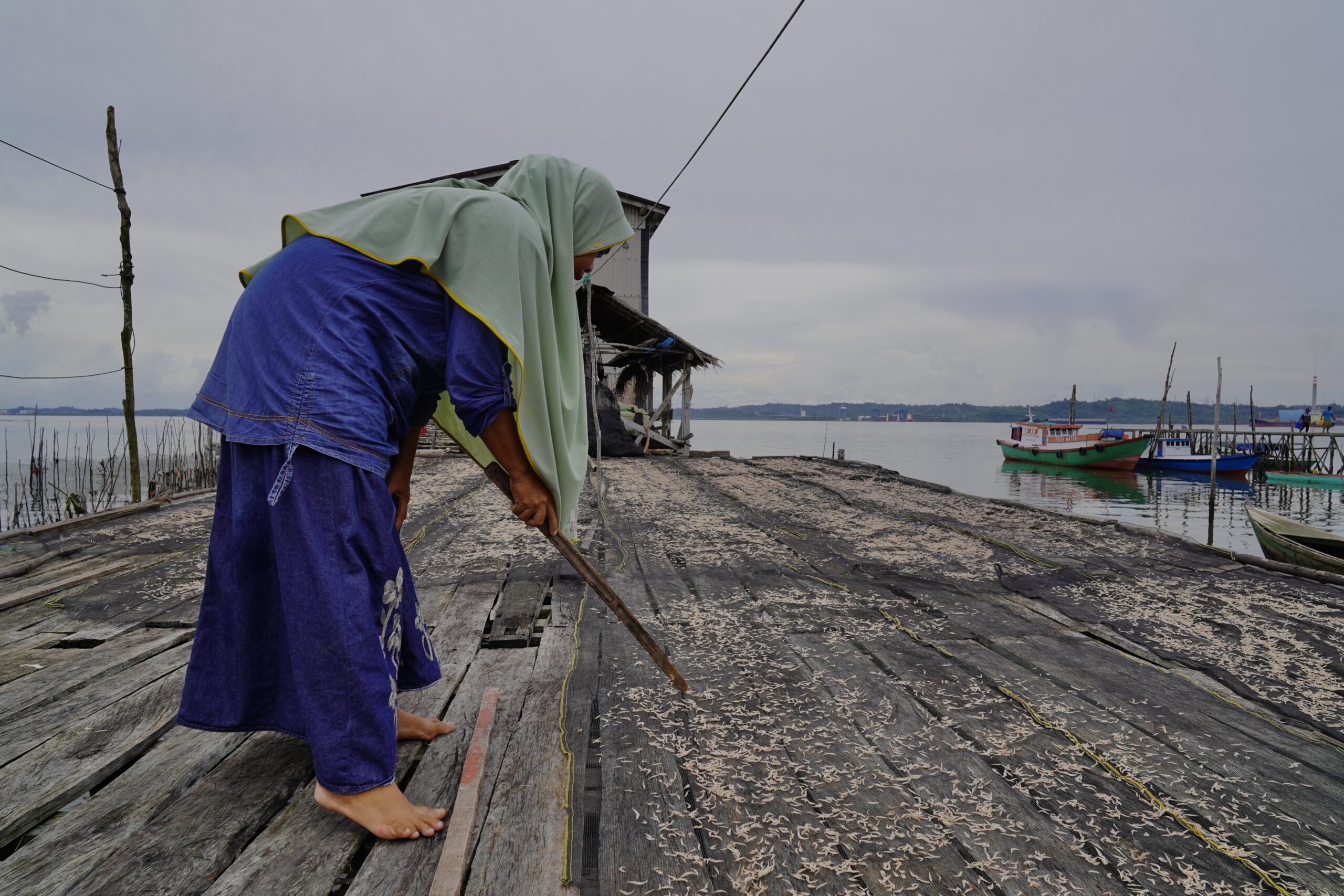
The shift toward informal trading became a necessity for Ani’s family two years ago when her husband’s income as a fisherman began to fluctuate wildly. In the past, a single fishing trip could bring home at least Rp200,000. Today, the reality is starkly different. On many days, the catch is non-existent, or so small it barely covers the cost of the diesel fuel required to power the boat. To bridge the gap and provide "sangu" (pocket money) for her youngest child’s school needs, Ani turns to the kitchen. With a modest capital of Rp70,000, she purchases 1.5 kilograms of shrimp and half a kilogram of starch. On a good day, her total revenue reaches Rp150,000, providing just enough to keep the household running. Yet, even this fragile lifeline is under threat as the primary raw material—shrimp—becomes increasingly scarce and expensive.
The Industrial Siege of Balikpapan Bay
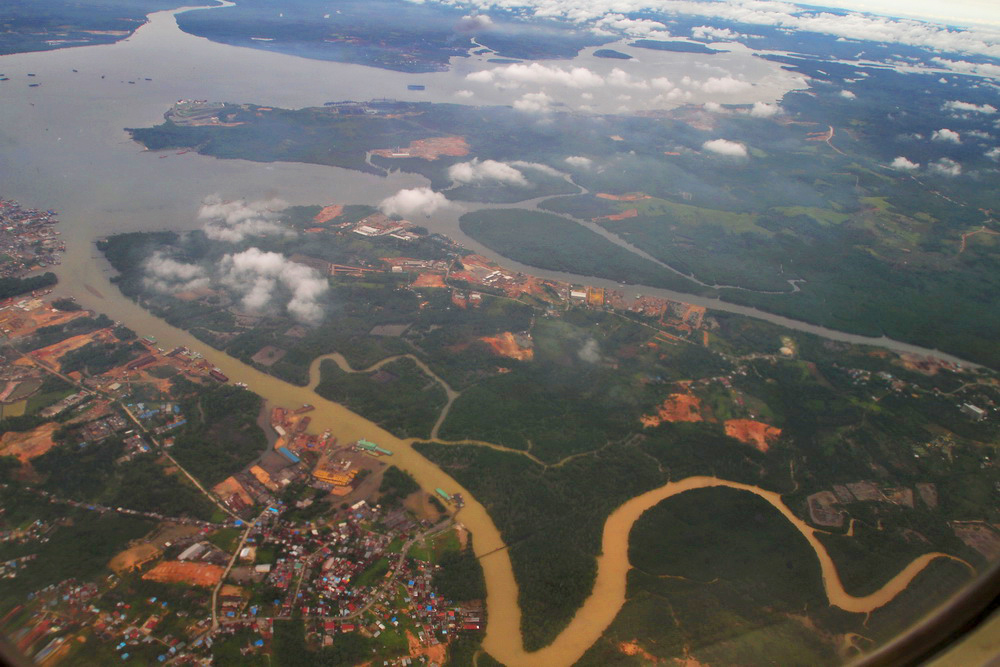
The struggles faced by the residents of Kampung Jenebora are not isolated incidents of bad luck; they are the direct consequence of a massive industrial transformation surrounding Balikpapan Bay. Over the last two decades, the area has become a focal point for Indonesia’s extractive and energy industries. The bay is now home to a dense cluster of corporate giants, including PT Kutai Refinery Nusantara (KRN), the Kaltim Teluk Power Plant (PLTU), PT Wilmar Nabati Indonesia (WINA), and the Balikpapan Coal Terminal owned by PT Bayan Resources. Furthermore, the massive Refinery Development Master Plan (RDMP) project continues to expand the existing oil refinery capacity in the region.
The latest addition to this industrial landscape is the nickel industry, driven by Indonesia’s ambitious goal to become a global hub for electric vehicle (EV) batteries. PT Mitra Murni Perkasa (MMP), a subsidiary of MMS Group Indonesia, has constructed a nickel smelter in the vicinity. This facility is designed to produce up to 28,000 metric tons of high-grade nickel matte annually. While the project is framed as a contribution to the global green energy transition, its local impact has been immediate and destructive. Before even securing all necessary environmental permits, MMP was found to have cleared dozens of hectares of vital mangrove forests. Although the East Kalimantan Environmental Agency (DLH) eventually imposed sanctions, the damage to the coastal ecosystem—the primary breeding ground for the shrimp and fish that Ani’s family relies on—was already done.
Mappaselle, the Executive Director of the Coastal Working Group (Pokja Pesisir), notes that the decline in the quality of life for local fishermen began in earnest after the year 2000. Before the industrial boom, the bay was a bountiful resource. Today, the expansion of jetties, terminals, and heavy shipping traffic has physically hemmed in the fishing communities. The fishing grounds are shrinking, water pollution is rising, and increased sedimentation is choking the seabed. According to Mappaselle, the development of these industrial zones has been largely unilateral, with minimal meaningful involvement from the communities whose "living space" is being occupied.
The Systematic Exclusion of Women
The environmental degradation of Balikpapan Bay carries a heavy gendered dimension. In the patriarchal social structure of coastal East Kalimantan, women are often the most vulnerable to economic shocks, yet they are the least likely to be included in decision-making processes. When corporations hold "socialization" meetings to discuss the impacts of their operations, the invitations are almost exclusively extended to men.
Ani recalls that while some companies provided information about their presence, the narrative was always focused on the "positive" stories of development. The potential negative impacts—such as the collapse of fish stocks or the health risks of industrial runoff—were never discussed with the women of the village. "It’s only the fathers; the mothers are never involved," Ani remarked. This lack of inclusion means that the very people responsible for managing the household’s daily survival are kept in the dark about the threats to their livelihood.
Sapiah, another resident of Jenebora who produces shrimp paste (terasi), echoes this sentiment of powerlessness. For Sapiah, the barrier to participation is not just gender, but also education. She expressed a deep-seated fear of speaking out or questioning corporate representatives, citing her limited formal schooling. "We are afraid of saying the wrong thing," she admitted. This silence is often misinterpreted by authorities and corporations as consent. Without a seat at the table, women like Ani and Sapiah are forced to bear the "double burden" of industrialization: they must find new ways to generate income as the sea fails them, while simultaneously performing all domestic duties and managing the family’s growing debt.
The Sociological Impact and the Myth of Consent
The exclusion of women from environmental discourse is a significant failure of the "Free, Prior, and Informed Consent" (FPIC) principle, which is supposed to be a global standard for industrial development. Sri Murlianti, a sociologist from Mulawarman University, argues that the current processes in East Kalimantan are often mere formalities. "There should be specific procedures where women are gathered in a space free from pressure, where they can speak freely in their own language," Murlianti suggested.
The sociological data for the region reveals a troubling trend. While the province attracts billions in industrial investment, the educational level of the local population remains stagnant, with many residents having only a middle-school education or less. This disparity creates a "capacity gap" that corporations and the state often exploit. When a community does not protest, the government assumes they agree with the project. However, Murlianti points out that many people simply do not have the capacity or the platform to voice their grievances until the damage is irreversible.
Furthermore, the health implications of the new nickel smelter are a looming concern. Refinaya, the Coordinator of Perempuan Mahardhika Samarinda, warned that the contamination of the food chain is inevitable. "The fish they consume every day will be contaminated by the presence of this industry," she stated. For coastal families who rely on the bay for their primary protein source, the "green" transition could lead to a new wave of chronic health issues, adding yet another layer to the burden carried by women.
A Precarious Future
The current state of Balikpapan Bay represents a clash between national strategic interests and local survival. On one hand, the Indonesian government is pushing for the completion of the New Capital City (IKN) Nusantara and the development of the EV battery ecosystem to position the country as a leader in the global energy transition. On the other hand, these "macro" successes are being built on the "micro" failures of communities like Jenebora.
As the shrimp become harder to find, Ani is forced to adapt. If shrimp are unavailable, she makes "plain" salome or uses quail eggs and chicken—anything to keep the business going. But the margins are thinning. When the sea provides nothing and the salome sales are slow, Ani has no choice but to go into debt at the local grocery store just to buy rice. "We have to pay it back when there is a bit of fortune again," she says.
The call for "meaningful participation" is no longer just a theoretical demand from NGOs; it is a necessity for the survival of the coastal social fabric. Experts and activists are urging the state to implement a more rigorous "social baseline" study that specifically accounts for gendered impacts. They argue that development cannot be considered successful if it destroys the traditional livelihoods of the people it claims to benefit.
The story of the women in Jenebora is a reminder that the cost of industrialization is often hidden in the domestic spheres of the poor. As the nickel smelters begin their commissioning phases and the smoke rises over Balikpapan Bay, women like Ani and Sapiah continue to fight a quiet, desperate battle to keep their families fed, their children in school, and their traditions alive in a landscape that is increasingly being paved over by progress. The sky over Jenebora remains grey, reflecting a future that is as uncertain as the next day’s catch.