Nila Kartika Wati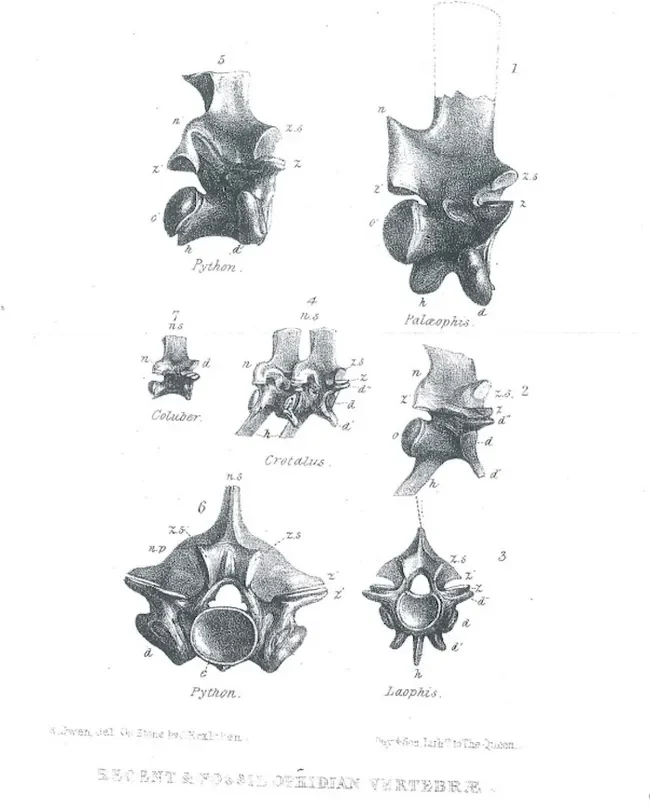
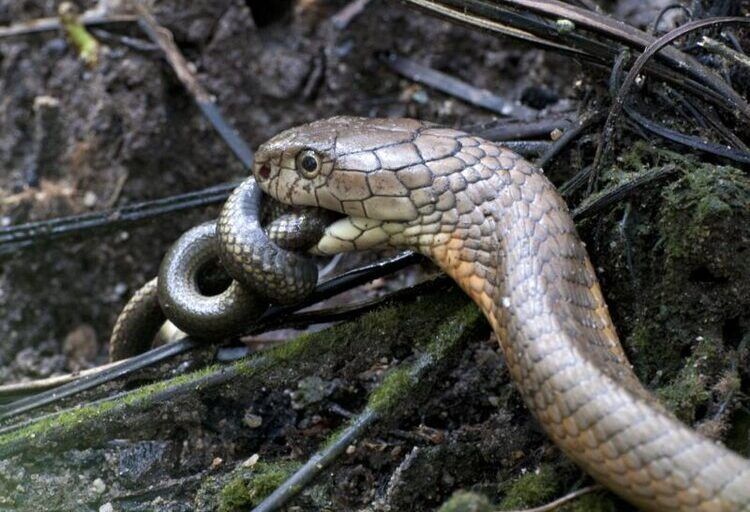
For decades, the King Cobra (Ophiophagus hannah) has reigned supreme in the public imagination and scientific records as the undisputed titan of the venomous snake world. Its credentials are formidable: it is the only snake that builds nests for its young, it possesses a neurotoxic venom potent enough to fell an Asian elephant, and it reaches lengths of up to 5.5 meters. When threatened, a King Cobra can lift a third of its body off the ground, standing eye-to-eye with an average human adult. In terms of mass, a healthy wild specimen typically weighs between 6 and 9 kilograms, with rare captive individuals reaching a record-breaking 12.7 kilograms. However, recent paleontological re-evaluations and fossil discoveries have officially dethroned the King Cobra from its status as the most massive venomous snake to ever inhabit the Earth. That title belongs to a prehistoric phantom of the Pliocene epoch: Laophis crotaloides.
Living approximately 4 million years ago in the grasslands of what is now northern Greece, Laophis crotaloides was a giant viper that redefined the biological limits of venomous reptiles. While the King Cobra may still hold the record for linear length, Laophis was a creature of immense girth and muscular density. Scientific estimates based on recovered vertebrae suggest that this ancient viper reached a body mass of at least 26 kilograms—nearly triple the weight of an average King Cobra and double that of the largest ever recorded in a controlled environment. The existence of such a massive predator in a temperate European climate challenges long-held assumptions about reptile metabolism and the environmental conditions required to support "megafauna" snakes.
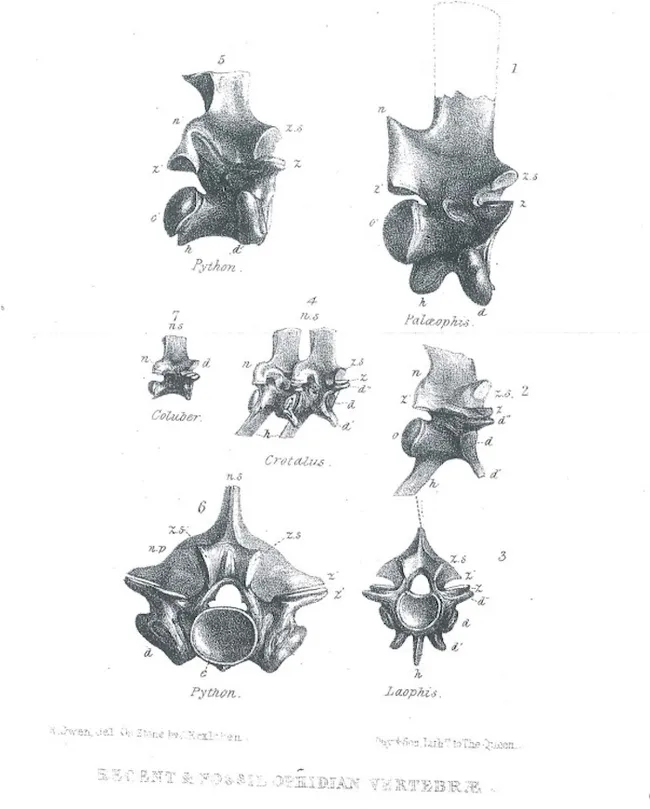
The history of Laophis crotaloides is as dramatic as the creature itself, characterized by a mid-19th-century discovery, a century and a half of skepticism, and a modern scientific vindication. The story began in 1857 when Sir Richard Owen, the pioneering English biologist and paleontologist who famously coined the term "Dinosauria," described 13 fossilized vertebrae found near Thessaloniki, Greece. Owen recognized that these bones belonged to a viper of unprecedented proportions. He named the species Laophis crotaloides, suggesting an affinity with the Crotalinae (pit viper) subfamily. However, in a stroke of misfortune for the scientific community, the original fossils Owen studied were lost, leaving behind only his drawings and descriptions. Without physical evidence, many 20th-century herpetologists and paleontologists relegated Laophis to the status of a "nomen dubium"—a doubtful name—suspecting that Owen might have exaggerated the dimensions or misidentified the remains of a non-venomous species.
The tide turned recently when a team of researchers, including paleontologists Georgios Georgalis and Benjamin Kear, announced the discovery of a new, single vertebra at the same site in Greece where Owen’s specimens were originally unearthed. This find was the "smoking gun" needed to validate Owen’s 1857 claims. Using advanced geometric morphometrics and comparative anatomy, the researchers compared the new fossil with the vertebrae of modern vipers. The results were staggering. The internal structure and external dimensions of the bone confirmed that Laophis was indeed a member of the Viperidae family and that it was significantly larger than any viper currently in existence.
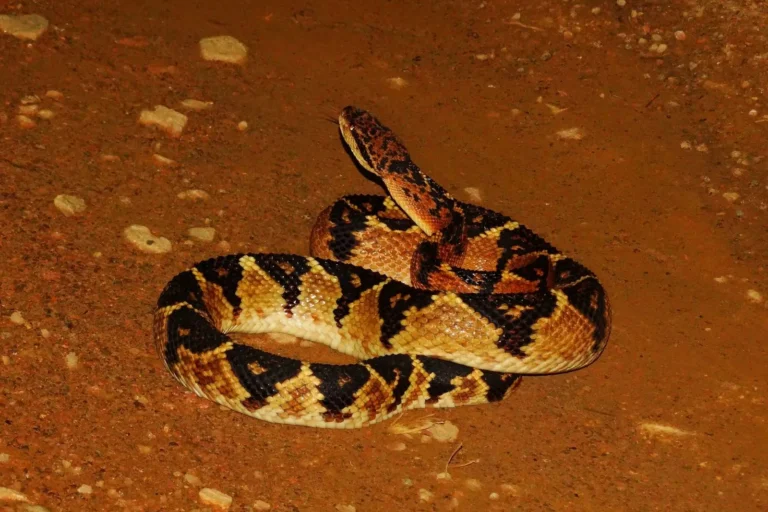
To understand the physical presence of Laophis crotaloides, experts point to the South American Bushmaster (Lachesis muta) as the closest modern analog. The Bushmaster is currently the largest viper in the world, reaching lengths of 3.6 meters. Unlike the slender, whip-like bodies of many elapids (the family that includes cobras and mambas), vipers like the Bushmaster and the extinct Laophis are characterized by heavy, robust builds. They are ambush predators with thick-set muscles designed for sudden, explosive strikes rather than sustained chases. If a Bushmaster is a heavy-weight contender, Laophis was the ultimate super-heavyweight. With a projected weight of 26 kilograms, Laophis would have possessed a strike force capable of delivering massive quantities of venom deep into the tissues of its prey through fangs that likely exceeded several centimeters in length.
The ecological implications of Laophis’s existence are a subject of intense study. One of the most perplexing aspects of this discovery is the climate in which the snake thrived. Traditional biological rules suggest that giant reptiles require the consistent, high temperatures of the tropics to maintain their metabolic functions. This is why the modern King Cobra is found in the steaming jungles of Southeast Asia and why the even larger (but non-venomous) Titanoboa lived in the sweltering Paleocene rainforests of Colombia. Yet, 4 million years ago, northern Greece was a temperate environment characterized by seasonal grasslands and fluctuating temperatures.
According to Dr. Benjamin Kear of Uppsala University, the presence of such a massive ectotherm (cold-blooded animal) in a seasonal climate is "highly unusual." The Pliocene of Greece was home to other giants, including tortoises the size of small cars, suggesting that the ecosystem was far more productive than previously thought. The abundance of prey—ranging from large rodents to the juveniles of primitive horses and deer—likely provided the caloric surplus necessary for Laophis to reach its gargantuan size. Researchers hypothesize that the snake may have utilized a combination of thermal inertia (the ability of a large body to retain heat) and specific behavioral adaptations, such as brumation (a reptile’s version of hibernation), to survive the cooler months.
In terms of predatory behavior, Laophis crotaloides was likely an apex predator of the Balkan grasslands. As a member of the Viperidae family, it would have possessed a highly sophisticated venom delivery system. While the exact chemical composition of its venom cannot be determined from fossils, vipers typically utilize hemotoxic venom. Unlike the neurotoxic venom of the King Cobra, which attacks the central nervous system and causes respiratory failure, hemotoxic venom destroys red blood cells, causes organ degeneration, and induces massive tissue necrosis. For a 26-kilogram snake, the sheer volume of venom produced would have been enough to incapacitate large mammalian prey almost instantly.
The rediscovery of Laophis also provides a critical piece of the puzzle regarding the evolution of vipers in Europe. It demonstrates that the European continent was once a hub for venomous megafauna before the onset of the Pleistocene ice ages. The extinction of Laophis was likely tied to the dramatic cooling of the global climate. As the lush grasslands of the Pliocene gave way to the harsher, more volatile conditions of the Ice Age, the environmental window that allowed for such a massive cold-blooded predator began to close. Smaller, more adaptable viper species survived, while the "Viper King" of Greece faded into the fossil record.
The broader impact of this research extends beyond herpetology. It serves as a reminder of the "lost giants" of the recent geological past and highlights the importance of re-examining historical scientific records. Sir Richard Owen, despite the loss of his specimens, has been vindicated by 21st-century technology. The validation of Laophis crotaloides forces scientists to reconsider the maximum possible size for venomous terrestrial vertebrates. While the King Cobra remains the longest venomous snake today, its position as the "greatest" is now shared with a prehistoric rival that was three times its weight.
Current scientific consensus, supported by the work of researchers like Georgalis and published in journals such as the Swiss Journal of Geosciences, emphasizes that the study of Laophis is far from over. Future excavations in the Thessaloniki region may one day yield a skull or a more complete skeleton, which would provide definitive answers regarding the snake’s cranial kinesis and exact fang length. Until then, Laophis crotaloides stands as a testament to the extraordinary diversity of the natural world and the hidden giants that once roamed the European landscape. It reminds us that for every modern wonder like the King Cobra, there is often a prehistoric predecessor that pushed the boundaries of biology even further. This discovery not only enriches our understanding of the Pliocene epoch but also underscores the fragile balance between climate, habitat, and the survival of Earth’s most formidable predators.