Tata Titiana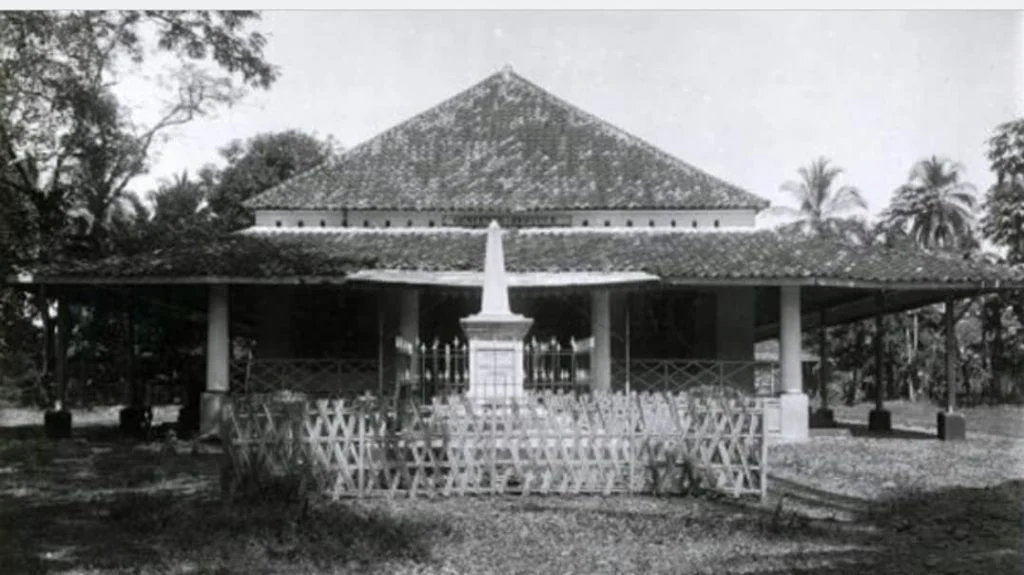
Depok, a municipality in West Java province, Indonesia, boasts a history far more complex and intriguing than its current administrative status might suggest. While officially established as a municipality on April 27, 1999, having previously been a district within Bogor Regency, the story of Depok stretches back centuries, revealing a fascinating chapter where it functioned as a self-governing entity with its own president. This often-overlooked narrative sheds light on a unique period of Indonesian history, marked by colonial land ownership, emancipation, and the establishment of a distinctive local governance.
The genesis of Depok’s unique status can be traced back to the late 17th century. Cornelis Chastelein, a prosperous Dutch merchant, acquired a substantial tract of land in the Depok area, spanning approximately 12.44 square kilometers, for a sum of 2.4 million Dutch Guilders. This land was designated as "partikelir" – private property – placing it outside the direct administrative control of the Dutch East Indies government. By the 18th century, this private land had evolved into an administrative territory with its own rudimentary civil government, known as a gemeente bestuur. Cornelis Chastelein, therefore, stands as the first proprietor and founder of Depok.
At the time of Chastelein’s acquisition, the Depok region was largely undeveloped, characterized by dense wilderness. With the labor of his enslaved individuals, who hailed from diverse ethnic backgrounds, Chastelein embarked on the arduous task of clearing the forests to establish arable land. The extent of his dominion was considerable, encompassing not only the present-day Depok area but also stretching to Pasar Minggu in South Jakarta and Gambir in Central Jakarta. The initial inhabitants of this burgeoning territory were the enslaved people owned by Chastelein.
A pivotal moment in Depok’s history arrived with Chastelein’s passing. A devout Catholic, he exhibited remarkable generosity towards his enslaved population. In his will, dated June 28, 1714, Chastelein bequeathed his land, houses, livestock, and agricultural tools to his enslaved individuals. Crucially, he also decreed their emancipation upon his death. To preempt potential disputes and ensure an orderly transition, he appointed Jarong van Bali to lead and manage the newly freed populace.

The freed inhabitants, while grateful for their liberty, harbored concerns about future power struggles after Jarong van Bali’s tenure. To address this, they collectively agreed to implement a democratic system for electing their leader, who would be designated as "president," with terms limited to three years. This innovative governance structure, devoid of a vice-presidential role, stipulated that the president would be assisted by a secretary in executing their duties. The framework for this governmental order was meticulously drafted by a lawyer from Batavia and officially implemented in 1913.
The Rise of the Depok Republic
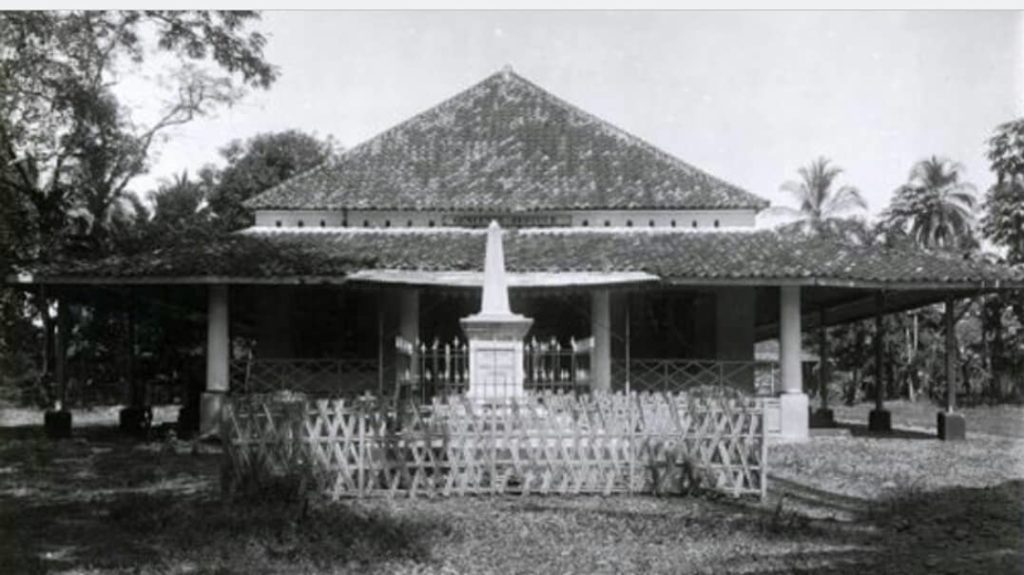
The establishment of this unique governmental system marked the formalization of Depok as an independent entity, albeit one operating within the broader colonial context. The official name of this governing body was Het Gemeente Bestuur van Het Particuliere Land Depok. The selection of its leaders was a democratic process, with the populace electing their president. The administrative heart of this nascent nation was located at Kilometer 0, a site still commemorated by the Depok Monument. Nearby, a government building, now serving as Harapan Hospital, housed the administrative functions. The presidential term was intentionally short, a three-year mandate, likely designed to ensure regular rotation of leadership and prevent the consolidation of power.
The first president of Depok was Gerrit Jonathans, who assumed office in 1913. Following his tenure, three other presidents led the nation: Martinus Laurens, who served in 1921; Leonardus Leander, who took office in 1930; and Johannes Matjis Jonathans, who served in 1952. Regrettably, detailed records pertaining to the specific achievements or challenges during each president’s term are scarce, leaving many aspects of their administrations shrouded in historical ambiguity.
A Legacy of Emancipation and Self-Governance
Cornelis Chastelein’s vision extended beyond mere land acquisition; it encompassed the establishment of a self-sustaining community built on principles of fairness and autonomy for those he had previously enslaved. His will served as the foundational document for this unique social experiment. By granting land, resources, and freedom, Chastelein empowered his former bondsmen to forge their own destiny. The subsequent fear of internal conflict among the freed population catalyzed the adoption of a democratic electoral system, a remarkably progressive step for its time, especially within the colonial framework of the Dutch East Indies.
The structure of the Depok government, with its elected president and limited terms, reflected a desire for stability and equitable representation. The absence of a vice-president meant that the president was solely accountable for their decisions, with the secretary acting as a crucial administrative support. This system, though small in scale, represented a significant exercise in self-determination for a community that had been denied basic human rights for generations.
Transition and Integration into Indonesia
The unique status of Depok as a private land with its own governance eventually came to an end. In 1952, the last president of Depok, Matijs Jonathans, formally handed over the territory to the Indonesian government through an official act of transfer of the private land. This marked the end of an era for Depok as an independent entity.
From an administrative perspective, Depok as a municipality is relatively young, celebrating its 22nd anniversary in 2021. However, when considering its historical trajectory prior to becoming part of West Java, Indonesia, its lifespan as a distinct entity stretches back over three centuries. The narrative of Depok, therefore, is not merely that of a modern Indonesian municipality but also of a historical territory that achieved a form of self-governance and independence before Indonesia itself gained its independence from colonial rule.
Broader Context and Implications
The history of Depok offers a unique lens through which to examine the complexities of colonial land ownership and its long-term societal impacts. Chastelein’s actions, while rooted in personal conviction and perhaps a degree of guilt, inadvertently created a micro-nation with its own governing structure. This period highlights the fragmented nature of colonial rule, where private entities could wield significant administrative power, often shaping local destinies independently of the overarching colonial government.
The story of Depok’s transition from private land to a self-governing entity and finally to an Indonesian municipality underscores the evolving political landscape of Indonesia. It serves as a reminder that the nation’s modern administrative divisions are built upon a rich tapestry of historical precedents, some of which are far more nuanced than commonly understood. The legacy of Chastelein’s will and the subsequent democratic experiment in Depok remain a compelling chapter in the broader narrative of Indonesian history, illustrating a unique path towards self-determination shaped by colonial legacies and the resilience of local communities.
The fact that Depok had its own elected president and governed itself for a significant period before being integrated into the Indonesian state raises questions about national identity formation and the recognition of diverse historical trajectories within a unified nation. While Depok’s current administrative status is that of a municipality, its historical narrative as a quasi-independent nation adds a layer of depth and significance to its identity. This history challenges a monolithic understanding of Indonesian historical development and emphasizes the importance of local narratives in shaping a comprehensive national history. The period of Depok’s self-governance can be seen as an early, albeit unique, experiment in Indonesian self-determination, predating the nation’s formal independence. The relatively short presidential terms might also be analyzed in the context of preventing potential dictatorships, a concern that has resonated throughout various political systems. The lack of detailed records from the presidential eras is a common challenge in historical research, particularly for smaller, less documented entities, yet the existence of these presidencies is undeniable and significant. The transfer of land in 1952 also occurred within a broader context of decolonization and the consolidation of the newly independent Indonesian state, which sought to integrate all territories under its sovereign control. This act by President Matijs Jonathans can be viewed as a final step in Depok’s journey towards becoming an integral part of the Indonesian nation.