Nila Kartika Wati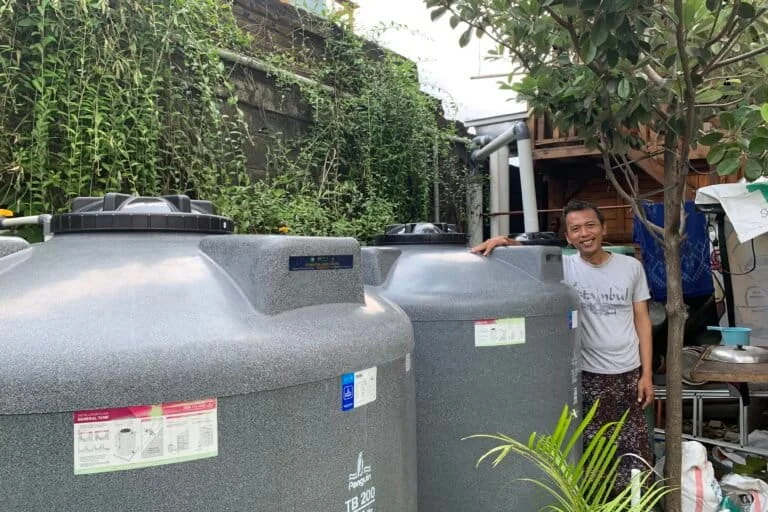
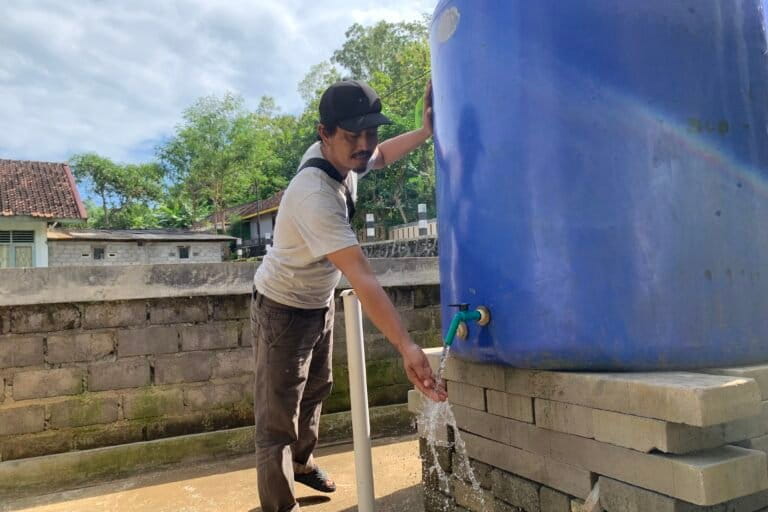
As the Indonesian archipelago braces for a prolonged period of heat and drought, the residents of Kalurahan Balong, located in the Girisobo District of Yogyakarta, have taken a proactive and unconventional approach to securing their most vital resource. By the beginning of April, marking the tail end of the rainy season, the community successfully implemented a large-scale rainwater harvesting initiative, ensuring that the perennial threat of water scarcity will not paralyze the village this year. In a region where drought is an expected seasonal visitor, the village has managed to filter and store more than 5,000 cubic meters of rainwater within the village hall’s infrastructure, providing a buffer against the looming climate crisis.
This strategic move comes as a direct response to a stark warning issued by the National Research and Innovation Agency (BRIN) in late March. BRIN scientists have alerted the nation to the emergence of a "Godzilla" El Niño—a term used to describe an exceptionally strong and disruptive El Niño cycle. This climatic phenomenon is expected to persist from April through October, bringing with it temperatures significantly higher than the average dry season and severely reduced precipitation across Java. By anticipating this shift as early as January, the people of Balong have transitioned from being victims of their environment to active managers of their water security.
The Geological Challenge of the Gunungkidul Karst
The Kalurahan Balong area, situated at the southern tip of the Gunungkidul Regency, faces unique geographical hurdles. The entire region is characterized by a karst landscape—a topography formed from the dissolution of soluble rocks such as limestone. While karst landscapes are beautiful, they are notoriously difficult for water management. In Balong, the soil is thin and the underlying rock is highly porous, meaning that rainwater quickly disappears into underground networks, leaving the surface dry.
Historically, this has meant that traditional methods of water extraction are largely ineffective. Purwanta, the Carik (Village Secretary) of Kalurahan Balong, noted that the community has attempted to drill deep wells on multiple occasions with government assistance. Despite drilling to depths exceeding 100 meters, the efforts yielded no water, as the subterranean rivers typical of karst regions remained elusive or unreachable.
Furthermore, the village’s natural water sources have dwindled over the decades. A local pond, which once served as a primary reservoir for the community, has completely dried up and has since been repurposed as a football field. The decline of these natural sources is attributed not only to climate change but also to significant changes in land use. The construction of the Southern Cross Road (Jalur Lintas Selatan or JLS), which spans from Banten to East Java, has cut through the karst heartland of Gunungkidul. This massive infrastructure project is believed to have disrupted local hydrogeological patterns, causing many traditional springs and ponds to vanish.
A Technological and Traditional Synthesis
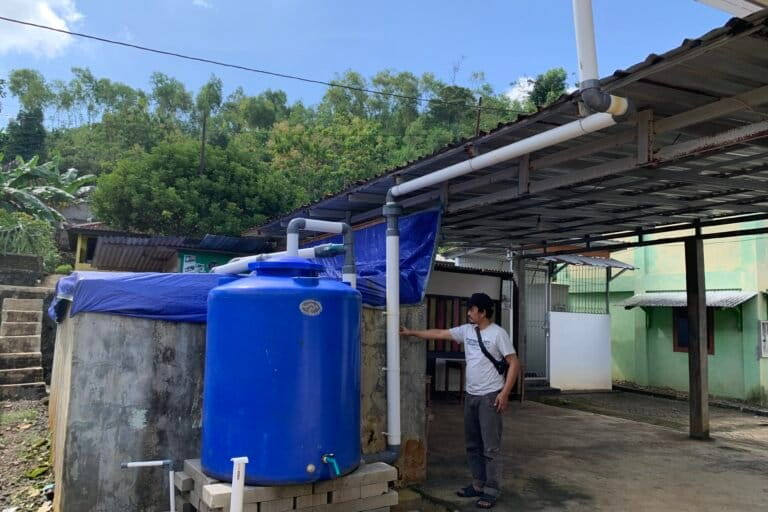
The solution adopted by Balong is a sophisticated yet accessible system of rainwater harvesting. While the ancestors of the village have stored rainwater for centuries, those traditional methods often involved open containers that were prone to contamination and mosquito breeding. The new installation, completed in December 2025, utilizes technology verified by the Rainwater School (Sekolah Air Hujan or SAH), an organization that has pioneered hygienic water harvesting across Indonesia.
"We based our predictions on the traditional titimangsa calendar, which suggested this year’s dry season would be unusually long," Purwanta explained. "That is why we built an installation that produces water ready for direct consumption. In a crisis, drinking water is the most critical priority."
The system involves a series of pipes and specialized filters that remove sediments and pathogens, making the water safer than many alternative sources. The village now holds approximately 5 million liters of filtered water, a volume calculated to be sufficient for the drinking needs of the village’s 4,003 residents throughout the duration of the El Niño cycle.
Economic Resilience and Household Adoption
One of the most compelling arguments for rainwater harvesting in rural Yogyakarta is its economic viability. For many residents, the dry season usually necessitates the purchase of water from commercial tankers, which can be prohibitively expensive for low-income households. Alternatively, many rely on the regional water utility (PDAM), which often suffers from supply interruptions during peak demand periods.
Painah, a local housewife and the head of the village’s Family Welfare Movement (PKK), has become a vocal advocate for the system. Since January, she has been consuming the harvested rainwater and reports no health issues; on the contrary, she finds the water "fresher and healthier."
"The water is clean and guaranteed to be hygienic," Painah stated. "It is much more economical than subscribing to PDAM or buying from tankers. At the village hall, residents can take what they need for their gallon containers without paying a cent."
The success of the communal system has sparked a wave of interest among individual households. The cost of installing a domestic rainwater filtration system is remarkably low, often less than IDR 1 million (approximately USD 65). Given that most houses in the area are already equipped with gutters and basic drainage, the transition to a filtered harvesting system is technically simple.
"Rain falls everywhere, not just at the village hall," Painah remarked. "If every household harvests their own water, we can ensure that no one in this village ever suffers from a water crisis again."
Community-Led Initiatives: The Gusdurian Model
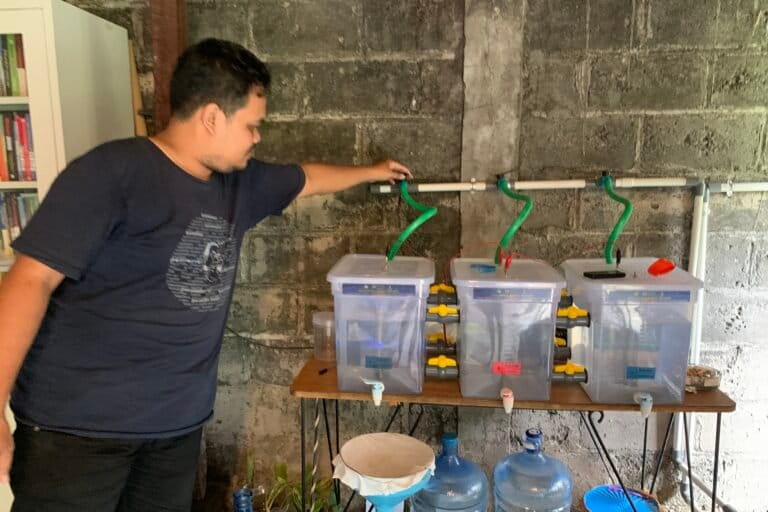
The movement toward rainwater sovereignty is not limited to Balong. In the Banguntapan area of Bantul, the Gusdurian community—a social activist network inspired by the late Indonesian President Abdurrahman Wahid—has also embraced the technology. In January 2026, they installed a harvesting system equipped with an electrolysis unit to further purify the water.
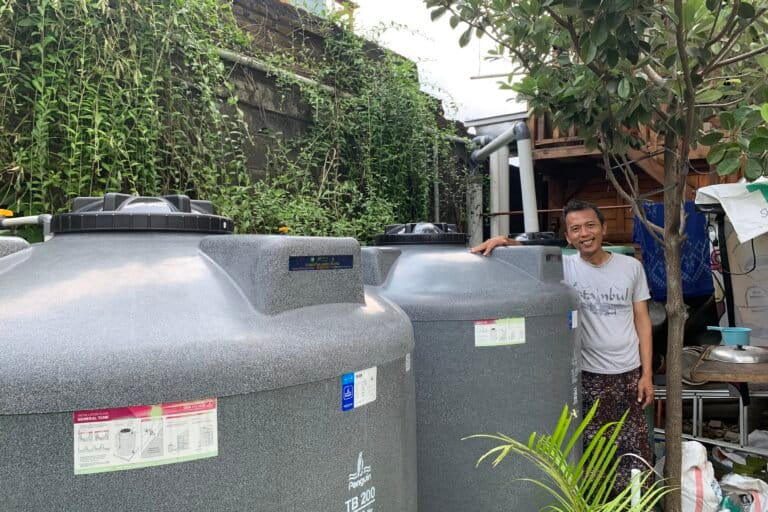
Prior to this, the community center relied on bottled water, consuming roughly one 19-liter gallon per day for the 15 staff members and volunteers on-site. This resulted in an expenditure of approximately IDR 240,000 per month. By switching to rainwater, they have eliminated this cost entirely. Their storage capacity of 6,000 liters, spread across three large tanks, is estimated to last through a six-month drought.
Nur Solikhin, an administrator for the Gusdurian community, emphasized that the project is as much about ideology as it is about utility. Through their "Jagat" (Religious Network for Nature and Tolerance) program, the community aims to demonstrate that environmental stewardship is a moral imperative.
"We are concerned about the ecological impact of over-extracting groundwater," Solikhin said. "By harvesting rain, we reduce our footprint. We also maintain strict Standard Operating Procedures (SOPs) to ensure quality, such as cleaning the gutters once a month and diverting the first ten minutes of any rainfall to ensure the dust is washed away before we start collecting."
Laboratory tests conducted by the community show that their harvested rainwater has a Total Dissolved Solids (TDS) level of less than 10 mg/L. In comparison, many commercial bottled water brands have TDS levels around 50 mg/L. A lower TDS level indicates higher water purity, making the rainwater technically "healthier" for the kidneys and general metabolic function.
Advocacy for a National Shift in Water Policy
Despite the clear success of these community-led projects, activists argue that the Indonesian government remains fixated on unsustainable "quick-fix" solutions. Halik Sandera, an activist with the Rainwater School (SAH) based in Sleman, criticized the official reliance on borehole drilling and water trucking.
"The government’s current approach is expensive and non-renewable," Sandera argued. "In karst regions like Gunungkidul, drilling is a gamble that often fails. And sending water trucks is like putting a bandage on a deep wound—it doesn’t solve the root cause. The funds used for these temporary measures could be better spent on building permanent rainwater harvesting infrastructure."
Sandera and the SAH are currently working to secure intellectual property rights for the filtration technologies they have developed. Their goal is not to commercialize the tech, but to ensure it remains in the public domain, preventing private companies from patenting the designs and charging royalties to poor communities.
From a regulatory standpoint, the framework for rainwater harvesting is already in place. Law No. 17 of 2019 concerning Water Resources and Minister of Public Works Regulation No. 11/PRT/M/2014 both recognize rainwater as a legitimate and encouraged source of raw water. Furthermore, the Indonesian Food and Drug Authority (BPOM) has established safety standards for rainwater intended for human consumption.
The missing piece, according to advocates, is the political will to integrate these systems into national infrastructure planning. As climate change makes weather patterns increasingly unpredictable, the "Balong Model" offers a blueprint for resilience. It suggests that by combining traditional weather-tracking wisdom with modern filtration technology and community-driven management, even the most water-stressed regions of Indonesia can secure their future, one raindrop at a time.