Nasution Nanang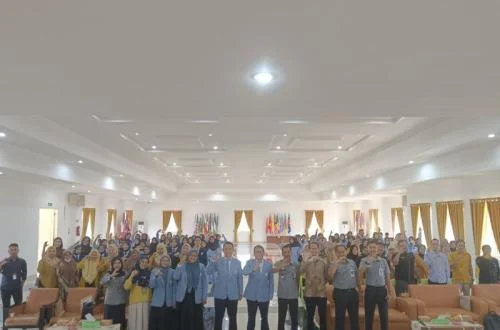
PANGKALPINANG – The Regional Office of the Ministry of Law and Human Rights (Kanwil Kemenkumham) of Bangka Belitung Islands recently conducted a comprehensive educational program focused on intellectual property (IP) protection, specifically delving into the intricacies of patents and music royalties. The impactful event, held on Tuesday at the Institut Citra Internasional (ICI) in Pangkalpinang, was strategically designed to elevate public understanding and appreciation for the critical role intellectual property plays in fostering innovation, economic growth, and the safeguarding of creative endeavors within the academic sphere and beyond. This initiative underscores a broader national commitment to cultivating a robust IP ecosystem, starting from the foundational pillars of education and research.
The Strategic Imperative: Fostering IP Culture in Academia
The program at ICI was not merely an isolated event but a significant component of Kanwil Kemenkumham Bangka Belitung’s proactive strategy to embed IP awareness deeply within the intellectual heart of the community – its academic institutions. Johan Manurung, the Head of Kanwil Kemenkumham Bangka Belitung, passionately articulated this vision during his opening remarks. He emphasized that universities, by their very nature, serve as fertile grounds for innovation, research, and the generation of original intellectual works. It is within these hallowed halls, he argued, that the seeds of future patents, copyrights, and trademarks are sown. Therefore, instilling a profound understanding of IP protection among the academic community – including faculty members, researchers, and students – is paramount.
Manurung elaborated on the dual benefits of IP knowledge for academics. Firstly, it provides a structured mechanism for legal protection, ensuring that the creators’ rights are recognized and upheld. This includes safeguarding their moral rights, which acknowledge authorship, and their economic rights, which allow them to derive financial benefit from their creations. Secondly, and perhaps more crucially in the context of national development, a clear grasp of IP systems empowers academics to leverage their innovations for greater economic value. Patents, for instance, can be licensed or commercialized, transforming groundbreaking research into tangible products or services that contribute to societal advancement and economic prosperity. Copyrights protect artistic and literary works, enabling creators to earn royalties from their music, books, or software. This strategic approach aligns with Indonesia’s broader national agenda to shift towards a knowledge-based economy, where innovation and intellectual capital are key drivers of competitiveness and sustainable development. The initiative at ICI, therefore, represents a localized effort to contribute to this national aspiration by empowering the next generation of innovators and entrepreneurs.
Deep Dive into the Program: Patents and Music Royalties
The educational session, aptly themed "Intellectual Property Protection in the Fields of Patents and Music Royalties," attracted a diverse audience comprising lecturers and students from various departments within ICI. The choice of patents and music royalties as focal points for the discussion was deliberate, reflecting their widespread relevance across scientific, technological, and creative industries, which are increasingly intertwined with academic research and artistic expression.
Expert speakers from Kanwil Kemenkumham Bangka Belitung meticulously guided participants through the intricacies of patent law, explaining what constitutes a patentable invention, the criteria for novelty, inventive step, and industrial applicability, and the rigorous process of patent application and registration. They highlighted the importance of early disclosure protection and the strategic advantages patents offer in securing market exclusivity and attracting investment for technological innovations. The discussions included practical case studies, illustrating how groundbreaking research from university laboratories could be translated into protectable patents, thereby securing competitive advantages for researchers and their institutions.
Simultaneously, the session delved into the complex world of music royalties, an area of growing importance in the digital age. Speakers elucidated the nuances of copyright law as it pertains to musical compositions, sound recordings, and performances. They explained the different types of royalties – such as mechanical royalties, performance royalties, and synchronization royalties – and the mechanisms through which artists, composers, and publishers can claim and collect their due remuneration. The rise of streaming platforms and digital distribution channels has introduced new complexities and opportunities for monetization, making this aspect of IP particularly relevant for students and faculty interested in creative arts, media, and digital entrepreneurship. The program aimed to demystify these processes, providing a clear roadmap for participants to protect and monetize their musical creations effectively.
Adi Riyanto, the Head of Intellectual Property Services at Kanwil Kemenkumham Bangka Belitung, reiterated the fundamental importance of registering intellectual property as the definitive step for safeguarding both the moral and economic rights of creators. "Intellectual property protection," Riyanto asserted, "does not merely offer legal certainty; it also carries significant economic value that can be harnessed by the owner of the work. This is crucial for preventing potential disputes and infringement issues in the future." He elaborated that while moral rights – the right to be recognized as the creator and to object to derogatory treatment of the work – are generally inalienable, economic rights, which include the right to reproduce, distribute, perform, and adapt the work, are what allow creators to earn a livelihood from their ingenuity. Formal registration with the Directorate General of Intellectual Property (DGIP) under Kemenkumham provides undeniable legal proof of ownership, making it significantly easier to enforce rights against infringers and to engage in licensing, assignment, or commercialization agreements with confidence. Without registration, proving ownership and claiming damages in cases of infringement becomes a considerably more arduous and often unsuccessful endeavor.
Bangka Belitung’s IP Potential: A Regional Perspective
The Rektor of Institut Citra Internasional, whose name was not specified in the original content but whose perspective is crucial, provided an insightful local context to the discussion. The Rektor underscored the strategic role of higher education institutions like ICI in driving the protection and utilization of intellectual property, particularly within the specific economic and social landscape of Bangka Belitung. The province, known for its pristine beaches, tin mining heritage, and burgeoning tourism sector, also houses a growing demand for skilled professionals in healthcare. The Rektor highlighted that various academic fields offered at ICI, such as nursing, midwifery, and tourism, possess immense potential for generating intellectual property that warrants legal protection.
For instance, in nursing and midwifery, innovations could range from new patient care protocols, specialized medical devices, public health education modules, to unique therapeutic approaches. Each of these, if sufficiently novel and inventive, could be eligible for patent protection or copyright as educational materials. In the rapidly expanding tourism sector, IP can be found in unique destination branding strategies, innovative eco-tourism models, distinctive culinary recipes that become signature dishes, cultural performances, traditional craft designs, and even software applications for tourism management. Protecting these unique offerings through trademarks, copyrights, and industrial designs can provide a competitive edge, differentiate local products and services, and prevent unauthorized exploitation by external entities. By encouraging students and faculty in these fields to think critically about the intellectual assets they create, ICI aims to contribute directly to the economic diversification and sustainable development of Bangka Belitung, fostering a culture where local ingenuity is recognized, protected, and ultimately, valorized.
The Broader National Landscape of Intellectual Property
Indonesia has made significant strides in recent decades to strengthen its intellectual property framework, recognizing IP as a cornerstone of national development. The country is a signatory to various international IP treaties and conventions, including the TRIPS Agreement (Agreement on Trade-Related Aspects of Intellectual Property Rights) under the World Trade Organization (WTO), and has continually updated its domestic IP laws. Key legislation includes Law No. 13 of 2016 concerning Patents, Law No. 28 of 2014 concerning Copyright, Law No. 20 of 2016 concerning Trademarks and Geographical Indications, and Law No. 31 of 2000 concerning Industrial Designs. These laws provide the legal backbone for protecting a wide spectrum of intellectual creations.
Statistics from the Directorate General of Intellectual Property (DGIP) frequently illustrate a steady increase in IP registrations across various categories, reflecting growing awareness and economic activity. For example, in recent years, Indonesia has seen thousands of patent applications annually, alongside hundreds of thousands of copyright registrations, driven by a vibrant creative industry and a burgeoning startup ecosystem. While the majority of these applications originate from major economic hubs, initiatives like the one in Bangka Belitung are crucial for decentralizing IP awareness and encouraging innovation in all regions. The Ministry of Law and Human Rights, through its regional offices, plays a pivotal role in disseminating information, facilitating registration processes, and ultimately, fostering an environment conducive to intellectual property creation and enforcement nationwide. This concerted effort is vital for Indonesia to enhance its global competitiveness, attract foreign investment in innovation-driven sectors, and ensure that its own innovators and creators receive due recognition and reward.
Empowering Innovators: The Participant Experience
The immersive nature of the IP education program at ICI left a tangible impact on the participants. Students and lecturers alike engaged actively in the question-and-answer sessions, seeking clarification on complex legal terminologies and practical application procedures. Many expressed a newfound appreciation for the strategic value of IP, which previously might have been perceived as a niche legal concern. For instance, a hypothetical nursing student, perhaps developing an innovative mobile application for patient monitoring, might have realized the potential to protect their software code via copyright and specific features through a utility model or even a patent. Similarly, a lecturer in the tourism department, having crafted a unique module on sustainable tourism practices for the Bangka Belitung context, would now understand the importance of copyrighting their educational materials and potentially trademarking unique course names or methodologies.
The interactive format, which included illustrative examples and simplified explanations of legal jargon, helped bridge the gap between academic research and its practical legal and economic implications. Participants reported feeling more confident about navigating the IP landscape, motivated to explore the registrability of their own projects, and equipped with basic knowledge to identify potential IP in their respective fields. This empowerment is critical, as it transforms abstract legal concepts into actionable strategies for individual creators and their institutions, fostering a culture of innovation that is also commercially savvy and legally secure.
Challenges and Opportunities in IP Protection
Despite significant progress, Indonesia, like many developing nations, still faces challenges in fully realizing its IP potential. These include a relatively low rate of IP registration compared to the volume of creative output, particularly outside major urban centers. There is also a persistent need to combat IP infringement, ranging from counterfeit goods to digital piracy, which undermines the efforts of legitimate creators and businesses. Furthermore, continuous education is required to keep pace with rapid technological advancements and evolving business models, especially in digital and creative economies.
However, these challenges also present immense opportunities. Programs like the one conducted by Kanwil Kemenkumham Bangka Belitung are directly addressing the awareness gap, which is often the first hurdle. By engaging academic institutions, the Ministry is investing in a multiplier effect, as educated students and faculty will carry this knowledge into their future careers, startups, and research endeavors. The growing digital infrastructure in Indonesia also offers new avenues for IP enforcement and monetization, provided creators are equipped with the knowledge to navigate these platforms securely. Moreover, the focus on specific regional potentials, such as tourism and healthcare in Bangka Belitung, allows for tailored IP strategies that can genuinely boost local economies and protect unique cultural and intellectual assets.
Looking Ahead: Sustainable IP Development
The successful IP education program at Institut Citra Internasional marks a crucial step in Kanwil Kemenkumham Bangka Belitung’s ongoing efforts to build a more IP-conscious society. The hope is that this initiative will serve as a catalyst for future collaborations between the Ministry and various academic, industrial, and creative sector stakeholders across the province. Follow-up programs could involve dedicated IP clinics at universities, specialized workshops for specific industries, or even partnerships to assist local entrepreneurs and artists in the IP registration process. The long-term vision is to cultivate an environment where intellectual property is not merely seen as a legal formality but as an integral asset for innovation, economic growth, and cultural preservation in Bangka Belitung and, by extension, throughout Indonesia. By continuously investing in IP education and support, the nation can ensure that its rich tapestry of creativity and ingenuity is adequately protected and leveraged for the benefit of all.