Bambang Pamungkas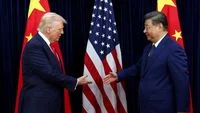
Jakarta, CNBC Indonesia – Beijing is meticulously threading a needle in the escalating conflict between the United States and Israel bloc and Iran, balancing overt diplomatic engagement with Tehran with an eye towards a pivotal meeting between President Xi Jinping and President Donald Trump next month. This strategic calculus is profoundly shaping China’s immediate and long-term stance in the volatile Middle Eastern landscape, a region critical to its energy security and global ambitions.
As the world’s largest importer of crude oil, China’s economic stability is inextricably linked to the unimpeded flow of energy from the Middle East, a region that supplies roughly half of its total energy requirements. This profound reliance dictates Beijing’s primary interest: the swift de-escalation of hostilities and the preservation of regional stability. This overarching strategic imperative underpins China’s current measured approach, which surprisingly has garnered a degree of acknowledgment from Washington. President Trump himself has reportedly credited Beijing for its role in encouraging Iran to participate in peace talks held in Pakistan last weekend, a significant, albeit preliminary, diplomatic achievement.
"You have heard President Trump repeatedly mention how the Chinese are talking to Iran," noted Eric Olander, editor-in-chief of the China-Global South Project, in an interview with Reuters on Friday, April 17, 2026. "That puts them in the negotiating room, even if not at the main table." This observation highlights China’s nuanced position, engaging with a state often at odds with Western powers while simultaneously seeking to maintain a constructive, if competitive, relationship with the United States.
A Delicate Balancing Act: Geopolitics and Domestic Imperatives
China’s approach to the Iran conflict is not merely about regional stability; it is intricately woven into its broader geopolitical agenda, particularly as the high-stakes Xi-Trump summit looms. Sources privy to the inner workings of the Chinese government indicate that Beijing is leveraging the current crisis to advance other strategic interests, notably concerning trade disputes and the sensitive issue of Taiwan. The perception within Beijing is that President Trump, characterized as "transactional and susceptible to praise," presents a unique opportunity. Consequently, China is keen to "roll out the red carpet for him and ensure strategic stability" ahead of the bilateral talks, aiming to create an environment conducive to favorable outcomes.
This pursuit of strategic stability has led China to adopt a conspicuously restrained posture regarding Washington’s military actions in the region. Despite increasing pressure on Iran, including a reported naval blockade by the U.S. Navy on Iranian ports, Beijing has largely refrained from issuing strong condemnations of Washington’s military moves. This deliberate restraint is a calculated effort to preserve the momentum for the impending Xi-Trump meeting, which had reportedly been delayed due to the burgeoning conflict.
The Diplomatic Offensive: A Chronology of Engagement
The roots of the current conflict can be traced back to February 28, when initial hostilities erupted, quickly escalating into a broader regional crisis. Since then, China has embarked on an intensive diplomatic offensive, showcasing its commitment to a peaceful resolution. On Tuesday, President Xi Jinping himself articulated a four-point peace plan, emphasizing the critical importance of peaceful coexistence, the sovereignty of nation-states, adherence to international rule of law, and a balanced approach between economic development and security. This comprehensive framework underscores China’s long-standing principles of non-interference and multilateralism, positioning itself as a responsible global stakeholder.
However, in the face of President Trump’s stark warning that "an entire country could be destroyed overnight," China’s official response remained cautiously worded. Foreign Ministry spokesperson Mao Ning merely expressed Beijing’s "deep concern" and urged all parties involved to play a "constructive role in de-escalating the situation." This measured language reflects China’s desire to avoid alienating either side while still asserting its call for restraint.
The intensity of China’s diplomatic outreach is further evidenced by the relentless efforts of its top officials. Foreign Minister Wang Yi has reportedly engaged in nearly 30 calls and meetings with international counterparts, tirelessly advocating for a ceasefire. Concurrently, special envoy Zhai Jun undertook an arduous tour of five Gulf and Arab capitals, navigating the treacherous realities of the conflict zone. During one leg of his journey, Zhai was compelled to travel by land to bypass contested airspace, recounting instances of hearing air raid sirens during his perilous passage. Such firsthand experiences highlight the significant risks China’s diplomats are willing to undertake in their pursuit of peace.
President Xi’s presentation of his peace plan during a meeting with Abu Dhabi Crown Prince Sheikh Khaled bin Mohamed bin Zayed Al Nahyan also reveals another layer of China’s multi-faceted strategy. This engagement with a key regional player and a rival of Iran underscores Beijing’s broader efforts to cultivate relationships across the Middle East, demonstrating its capacity to engage with diverse actors while simultaneously pushing Tehran towards dialogue. This strategic outreach aims to solidify China’s standing as a credible mediator, capable of fostering consensus among competing interests.
Strategic Imperatives: Energy Security and the Belt and Road Initiative
China’s deep entanglement in the Middle East is fundamentally driven by its energy needs. As the world’s largest energy consumer, China’s economic engine relies heavily on oil and gas imports, with a substantial portion originating from the Gulf region. Any disruption to the Strait of Hormuz, a vital chokepoint for global oil shipments, would have catastrophic repercussions for China’s economy, potentially triggering widespread energy shortages and inflationary pressures. This vulnerability has compelled Beijing to adopt a proactive stance in maintaining regional stability, often prioritizing economic pragmatism over ideological alignment.
Beyond energy, China’s ambitious Belt and Road Initiative (BRI) further cements its interest in a peaceful Middle East. The BRI envisions a vast network of infrastructure projects connecting Asia, Africa, and Europe, with several crucial corridors traversing the Middle East. Stability in the region is paramount for the successful implementation and security of these projects, which include ports, railways, and energy pipelines. A protracted conflict would not only endanger existing investments but also deter future development, undermining a cornerstone of China’s global economic strategy. This confluence of energy security and infrastructure development provides a robust rationale for China’s persistent diplomatic engagement.
The US Angle: Acknowledgment Amidst Skepticism
While President Trump’s acknowledgment of China’s role in encouraging Iran to talks offers a rare moment of cooperation, the broader US perspective on China’s Middle East engagement remains complex and often skeptical. Washington traditionally views Beijing’s expanding influence in the region with a mix of suspicion and concern, fearing that it could undermine US strategic interests and alliances. However, in the immediate context of de-escalating a potentially devastating conflict, any assistance in bringing parties to the negotiating table is likely to be cautiously welcomed.
The US strategy in the Middle East has long focused on containing Iran, supporting its regional allies, and ensuring the free flow of oil. China’s non-confrontational approach, while seemingly beneficial for de-escalation, is also seen by some in Washington as an attempt to reap the benefits of stability without sharing the full burden of security responsibilities. This undercurrent of strategic competition persists even as both powers find common ground in preventing a full-blown regional war.
Limitations and Realities of China’s Influence
Despite its active diplomacy, several analysts contend that China’s actual room for influence remains inherently limited. Beijing, unlike Washington, lacks a significant military presence in the Middle East that could lend weight to its diplomatic overtures. While it can persuade and facilitate, it cannot impose its will through military might, a factor that often proves decisive in high-stakes regional conflicts. Professor Cui Shoujun of Renmin University, an expert in international relations, suggests that "the sense of urgency and the mode of China’s tactical intervention are changing" as the conflict, which began on February 28, continues to drag on. This indicates an evolving understanding within Beijing of the complexities and limitations of its role.
Drew Thompson, from the S. Rajaratnam School of International Studies, offers a perspective on China’s advantageous position: "Beijing’s ideal outcome is to maintain an unconditional relationship with anti-Western states like Iran, but also to preserve the opportunity for some kind of modus vivendi with the U.S." This highlights China’s desire to hedge its bets, cultivating ties across the geopolitical spectrum without fully committing to either side. However, not all analyses are as sanguine about China’s effectiveness. Patricia Kim of the Brookings Institution views Beijing’s diplomacy as largely symbolic. "While Iran wants to highlight its relationship with China and has asked Beijing to be a guarantor of a ceasefire, China has shown zero interest in taking on that role," she asserted. "China appears quite content to remain on the sidelines while the United States bears the primary pressure." This critique suggests that China’s actions might be more about burnishing its image as a responsible power and less about truly altering the conflict’s trajectory or taking on the heavy lifting of conflict resolution.
The Impending Xi-Trump Summit: Practicalities Over Grand Bargains
The highly anticipated meeting between President Xi Jinping and President Donald Trump is expected to focus predominantly on practical, tangible outcomes rather than sweeping geopolitical agreements. It is widely speculated that China may agree to substantial purchases of Boeing aircraft, potentially marking one of the largest transactions in history, alongside an increase in agricultural product imports from the United States. These economic concessions would serve as goodwill gestures, aiming to ease trade tensions and create a more positive atmosphere for bilateral relations.
However, analysts are largely in agreement that the summit is unlikely to tackle more substantive, intractable issues that define the long-term strategic competition between the two superpowers. Discussions on critical matters such as artificial intelligence governance, market access for foreign companies in China, or the contentious issue of industrial overcapacity are expected to be sidestepped or addressed only superficially. Scott Kennedy, from the Center for Strategic and International Studies, offered a stark assessment: "There is absolutely no chance for China to reach a grand bargain with the United States." This prognosis suggests that while the immediate crisis might create temporary convergences of interest, the fundamental divergences in their global visions and economic models remain firmly in place.
Future Outlook: A Shifting Global Order
China’s meticulous navigation of the Middle East crisis, while serving its immediate strategic interests, also signals a broader evolution in its foreign policy. The active diplomatic outreach, even with its acknowledged limitations, underscores Beijing’s growing willingness to engage in complex global issues, gradually moving beyond its traditional non-interference doctrine. However, this engagement remains highly selective and calibrated, prioritizing national economic security and geopolitical leverage.
As the US-Israel-Iran conflict continues to unfold, China’s role will be closely watched. Its ability to maintain a delicate balance between its energy needs, its relationship with Iran, and its imperative to stabilize ties with the United States will be a crucial test of its emerging great power diplomacy. The outcome of the Xi-Trump summit, while perhaps not yielding a "grand bargain," will nonetheless offer vital clues about the trajectory of US-China relations and, by extension, the future shape of global stability in an increasingly multipolar world. The current crisis has provided a stark reminder that even as major powers compete, there are moments when shared interests in de-escalation and stability can forge unexpected, if temporary, diplomatic pathways.