Nila Kartika Wati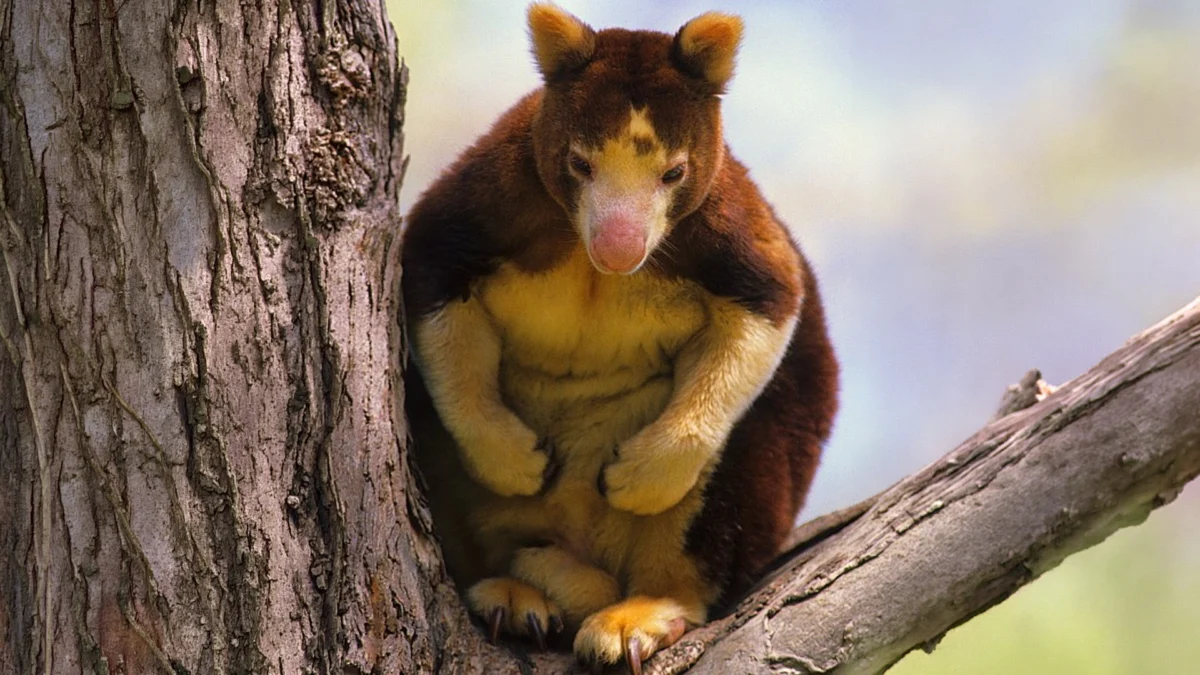
Deep within the mist-shrouded peaks of the Wondiwoi Mountains in West Papua, at an elevation of 1,700 meters above sea level, lives a creature that was, for nearly a century, considered little more than a biological ghost. The Wondiwoi tree kangaroo (Dendrolagus mayri), characterized by its stunning golden-tinted fur that blends seamlessly with the thick mosses of the montane canopy, represents one of the most significant "re-discoveries" in modern mammalogy. First documented by the legendary evolutionary biologist Ernst Mayr in 1928, the species vanished from the scientific record for 90 years, leading many to fear it had succumbed to extinction. It was not until 2018 that British botanist Michael Smith, during a grueling expedition through some of the world’s most rugged terrain, managed to capture the first-ever photographs of the living animal, confirming that this endemic marvel still haunts the high forests of the Wondama Peninsula.
The story of the Wondiwoi tree kangaroo is more than a tale of survival; it is a window into the extraordinary evolutionary divergence that occurred between the marsupials of the Australian continent and those of the New Guinea archipelago. While their cousins in Australia adapted to the arid plains by developing powerful hind legs for high-speed hopping, the tree kangaroos of Papua took a different path, returning to the trees to fill an ecological niche similar to that of primates or lemurs. This evolutionary pivot has resulted in a suite of physical adaptations that make them unique among the Macropodidae family.
Evolutionary Engineering: The Anatomy of an Arboreal Marsupial
Tree kangaroos are fundamentally different from terrestrial kangaroos in ways that highlight the precision of natural selection. To navigate the vertical world of the Papuan rainforest, Dendrolagus species evolved shorter, broader hind legs and significantly more muscular forelimbs. These powerful arms allow them to pull their body weight up vertical trunks, while their curved, needle-sharp claws act as safety hooks, securing a grip on slick bark.
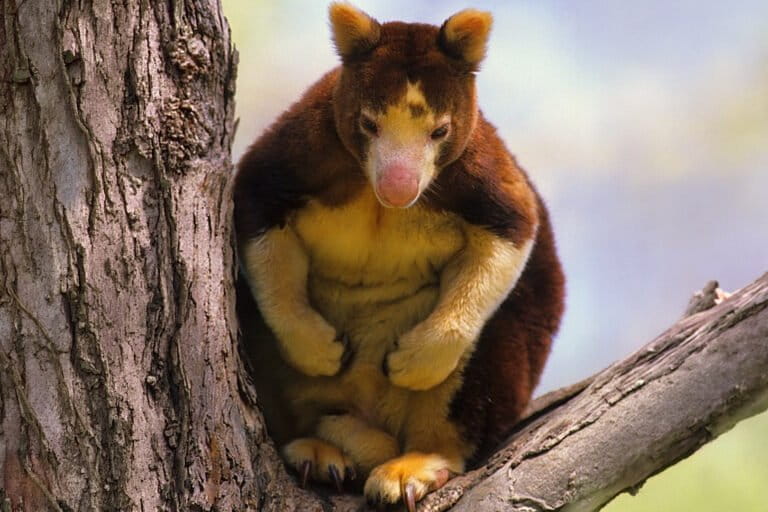
One of the most distinctive features of the tree kangaroo is its tail. Unlike the thick, rigid tails of ground-dwelling kangaroos used for balance and as a "third leg" during pentapedal movement, the tree kangaroo’s tail is remarkably long—ranging from 40 to 94 centimeters—and serves as a sophisticated counterweight. While they do not possess truly prehensile tails like some South American monkeys, they use the appendage with expert precision to stabilize themselves while leaping between branches. Furthermore, the soles of their feet are covered in specialized, roughened skin that provides high-friction traction, allowing them to move confidently across wet, moss-covered limbs that would be treacherous for other mammals.
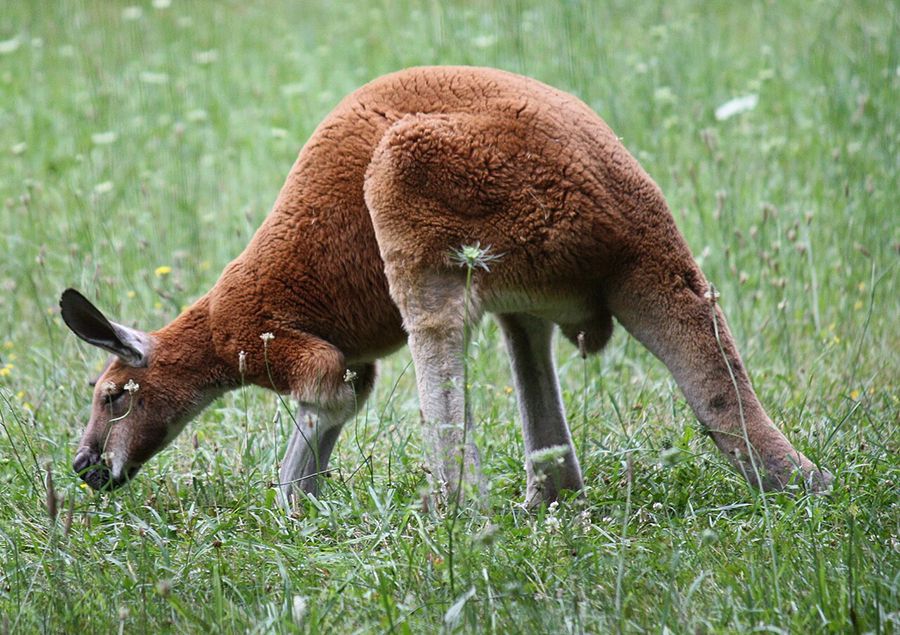
On the ground, these adaptations come at a cost. The very features that make them agile in the canopy—the independent movement of their hind legs and their stocky build—render them somewhat clumsy on flat earth. Instead of the graceful, explosive hops of a Red Kangaroo, the tree kangaroo moves with a gait more reminiscent of a cat or a bear, walking on all four limbs. This vulnerability on the ground is why the preservation of a continuous, unbroken canopy is essential for their survival.
The 2018 Expedition and the Chronology of Rediscovery
The timeline of the Wondiwoi tree kangaroo’s history is marked by long periods of silence. Following Ernst Mayr’s 1928 collection of a single specimen, the scientific community lacked any visual or physical evidence of the species’ continued existence. For decades, the Wondiwoi Mountains remained largely unexplored due to their extreme topography and remote location.
In 2018, Michael Smith, an amateur botanist with a passion for rare orchids and overlooked species, organized a trek into the Wondiwoi range. The expedition was a feat of endurance, requiring the team to hack through dense jungle and navigate steep, limestone ridges. The discovery occurred near the end of the trip when Smith spotted a flash of gold in the high branches. The resulting photographs provided the first diagnostic evidence of Dendrolagus mayri in nearly a century, showing an animal with a dark back and distinctly pale, golden-yellow limbs and rump—the hallmark of the species Mayr described.
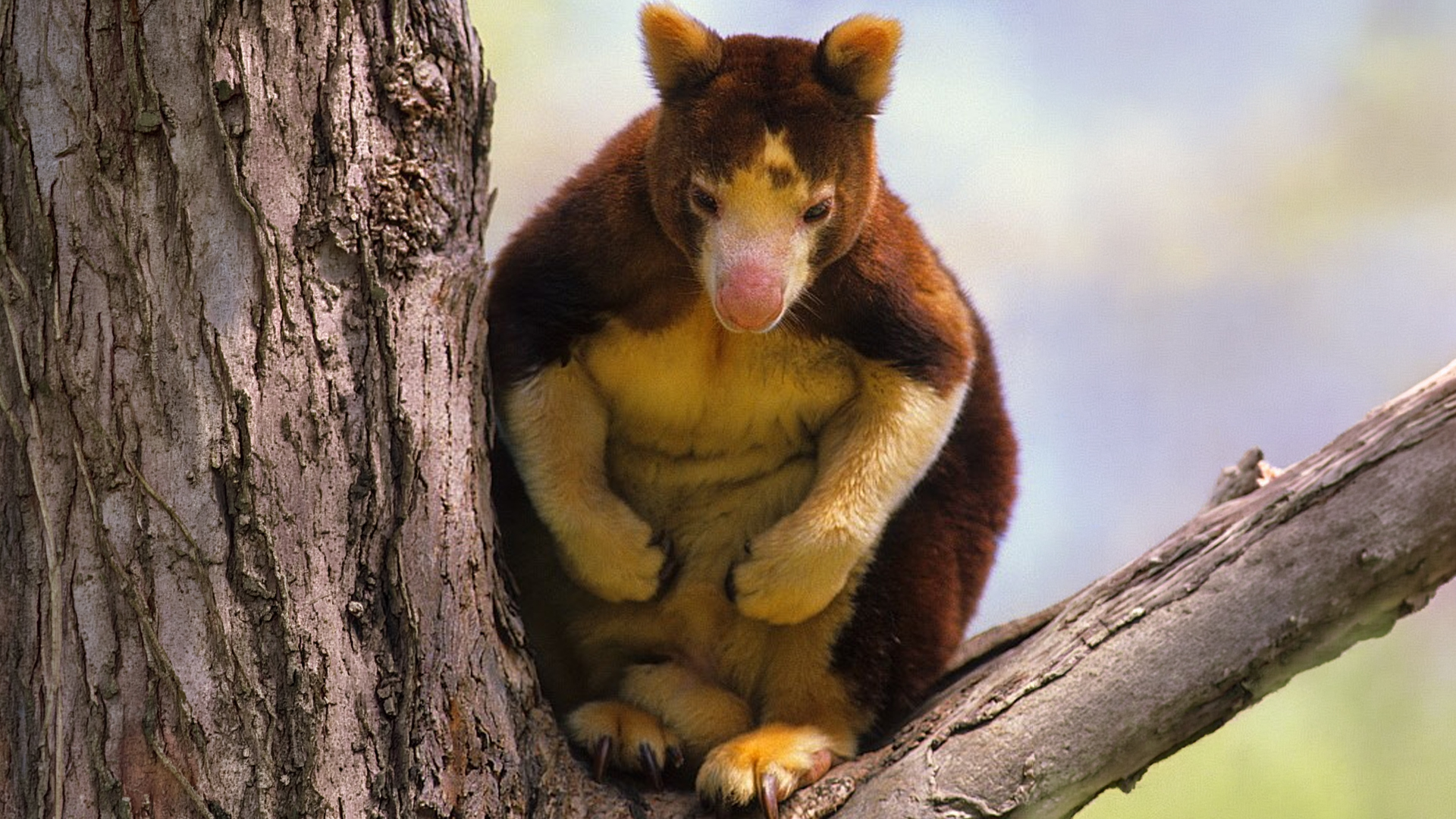
This rediscovery sent ripples through the global conservation community, shifting the Wondiwoi tree kangaroo from a "possibly extinct" status back to a "critically endangered" reality. It also highlighted how much of Papua’s biodiversity remains hidden from modern science, protected by the very terrain that makes it so difficult to study.
Global Diversity: The Eight Species of Indonesian Papua
While the Wondiwoi tree kangaroo is perhaps the most elusive, it is part of a broader genus, Dendrolagus, which contains between 12 and 14 species distributed across the island of New Guinea and the far northern tip of Queensland, Australia. According to the "Ecology of Indonesian Papua" (2012), the Indonesian side of the island (Western New Guinea) is home to eight confirmed species, each adapted to specific micro-climates and mountain ranges:
- Grizzled Tree Kangaroo (Dendrolagus inustus): Found primarily in the northern and western regions of Papua.
- Doria’s Tree Kangaroo (Dendrolagus dorianus): One of the largest and most robust species, inhabiting the central highlands.
- Golden-mantled Tree Kangaroo (Dendrolagus pulcherrimus): An incredibly rare species endemic to the Foja Mountains.
- Wondiwoi Tree Kangaroo (Dendrolagus mayri): Endemic strictly to the Wondiwoi Mountains of the Wondama Bay area.
- Ifola Tree Kangaroo (Dendrolagus notatus): Distinguished by its unique facial markings and coloration.
- Lowland Tree Kangaroo (Dendrolagus spadix): Found in the southern lowlands of Papua.
- Dingiso or Bondegezou (Dendrolagus mbaiso): A culturally significant species for the Moni people, often found in sub-alpine forests.
- Ursine Tree Kangaroo (Dendrolagus ursinus): Endemic to the Doberai (Bird’s Head) Peninsula of West Papua.
The distinction between these species is vital for conservation planning. Because many, like the Wondiwoi and the Golden-mantled, are "micro-endemics"—found in only one specific mountain range—the destruction of even a small area of habitat can result in the total extinction of an entire species.
Ex-Situ Conservation: The Role of Modern Zoos
While the battle for the tree kangaroo’s future is being fought in the jungles of Papua, international institutions are playing a supporting role through ex-situ conservation and public education. On May 1, 2026, the Woodland Park Zoo in Seattle, Washington, unveiled its "Forest Trailhead" exhibit, a state-of-the-art habitat designed to replicate the misty cloud forests of the Huon Peninsula in Papua New Guinea.
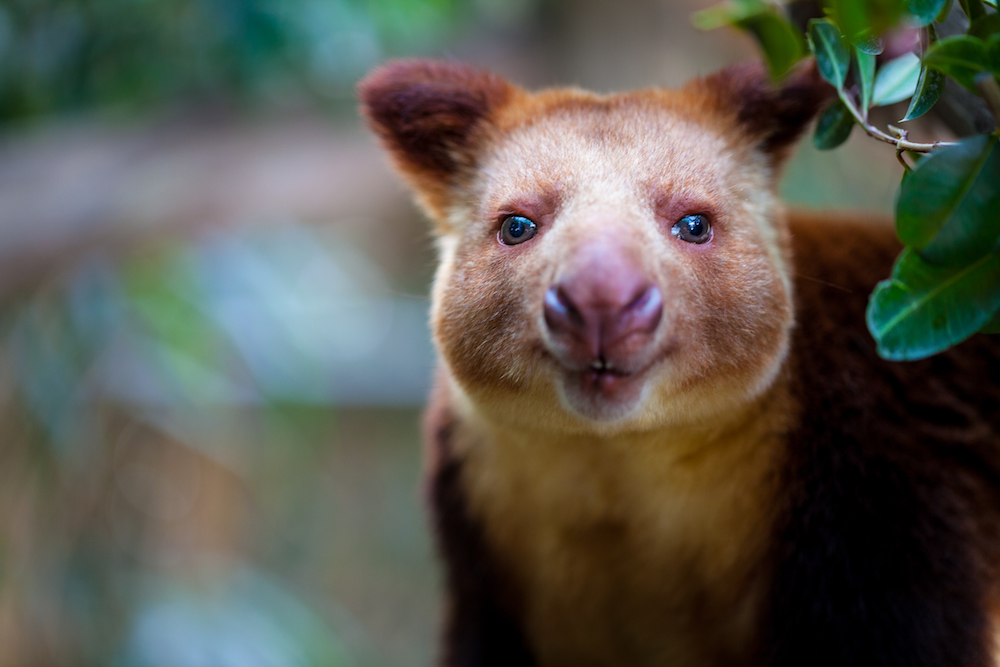
The exhibit features the Matschie’s tree kangaroo (Dendrolagus matschiei), a close relative of the Indonesian species. One of the stars of the exhibit is Rocket, a 12-year-old male who serves as an ambassador for his species. These captive populations are part of the Tree Kangaroo Conservation Program (TKCP), which works to maintain a genetic "insurance policy" for the species while raising funds for habitat protection in the wild.
Alejandro Grajal, President and CEO of Woodland Park Zoo, emphasized the spiritual and ecological connection humans share with these environments. "The forest is our lungs, our livelihood, our happiness, and our home," Grajal stated during the exhibit’s opening. "It provides food, medicine, beauty, and peace. By protecting the tree kangaroo, we are protecting the entire ecosystem that sustains us all."
Existential Threats: Fragmentation and the Human Footprint
Despite their remote habitats, tree kangaroos are facing an unprecedented crisis. As arboreal specialists, they are biologically tethered to the canopy. They cannot survive in open landscapes or monoculture plantations. The primary threat to their existence is habitat fragmentation caused by logging, mining, and the expansion of agricultural settlements.
When a forest is fragmented, it is broken into "islands" of trees. For a tree kangaroo, these islands can become genetic traps. If they cannot move through a continuous canopy to find mates, the population suffers from inbreeding depression. Furthermore, forced movement across the ground between forest patches exposes them to predators, including domestic dogs and human hunters.
Daawia, an academic from Cenderawasih University, has been a vocal advocate for stricter protections in Papua. She notes that the population of some endemic species was estimated to be as low as 500 individuals in the wild as of 2015. "The hunting and the felling of trees in the habitats of Papua’s endemic fauna must stop if we want to save these species from the brink of extinction," she warned in a report via Antaranews.com.
Analysis of Implications and the Path Forward
The rediscovery of the Wondiwoi tree kangaroo serves as a powerful reminder of the resilience of nature, but it should not be mistaken for a sign that the species is safe. Rather, it is a call to action. The fact that an animal can remain hidden for 90 years suggests that there is still much to lose before we even fully understand what exists in the Papuan wilderness.
The survival of the genus Dendrolagus depends on a multi-faceted approach:
- Community-Led Conservation: Engaging indigenous communities who have lived alongside these animals for millennia. In many parts of Papua, the tree kangaroo holds deep cultural and totemic significance.
- Canopy Corridors: Ensuring that development projects do not sever the "highways in the trees." Maintaining connectivity is more important than the total acreage of forest.
- Scientific Monitoring: Using modern technology, such as camera traps and environmental DNA (eDNA) sampling, to track elusive populations like the Wondiwoi kangaroo without disturbing their fragile habitats.
The Wondiwoi tree kangaroo is a symbol of the "Lost World" of Papua—a region of unparalleled biological wealth that stands at a crossroads. Its golden fur, camouflaged against the moss, is a testament to millions of years of evolution. Whether that gold continues to glimmer in the mountain mists or fades into the permanent darkness of extinction depends entirely on the conservation choices made in the coming decade. As the "lungs of the earth" continue to face pressure, the fate of the tree kangaroo remains a primary indicator of the health of our planet’s most vital ecosystems.