Nila Kartika Wati
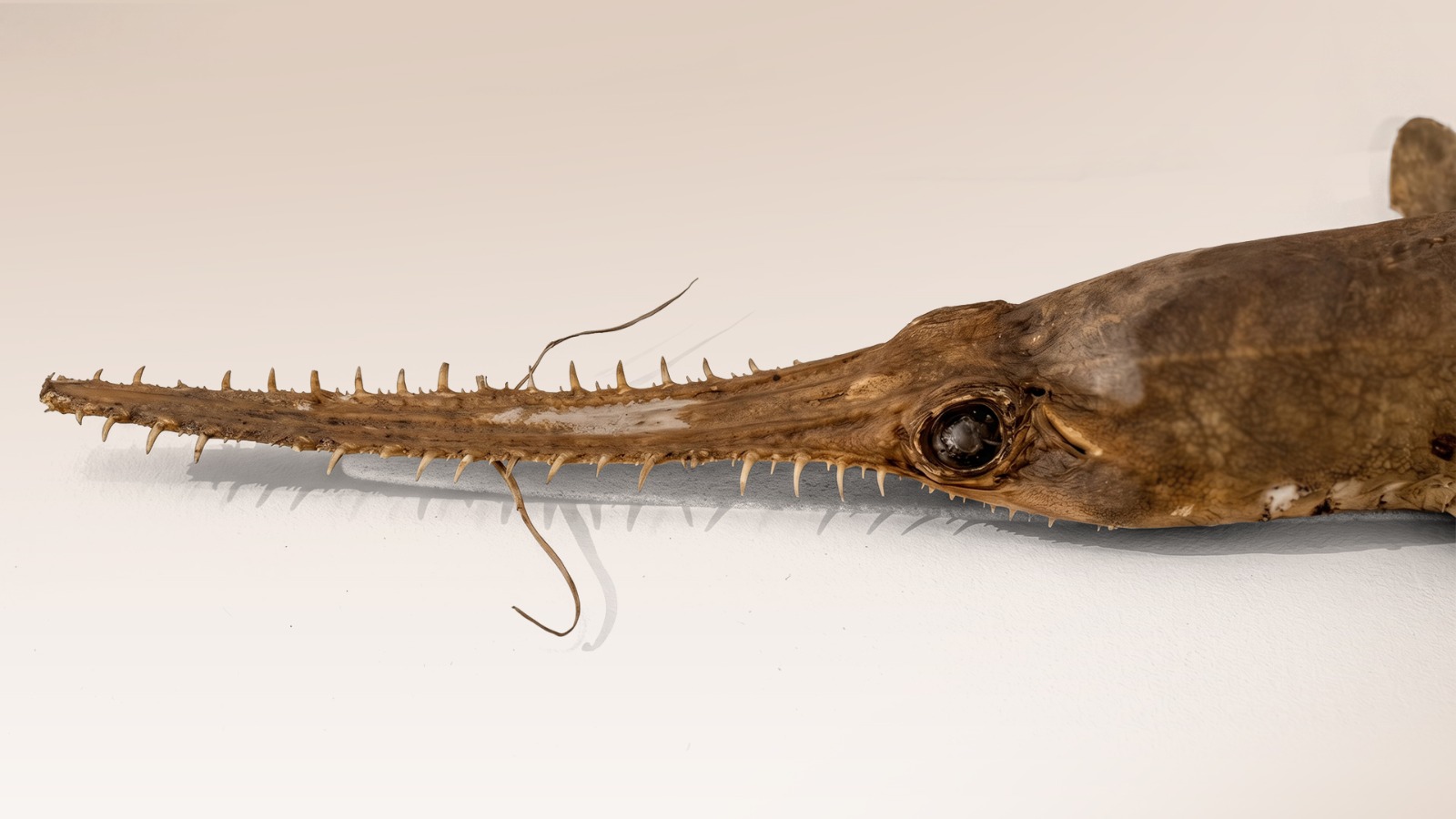
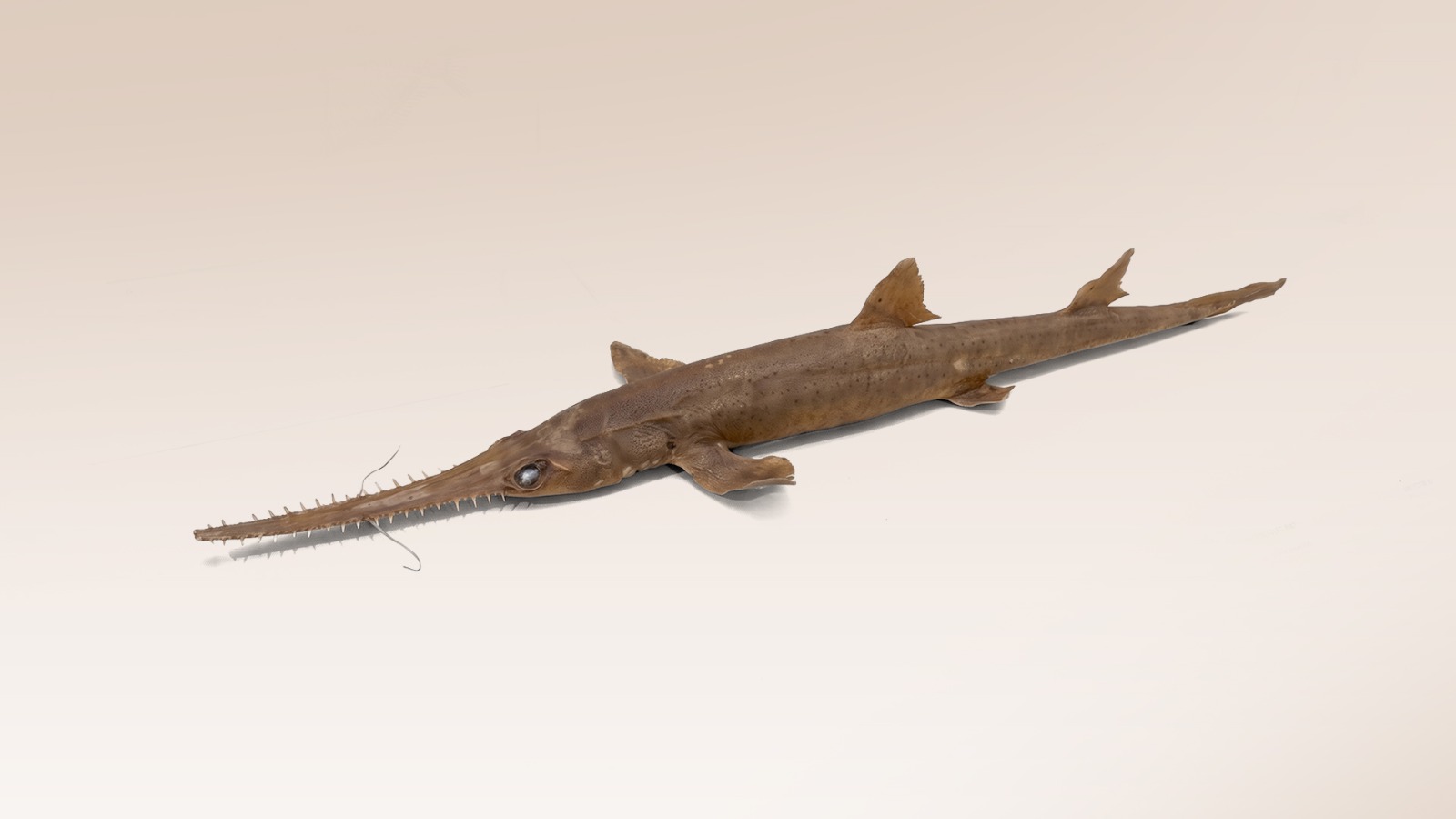
The sawfish, a member of the Pristidae family, represents one of the most enigmatic and evolutionarily distinct lineages of marine life, characterized by a shark-like body and a formidable, saw-like snout known as a rostrum. Despite their appearance, which frequently leads coastal communities to misidentify them as "saw sharks," these creatures are actually specialized rays. Their iconic rostrum, lined with sharp transverse teeth, is not merely a weapon but a highly sophisticated sensory organ equipped with thousands of electroreceptors. This evolutionary marvel allows the sawfish to detect the heartbeat and movements of prey in the murky, sediment-rich waters of estuaries and tropical coastlines. However, this very feature has become a biological curse, making them exceptionally vulnerable to entanglement in fishing nets. Today, the sawfish stands on the precipice of global extinction, and in the vast Indonesian archipelago—once a primary stronghold for these prehistoric giants—the fight to prevent their total disappearance has reached a critical turning point.
Indonesia’s geographical position as a sprawling maritime nation with extensive mangrove forests and river systems once made it an ideal sanctuary for sawfish. Historically, the region hosted four of the five known species of sawfish found worldwide: the Largetooth Sawfish (Pristis pristis), the Dwarf Sawfish (Pristis clavata), the Green Sawfish (Pristis zijsron), and the Narrow Sawfish (Anoxypristis cuspidata). These species are currently listed as either Endangered or Critically Endangered on the International Union for Conservation of Nature (IUCN) Red List. The presence of such a high diversity of Pristidae species in Indonesian waters underscores the country’s ecological importance in the global effort to preserve marine biodiversity. Yet, for nearly three decades, sightings of these animals have dwindled so significantly that many younger fishers have never seen one alive, relegating the sawfish to the realm of local folklore and the memories of village elders.

The 2018 Riau Discovery: A Beacon of Hope Amidst Decline
For much of the early 21st century, marine biologists feared that the Largetooth Sawfish had been functionally extirpated from the Malacca Strait. However, a significant event in January 2018 altered this narrative. In the waters of Tebing Tinggi Barat, located in the Riau Province, a fisherman inadvertently captured a massive Largetooth Sawfish. The specimen, which was documented by the Padang Coastal and Marine Resources Management Center (BPSPL), served as a shocking reminder that the species—known locally as "Hiu Parang" or Machete Shark—still inhabited the coastal corridors of the Malacca Strait.
This discovery was the first verified record of the species in the area in years. According to local testimonials gathered by researchers, sawfish were common sights in the 1990s, often found near the mouths of large rivers where they moved between salt and freshwater environments. The 2018 encounter provided crucial evidence that the Malacca Strait remains a viable, albeit stressed, habitat. It transformed the sawfish from a "legendary creature" back into a biological reality, prompting a renewed focus on the Riau coastline and the Riau Islands as key conservation zones.
The chronology of the sawfish’s decline in Indonesia mirrors global trends. Throughout the 20th century, as industrial fishing expanded and mangrove forests were converted for aquaculture and infrastructure, sawfish populations plummeted. Their long, tooth-studded saws are notoriously easy to snag in almost any type of fishing gear, particularly gillnets and trawls. Once entangled, the animals are difficult to release without injury to the fish or the fisher, often leading to the animal being killed for its meat or its valuable rostrum.

Cultural Significance and the Rostrum Trade
The relationship between the people of the Malacca Strait and the sawfish is deeply rooted in both fear and reverence. Historically, the sawfish was viewed as a powerful and dangerous inhabitant of the seabed. Its ability to camouflage in the silt, combined with the destructive potential of its rostrum to tear through expensive fishing nets, made it a creature to be respected and avoided. In many coastal Melayu (Malay) communities, the sawfish was seen as a guardian of the waters, and its capture was considered a significant event.
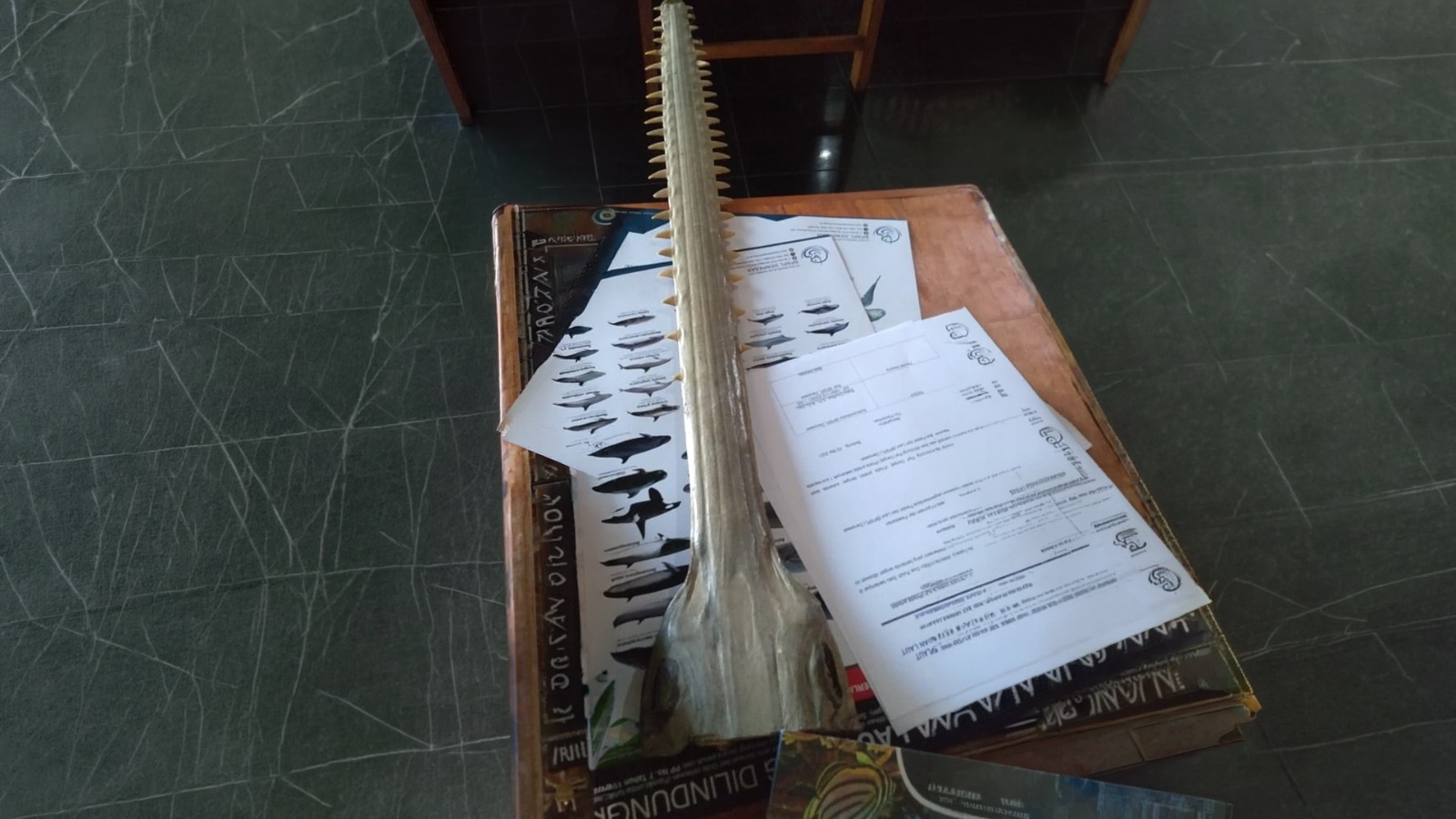
This reverence extended into the spiritual and domestic spheres. For the Malay seafaring communities, the rostrum of a sawfish was often dried and mounted above the front doors of homes. It was believed to act as a protective talisman, warding off evil spirits and bringing safety to the household. Similarly, within the Chinese-Indonesian communities of the Riau Islands, the sawfish rostrum holds a place of honor. In various temples, such as those dedicated to Mazu, the Goddess of the Sea, sawfish rostra are frequently placed on altars. They are regarded as "holy objects" that symbolize the strength and protection of the ocean’s deity.
Unfortunately, this cultural value has also contributed to the species’ demise. Beyond their use as talismans, sawfish rostra are highly sought after as curios and collectors’ items on the international black market. The meat, while often consumed locally or dried into salted fish, is less valuable than the fins—which enter the shark fin trade—and the rostrum itself. This multi-layered exploitation has created a scenario where a single accidental capture can result in high financial gain, disincentivizing the live release of bycatch.
Biological Vulnerability and Ecosystem Impact
The extinction risk of the sawfish is exacerbated by its unique biological profile. Like many elasmobranchs (sharks and rays), sawfish are "K-strategists." They grow slowly, reach sexual maturity late in life, and produce very few offspring. Some species may take a decade to reach breeding age, and their gestation periods are lengthy. This means that even a small increase in adult mortality can lead to a population collapse, as the species cannot reproduce fast enough to replace the individuals lost to fishing and habitat degradation.
The loss of sawfish from Indonesian waters would have profound ecological repercussions. As apex predators in estuarine environments, sawfish play a vital role in maintaining the balance of the food web. They use their saws to stir up the muddy bottom to find crustaceans and to slash through schools of fish, culling the weak and maintaining the health of fish populations. Their disappearance signals a broader decline in the health of the coastal ecosystem. Sawfish are often considered "indicator species"; their presence requires pristine, complex habitats with intact mangroves and clean water. The fact that they are vanishing suggests that the very foundations of Indonesia’s coastal productivity are under threat.
Legal Protections and the Path to Recovery
Recognizing the gravity of the situation, the Indonesian government has implemented stringent legal frameworks to protect all species of sawfish. Under the Ministry of Environment and Forestry Regulation No. P.106 of 2018, sawfish are listed as fully protected species. This was further reinforced by the Ministry of Marine Affairs and Fisheries (KKP) Decree No. 1 of 2021, which explicitly prohibits the capture, injury, trade, or possession of sawfish and their body parts.
International protections are also in place, as all species of the Pristidae family are listed under Appendix I of the Convention on International Trade in Endangered Species of Wild Fauna and Flora (CITES). This represents the highest level of international protection, effectively banning all commercial international trade in sawfish parts.
However, legislation alone is insufficient. The vastness of the Indonesian archipelago makes enforcement a monumental challenge. Most sawfish captures occur in remote areas, far from the oversight of maritime authorities. To address this, conservationists emphasize the need for "citizen science" and community-based management. The role of individuals like Junaidi Ismail, a citizen scientist in Riau, is pivotal. By documenting sightings and educating local fishers on how to safely release entangled sawfish, community members become the first line of defense against extinction.
Future Outlook: A Race Against Time
The future of the sawfish in Indonesia hinges on a three-pronged approach: habitat restoration, rigorous enforcement of anti-poaching laws, and extensive community outreach. The 2018 sighting in Riau proved that the species is resilient, clinging to existence in the quiet corners of the Malacca Strait. But that resilience has limits. The continued expansion of coastal development and the persistence of destructive fishing practices threaten to extinguish the remaining few.
Conservationists from organizations such as the IUCN Species Specialist Group and local universities are calling for the establishment of "Sawfish Conservation Areas" in Riau and Papua, where populations are still thought to persist. These areas would focus on protecting critical nursery habitats—the shallow, brackish waters where young sawfish hide from larger predators.
The question that remains for Indonesia is whether the 2018 Largetooth Sawfish was a sign of a surviving population or one of the last individuals of its kind in the region. If the latter is true, the "Hiu Parang" may soon transition from a biological reality back into a tragic legend. The survival of these prehistoric rays is not just a matter of marine biology; it is a test of Indonesia’s commitment to its natural heritage and its ability to protect the "living fossils" that have patrolled its waters for millions of years. Collaborative efforts between the government, researchers, and the coastal communities who live alongside these creatures are the only way to ensure that the sawfish does not become a ghost of the Malacca Strait.