Nila Kartika Wati
Ayunia Muis was in the middle of preparing traditional cakes for her daily trade when an urgent notification flashed across her phone screen. The message came from a group chat titled ‘Kartini Torobulu,’ a digital gathering point for women in her village who have become the frontline of environmental resistance. In Torobulu, a village located in the Laeya District of South Konawe Regency, Southeast Sulawesi, the rhythm of life is no longer dictated by the tides or the baking oven, but by the movement of heavy machinery. For Ayu and her neighbors, any activity by the local mining company demands an immediate cessation of domestic work and a move to the field to monitor the encroachment of nickel excavation into their living spaces.
Born and raised in Torobulu, the 30-year-old Ayu remembers a different version of her home. Before the arrival of large-scale nickel mining, Torobulu was affectionately known as "Dollar Village." The moniker was earned not through industrialization, but through the bounty of the sea. As a primary producer of high-quality seaweed and fish, the community enjoyed a level of prosperity that allowed them to thrive on natural resources. Today, that legacy is being dismantled by the very industry the Indonesian government labels as the backbone of the global "green energy" transition.
The Transformation of a Coastal Paradise to an Industrial Wasteland
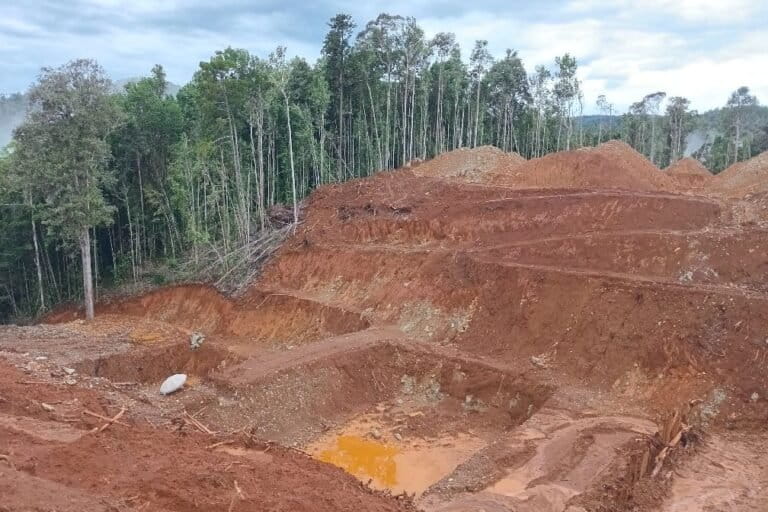
The environmental degradation in Torobulu is stark and visible. The coastline, once characterized by pristine white sand where children played during low tide, has been stained a deep, rusty red. This discoloration is the result of massive sedimentation caused by mining runoff, which carries toxic compounds into the marine ecosystem. The seawater, once transparent enough to reveal the seabed, is now an opaque slurry of silt and minerals.
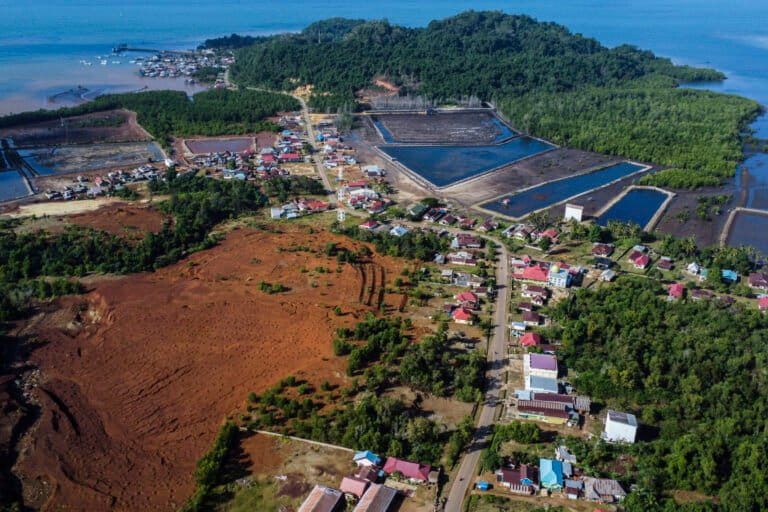
The economic impact of this ecological shift is devastating. For the local fishing community, the harvest has plummeted. Previously, a single fishing trip could yield between 20 and 40 kilograms of fish. Following the contamination of the waters, catch rates have dropped to a mere 2 to 7 kilograms—often barely enough to feed a family, let alone provide a surplus for sale. Furthermore, the seaweed industry, which once brought foreign currency into the village, has effectively collapsed as the water quality can no longer support its growth.
The proximity of the mining operations to human settlements has also raised significant health and safety concerns. In Torobulu, the mining pit has advanced to within 10 meters of a local elementary school. Without a perimeter fence or buffer zone, students are exposed daily to thick clouds of dust and the roar of heavy machinery. Reports of respiratory distress among schoolchildren have become increasingly common, yet the excavation continues unabated during school hours.
A Chronology of Resistance and Legal Pressure
The community’s response to this encroachment has been led predominantly by women like Ayu and Mina, another resident who views the mining as a direct threat to survival. The formation of the ‘Kartini Torobulu’ group represents a shift in local activism, where women have taken the lead in protesting and documenting environmental violations.
The community’s efforts to seek redress through official channels have met with systemic indifference. Residents have sent formal letters and held meetings with local, provincial, and state authorities. However, they describe a "bureaucratic ping-pong" where the provincial government refers them to the regency level, and the regency level claims a lack of authority. Even direct appeals to the Governor of Southeast Sulawesi have failed to produce a resolution or a halt to the mining activities.

As the protests intensified, the legal pressure on the villagers shifted from administrative to criminal. Several residents were reported to the South Konawe Police and the Southeast Sulawesi Regional Police by the mining company. Two individuals, Hasilin and Andi Firmansyah, were named suspects and faced trial for their roles in the protests. Although the court eventually acquitted them, the legal ordeal served as a form of "judicial harassment," intended to intimidate the community and drain their resources.
The National Context: Indonesia’s Nickel Ambition
The situation in Torobulu is not an isolated incident but a symptom of Indonesia’s aggressive push to become a global hub for the electric vehicle (EV) supply chain. Indonesia holds the world’s largest nickel reserves, estimated at 21 million metric tons, or roughly 22% of the global total. Under the administration’s "hilirisasi" or downstreaming policy, the government has banned the export of raw nickel ore, forcing companies to build smelters and processing plants within the country.
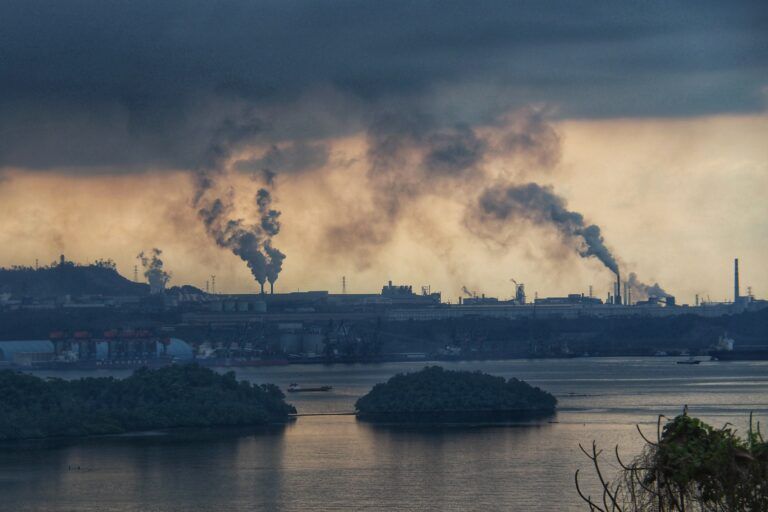
While this policy aims to boost the national economy and position Indonesia as a leader in the green transition, environmental advocates argue that the "green" label is a misnomer. The extraction process remains highly carbon-intensive and ecologically destructive. Many of the smelters powering the nickel industry are fueled by captive coal-fired power plants, creating a paradoxical situation where the raw materials for "clean" EVs are produced through high-emission processes and local environmental destruction.
Expert Analysis: Systematic Governance Failure
Andi Rahman, Executive Director of WALHI (The Indonesian Forum for the Environment) in Southeast Sulawesi, points to a fundamental failure in governance and oversight. He argues that if the government strictly enforced existing environmental and spatial planning regulations, mining would never be permitted so close to residential kitchens or primary schools.
"The government has the authority to evaluate and revoke licenses," Rahman stated. "The fact that mining continues to destroy clean water sources and encroach on settlements suggests a lack of political will to supervise the industry."
Mida Saragih, a coastal and marine protection campaigner for WALHI National, adds that Eastern Indonesia is being treated as a sacrifice zone for national strategic projects. She suggests that the government must implement a "crisis-based" spatial planning model. In areas where fisheries or ecosystems are already in a state of collapse, a moratorium on industrial expansion should be mandatory to allow the environment to recover.
The "False Solution" of Green Energy
Imam Shofwan from the National Mining Advocacy Network (Jatam) describes the current nickel boom as a "false solution" to the climate crisis. He notes that the rhetoric of climate rescue and emission reduction is being hijacked to justify the expansion of extractive industries.
"At the taproot, these companies are still reliant on coal, and their operations are destroying the very forests and oceans that act as carbon sinks," Shofwan explained. He further highlights a "conflict of interest" within the government, noting that many high-ranking officials in the executive and legislative branches have personal or familial ties to the mining and energy sectors, which complicates the impartial enforcement of environmental laws.
Toward a Regenerative Future: The Path of Intergenerational Justice
Dr. Yulia Sugandi, a sociologist and anthropologist from IPB University, views the crisis in Torobulu as a "wicked problem"—a complex challenge where social, ecological, and economic issues are so deeply intertwined that they cannot be solved in isolation. She argues that the current "degenerative" economic model, which focuses solely on linear extraction for profit, must be replaced with a "regenerative" model.
"A regenerative economy considers everyone and everything within the living space," Dr. Sugandi explained. "It does not externalize costs onto the marginalized while the benefits are concentrated at the top."
The concept of "intergenerational justice" is central to this shift. The current generation’s exploitation of nickel for temporary economic gain is leaving behind a legacy of poisoned water, barren seas, and destroyed landscapes for future generations. According to Dr. Sugandi, the disconnection between humans and their ecological roots is the ultimate cause of this crisis.
In Torobulu, the fight is no longer just about seaweed or cake sales; it is a struggle for the right to inhabit a safe and healthy environment. As the global demand for EVs continues to surge, the residents of this small coastal village stand as a reminder that the transition to a low-carbon future cannot be built on the destruction of the very communities it claims to save. The "Dollar Village" may be a memory, but the "Kartini Torobulu" movement ensures that the cost of progress will not go unrecorded.