Nila Kartika Wati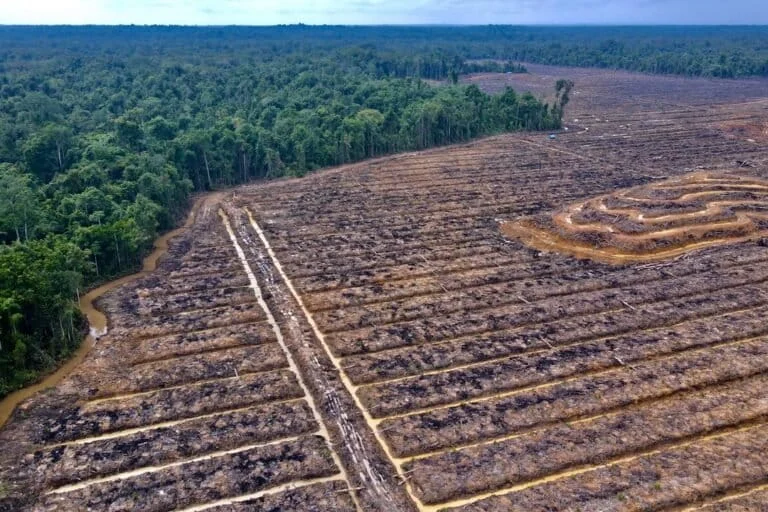
The annual celebration of Earth Day in Indonesia has increasingly become a hollow ceremony as the nation’s primary rainforests face an existential threat from an aggressive state-led push for economic growth. Under the banner of securing national food, energy, and water reserves, the Indonesian government is overseeing a systematic conversion of forest landscapes into industrial zones, a move that environmental advocates warn is marginalizing local communities and dismantling the country’s ecological defenses. While the government maintains that these projects are essential for national sovereignty, recent data reveals a starkly different reality on the ground: a landscape of accelerating forest loss, rising carbon emissions, and the erosion of indigenous rights.
At the heart of the controversy is a government initiative to earmark approximately 20.6 million hectares of forest land for strategic reserves by the end of 2024. This massive land bank is intended to support the development of "food estates," renewable energy plantations, and water infrastructure. However, environmental watchdogs such as the Indonesian Forum for the Environment (Walhi) and Yayasan Auriga Nusantara argue that this policy serves as a mechanism for the "legalization of deforestation" on an unprecedented scale. Instead of benefiting the general populace, critics argue that the fruits of these projects are being reaped by a small group of corporate elites while the environmental costs are socialized among the most vulnerable.
The Scope of the Strategic Land Bank and Disputed Claims
The Ministry of Forestry has identified 20.6 million hectares for these strategic reserves, a territory nearly the size of the United Kingdom. According to government data, roughly 15.53 million hectares of this total consist of protected forests (hutan lindung) and production forests (hutan produksi) that are currently free of existing permits. The breakdown includes 2.29 million hectares of protected forest and 13.24 million hectares of production forest. Additionally, the government aims to reclaim 3.17 million hectares from inactive or revoked forest utilization permits (PBPH) and another 1.9 million hectares from social forestry areas.
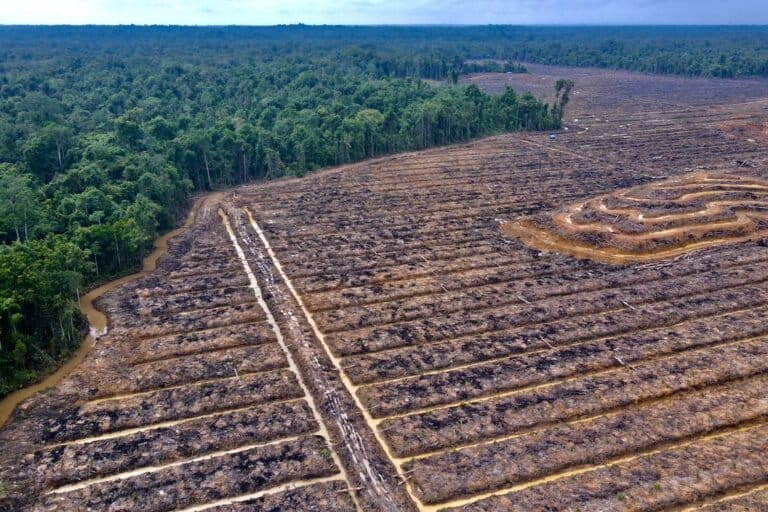
Raja Juli Antoni, the Minister of Forestry, has sought to allay environmental concerns by guaranteeing that the program will not lead to increased net deforestation. The Minister claims that the management of these lands will utilize agroforestry models—integrating agricultural crops with forest trees. However, these assurances are directly contradicted by the findings of the Status of Deforestation in Indonesia (STADI) 2025 report published by Yayasan Auriga Nusantara. The report reveals that 18% of the total deforestation recorded in early 2025—amounting to 79,408 hectares—occurred precisely within the areas designated for food, energy, and water reserves.
The geographical distribution of this forest loss is concentrated in several key provinces. Central Kalimantan leads with 13,439 hectares of lost forest, followed by West Sumatra (8,273 hectares), West Kalimantan (6,281 hectares), Aceh (6,086 hectares), and East Kalimantan (5,040 hectares). These figures suggest that the "reserve" designation is acting as a catalyst for clearing rather than a framework for sustainable management.
Systemic Drivers: The Legalization of Forest Conversion
Environmental experts argue that the current wave of deforestation is not an accidental byproduct of development but a calculated outcome of recent legislative shifts. Anggi Prayoga, a forest campaigner for Greenpeace Indonesia, suggests that the thinning of Indonesia’s forest cover is being facilitated by a regulatory framework that prioritizes economic valuation over ecological integrity. The primary culprit, according to campaigners, is the Job Creation Law (Omnibus Law) and its various implementing regulations.
The Omnibus Law has fundamentally altered the way forest landscapes are managed, encouraging the release of forest areas for "National Strategic Projects" (PSN). Under this regime, the government views forests primarily as economic assets. This paradigm shift has allowed for the implementation of the "Food Estate" program, which advocates describe as a "legal deforestation tactic." By using official government mandates, large-scale industrial players can clear primary forests for monoculture crops like sugarcane or cassava under the guise of food security.
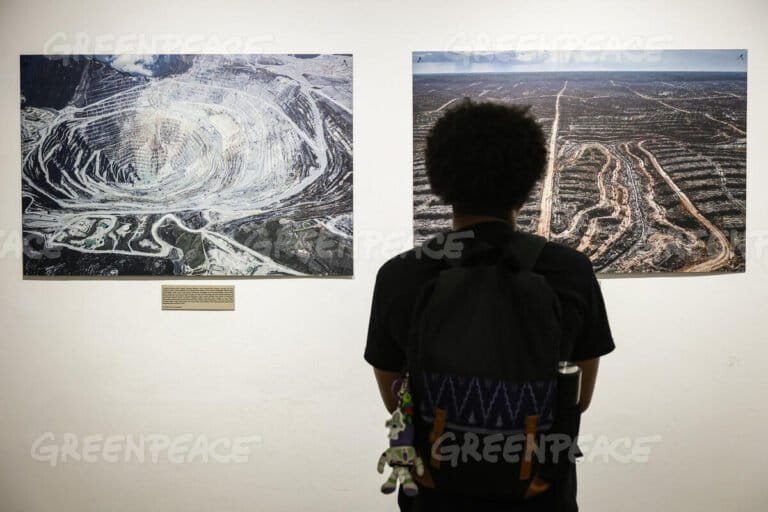
Furthermore, the existing Forestry Law contributes to this vulnerability by categorizing forests into functional zones. While this sounds protective in theory, the "production forest" designation effectively serves as a green light for industrial exploitation. Greenpeace and other organizations argue that this zoning ignores the holistic reality of forest ecosystems, which do not function as isolated blocks but as interconnected life-support systems.
The Human Cost: Displacement and the "Empty Land" Myth
The expansion of industrial reserves is having a devastating impact on Indonesia’s indigenous populations. Franky Samperante, Executive Director of Yayasan Pusaka Bentala Rakyat, highlights that the government’s decision-making process is increasingly authoritarian, characterized by a lack of public participation and the marginalization of local voices. This "top-down" approach has led to significant overlaps between corporate concessions and indigenous territories, particularly in Papua.
In Merauke, South Papua, a massive sugarcane production project designated as a National Strategic Project (PSN) is currently displacing indigenous clans from their ancestral lands. For these communities, the forest is not merely a source of timber or land; it is their supermarket, their pharmacy, and their temple. The clearing of these forests destroys the biodiversity they rely on for food and medicine, while also erasing spiritual sites central to their cultural identity.
Samperante notes that the state often employs the concept of "domein verklaring" or "empty land" to claim indigenous territories. By refusing to formally recognize the rights of indigenous peoples over their ancestral forests, the state treats inhabited and managed lands as vacant property, which is then handed over to corporations. This trend is particularly visible in Papua, which has become the new frontier for exploitation as forests in Sumatra and Kalimantan have already been severely depleted by decades of logging and palm oil expansion.
Energy Transition or Greenwashing?
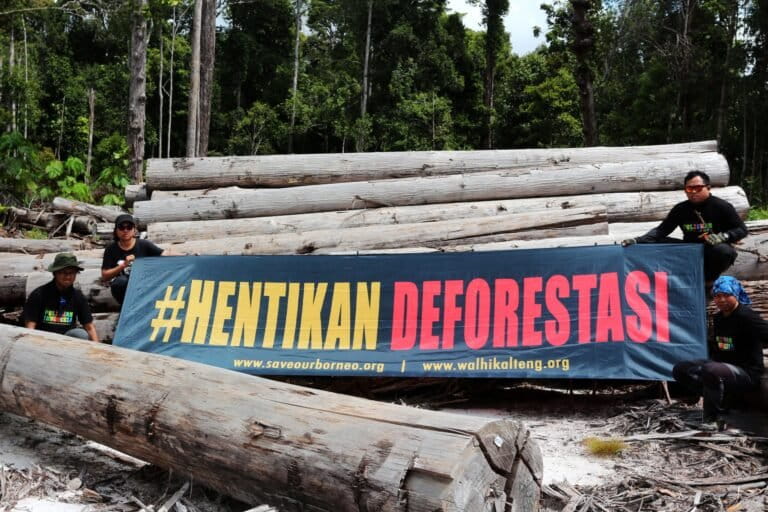
The push for "energy reserves" has also come under fire for being a form of "greenwashing." Ogy Dwi Aulia, Data Manager at Forest Watch Indonesia (FWI), has identified at least 57 companies currently implementing Energy Plantation Forests (HTE) across 1.8 million hectares. Despite being marketed as a renewable energy solution—producing wood pellets for biomass—these companies have reportedly cleared 31.610 hectares of natural forest between 2021 and 2024 to make way for plantations.
This reveals a disturbing irony: natural, carbon-rich forests are being destroyed to plant fast-growing industrial trees intended to lower carbon emissions. Critics argue that programs like "FOLU Net Sink 2030," which Indonesia promotes globally as a climate success story, are being used as a "green cover" for continued industrial expansion. Instead of genuine forest restoration, these policies often facilitate the conversion of natural ecosystems into industrial timber estates, which do not offer the same biodiversity or carbon sequestration benefits.
Ecological and Climate Implications
The environmental consequences of these land-use changes are staggering. Walhi estimates that if the government proceeds with opening just 4.5 million hectares of natural forest, it will release approximately 2.59 billion tons of carbon dioxide into the atmosphere. Should the full 20.6 million hectares be exploited, the resulting carbon "bomb" would likely make it impossible for Indonesia to meet its Nationally Determined Contributions (NDC) under the Paris Agreement.
Beyond carbon, the loss of forest cover is triggering a collapse in local ecosystem services. Hironimus Pala of FIAN Indonesia points out that the conversion of forests into monoculture agriculture destroys natural water catchments, leading to cycles of floods and droughts. Furthermore, the very "reserves" the government claims to be protecting—water, energy, and food—are often found in the natural forests themselves. By clearing the forest to create an industrial food estate, the government is destroying the existing natural food and water systems that have sustained local populations for generations.
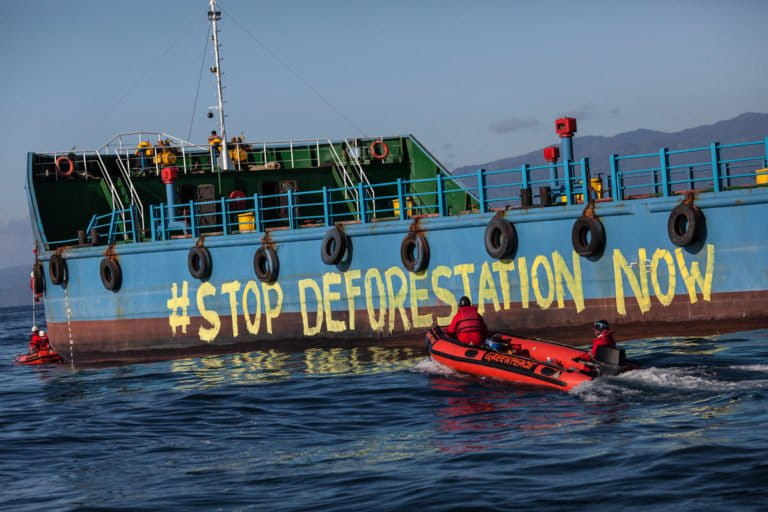
The crisis also extends to Indonesia’s small islands. Greenpeace Indonesia reports that despite legal protections under Law No. 27/2007 and a Constitutional Court ruling (No. 35/PUU-XXI/2023) that prohibits large-scale mining on small islands, forest clearing for mineral extraction continues unabated. On these islands, deforestation does not just mean the loss of trees; it means the loss of habitable land, as the removal of coastal forests accelerates erosion and leaves communities vulnerable to rising sea levels.
Conclusion and Future Outlook
The trajectory of Indonesia’s forest management suggests a widening gap between international rhetoric and domestic policy. While government officials attend global climate summits pledging to protect biodiversity, the legislative and economic machinery at home is being geared toward the rapid liquidation of forest assets. Data from Forest Watch Indonesia (FWI) underscores this trend: deforestation rates jumped from 0.77 million hectares in 2023–2024 to an alarming 1.09 million hectares in the 2024–2025 period based on early warning indicators.
To reverse this trend, environmental advocates call for a fundamental reassessment of the "Food Estate" and "Energy Reserve" models. They argue for a shift toward community-based forest management, the formal recognition of indigenous land rights, and the repeal of regulations that allow for the "legal" destruction of primary forests. Without a transition from an extractive economic paradigm to one that values forests as essential life-support systems, Indonesia risks losing its most vital natural heritage in the name of a development model that leaves both the people and the planet poorer.