Nasution Nanang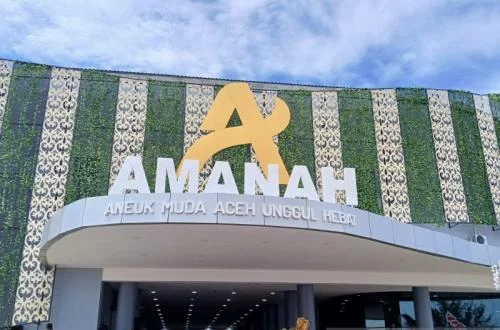
BANDA ACEH – Governor of Aceh, Muzakir Manaf, has unequivocally declared the provincial government’s full backing for the Aneuk Muda Aceh Unggul Hebat (AMANAH) program, a strategic initiative designed to cultivate a new generation of young entrepreneurs within Aceh. The Governor’s robust endorsement came during the significant relaunching ceremony of AMANAH, held on Thursday in Aceh Besar, signaling a renewed commitment to fostering youth-driven economic development in the region. This event marks a pivotal moment in Aceh’s ongoing efforts to diversify its economy and empower its burgeoning youth population, positioning AMANAH as a cornerstone for future prosperity.
The Governor, affectionately known as Mualem, emphasized that the Aceh administration is dedicated to transforming AMANAH into a premier incubation center for young entrepreneurs, a vibrant hub for creative economy development, and a crucial bridge facilitating collaboration among youth, government, and the business sector. Speaking from the AMANAH Complex in Ladong, Aceh Besar, Mualem articulated a vision where the province’s future is not solely reliant on its abundant natural resources but profoundly shaped by the ingenuity, creativity, and resilience of its young people. His address underscored the critical importance of investing in human capital, particularly the youth, as the ultimate driver for sustainable progress and enhanced regional competitiveness.
The relaunching ceremony was a high-profile affair, drawing a distinguished roster of national and regional dignitaries. Among the notable attendees were Teuku Riefky Harsya, the Minister of Creative Economy, and Muhammad Herindra, the Head of the National Intelligence Agency (BIN), alongside numerous other central and local government officials. Their presence at the event highlighted the significant national interest and cross-sectoral commitment to AMANAH’s objectives, reflecting a broader recognition of Aceh’s strategic importance and the potential impact of youth empowerment initiatives on national stability and economic growth.
The Relaunching Event: A Detailed Account and Strategic Imperative
The event on Thursday was more than a mere ceremonial gathering; it symbolized a strategic recalibration and renewed impetus for a program vital to Aceh’s future. The choice of the AMANAH Complex in Ladong, Aceh Besar, as the venue underscored the tangible infrastructure being dedicated to this initiative. The atmosphere was charged with optimism, reflecting the collective hope that AMANAH would indeed become a beacon for innovation and entrepreneurship. The "relaunching" aspect itself suggests that AMANAH, while perhaps having existed in some form previously, is now being revitalized with enhanced resources, a clearer strategic direction, and stronger political will, signaling a move from conceptualization to robust implementation.
Governor Muzakir Manaf’s address was the focal point of the ceremony. He articulated that the timing of the relaunch was crucial for strengthening Aceh’s development, which he stressed must be anchored in the capabilities of its younger generation. Mualem, a figure synonymous with Aceh’s transition from conflict to peace, drew a clear line between stability and economic opportunity. He reiterated his firm belief that the future trajectory of Aceh hinges less on its historical endowments of oil, gas, and agricultural land, and more on the quality, innovative spirit, and entrepreneurial drive of its youth. This perspective aligns with modern economic thinking that prioritizes human capital and innovation as key drivers of sustainable growth, particularly in regions undergoing post-conflict reconstruction.
The formal confirmation of AMANAH’s management and working body was a strategic move, designed to institutionalize the program and ensure its operations are professional, transparent, and far-reaching. This step is critical for building trust among stakeholders, attracting partnerships, and ensuring the efficient allocation of resources. A well-structured governance framework is paramount for any large-scale development initiative, enabling it to operate effectively, adapt to challenges, and measure its impact rigorously.
AMANAH: A Strategic Vision for Aceh’s Youth
At its core, AMANAH is envisioned as a dynamic "creative hub," a nexus designed to bring together the diverse ideas, burgeoning talents, and groundbreaking innovations of Aceh’s youth. The ultimate goal is to nurture these elements into economically valuable products, services, and solutions that can directly address the myriad development challenges facing the province. This approach moves beyond traditional employment models, encouraging self-reliance and fostering a culture of innovation that can create new industries and job markets.
The program aims to offer a comprehensive ecosystem for aspiring young entrepreneurs. This includes, but is not limited to, providing state-of-the-art co-working spaces, offering expert mentorship from seasoned business leaders and technical specialists, facilitating access to crucial seed funding and investment networks, organizing regular networking events with industry players, and conducting skill-building workshops tailored to the demands of the modern economy. These offerings are designed to equip young Acehnese with the practical tools, knowledge, and connections needed to transform their creative ideas into viable, scalable businesses.
AMANAH’s focus on the creative economy is particularly salient. This sector, encompassing everything from digital content creation, fashion, culinary arts, crafts, and performing arts, is recognized globally for its high growth potential and its ability to generate significant economic value with relatively lower capital investment. For Aceh, leveraging its rich cultural heritage and artistic traditions through modern creative industries presents a unique opportunity for economic diversification and global market integration. The program targets "Aneuk Muda Aceh," a term that encompasses a broad demographic of young people, likely ranging from high school graduates to university students and young professionals, all with an inherent drive to contribute to their community’s progress.
Aceh’s Economic Imperative: Diversification and Human Capital
Aceh’s economic landscape has historically been shaped by its natural resource wealth, primarily oil, natural gas, and extensive agricultural production. While these sectors have provided significant revenue, they are often susceptible to global commodity price fluctuations and do not always generate sufficient employment opportunities for a rapidly growing young population. The tragic 2004 tsunami, which devastated much of the province, and the protracted conflict preceding it, underscored the urgent need for a more resilient and diversified economy capable of absorbing shocks and providing sustainable livelihoods.
Youth unemployment remains a pressing concern across Indonesia, and Aceh is no exception. While specific real-time statistics for Aceh alone can fluctuate, national figures often highlight a significant challenge in matching educational outputs with labor market demands, particularly for those entering the workforce. Initiatives like AMANAH directly address this by shifting the paradigm from job-seeking to job-creation. By empowering young people to become entrepreneurs, the program aims to reduce reliance on traditional employment sectors and foster self-sufficiency. This is critical not only for economic stability but also for social cohesion in a post-conflict region where providing meaningful opportunities for youth is paramount for long-term peace.
Indonesia’s creative economy has been a standout performer in recent years, contributing significantly to the national Gross Domestic Product (GDP). This sector has demonstrated remarkable resilience and growth, driven by digital transformation and a vibrant youth culture. AMANAH aims to ensure Aceh is an active participant in this national trend, leveraging its unique cultural identity and creative potential to carve out a distinct niche within the broader Indonesian creative ecosystem. By doing so, Aceh can attract investment, foster local talent, and create a sustainable economic future less dependent on finite natural resources.
Statements from Key Stakeholders and Broader Implications
Governor Muzakir Manaf’s vision extends beyond mere economic growth; it is deeply intertwined with the concept of "martabat" (dignity) and "maju" (progress). His background as a former commander of the Free Aceh Movement lends significant weight to his pronouncements on peace and prosperity. For Mualem, economic empowerment through AMANAH is a continuation of the struggle for Aceh’s dignity, transforming the aspirations for self-determination into tangible economic independence and a vibrant future for its people. He expressed profound hope that AMANAH would become a movement capable of instilling optimism, enabling Aceh’s youth to compete not just nationally but on a global stage. "From this place, we hope big ideas will be born, the best works produced, and real movements emerge to bring Aceh to a more advanced and dignified future," Mualem affirmed.
Minister of Creative Economy Teuku Riefky Harsya’s presence and likely statements would have underscored the national government’s commitment to fostering creative industries as a cornerstone of Indonesia’s economic future. He would likely emphasize how AMANAH aligns with national strategies for creative economy development, potentially offering pathways for central government support, cross-province collaboration, and integration into national and international creative networks. The Minister’s involvement signals a strategic synergy between provincial aspirations and national policy frameworks, crucial for the longevity and impact of such an initiative.
The attendance of Muhammad Herindra, Head of the National Intelligence Agency, while perhaps less direct in its economic implications, is profoundly significant. It implicitly highlights the link between economic opportunity, particularly for youth, and national security. In a region with a history of conflict, providing constructive outlets for youthful energy and aspiration through entrepreneurship can serve as a powerful deterrent against social unrest, radicalization, and other threats to stability. The BIN Chief’s presence underscores that youth empowerment is not just an economic or social issue but a vital component of maintaining long-term peace and security in Aceh and the nation.
Local entrepreneurs and youth, though not quoted directly in the initial report, would undoubtedly view AMANAH with a mix of hope and anticipation. For many, it represents a tangible pathway to overcome the challenges of limited capital, market access, and mentorship. Their inferred reactions would likely highlight the practical support needed—ranging from specialized training in digital marketing and financial literacy to assistance in navigating regulatory hurdles and connecting with potential investors.
Path Forward: Implementation and Expected Impact
The relaunch of AMANAH is merely the beginning of a challenging yet promising journey. The immediate next steps for the program’s newly confirmed management and working body will involve translating the broad vision into concrete action plans. This includes developing a detailed program calendar for workshops, mentorship sessions, and pitching events; actively recruiting participants; establishing clear criteria for incubation; and continuing to develop the physical infrastructure of the AMANAH Complex. Furthermore, securing sustainable funding mechanisms, whether through government allocations, private sector partnerships, or international grants, will be critical for its long-term viability.
AMANAH is poised to catalyze growth in several key sectors within Aceh. Beyond traditional creative arts, this could include technology startups focusing on local solutions (e.g., agri-tech for Aceh’s agricultural sector, fintech for financial inclusion), tourism-related ventures leveraging Aceh’s natural beauty and cultural sites, and sustainable product development utilizing local resources and traditional craftsmanship. The ripple effect of successful startups—creating jobs, attracting further investment, and fostering a dynamic entrepreneurial ecosystem—could be transformative for the entire province.
The success of AMANAH will be measured not just by the number of startups incubated or the workshops conducted, but by the tangible socio-economic impact it generates. Key performance indicators will likely include the number of full-time jobs created by AMANAH-supported enterprises, the total revenue generated by these businesses, the amount of external investment attracted, and the development of new intellectual property or patents. Beyond economic metrics, the program’s success will also be assessed by its contribution to reducing youth unemployment, fostering a culture of innovation, and strengthening social cohesion in Aceh.
Ultimately, AMANAH represents a strategic investment in Aceh’s most valuable asset: its youth. By providing the tools, mentorship, and environment necessary for young people to thrive as entrepreneurs and innovators, Aceh is laying the groundwork for a future characterized by economic resilience, cultural vibrancy, and sustained peace. The provincial government’s unwavering support, coupled with national endorsement, positions AMANAH as a potential model for youth empowerment and creative economy development, not just within Indonesia but potentially across other post-conflict regions grappling with similar challenges of reconstruction and human capital development. The journey ahead will demand persistent effort, adaptive strategies, and unwavering commitment, but the vision for a stronger, more prosperous, and dignified Aceh, led by its brilliant young minds, is now clearer than ever.