Nasution Nanang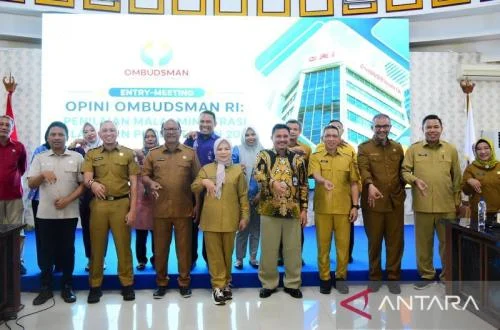
GORONTALO, Indonesia – In a significant move to fortify its commitment to exemplary public service delivery and combat maladministration, the Gorontalo Provincial Government, spearheaded by Vice Governor Idah Syahidah Rusli Habibie, officially inaugurated the Entry Meeting for the 2026 Assessment of Public Service Maladministration. The pivotal event, held on Tuesday at the Dulohupa Room of the Governor’s Office, marks the strategic commencement of an exhaustive evaluation process aimed at fostering a professional, integrity-driven, and maladministration-free bureaucracy across the province. This proactive engagement underscores Gorontalo’s dedication to aligning with national mandates for good governance and ensuring that public services genuinely serve the populace with efficiency and equity.
The entry meeting served as a critical platform for convergence, bringing together a distinguished assembly of stakeholders essential to the integrity and efficacy of public administration. Among the notable attendees were Partono, a revered member of the Ombudsman of the Republic of Indonesia (Ombudsman RI), and Muslimin B. Putra, the Head of the Ombudsman RI Representative Office for Gorontalo. Their presence highlighted the indispensable oversight role of the Ombudsman in safeguarding citizens’ rights against administrative abuses. Also present were Sofian Ibrahim, the Provincial Secretary of Gorontalo, alongside a myriad of leaders from various regional apparatus organizations (OPD) and other invited dignitaries. This comprehensive attendance symbolized a robust synergy between the provincial government and its supervisory bodies, laying a foundation for collaborative efforts in upholding bureaucratic integrity and accountability.
Setting the Stage for Enhanced Governance: The Vice Governor’s Vision
In her opening remarks, Vice Governor Idah Syahidah expressed profound appreciation for the Ombudsman RI’s unwavering consistency in evaluating public service provision. She emphasized that the entry meeting transcended mere administrative formality; rather, it represented a vital forum for evaluation and a shared understanding of common objectives. "This is not just a procedural step," Idah asserted, "but a crucial space for evaluating our performance and aligning our perceptions to prevent and control potential maladministration in a sustainable manner." Her statement underscored the provincial administration’s recognition of the assessment as an ongoing, iterative process designed for continuous improvement rather than a one-off audit.
The Vice Governor articulated a comprehensive vision for public service, framing it as the very "face of the government to its people." She elaborated that the quality of public services extends beyond mere speed and convenience. It encompasses certainty of procedures, clarity of information, fairness of service delivery, and, fundamentally, freedom from maladministration. "Therefore," she declared, "this evaluation must serve as a genuine momentum for tangible improvement." Her address resonated with the broader national agenda of bureaucratic reform, which places citizen satisfaction and trust at its core. This initiative is particularly pertinent in a developing region like Gorontalo, where effective public services are paramount for fostering economic growth and social development.
Shifting Paradigms: From Correction to Prevention
A key highlight of Idah Syahidah’s address was her emphasis on the evolving conceptual framework of the assessment, which now places a greater premium on the prevention and proactive control of maladministration. This paradigm shift, moving beyond reactive correction to proactive mitigation, necessitates a deeper understanding and commitment from all levels of government. The Vice Governor urged all regional apparatuses to pay serious attention to this change, recognizing it as an opportunity to embed preventive measures within their daily operations. She explicitly stated that the findings from previous evaluations must not be seen as historical data but rather as a "roadmap" to strengthen policies and refine implementation, ensuring that the benefits are genuinely experienced by the community.
The Provincial Government of Gorontalo is resolute in leveraging the 2026 assessment as a catalyst for accelerating bureaucratic reform. This commitment translates into tangible actions: reinforcing service standards, enhancing the capacity of civil servants, harnessing information technology for greater efficiency and transparency, and strengthening internal oversight mechanisms within each regional apparatus. Such measures are designed to create a resilient public service ecosystem capable of self-correction and continuous adaptation to the evolving needs of its citizens. The focus on technology, in particular, reflects a forward-looking approach to modernizing governance, potentially reducing human error and opportunities for corruption.
Targeted Evaluation: Lokus of Reform
The Vice Governor directed particular attention to the specific regional apparatuses designated as the "lokus" or focus areas for this year’s evaluation. These critical institutions include the Department of Education and Culture, the Department of Social Affairs, the Department of Population and Civil Registration, and the Hasri Ainun Habibie Regional General Hospital UPTD. The selection of these sectors is strategic, as they represent fundamental pillars of public welfare and often serve as primary points of interaction between citizens and the state. Issues within these departments, such as delays in educational services, complexities in social assistance distribution, inefficiencies in civil document processing, or substandard healthcare delivery, directly impact the daily lives and well-being of Gorontalo’s residents.
Idah Syahidah underscored the imperative for these departments to meticulously adhere to and implement all recommendations issued by the Ombudsman RI in previous assessments. Her directive was unequivocal: "I demand that all regional apparatuses serving as the evaluation focus make the Ombudsman’s recommendations an absolute guide for improvement. Do not repeat the negative records from previous years, but demonstrate real improvement in the quality of service to the community." This firm stance reflects a zero-tolerance policy for recurrent issues and a strong desire to see measurable progress. The emphasis on tangible improvements aligns with performance-based governance principles, where accountability is tied to demonstrable outcomes.
The Role of the Ombudsman: A Guardian of Public Trust
The presence and active participation of the Ombudsman RI, represented by Partono and Muslimin B. Putra, are central to the credibility and effectiveness of this assessment. The Ombudsman RI, established under Law No. 37 of 2008, serves as an independent state institution tasked with supervising the implementation of public services. Its mandate includes receiving and investigating complaints of maladministration, conducting proactive assessments, and issuing recommendations to public service providers. This independent oversight mechanism is crucial for ensuring that public servants adhere to principles of good governance, transparency, and accountability.
Partono, a member of the Ombudsman RI, elaborated on the comprehensive methodology employed in their assessments. He explained that the evaluation process is multi-faceted, involving not only document review and stakeholder interviews but also direct observation of service delivery points and interaction with service users. The Ombudsman’s approach is not punitive but rather diagnostic and facilitative, aiming to identify root causes of maladministration and guide institutions toward sustainable solutions. He highlighted the importance of collaboration between the Ombudsman and regional governments, emphasizing that shared commitment is key to systemic change. "Our goal is not merely to find fault," Partono stated, "but to partner with the government to build a robust system that inherently prevents maladministration and champions excellent public service."
Muslimin B. Putra, Head of the Ombudsman RI Representative Office for Gorontalo, provided a local perspective, stressing the unique challenges and opportunities within the province. He reiterated the importance of localized data and feedback in shaping effective reform strategies. "Each region has its own specific context," Muslimin noted. "Our role in Gorontalo is to ensure that national standards for public service are adapted and implemented effectively, addressing the particular needs and administrative landscape of the province." He also emphasized the importance of public awareness regarding their rights to good service and the channels available for lodging complaints, thereby empowering citizens to act as informal monitors of government performance.
The Broader Context: National Imperatives for Public Service Reform
Gorontalo’s initiative is firmly situated within Indonesia’s broader national agenda for bureaucratic reform and good governance. Since the post-reformasi era, successive Indonesian governments have emphasized the need to transform public administration from a cumbersome, often corrupt system into one that is efficient, transparent, and responsive. Laws such as Law No. 25 of 2009 on Public Services provide the legal framework for this transformation, mandating standards, accessibility, and accountability in service delivery. The Ombudsman RI’s assessments are a direct implementation of this legal framework, serving as a critical tool for measuring progress and identifying areas for intervention.
Maladministration, which encompasses various forms of administrative misconduct such as delays, discriminatory practices, non-provision of services, abuse of authority, and requests for unofficial fees, erodes public trust and hinders national development. Studies by institutions like the World Bank and Transparency International consistently highlight the negative impact of poor governance and corruption on economic growth, foreign investment, and social equity. By proactively addressing maladministration, Gorontalo is not only improving the lives of its citizens but also contributing to Indonesia’s overall competitiveness and standing on the global stage. The province’s commitment sends a clear signal to potential investors and partners that it is serious about creating a transparent and predictable administrative environment.
A Detailed Look at the Assessment Process and Its Timeline
The "Entry Meeting" marks the formal kick-off for the 2026 assessment cycle. Typically, the Ombudsman’s assessment process unfolds in several stages:
- Entry Meeting (Current Stage): Official launch, communication of assessment objectives, methodology, and scope to the assessed agencies. This stage ensures all parties are on the same page and fosters cooperation.
- Data Collection and Document Review: The Ombudsman team collects relevant data, including standard operating procedures (SOPs), service charters, public complaint mechanisms, performance reports, and legal frameworks from the targeted OPDs.
- Field Visits and Observation: On-site visits to service points (e.g., schools, hospitals, civil registration offices) to directly observe service delivery, assess physical infrastructure, and evaluate staff interactions with the public.
- Interviews and Focus Group Discussions: Engagements with service providers (staff, managers), service users (citizens), and other relevant stakeholders to gather qualitative data on experiences, perceptions, and challenges.
- Preliminary Findings and Feedback: The Ombudsman team compiles preliminary findings and discusses them with the assessed agencies, allowing for clarification and initial responses. This stage is crucial for ensuring accuracy and fairness.
- Final Report and Recommendations: A comprehensive report detailing the findings, identifying areas of maladministration, and providing specific, actionable recommendations for improvement. These recommendations are tailored to address systemic issues and promote best practices.
- Monitoring and Follow-up: The Ombudsman typically monitors the implementation of its recommendations over a specified period, often conducting follow-up assessments to ensure that the identified issues have been effectively addressed. This iterative process ensures sustainable change.
This structured approach ensures that the assessment is thorough, evidence-based, and ultimately effective in driving meaningful improvements. The emphasis on "2026 Assessment" indicates a forward-looking strategy, allowing ample time for the provincial government and its agencies to prepare, implement changes, and demonstrate sustained progress by the time the final evaluation culminates.
Challenges and Opportunities on the Path to Excellence
While Gorontalo’s commitment is commendable, the journey towards eradicating maladministration and achieving public service excellence is fraught with challenges. These can include:
- Resistance to Change: Bureaucratic inertia, ingrained practices, and a reluctance to adopt new procedures can impede reform efforts.
- Capacity Gaps: A lack of sufficient training, technical skills, or resources among civil servants to implement new standards or utilize technology effectively.
- Resource Constraints: Limited financial and human resources can hinder the adoption of comprehensive reform measures.
- Political Will Fluctuation: The sustainability of reform initiatives often depends on consistent political will and leadership support across different administrations.
- Public Awareness: A lack of public knowledge about their rights and complaint mechanisms can limit the effectiveness of oversight.
However, these challenges also present significant opportunities. The assessment process itself serves as an opportunity for:
- Learning and Development: Identifying skill gaps and implementing targeted training programs for civil servants.
- Innovation: Encouraging the adoption of new technologies and creative solutions to service delivery challenges.
- Enhanced Collaboration: Strengthening partnerships between government agencies, the Ombudsman, civil society organizations, and the public.
- Improved Citizen Trust: Demonstrating a tangible commitment to accountability and responsiveness, thereby rebuilding public confidence in government institutions.
- Economic Benefits: Efficient and transparent public services attract investment, stimulate economic activity, and foster a more conducive business environment.
In conclusion, Vice Governor Idah Syahidah’s call to action at the Entry Meeting for the 2026 Public Service Maladministration Assessment is more than a procedural formality; it is a declaration of intent. By urging all stakeholders to embrace the Ombudsman’s recommendations and to proactively prevent maladministration, Gorontalo is embarking on a transformative journey. This collective endeavor aims to construct a public service system that is not only accountable and high-quality but also deeply rooted in the interests and welfare of its citizens, thereby solidifying Gorontalo’s position as a leader in good governance within the Indonesian archipelago. The commitment to continuous evaluation and improvement ensures that the "face of the government" truly reflects professionalism, integrity, and unwavering dedication to the public good.