Nasution Nanang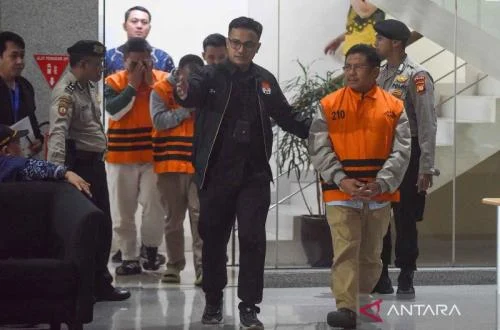
JAKARTA – The Corruption Eradication Commission (KPK) emphatically stated that its recent series of sting operations (Operasi Tangkap Tangan – OTT) targeting two regional heads were purely an exercise in law enforcement, devoid of any political agenda. This assertion was made by the Acting Director of Investigations at the KPK, Achmad Taufik Husein, at the KPK’s Red and White Building in Jakarta on Tuesday, July 21, 2026, in response to growing speculation regarding the timing and targets of these high-profile arrests.
"I assure you that these actions are far removed from any political elements," Taufik declared, directly addressing the rumors circulating after the arrests of Syah Afandin, the Regent of Langkat, and Lalu Ahmad Zaini, the Regent of West Lombok. Both individuals are notable for their previous roles as chairs of the regional executive boards (DPW) of the National Mandate Party (PAN), a prominent political party in Indonesia. Taufik elaborated that both operations were initiated following credible public complaints, which were then diligently pursued and verified by the investigative team. "This is a result of public reports, and we followed up. It just so happens that, coincidentally, these individuals were associated with PAN," he added, underscoring the evidence-based nature of the investigations.
KPK’s Unwavering Mandate and the Modus Operandi of OTTs
The KPK, established in 2002, operates as an independent governmental agency with a specific mandate to eradicate corruption in Indonesia. Its unique powers, including the ability to conduct sting operations, wiretaps, and asset tracing, have made it a formidable force against graft. OTTs are a cornerstone of the KPK’s strategy, designed to catch perpetrators red-handed, thereby securing direct evidence of corruption, often involving cash transactions. This method is crucial in circumventing the complex webs of corruption and making it difficult for suspects to deny their involvement. The commission maintains that these operations are executed only after extensive intelligence gathering and careful surveillance, ensuring that each arrest is grounded in solid preliminary evidence of criminal activity.
The emphasis on "public complaints" as the genesis of these operations highlights the vital role of citizen participation in the fight against corruption. The KPK encourages the public to report suspicious activities, creating a crucial partnership between the institution and the populace in upholding good governance. This collaborative approach reinforces the KPK’s independence and its commitment to serving the public interest, rather than succumbing to political pressures or partisan motives.
A Deep Dive into the Recent High-Profile Arrests
The arrests of Syah Afandin and Lalu Ahmad Zaini sent ripples through Indonesia’s political landscape, particularly given their affiliations with PAN. Syah Afandin, as the Regent of Langkat in North Sumatra, was the 15th regional head to be ensnared in a KPK OTT in 2026. His arrest underscores the persistent challenges of corruption within regional administrations, often involving illicit dealings related to public procurement, licensing, or administrative services. While specific details of the allegations against Afandin were not fully disclosed at the time of Taufik’s statement, the nature of OTTs typically points towards bribery or illicit gratification.
Similarly, Lalu Ahmad Zaini, the Regent of West Lombok in West Nusa Tenggara, marked the 17th such arrest in the same year. His case, like Afandin’s, is expected to involve allegations of misusing authority for personal gain, a common thread in regional corruption cases. The fact that both arrests occurred in July 2026 within a short timeframe further intensified public scrutiny and discussions about the prevalence of corruption among elected officials. For a political party like PAN, having two prominent regional leaders arrested by the anti-graft body presents a significant challenge, prompting internal reflections on party discipline and candidate vetting processes.
Escalating Trend: A Timeline of Regional Head Arrests
The arrests of Afandin and Zaini are not isolated incidents but rather part of a discernible and alarming trend. Cumulatively, from 2025 to July 22, 2026, the KPK has arrested and named 16 regional heads, who were elected in the 2024 regional elections (Pilkada), as suspects in alleged corruption cases. This figure is a stark indicator of the intensity of anti-corruption efforts at the regional government level and, simultaneously, a troubling sign of persistent corruption among newly elected officials.
The year 2025 saw several notable arrests, including:
- Abdul Azis, Regent of Kolaka Timur
- Abdul Wahid, Governor of Riau
- Sugiri Sancoko, Regent of Ponorogo
- Ardito Wijaya, Regent of Lampung Tengah
- Ade Kuswara Kunang, Regent of Bekasi
Entering 2026, the list of regional leaders under KPK scrutiny expanded significantly. Beyond Syah Afandin and Lalu Ahmad Zaini, the KPK also apprehended:
- Maidi, Mayor of Madiun
- Sudewo, Regent of Pati
- Fadia Arafiq, Regent of Pekalongan
- Muhammad Fikri Thobari, Regent of Rejang Lebong
- Syamsul Auliya Rachman, Regent of Cilacap
- Gatut Sunu Wibowo, Regent of Tulungagung
- Edison, Regent of Muara Enim
- Suhardiman Amby, Regent of Kuantan Singingi
- Etik Suryani, Regent of Sukoharjo
This comprehensive list reveals a broad geographical reach and a consistent focus by the KPK on various levels of regional governance, from regents to mayors and governors. The concentration of arrests among officials elected in the 2024 Pilkada suggests that the pressures and temptations for corruption may begin early in an official’s tenure, or perhaps reflect the financial burdens incurred during election campaigns.
Broader Context: The Endemic Challenge of Corruption in Indonesia
Indonesia has long grappled with systemic corruption, a challenge that undermines public trust, hinders economic development, and distorts the principles of good governance. International indices, such as Transparency International’s Corruption Perception Index (CPI), consistently highlight Indonesia’s ongoing struggle, despite incremental improvements. While the country has made strides, particularly through the establishment and sustained operations of the KPK, corruption remains deeply entrenched, especially at regional levels where control over significant budgets and vast resources often goes hand-in-hand with limited oversight.
Regional governments are particularly vulnerable due to several factors:
- Decentralization of Power: While intended to bring governance closer to the people, decentralization has also dispersed opportunities for corruption, making local officials powerful figures with control over substantial funds and critical permits.
- Resource Control: Regional heads often control natural resources, land permits, and large public procurement projects, all ripe areas for bribery, kickbacks, and illicit influence peddling.
- Money Politics: The high cost of regional elections (Pilkada) often compels candidates to seek illicit funding or to engage in corrupt practices post-election to recoup their investments, perpetuating a vicious cycle.
- Weak Local Oversight: Local legislative bodies and civil society organizations often lack the capacity or independence to effectively monitor the executive, creating fertile ground for abuses of power.
The KPK’s consistent targeting of regional heads demonstrates its recognition of this systemic issue and its commitment to cleaning up governance at the grassroots level, where corruption directly impacts the delivery of public services and local development.
Official Reactions and Inferred Statements
Following Taufik Husein’s unequivocal statement, reactions from various stakeholders can be logically inferred:
- KPK Leadership: The KPK leadership would undoubtedly reiterate Taufik’s stance, emphasizing the institution’s independence and commitment to its mandate without fear or favor. They would likely call for public support and cooperation, stressing that the fight against corruption is a shared responsibility.
- National Mandate Party (PAN): As two of their prominent members were arrested, PAN would likely issue a statement condemning any acts of corruption committed by its cadres. They would likely emphasize that such actions are individual transgressions and do not reflect the party’s official stance or principles. PAN might also announce internal disciplinary measures, such as immediate dismissal of the accused members, and commit to strengthening internal ethics and candidate vetting processes to prevent future occurrences. Such a response is crucial for maintaining public image and trust in a political party.
- Civil Society Organizations (CSOs) and Anti-Corruption Watchdogs: Groups like Indonesia Corruption Watch (ICW) would likely welcome the arrests as a positive step, while simultaneously urging the KPK to continue its relentless efforts. They might also use the opportunity to call for broader systemic reforms, emphasizing that arrests alone are not enough to eradicate corruption. CSOs would likely highlight the need for improved transparency, asset declaration, and whistleblower protection mechanisms.
- General Public: Public sentiment would likely be a mix of frustration and support. Frustration over the continuous stream of corruption cases involving public officials, but also support for the KPK’s unwavering resolve. There might be renewed calls for accountability and stricter penalties for corrupt officials.
Implications for Governance and Public Trust
The ongoing arrests of regional heads by the KPK carry significant implications for governance and public trust in Indonesia:
- Erosion of Public Trust: Each arrest, particularly of elected officials, further erodes public trust in democratic institutions and the integrity of government. When leaders entrusted with public welfare are found to be corrupt, it fosters cynicism and disengagement among citizens.
- Disruption to Governance: The arrest of a regional head can lead to administrative instability, delays in policy implementation, and disruption of public services as interim officials are appointed and investigations proceed. This directly impacts the well-being of local communities.
- Deterrent Effect: While challenging, the KPK’s consistent operations do serve as a deterrent. The fear of being caught red-handed through an OTT may compel some officials to reconsider corrupt practices, at least in the short term.
- Call for Systemic Reforms: The recurring nature of these arrests highlights the need for deeper, systemic reforms. Beyond individual prosecutions, there is a pressing need to overhaul bureaucratic processes, enhance financial oversight, strengthen accountability mechanisms, and improve the ethical framework within public service. This includes transparency in public procurement, simplified licensing procedures, and independent auditing.
- Impact on Political Parties: The arrests put pressure on political parties to ensure the integrity of their candidates and members. It compels them to take a more proactive role in preventing corruption, not just reacting to it. This can lead to internal reforms, but also potential political maneuvering to protect party interests.
- Reinforcing KPK’s Role: Despite past controversies and attempts to curb its powers, the KPK’s continued effectiveness in carrying out high-profile arrests reaffirms its critical role in Indonesia’s democratic system as a crucial check on power.
Looking Ahead: The Unfinished Battle
The KPK’s resolute stance, as articulated by Achmad Taufik Husein, underscores that the fight against corruption in Indonesia is an ongoing, complex, and often politically charged battle. The significant number of regional heads apprehended in 2025 and 2026, especially those newly elected, paints a stark picture of the challenges ahead.
The commission’s unwavering commitment to pursue cases based on credible public complaints and solid evidence, irrespective of the political affiliations of the accused, is vital for maintaining its credibility and the public’s confidence. While the KPK continues to be a spearhead in this fight, the ultimate success of anti-corruption efforts will depend on a multi-pronged approach involving strong political will, robust institutional reforms across all government branches, active participation from civil society, and a sustained shift in societal values towards integrity and accountability. The journey towards a truly clean and corruption-free Indonesia, while arduous, remains a fundamental aspiration for its citizens and a continuous imperative for its institutions.