Nila Kartika Wati
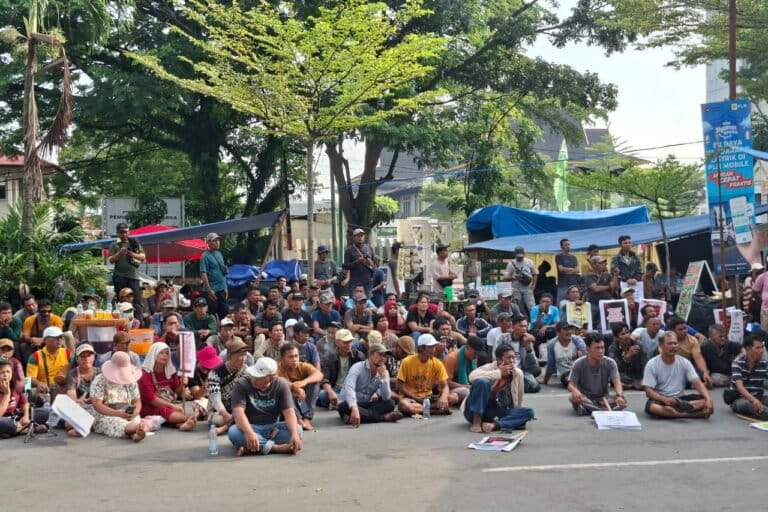
The long-standing conflict surrounding the presence of residents and palm oil plantations within the Tesso Nilo National Park (TNTN) in Riau remains far from a resolution. For several days, hundreds of residents have staged a persistent protest in front of the Riau Governor’s Office in Pekanbaru, expressing a firm rejection of the government’s relocation plans. The protesters cite a lack of conceptual clarity, the absence of a confirmed relocation site, and a significant deficiency in meaningful dialogue between the authorities and the affected communities. While the government acknowledges the complexities and continues its search for replacement land, the tension on the ground reflects a deep-seated distrust between the state and the people living within the conservation area.
Wandri Saputra Simbolon, Chairman of the Pelalawan Student and Community Alliance (AMMP) and the leader of the demonstration, confirmed that the residents are seeking a direct audience with the central government. A follow-up dialogue is scheduled to take place in Jakarta on Wednesday, April 22, 2026. This move follows a virtual meeting facilitated by the Riau provincial government with the Director General of Natural Resources and Ecosystem Conservation (KSDAE) from the Ministry of Forestry. Supriyadi, Head of the Riau Communication, Informatics, and Statistics Office (Kominfotik), stated that the government is opening channels for residents to voice their aspirations directly to national policymakers.
Despite this window for negotiation, the protesters have issued a stern warning. Wandri emphasized that there must be no operations or movement from the Forestry Area Order Task Force (Satgas PKH) until the government provides transparent data regarding the 4,000 residents who are claimed to have already registered for relocation. The discrepancy in data and the lack of a clear roadmap have become the primary catalysts for the ongoing civil unrest in the province.
A Chronology of Protest and the Demand for Presidential Intervention
The current wave of demonstrations began on April 13, 2026, when hundreds of residents from the Tesso Nilo area marched to Jalan Cut Nyak Dien, adjacent to the Governor’s office. For days, the masses occupied the area, sleeping under makeshift tents and vowing not to leave until they were granted a virtual meeting with President Prabowo Subianto. The residents believe that only the highest level of executive authority can provide the legal certainty they seek.
However, the realization dawned on the protesters that a meeting with the President would not be immediate, particularly as President Prabowo was on a diplomatic tour of Russia and France at the time. Fearing for the health and safety of the elderly and children among them, the group eventually scaled back their occupation, though their demands remained unchanged. SF Hariyanto, the Acting Governor of Riau, noted that while the initial dialogue with the Tesso Nilo National Park Recovery Acceleration Team (TP2TNTN) reached a stalemate due to the residents’ insistence on speaking with the President, recent communications have shown some positive progress toward a structured discussion.
"We demand a Zoom meeting with the President to gain certainty about what is happening in TNTN. In our view, the central government does not realize that there are people living there legally. If we are called illegal, then we are being treated like foreign nationals in our own country," Wandri declared during an oration. This sentiment highlights a core grievance: the residents possess official identification cards (KTP) and family cards (KK) issued by the state, and they have historically participated in local and national elections, yet they are now being labeled as illegal encroachers.
The Lack of a Concrete Relocation Framework
The primary reason for the rejection of the relocation plan is the perceived "emptiness" of the government’s promises. Residents argue that the concept of relocation—including the timeline, the specific location, and the economic transition plan—has never been discussed directly with those most impacted. Many only heard through secondary sources that they would be expected to move independently and that their palm oil plantations would be converted under a social forestry scheme.
"We want to hear directly from the central government about how the scheme works before we agree to negotiate. The Riau provincial government has mostly offered empty talk," Wandri said. This skepticism is bolstered by the failed relocation attempt of residents from Bagan Limau on December 20 of last year. That initiative created new conflicts when the destination site in Pesikaian Village, Kuantan Singingi Regency, was rejected by the local indigenous community, who refused to allow their ancestral lands (tanah ulayat) to be used for outsiders.
The government’s data also remains a point of contention. Acting Governor SF Hariyanto stated that approximately 10,600 hectares of palm oil plantations within TNTN are currently held by 3,916 families. After an initial relocation of 227 families covering 633 hectares, the government is still searching for nearly 10,000 hectares of replacement land. Ristianto Pribadi, a spokesperson for the Ministry of Forestry, claimed that over 70% of the population—around 4,011 families—have registered and expressed readiness for relocation. However, residents challenge these figures, demanding that the government release the names and details of these families to prove the data has not been manufactured.
Economic Security and the Role of Women in TNTN
The conflict over Tesso Nilo is not merely a legal or environmental issue; it is a deeply human one. The protests have seen significant participation from women, who are often the backbone of the local economy. In Tesso Nilo, women manage domestic affairs while also working alongside their husbands in the palm oil groves. For many, these plantations represent their life savings.
Refi and Ida Wati, two residents who joined the protest, shared how they sold their land in their home villages a decade ago to buy small plots in Tesso Nilo, hoping to improve their families’ futures. "We are not big corporations. We own less than five hectares," Ida Wati explained. She noted that since the Satgas PKH began its operations in June 2025, a cloud of trauma has hung over the community. The sight of personnel carrying long-barreled weapons has frightened children and created an atmosphere of intimidation.
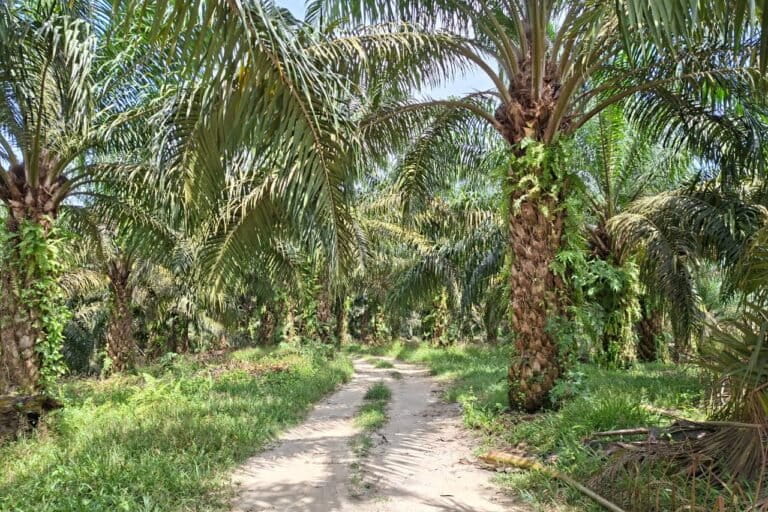
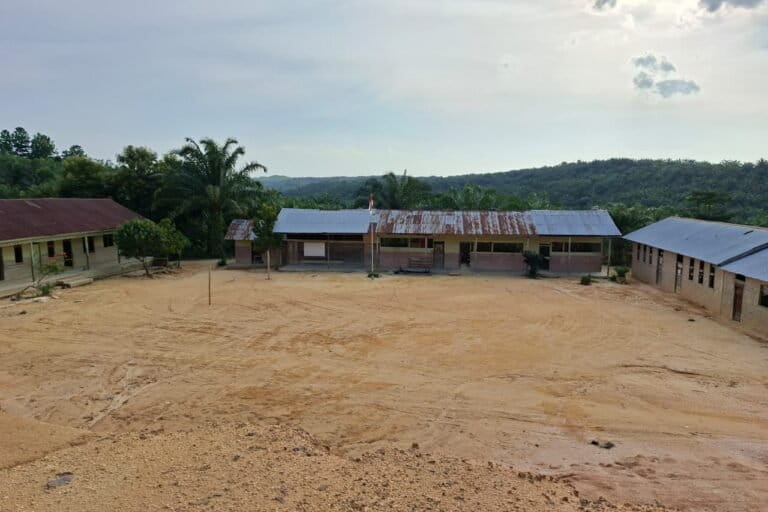
The residents point out the irony of their situation: while the government labels them illegal, it has historically provided them with infrastructure and services. The residents of Kesuma Village, for instance, built their own schools, health clinics, and places of worship through self-funding (swadaya). "I didn’t go to school, and I am uneducated. But I don’t want to pass that on to my children. I live only to ensure they get an education so they can one day sit in the governor’s office—not to deceive the public, but to serve it," Ida Wati said.
Expert Analysis: Legal Certainty vs. Enforcement
Environmental and social organizations have weighed in on the crisis, urging the government to adopt a more nuanced approach. Riko Kurniawan, Director of Paradigma, argued that the resistance is a logical response to the lack of legal certainty. He suggested that the government must prioritize residents who own less than five hectares and ensure that replacement sites are fully equipped with basic infrastructure—schools, markets, and clinics—before demanding that people vacate the national park.
The Executive Director of Walhi Riau, Eko Yunanda, echoed these concerns, stating that while the restoration of the national park is essential, it must not come at the expense of human rights. He warned that using locations that are already subject to indigenous claims, as seen in the Pesikaian case, only shifts the conflict from one area to another.
Uli Arta Siagian, Head of the National Executive Campaign Division of Walhi, offered a more systemic critique. She argued that the Satgas PKH approach oversimplifies a complex history of land tenure. Tesso Nilo was originally ancestral land before being granted to forestry companies, which were then converted into palm oil plantations, eventually leading to the park’s establishment to protect elephant habitats.
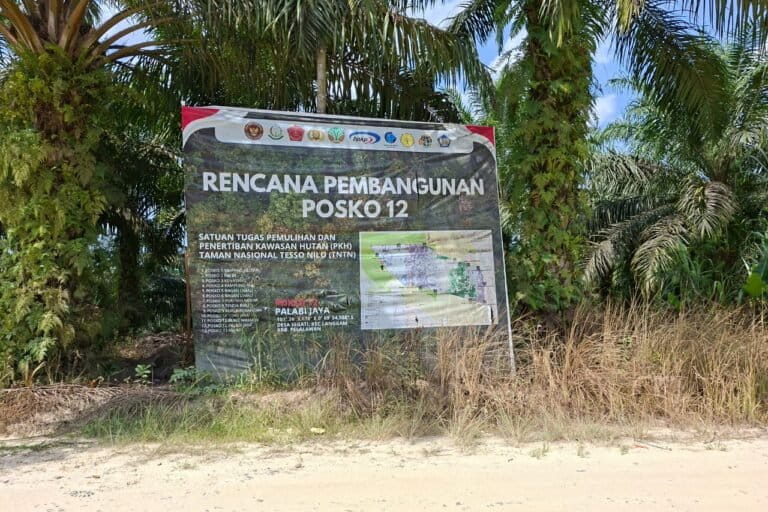
"The government should consider a ‘Jangka Benah’ (transitional) strategy," Uli suggested. Under this scheme, residents with small-scale holdings would be allowed to continue harvesting their palm oil for one crop cycle while being required to interplant with forest species. Over time, the palm oil would be phased out in favor of an economically viable forest ecosystem. This would allow for the restoration of elephant corridors without abruptly destroying the livelihoods of thousands of families.
Implications for Conservation and Social Stability
The Tesso Nilo National Park, established in 2004 and expanded in 2009, is one of the last remaining lowland rainforests in Sumatra and a critical sanctuary for the critically endangered Sumatran elephant. However, its history has been marred by rampant deforestation and encroachment. The current standoff represents a pivotal moment for Indonesia’s conservation policy.
If the government resorts to heavy-handed enforcement without providing a viable and conflict-free alternative for the residents, it risks a humanitarian crisis and prolonged social unrest in Riau. Conversely, if the encroachment continues unchecked, the ecological integrity of the park—and the survival of the species within it—will be permanently compromised.
The upcoming meeting in Jakarta is seen as a critical juncture. For the residents of Tesso Nilo, the demand is simple: they want to be treated as citizens with rights, not as obstacles to be removed. For the government, the challenge is to balance the urgent need for environmental restoration with the complex socio-economic realities of the thousands of people who have called the forest their home for decades. As the April 22 deadline approaches, the eyes of the province remain fixed on whether a middle ground can be found or if the tents on Jalan Cut Nyak Dien will return once more.