Nila Kartika Wati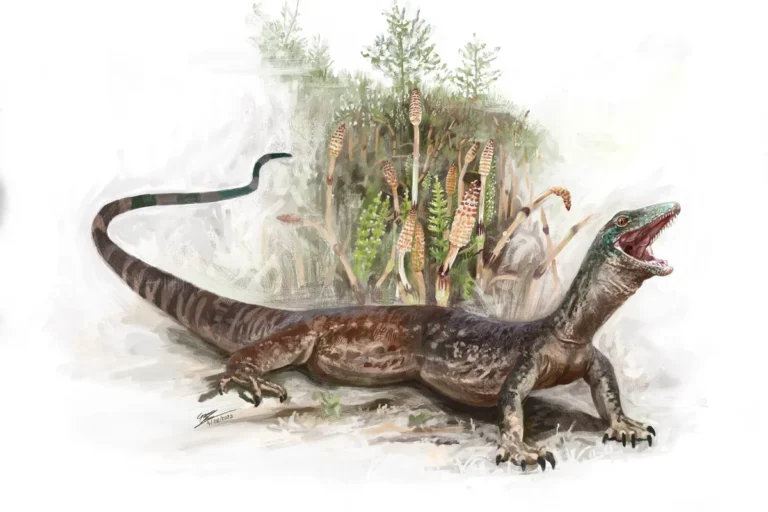
The evolutionary history of serpents has long been one of the most enduring mysteries in vertebrate paleontology, characterized by a frustratingly sparse fossil record that scientists often refer to as a "transitional data void." For decades, the primary obstacle in tracing the lineage of snakes back to their four-legged ancestors has been the inherent fragility of small reptile bones from the Jurassic period. These delicate structures rarely survive the rigors of fossilization, often disintegrating before they can be encased in sediment, leaving a massive chronological gap where the transition from lizard to snake should be. However, a groundbreaking discovery on the Isle of Skye in Scotland has finally provided a physical bridge across this evolutionary chasm. The identification of a 167-million-year-old fossil, named Breugnathair elgolensis, offers definitive proof that the specialized cranial features of snakes evolved millions of years before they lost their limbs, fundamentally reshaping our understanding of reptilian history.
The Discovery and a Decade of Analysis
The journey to this discovery began in 2016 during a paleontological expedition led by Dr. Stig Walsh of National Museums Scotland. The Isle of Skye, often referred to as Scotland’s "Dinosaur Isle," is one of the few places on Earth where Middle Jurassic terrestrial fossils are accessible, yet the initial find appeared modest. The specimen was encased in hard, stubborn rock, revealing little of its significance to the naked eye. It would take nearly a decade of painstaking research and the application of cutting-edge aerospace-grade technology to unlock the secrets held within the stone.
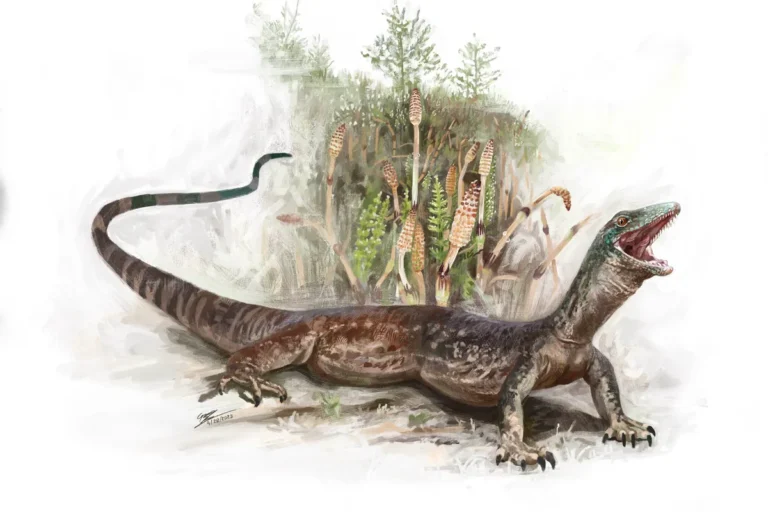
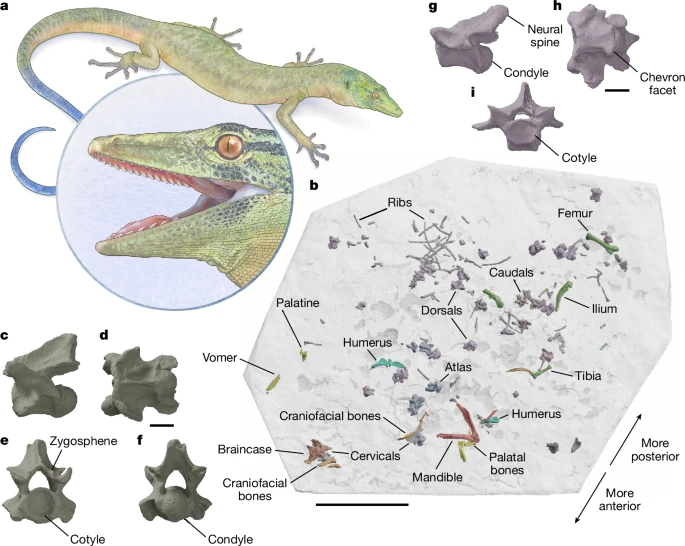
To analyze the specimen without damaging the fragile remains, an international team of scientists transported the fossil to the European Synchrotron Radiation Facility (ESRF) in Grenoble, France. Using high-energy X-ray tomography—a process far more powerful than a standard medical CT scan—researchers were able to create a three-dimensional digital reconstruction of the animal’s anatomy. This digital "dissection" allowed the team to examine the internal structure of the skull and the microscopic details of the teeth, providing a level of clarity that was impossible with traditional mechanical preparation. The results revealed a creature approximately 40 centimeters in length that possessed a startling "mosaic" of physical traits: the robust, four-legged body of a lizard paired with the highly specialized head of a primitive snake.
Mosaic Anatomy: A Specialized Predator of the Middle Jurassic
The anatomical profile of Breugnathair elgolensis serves as a "missing link" that clarifies the sequence of evolutionary changes. While the creature maintained a traditional lizard-like gait with fully functional limbs, its skull had already begun to move toward the predatory specialization seen in modern pythons. Most notably, its teeth were curved backward—a specific adaptation designed to grip struggling prey and prevent it from escaping. This dental arrangement suggests that Breugnathair was an active and formidable predator in its ecosystem.
Detailed analysis of the bone microstructure, or histology, provided further insights into the life history of this specific individual. By examining growth rings within the bone—similar to the rings of a tree—paleontologists determined that the animal was approximately nine years old at the time of its death. It likely inhabited the margins of a calm, ancient lagoon, a common feature of the Scottish landscape during the Middle Jurassic. When it died, its body was quickly covered by fine silt, protecting it from scavengers and the elements for 167 million years until its eventual discovery in the 21st century.
Challenging the Burrowing Ancestor Theory
Perhaps the most significant impact of the Breugnathair discovery is its direct challenge to the "fossorial" or burrowing lizard theory. For over a century, a dominant hypothesis in evolutionary biology suggested that snakes evolved from lizards that took to living underground. According to this theory, these lizards lost their legs and evolved reduced eyes as an adaptation to a subterranean lifestyle, only later emerging to become the surface predators we recognize today.
However, the physical evidence provided by Breugnathair elgolensis points in a different direction. The creature’s skeletal structure, particularly its well-developed limb attachments and the size of its orbital cavities (eye sockets), indicates that it was a surface-dwelling animal. It likely hunted in broad daylight, using its keen eyesight and specialized jaw to navigate the terrestrial environment. This suggests that the "snake-like" head evolved as a tool for more efficient hunting on the surface, rather than as a byproduct of a life spent digging in the dark. This discovery shifts the focus of snake origins away from isolated, worm-like burrowers and toward a lineage of highly capable terrestrial hunters, perhaps more closely related to the ancestors of modern monitor lizards.
Technological Innovation in Modern Paleontology
The study, published in the prestigious journal Nature, highlights the shifting methodology of modern paleontology. The decade-long gap between the 2016 discovery and the 2025 publication underscores the complexity of modern fossil analysis. In the past, a fossil like Breugnathair might have been partially destroyed during the attempt to chip it out of the rock. Today, the use of synchrotrons and high-resolution CT scanning allows for "virtual paleontology," where the specimen remains safely inside the matrix while scientists manipulate a digital twin.
This technology has allowed researchers to observe the "mosaic evolution" in real-time. Mosaic evolution is a phenomenon where different parts of an organism evolve at different rates. In the case of Breugnathair, the "snake" part of the evolution (the head) was racing ahead of the "lizard" part (the body). This provides a rare glimpse into the "experimental" phase of evolution, where nature was testing new predatory tools before the dramatic transition to a limbless body plan occurred.
The Middle Jurassic Ecosystem of the Isle of Skye
The context of the find is as important as the fossil itself. During the Middle Jurassic, the Isle of Skye was part of a subtropical archipelago characterized by lush vegetation and a network of lagoons and rivers. It was a world in transition, where early mammals were beginning to diversify and dinosaurs were reaching massive proportions. Breugnathair lived alongside these creatures, likely preying on early mammalian ancestors and the hatchlings of larger reptiles.
The rarity of Middle Jurassic terrestrial fossils makes this discovery a cornerstone for understanding the Squamata order, which includes over 10,000 species of modern lizards and snakes. Before Breugnathair, the record of this period was so thin that scientists could only speculate on when the split between lizards and snakes truly occurred. Now, there is a physical anchor in time—167 million years ago—showing that the path toward "snakeness" was already well underway.
Scientific Reactions and Broader Implications
The scientific community has reacted with significant enthusiasm to the findings. Experts in herpetology and evolutionary biology note that Breugnathair helps resolve long-standing debates regarding convergent evolution. Convergent evolution occurs when unrelated species develop similar traits due to similar environmental pressures. By having a clear transitional fossil, researchers can more accurately distinguish between traits inherited from a common ancestor and those that evolved independently.
Dr. Roger Benson of the University of Oxford, a co-author of the study, emphasized that Breugnathair is a "key piece of the puzzle." The discovery suggests that the evolutionary success of snakes was not a sudden fluke but the result of millions of years of gradual refinement. The transition was not a "jump" but a slow, methodical transformation that began with the tools of the hunt—the teeth and the jaw—long before the legs became a hindrance to the animal’s lifestyle.
Conclusion: A New Chapter in Reptilian History
The discovery of Breugnathair elgolensis serves as a reminder that the Earth still holds profound secrets within its ancient strata. For a century, the origin of snakes was a story told with missing pages; the Isle of Skye fossil has effectively recovered one of the most important chapters. It confirms that the evolution of the snake was a sophisticated, multi-stage process that began in the sunlit world of the Middle Jurassic, driven by the needs of a predator rather than the constraints of a burrower.
As researchers continue to analyze the data from the Isle of Skye and search for further specimens, the story of Breugnathair will likely become a staple of biology textbooks. It stands as a testament to the power of persistence in field research and the transformative potential of modern technology. More importantly, it provides a vivid image of a 167-million-year-old world where a small, four-legged creature with a python’s smile began the long journey toward becoming one of the most successful and specialized lineages of predators in the history of life on Earth. Through Breugnathair, the "data void" is finally being filled, offering a clearer view of the intricate and surprising ways in which life adapts, survives, and thrives across the eons.