Chalifah Fatihah
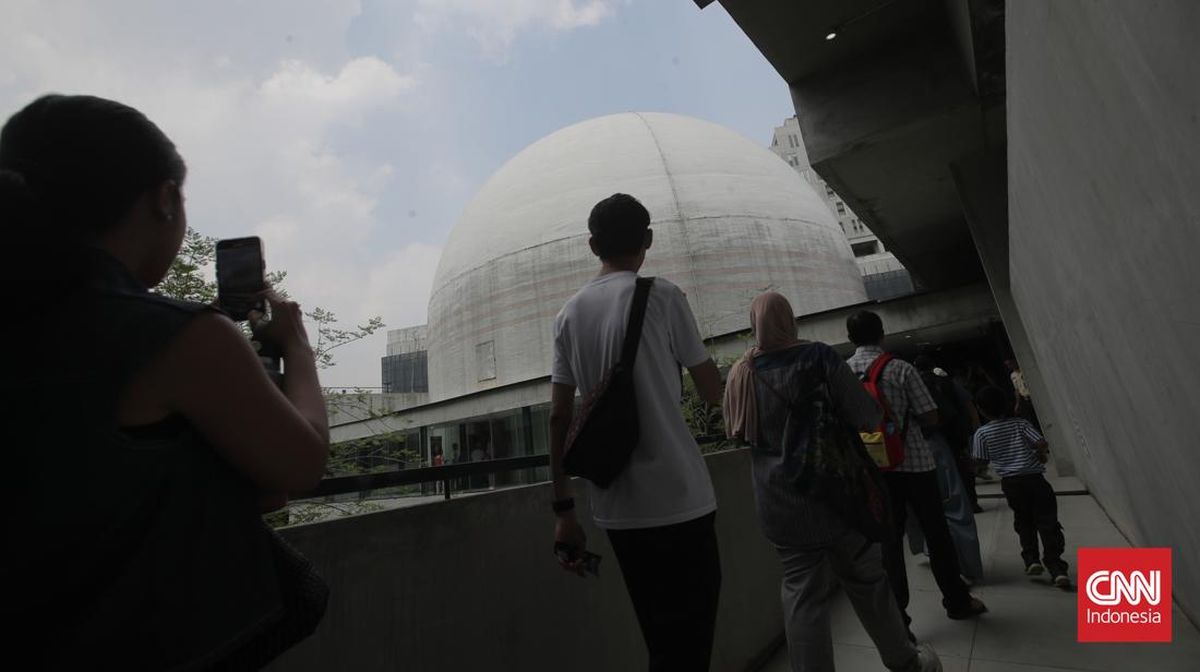
Jakarta, Indonesia – On Thursday, April 23, 2026, the Planetarium Jakarta is set to open its doors to the public for an extraordinary astronomical event: "Piknik Malam Bersama Bulan dan Jupiter" (Moon and Jupiter Picnic Night). This free-of-charge event, scheduled from 5:00 PM to 9:00 PM WIB at the Jakarta Theater Building within Taman Ismail Marzuki (TIM) in Cikini, Central Jakarta, offers a unique opportunity for residents to witness a rare conjunction of the Moon and Jupiter.
The celestial highlight of the evening will be the close alignment of the Moon and Jupiter, appearing side-by-side in the night sky as viewed from Earth. This rare phenomenon presents an ideal moment for public observation, according to an announcement made by Planetarium Jakarta via its official Instagram account on Tuesday, April 21st. Attendees will have the chance to observe Jupiter’s Great Red Spot, a persistent anticyclonic storm, and its four largest moons, known as the Galilean moons – Io, Europa, Ganymede, and Callisto – through the provided telescopes. The Moon, in its quarter phase during this event, will reveal its intricate surface details, including craters, valleys, and mountain ranges, with remarkable clarity.
Beyond the direct astronomical observation, the "Moon and Jupiter Picnic Night" promises a multifaceted experience. The program includes an engaging astronomy talk show, a mini planetarium show, and an astrophotography exhibition, enriching the educational and entertainment value of the evening. This initiative by Planetarium Jakarta underscores its commitment to making astronomy accessible and engaging for the wider community, fostering a deeper appreciation for the cosmos.
Event Details and Registration Procedures
Participation in this special event is on a first-come, first-served basis, with on-site registration commencing at 4:00 PM WIB. It is crucial for all attendees, including children and their accompanying adults, to register individually. While the event itself is free of charge, visitors will be subject to the standard parking fees applicable at Taman Ismail Marzuki.
The mini planetarium show has a limited capacity of 100 participants, allocated across four sessions, each accommodating 25 individuals. These sessions are scheduled as follows:
- Session 1: 5:00 PM – 5:30 PM WIB
- Session 2: 5:30 PM – 6:00 PM WIB
- Session 3: 6:00 PM – 6:30 PM WIB
- Session 4: 6:30 PM – 7:00 PM WIB
Attendees are advised to arrive at least 15 minutes prior to their scheduled session to ensure a smooth entry. For other scheduled activities, such as the talk show and sky observation, there are no specific attendance quotas, encouraging broader public engagement.
Chronology of Scheduled Activities
The evening’s activities are meticulously planned to provide a comprehensive astronomical experience:
- Throughout the Event (5:00 PM – 9:00 PM WIB): The Astrophotography Exhibition will be open for viewing, showcasing stunning images captured by local astronomy enthusiasts. This exhibition serves as a visual testament to the beauty and wonder of celestial objects and phenomena.
- 7:00 PM – 9:00 PM WIB: The Astronomy Talk Show and Discussion will commence, featuring experts who will delve into various astronomical topics, potentially including the significance of planetary conjunctions and recent discoveries in space exploration. This segment aims to provide in-depth knowledge and answer audience questions.
- 8:00 PM – 9:00 PM WIB: The highly anticipated Sky Observation session will begin. Utilizing four telescopes, attendees will have the opportunity to take turns observing the Moon and Jupiter. The effectiveness of this observation is highly dependent on prevailing weather conditions.
Background Context: The Significance of Planetary Conjunctions and the Planetarium’s Role
A planetary conjunction occurs when two or more celestial bodies appear very close to each other in the sky from our perspective on Earth. While these events happen with relative frequency, the specific alignment of the Moon and Jupiter, especially when the Moon is in a visible phase that highlights its surface, is considered a significant astronomical spectacle. These events offer invaluable opportunities for public engagement with astronomy, moving beyond textbook knowledge to direct observation.
Planetarium Jakarta, as an institution dedicated to astronomy education and public outreach, plays a vital role in demystifying the cosmos for the Indonesian public. Established to provide accessible astronomical information and experiences, it serves as a crucial hub for fostering scientific curiosity. The revitalization and consistent programming of such events are essential for cultivating the next generation of scientists and for ensuring that the public remains informed and inspired by the wonders of the universe. The facility at Taman Ismail Marzuki, a cultural and recreational landmark in Jakarta, provides a fitting and accessible venue for these public events.
Supporting Data and Astronomical Insights
Jupiter, the largest planet in our solar system, is a gas giant with a complex atmospheric system. Its Great Red Spot, a storm larger than Earth, has been observed for centuries. The Galilean moons, discovered by Galileo Galilei in 1610, are worlds in their own right, with some, like Europa, believed to harbor subsurface oceans, making them prime targets in the search for extraterrestrial life. The Moon, Earth’s only natural satellite, plays a critical role in stabilizing our planet’s axial tilt and influencing tidal patterns. Observing its surface in detail provides insights into the early history of the solar system and the processes of impact cratering.
The apparent closeness of the Moon and Jupiter during a conjunction is an illusion of perspective. In reality, Jupiter is millions of kilometers away from Earth, while the Moon is significantly closer. However, their alignment in our line of sight creates a visually striking and scientifically significant event. Such conjunctions are predictable with high accuracy thanks to the advancements in celestial mechanics and astronomical modeling, allowing institutions like Planetarium Jakarta to plan and promote them well in advance.
Potential Reactions and Broader Implications
The "Moon and Jupiter Picnic Night" is expected to draw significant public interest, particularly from families, students, and amateur astronomy enthusiasts. This event serves as a powerful tool for science communication, translating complex astronomical concepts into tangible, memorable experiences. By offering a free and accessible platform for observation and learning, Planetarium Jakarta is likely to enhance public understanding and appreciation of astronomy.
The success of such public outreach programs can have broader implications for scientific literacy and engagement in Indonesia. Events that spark curiosity about space can inspire young people to pursue careers in STEM (Science, Technology, Engineering, and Mathematics) fields, contributing to the nation’s long-term scientific and technological development. Furthermore, by highlighting natural phenomena, these events can foster a greater sense of wonder and connection to the universe, promoting environmental awareness and a broader perspective on humanity’s place in the cosmos.
In the event of inclement weather, the observational aspects of the program may be compromised. However, the talk show and mini planetarium presentations would still proceed, offering valuable educational content. Planetarium Jakarta’s commitment to transparency regarding weather dependency is crucial for managing public expectations.
This event by Planetarium Jakarta is more than just a viewing opportunity; it is a carefully curated experience designed to educate, inspire, and unite the community under the vast canvas of the night sky. It underscores the enduring human fascination with the cosmos and the vital role of public institutions in making these wonders accessible to all.