Nasution Nanang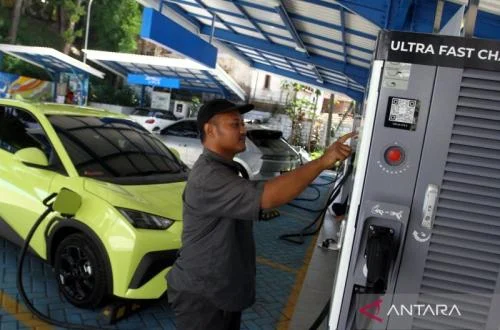
JAKARTA – As Indonesia positions itself as a major player in the global electric vehicle (EV) market, the nation faces the critical challenge of ensuring sustained growth without perpetual reliance on government subsidies. A leading automotive expert from the Bandung Institute of Technology (ITB), Yannes Martinus Pasaribu, has outlined a comprehensive strategy emphasizing market-driven mechanisms across pricing, infrastructure, and the broader EV ecosystem. This approach, he contends, is vital for fostering a robust and self-sufficient EV industry capable of thriving amidst potential shifts in fiscal incentive policies. Pasaribu’s insights offer a strategic roadmap for Indonesia to navigate the complexities of EV adoption, leveraging inherent market advantages and structural reforms to drive long-term sustainability.
Background and Indonesia’s Ambitious EV Vision
Indonesia, endowed with vast nickel reserves—a critical component for EV batteries—has set an ambitious goal to become a global hub for EV production and supply chain. President Joko Widodo’s administration has actively promoted foreign investment in battery and EV manufacturing, aiming to capitalize on its natural resources and reduce dependency on fossil fuels. This vision encompasses not only the domestic market but also positions Indonesia as an export base for Southeast Asia and beyond. To kickstart adoption, the government has introduced various incentives, including import duty exemptions, luxury goods tax reductions, and direct subsidies for certain EV models. While effective in the initial phase, these measures are inherently temporary. The long-term objective is to create an an environment where EVs are competitive purely on their economic and functional merits.
As of late 2023, EV adoption in Indonesia, while showing significant growth, still represents a relatively small fraction of the total vehicle fleet. Industry data indicates roughly 12,000 battery electric vehicles (BEVs) and approximately 60,000 hybrid electric vehicles (HEVs) were on the roads. However, the year-on-year growth rate has been substantial, primarily driven by the introduction of new models and, critically, government support. Globally, a trend is emerging where many developed nations are reassessing or gradually phasing out generous EV subsidies as markets mature and technology costs decrease. This global shift signals an eventual similar trajectory for Indonesia, making Pasaribu’s market-driven strategies particularly pertinent. The nation’s unique geographical challenges, diverse income levels, and existing energy infrastructure also necessitate tailored approaches distinct from those adopted in more mature EV markets.
The Pillars of Self-Sustained Growth: Yannes Pasaribu’s Five-Point Strategy
Yannes Martinus Pasaribu identifies five pivotal factors that, collectively, can supersede the need for direct fiscal incentives in stimulating consumer demand for electric vehicles. These factors address fundamental aspects of vehicle ownership and user experience, aiming to make EVs an inherently more attractive proposition than their conventional internal combustion engine (ICE) counterparts.
1. Superior Total Cost of Ownership (TCO)
The most compelling argument for EV adoption, according to Pasaribu, lies in demonstrating a more economical Total Cost of Ownership (TCO) compared to traditional gasoline-powered vehicles. TCO encompasses not just the purchase price but also running costs such as fuel/electricity, maintenance, insurance, and taxes over the vehicle’s lifespan. In Indonesia, where fuel prices are subject to government subsidies and periodic adjustments, the fluctuating cost of gasoline (Pertalite and Pertamax) directly impacts the economic viability of ICE vehicles. EVs, on the other hand, benefit from significantly lower "fuel" costs due to the comparative affordability of electricity. For instance, charging an EV at home or at public stations typically costs a fraction of refueling a comparable ICE car. A small EV might consume around 15 kWh per 100 km, costing approximately Rp 25,000 – Rp 30,000 for that distance at typical electricity rates, whereas a gasoline car consuming 10 liters per 100 km would cost Rp 100,000 – Rp 130,000 (depending on fuel type and price).
Furthermore, EVs generally have fewer moving parts, leading to reduced maintenance requirements and lower servicing costs over their operational life. Routine maintenance for an EV often involves checking tires, brakes, and fluids, rather than complex engine tune-ups or oil changes required by ICE vehicles. While the upfront purchase price of an EV might still be higher, the long-term savings in operational expenses can significantly offset this initial premium, especially when considering the average ownership period of 5-10 years for a vehicle in Indonesia. For TCO to be a primary driver, consumers need greater awareness and accessible tools to calculate these savings accurately, moving beyond the sticker price alone. Educational campaigns and transparent comparative analyses are crucial to highlight these long-term financial benefits.
2. Robust and Accessible Charging Infrastructure
The availability of a comprehensive and reliable charging infrastructure is paramount in fostering an EV ecosystem, a point strongly emphasized by Pasaribu. The fear of running out of charge—commonly known as "range anxiety"—remains a significant deterrent for potential EV buyers. A widespread network of Public Electric Vehicle Charging Stations (SPKLU) in strategic locations, including urban centers, inter-city routes, shopping malls, offices, and residential areas, is essential to alleviate this concern. As of late 2023, Indonesia had approximately 1,000 SPKLU points nationwide, a number that, while growing rapidly, still lags significantly behind the ideal international standards of EV-to-charger ratios. For comparison, countries like Norway or China boast significantly higher densities, with thousands of fast-charging stations readily available to support a much larger EV fleet.
The Indonesian government, through state-owned enterprises like PT PLN (Persero), has been actively expanding this network, often partnering with private entities and setting ambitious targets for charger deployment. However, the pace needs to accelerate dramatically to keep up with projected EV growth, which could see hundreds of thousands of EVs on the road by 2030. Beyond public charging, the ease and cost-effectiveness of home charging solutions also play a crucial role, as most EV owners will primarily charge overnight at their residences. The integration of smart grid technologies and renewable energy sources into the charging infrastructure will further enhance its sustainability, efficiency, and resilience. Development of a robust payment system and standardized charging protocols across different providers is also vital for user convenience.
3. Stable Resale Value and Long-Term Battery Warranty
A critical hurdle for EV adoption, particularly in emerging markets, is consumer uncertainty regarding the long-term value and reliability of the vehicle, especially its battery. Pasaribu highlights the importance of a stable resale value, which needs to be underpinned by robust, long-term battery warranties. Unlike ICE vehicles, where engine and transmission are primary concerns, the battery pack is the most expensive single component in an EV, potentially accounting for 30-40% of the vehicle’s cost. Concerns about battery degradation over time, the prohibitive cost of replacement, and the rapid pace of technological advancements can depress resale values.
Manufacturers need to offer competitive battery warranties, ideally extending beyond 8 years or 160,000 kilometers, to instill confidence in prospective buyers. Current market offerings vary, but a benchmark for warranty coverage similar to leading global manufacturers would significantly de-risk ownership for consumers. Beyond warranties, the development of a transparent secondary market for EV batteries (for energy storage applications or remanufacturing) and standardized battery health certification processes can help stabilize resale values. Policies supporting battery recycling and refurbishment can also contribute to a more circular economy and mitigate depreciation fears, turning potential liabilities into valuable assets. This factor requires not only manufacturer commitment but also regulatory frameworks that protect consumers and promote transparency in the EV resale market.
4. Innovative Financing Schemes
The upfront cost of EVs, despite TCO advantages, remains a significant barrier for many consumers, particularly in a market sensitive to initial purchase prices. Pasaribu advocates for innovative financing schemes that make EV ownership more accessible. These include specialized EV leasing programs and "Battery-as-a-Service" (BaaS) models. EV leasing, where consumers pay a monthly fee for vehicle usage rather than outright ownership, can significantly lower the initial financial burden. This model is particularly appealing for corporate fleets seeking predictable operational costs and individuals who prefer avoiding depreciation risks or frequent vehicle upgrades.
Battery-as-a-Service (BaaS) is an even more transformative concept. Under BaaS, customers purchase or lease the EV chassis without the battery, and instead subscribe to a battery service. This drastically reduces the upfront purchase price, as the battery can account for a substantial portion of the vehicle’s cost. BaaS also offers benefits like guaranteed battery performance, easy upgrades to newer battery technology, and quick battery swaps, potentially eliminating range anxiety and charging wait times. Companies like NIO in China and Gogoro in Taiwan have successfully implemented BaaS models, demonstrating their potential to accelerate adoption. In Indonesia, local financial institutions, in collaboration with EV manufacturers, could develop tailored green loan products with favorable interest rates, longer tenures, and flexible payment structures, further incentivizing EV purchases. This could include schemes tied to renewable energy installations for home charging.
5. Product Differentiation Through Advanced Technology and Features
Beyond basic transportation, EVs offer unique technological advantages and features that conventional vehicles cannot match. Pasaribu suggests leveraging this product differentiation to attract consumers. This includes superior performance (instant torque, quiet operation, smooth acceleration), advanced driver-assistance systems (ADAS), seamless connectivity, over-the-air (OTA) updates for software improvements, and innovative interior designs made possible by the absence of a large engine bay. The silent, smooth ride of an EV, coupled with its smart features and lower environmental footprint, provides a distinct user experience.
For environmentally conscious buyers, the zero-emission aspect is a significant draw, aligning with personal values and contributing to cleaner urban air. For tech-savvy consumers, the integration of smart home features, advanced infotainment systems, vehicle-to-grid (V2G) capabilities, and future autonomous driving functionalities can be powerful differentiators. As the market matures, manufacturers will increasingly compete on these value-added features, moving beyond price and range to offer a holistic and superior mobility solution that enhances the overall quality of life and driving experience. The unique design flexibility offered by EV platforms also allows for more spacious interiors and innovative storage solutions, adding practical appeal.
The Crucial Price Point: Reaching the Middle Class
A recurring theme in Pasaribu’s analysis is the necessity for Battery Electric Vehicles (BEVs) to hit a price sweet spot of Rp150 million to Rp200 million (approximately USD 9,500 – USD 12,700, depending on exchange rates) to truly penetrate the Indonesian middle-class market. Currently, many popular EV models in Indonesia, even with existing subsidies, often exceed this range, primarily targeting higher-income segments. The Rp150-200 million bracket is where a significant portion of new car sales occurs for conventional vehicles, indicating the purchasing power and market volume available at this level. For instance, popular ICE models like the Toyota Avanza, Honda Brio, or Daihatsu Sigra typically fall within or close to this range. Achieving this price point requires substantial efforts in localization and mass production, making EVs a viable alternative for the broader population rather than a niche luxury.
The Unintended Catalyst: Rising Fuel Prices
Pasaribu also points to an often-overlooked factor that could naturally accelerate EV adoption: the incremental increase in conventional fuel prices. "Every Rp1,000 increase per liter in Pertalite or Pertamax has the potential to accelerate the breakeven point for BEVs by one to two years," he asserts. This statement underscores the direct economic impact of fuel costs on consumer choices. Indonesia’s government periodically adjusts fuel prices, especially for subsidized fuels like Pertalite, in response to global oil price fluctuations and fiscal considerations. As these prices creep upwards, the TCO advantage of EVs becomes even more pronounced and immediate, pushing more consumers past the economic tipping point where an EV becomes a financially rational choice, irrespective of direct government subsidies. This acts as a powerful, market-driven incentive that aligns with broader national energy policies.
Addressing the Infrastructure Gap: A Persistent Challenge
Despite the optimism regarding market-driven strategies, Pasaribu acknowledges a significant, persistent obstacle: the current state of EV charging infrastructure. "Without mature infrastructure, range anxiety remains the main barrier to BEV adoption," he states emphatically. Indonesia’s EV charging station ratio, as mentioned, is still behind international benchmarks. This gap is not just about the absolute number of stations but also their distribution, reliability, and charging speeds. A robust infrastructure needs to include ubiquitous fast chargers for long-distance travel, medium-speed chargers for urban top-ups, and accessible home/workplace charging solutions.
The government, through its various ministries and state-owned enterprises like PT PLN (Persero), has set targets for SPKLU expansion, aiming for thousands of charging points by the end of the decade. For instance, PLN plans to deploy over 2,000 SPKLUs by 2025. However, the execution and coordination between public and private sectors remain critical. Investors and developers need clear regulations, standardized payment systems, interoperability between different providers, and incentives to accelerate deployment, particularly in less densely populated areas and along major transportation corridors. Furthermore, ensuring grid stability and adequate power supply to support widespread charging is a long-term planning imperative.
The Localization Imperative: High TKDN and Mass Production
For sustainable and affordable EV growth, Pasaribu champions a strategy centered on increasing Local Content (Tingkat Komponen Dalam Negeri – TKDN) and fostering mass domestic production. This approach is crucial for several reasons:
- Cost Reduction: Local manufacturing reduces import duties, logistics costs, and exposure to currency fluctuations,