Nasution Nanang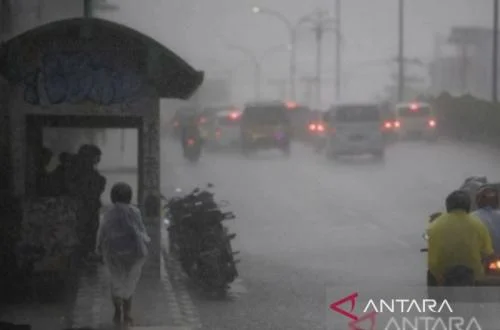
The Indonesian Agency for Meteorology, Climatology, and Geophysics (BMKG) has issued a significant weather alert, forecasting potential heavy to very heavy rainfall across several vital regions of Indonesia this Friday. The agency’s warning, disseminated through its official Instagram account (@infobmkg), underscores the critical need for heightened public vigilance against hydrometeorological hazards such as flash floods, riverine flooding, and landslides that often accompany such intense precipitation. This forecast is part of BMKG’s routine efforts to provide timely and accurate weather information, enabling communities and local authorities to prepare and mitigate potential risks.
Detailed Regional Weather Outlook
The BMKG forecast specifies that the most severe rainfall, categorised as heavy to very heavy, is primarily expected to impact regions including North Sumatra, South Sumatra, West Java, Maluku, and Papua. These areas, known for their diverse topographies ranging from mountainous terrains to coastal lowlands, are particularly vulnerable to the disruptive effects of excessive rainfall. West Java, with its dense population and extensive river networks originating from volcanic highlands, faces a perennial risk of landslides and urban flooding. Similarly, parts of Sumatra, characterized by long river basins and significant deforestation in some areas, are susceptible to river overflows and flash floods. Maluku and Papua, often experiencing localized, intense convectional rains, can witness rapid rises in water levels, impacting remote communities and infrastructure.
Beyond the heaviest downpours, the agency also highlighted specific areas prone to thunderstorms. Palembang, the capital of South Sumatra, is singled out for potential thunderous precipitation, which often brings strong winds and localized intense rainfall, posing risks to urban environments. Moderate intensity rain is anticipated in Serang, the capital of Banten province, and Bandung, the bustling capital of West Java, where even moderate rainfall can exacerbate existing drainage issues, particularly during peak hours. Merauke in Papua is also expected to experience moderate rainfall, which could affect agricultural activities and local transportation.
A broader swathe of the archipelago is predicted to receive light rainfall. This includes major cities and provinces such as Aceh, Medan, Pekanbaru, Tanjung Pinang, Padang, Jambi, Bengkulu, Bandar Lampung, Jakarta, Semarang, Yogyakarta, Surabaya, Pontianak, and Tanjung Selor in the western and central parts of Indonesia. In the eastern regions, light rain is expected in Denpasar, Mataram, Kupang, Makassar, Mamuju, Gorontalo, Ternate, Ambon, Sorong, Nabire, Jayapura, and Jayawijaya. While generally less severe, prolonged light rain can still contribute to saturated ground conditions, increasing the overall risk of more significant events should heavier rains follow.
Conversely, several regions are projected to experience predominantly cloudy conditions. Palangkaraya, Banjarmasin, and Pangkal Pinang in Kalimantan, along with Kendari in Southeast Sulawesi and Manado in North Sulawesi, are expected to have cloudy to thick cloudy skies, indicating atmospheric moisture but not necessarily immediate precipitation. Furthermore, areas like Samarinda in East Kalimantan, Palu in Central Sulawesi, and Manokwari in West Papua are forecast to experience hazy air, which could be attributed to a combination of atmospheric conditions, potentially including lingering smoke from land fires or high humidity contributing to reduced visibility.
Meteorological Drivers and Climate Context
Indonesia’s unique geographical position straddling the equator and its vast archipelagic nature make it highly susceptible to diverse weather phenomena. The current forecast is largely influenced by a confluence of atmospheric dynamics. Typically, during this period, Indonesia transitions between monsoon seasons or experiences the peak of the wet season in various parts. The Intertropical Convergence Zone (ITCZ), a belt of low pressure circling the Earth near the equator where the northeast and southeast trade winds converge, often oscillates across Indonesia, bringing substantial rainfall. Additionally, local atmospheric instability, often triggered by convective heating, combined with the presence of low-pressure systems or tropical depressions in proximity to the Indonesian seas, can significantly enhance rainfall intensity.
The definition of "heavy" to "very heavy" rainfall by BMKG is crucial for understanding the potential impact. Generally, "heavy rain" is characterized by precipitation rates of 20-50 mm per hour or 50-100 mm per day, while "very heavy rain" exceeds 50 mm per hour or 100 mm per day. Such intensities can rapidly overwhelm drainage systems, saturate soil, and trigger hydrological disasters. The archipelagic nation’s complex topography, featuring numerous mountain ranges, volcanoes, and extensive coastlines, acts as a significant factor in localizing and intensifying rainfall through orographic lifting, where moist air is forced upwards by terrain, cooling and condensing into rain.
Broader climate phenomena like the El Niño-Southern Oscillation (ENSO) and the Indian Ocean Dipole (IOD) also play a significant role in modulating Indonesia’s weather patterns. While the immediate forecast is based on short-term atmospheric conditions, the underlying seasonal patterns are influenced by these larger-scale climate drivers. For instance, a negative IOD or La Niña event typically enhances rainfall across much of Indonesia, leading to wetter conditions. BMKG continuously monitors these global phenomena to provide more accurate long-range seasonal forecasts, complementing their daily and weekly outlooks.
BMKG’s Role and Early Warning Systems
BMKG serves as the frontline agency for monitoring, analyzing, and disseminating weather, climate, and geophysical information in Indonesia. Its mandate is critical for public safety and national development. The agency employs a sophisticated network of meteorological instruments, including automatic weather stations (AWS), weather radars, satellite imagery (such as from Himawari-8), and numerical weather prediction (NWP) models. These tools provide real-time data and simulations that enable meteorologists to track atmospheric conditions, predict precipitation patterns, and identify potential severe weather events with increasing accuracy.
The process of issuing such a warning typically involves several stages. BMKG meteorologists continuously analyze incoming data from various sources. When conditions indicate a high probability of severe weather, a preliminary alert is generated. This is then refined and disseminated through multiple channels, including official websites, social media platforms like Instagram (as seen in this instance), news agencies, and direct communication with disaster management bodies. The timeline for such warnings can vary; short-term forecasts for imminent events, like the one for this Friday, are usually issued 12 to 24 hours in advance, providing a critical window for preparedness. For more widespread or longer-duration events, advisories might be released days in advance. The BMKG’s "Weather Early Warning System" is designed to ensure that crucial information reaches the public and relevant stakeholders promptly, facilitating proactive measures rather than reactive responses.
Potential Impacts and Preparedness Measures
The forecasted heavy to very heavy rainfall carries a multitude of potential implications for both urban and rural communities across Indonesia. Foremost among these are the risks of widespread flooding and landslides. In urban centers like Jakarta, Bandung, and Palembang, rapid accumulation of rainwater can overwhelm drainage systems, leading to flash floods that disrupt traffic, damage property, and pose health risks. Riverine flooding is a significant concern in Sumatra, where major rivers can overflow their banks, inundating agricultural lands and residential areas along floodplains.
Landslides are a particularly severe threat in mountainous regions, especially in West Java, parts of Sumatra, and Papua, where steep slopes and often unstable soil conditions are prevalent. Heavy rain saturates the soil, reducing its stability and making it prone to collapse. These events can be devastating, causing fatalities, destroying homes, and cutting off transportation routes. Disruption to transportation is another key implication; heavy rains can reduce visibility, make roads slippery, and cause temporary closures of airports and seaports due to strong winds or high waves, impacting logistics and travel schedules.
In anticipation of these potential impacts, government agencies and local communities are urged to enhance their preparedness. The National Disaster Management Agency (BNPB) and regional disaster management agencies (BPBDs) play a crucial coordinating role. They typically activate emergency response protocols, monitor vulnerable areas, prepare evacuation routes, and ensure the readiness of relief supplies. Local governments, often through their public works departments, are advised to inspect and clear drainage systems to minimize urban flooding. Residents in flood-prone areas are encouraged to secure their belongings, prepare emergency kits, and be ready to evacuate if advised by authorities. In landslide-prone areas, communities are urged to monitor for signs of soil movement and relocate to safer ground if necessary. BMKG’s warnings are a call to action for all stakeholders to implement preventive and mitigating measures.
Government and Community Response
In response to BMKG’s consistent warnings, officials from various government levels typically reiterate calls for public vigilance and preparedness. The Head of BMKG, or the Deputy for Meteorology, would likely issue statements emphasizing the scientific basis of the forecast and the importance of heeding official advisories. They would underscore BMKG’s commitment to continuous monitoring and transparent information dissemination.
Similarly, the Head of BNPB or their regional counterparts (BPBDs) would likely articulate specific preparedness measures. This includes ensuring the readiness of search and rescue teams, setting up temporary shelters, and coordinating with local police, military, and volunteer groups for potential emergency operations. Local mayors and governors in the affected provinces would also issue directives to their constituents, urging them to stay updated through official channels, avoid risky activities like crossing swollen rivers, and participate in community-level disaster preparedness drills.
Public awareness campaigns, often run in conjunction with BMKG and BNPB, are vital in ensuring that communities understand the risks and know how to respond. These campaigns educate residents on flood and landslide indicators, emergency contact numbers, and basic safety protocols. The community response is critical, as local knowledge and immediate action can significantly reduce casualties and property damage. Neighborhood watch groups and community leaders often play a pivotal role in disseminating information and coordinating local efforts.
Long-Term Climate Considerations
While the current forecast addresses immediate weather conditions, it is also important to view such events within the broader context of climate change. Scientific consensus suggests that climate change is leading to an increase in the frequency and intensity of extreme weather events globally, including heavy rainfall episodes. For an archipelagic nation like Indonesia, which is highly vulnerable to climate impacts, this trend poses significant long-term challenges. Rising sea levels, coupled with more intense rainfall, exacerbate coastal and urban flooding. Changes in monsoon patterns could lead to more erratic weather, with prolonged dry spells followed by unusually heavy rains.
BMKG actively participates in international climate research and monitoring efforts to understand these long-term trends and integrate them into national planning. The agency’s projections and warnings are not just about daily weather but also contribute to a larger effort to build climate resilience across Indonesia. This involves sustainable urban planning, ecosystem restoration (such as mangrove planting and reforestation), and strengthening infrastructure to withstand more extreme conditions. The regular issuance of severe weather alerts serves as a periodic reminder of the ongoing need for both immediate preparedness and long-term adaptation strategies to protect Indonesia’s population and vital resources from the escalating impacts of a changing climate.