Paryono Ramadhan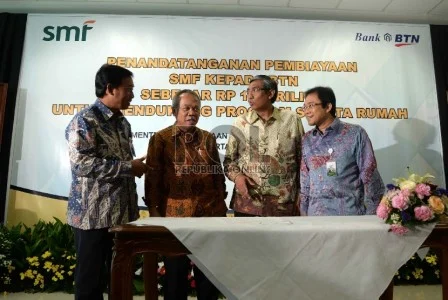
The Indonesian government is intensifying its commitment to address the nation’s persistent housing deficit, particularly for low-income communities, by mobilizing all available resources to accelerate the ambitious One Million Houses Program (Program Sejuta Rumah). This nationwide initiative received a significant boost with the recent signing of a cooperation agreement between PT Sarana Multigriya Finansial (SMF) and PT Bank Tabungan Negara (BTN), where SMF extended a substantial loan of Rp 1.5 trillion to BTN. This strategic partnership aims to enhance the capacity of BTN, a state-owned bank with a strong focus on housing finance, to disburse mortgages, thereby making homeownership more accessible for the Masyarakat Berpenghasilan Rendah (MBR), or low-income segments of society. The collaboration underscores the government’s multi-pronged approach to solving one of Indonesia’s most pressing socio-economic challenges, combining direct funding, liquidity provision, and regulatory reforms to streamline housing development and access.
The Genesis and Objectives of the One Million Houses Program
Launched in 2015 by President Joko Widodo, the One Million Houses Program (PSR) was conceived as a monumental effort to tackle Indonesia’s significant housing backlog. At its inception, the national housing deficit was estimated to be in the range of 11-12 million units, with a disproportionate impact on low-income families and informal sector workers who often struggle to access conventional financing and affordable land. The program’s core objective is not merely to build a million houses annually but to foster an ecosystem where affordable and decent housing becomes a fundamental right for all citizens, aligning with the constitutional mandate and the broader goals of sustainable development.
The PSR operates on a collaborative model, involving various stakeholders including the central government, regional administrations, state-owned enterprises (SOEs), private developers, and community organizations. Its implementation strategy encompasses the construction of both subsidized and non-subsidized housing units, with a strong emphasis on the former to cater to the MBR segment. Subsidies typically come in the form of down payment assistance, interest rate subsidies, and relaxed loan conditions, making monthly installments more manageable for eligible beneficiaries. The program also seeks to stimulate the construction sector, creating jobs and driving economic growth across the archipelago. Since its launch, the PSR has become a flagship infrastructure initiative, consistently reporting progress towards its annual targets, albeit facing continuous challenges related to land acquisition, infrastructure provision, and financing complexities. The program’s consistent presence in national development plans highlights its critical role in enhancing social welfare and reducing inequality.
Strategic Partnership: SMF and BTN Bolster Housing Finance Liquidity
The recent Rp 1.5 trillion loan from SMF to BTN represents a pivotal moment in the ongoing efforts to bolster the financial liquidity of the housing sector. PT Sarana Multigriya Finansial (SMF) is a state-owned enterprise operating under the Ministry of Finance, mandated to develop and foster the secondary mortgage market in Indonesia. Its primary function is to provide long-term funding to primary mortgage lenders, such as banks, through various mechanisms including refinancing and securitization. By doing so, SMF helps to alleviate liquidity constraints faced by banks, enabling them to extend more mortgages without depleting their capital reserves. This influx of capital allows banks to convert short-term deposits into long-term mortgage loans, thereby enhancing the stability and sustainability of the housing finance ecosystem.
PT Bank Tabungan Negara (BTN) holds a unique and central position in Indonesia’s housing finance landscape. Historically established to provide housing loans, BTN has evolved into the largest mortgage provider in the country, particularly dominating the subsidized housing segment. The bank is a primary channel for government-backed programs like the Fasilitas Likuiditas Pembiayaan Perumahan (FLPP), which offers highly subsidized interest rates to low-income homebuyers. The Rp 1.5 trillion facility from SMF will significantly augment BTN’s capacity to originate new mortgages, specifically targeting MBR beneficiaries under the One Million Houses Program. This capital injection is crucial as it directly translates into more accessible and affordable home loans, potentially reaching tens of thousands of families who might otherwise struggle to qualify for conventional financing. The partnership is a testament to the integrated approach taken by the government, leveraging the specialized roles of its SOEs to achieve national development goals. This synergy between SMF’s mandate to provide liquidity and BTN’s expertise in mortgage distribution creates a robust mechanism for channeling funds effectively to those who need it most.
Diversified Funding Mechanisms Powering the Program
Minister of Public Works and Public Housing (PUPR), Basuki Hadimuljono, emphasized that the SMF-BTN collaboration is just one facet of a broader, diversified funding strategy for the One Million Houses Program. He outlined several other significant sources of financing, demonstrating the multi-stakeholder commitment to the initiative.
One major potential contributor is the BPJS Ketenagakerjaan, Indonesia’s Workers’ Social Security Agency. With its vast pool of workers’ contributions, BPJS Ketenagakerjaan has an immense capacity for long-term investments. Minister Basuki highlighted a potential allocation of Rp 48.5 trillion from BPJS Ketenagakerjaan, which could be channeled into housing finance. This typically involves BPJS Ketenagakerjaan collaborating with banks to provide mortgages to its members at preferential rates or investing in housing development projects. Such an involvement not only provides a stable source of funding but also directly benefits millions of workers who are contributors to the social security scheme, offering them a pathway to homeownership.
Another cornerstone of the funding strategy is the Fasilitas Likuiditas Pembiayaan Perumahan (FLPP). This government-backed housing finance liquidity facility is crucial for making homeownership affordable for MBR. Under the FLPP scheme, the government provides liquidity support to banks, enabling them to offer mortgages with significantly lower and fixed interest rates (often around 5% per annum) over longer tenors (up to 20 years). This dramatically reduces the monthly installment burden for low-income borrowers, making housing loans financially viable. The Minister noted an allocation of Rp 5.1 trillion for FLPP, which is continuously replenished and adjusted based on housing demand and economic conditions. The FLPP mechanism has proven highly effective in stimulating demand for subsidized housing and has been instrumental in the success of the PSR since its inception.
Furthermore, direct government expenditure plays a vital role through the DIPA (Daftar Isian Pelaksanaan Anggaran) APBN, or the Budget Implementation List of the State Budget. A sum of Rp 8.1 trillion from the DIPA APBN is allocated to the housing sector. These funds are typically used for direct construction of public housing, development of basic infrastructure in housing complexes (roads, water, electricity), land acquisition for public housing projects, and various social housing programs. This direct government investment ensures that critical gaps are filled, particularly in remote areas or for specific segments of the population that may not be adequately served by market mechanisms or other financing schemes. The combination of these diverse funding streams—from secondary market liquidity providers, social security funds, direct government subsidies, and budgetary allocations—creates a robust financial framework designed to sustain the momentum of the One Million Houses Program.

Addressing Systemic Challenges: Insights from Indonesia Property Watch
While the financing aspects are critical, the success of the One Million Houses Program hinges on addressing several systemic challenges identified by industry experts. Indonesia Property Watch, a prominent independent research and consulting firm in the property sector, previously outlined five key areas requiring government intervention to effectively realize the program’s ambitious goals. These recommendations highlight the multifaceted nature of housing provision, extending beyond mere capital injection to encompass land, institutional frameworks, data, and regulatory efficiency.
Firstly, land availability through a land bank is paramount. The soaring cost of land, particularly in urban and peri-urban areas, remains a significant barrier to affordable housing development. Market mechanisms often lead to speculative price increases, making it economically unfeasible for developers to build low-cost housing. A dedicated land bank, managed by the state, would allow the government to acquire and hold land for future public housing projects, shielding it from market speculation and ensuring its availability at controlled prices. This strategic land management is crucial for large-scale, sustainable affordable housing initiatives.
Secondly, the establishment of a focused institution dedicated to managing public housing is essential. Currently, responsibilities for housing development are somewhat fragmented across various ministries and agencies. A centralized or highly coordinated body could streamline planning, implementation, and oversight, ensuring greater efficiency, accountability, and consistency in policy execution. Such an institution would be better equipped to coordinate with local governments, developers, and financial institutions, overcoming bureaucratic hurdles and accelerating project delivery.
Thirdly, diversified and sufficient funding is a perpetual requirement. While the FLPP and BPJS Ketenagakerjaan contributions are significant, the scale of Indonesia’s housing backlog necessitates continuous exploration and expansion of funding sources. This includes engaging more private sector investment, potentially through public-private partnerships, and exploring innovative financing instruments. The current collaboration between SMF and BTN directly addresses this point by injecting more liquidity into the system.
Fourthly, the availability of accurate and comprehensive data and information on housing needs is fundamental for effective policymaking. A precise understanding of the housing deficit, demographic trends, spatial distribution of demand, and socio-economic profiles of MBR is critical for targeted interventions. Robust data collection and analysis systems would enable the government to allocate resources more efficiently, identify priority areas, and tailor housing solutions to specific community needs, moving beyond generalized targets to more granular and impactful strategies.
Finally, streamlining and reducing costs associated with the housing development process is crucial. This includes significant reforms in permitting processes, which are often complex, time-consuming, and prone to corruption, adding considerable costs and delays to projects. Certification costs, particularly for land titles and building permits, also inflate the final price of housing units. Furthermore, the cost and process of connecting to essential utilities like electricity (PLN), water, and sanitation services can be prohibitive for developers of affordable housing. Simplifying these procedures, digitizing applications, and introducing transparent fee structures would significantly reduce the financial burden on developers, ultimately translating into more affordable homes for consumers.
Official Reactions and Broader Implications
Minister Basuki Hadimuljono reiterated the government’s unwavering commitment, stating, "We mobilize all our resources in the context of the One Million Houses Program, especially for low-income communities." This statement underscores the program’s social equity objective and the concerted effort from the highest levels of government.
From the perspective of SMF and BTN, the collaboration is a strategic move that aligns with their respective mandates. A representative from SMF would likely emphasize that this partnership enhances the stability and depth of the secondary mortgage market, facilitating the continuous flow of funds to primary lenders. For BTN, the loan provides critical leverage to expand its mortgage portfolio for subsidized housing, reinforcing its position as the leading bank for affordable homeownership. This synergy is expected to create a more resilient housing finance system, capable of weathering economic fluctuations and ensuring long-term support for the PSR.
The broader implications of the One Million Houses Program, supported by initiatives like the SMF-BTN partnership, are profound. Economically, the program serves as a powerful stimulus for the construction sector, creating direct and indirect employment opportunities across the supply chain, from raw materials to skilled labor. It also fosters the growth of ancillary industries, contributing to overall economic vibrancy. Socially, providing decent and affordable housing directly improves the quality of life for millions, reduces informal settlements, enhances public health outcomes, and promotes social stability. Homeownership for low-income families can also serve as a pathway to wealth creation and intergenerational mobility.
However, the journey towards eradicating Indonesia’s housing deficit remains long and complex. Challenges such as rapid urbanization, population growth, climate change impacts on housing infrastructure, and the need for continuous innovation in construction technologies and financing models will persist. The government’s sustained focus on these issues, coupled with adaptive policies and strong inter-agency coordination, will be crucial for the long-term success and sustainability of the One Million Houses Program, ultimately contributing to a more equitable and prosperous Indonesia. The strategic deployment of financial instruments and the proactive addressing of systemic hurdles, as highlighted by the SMF-BTN deal and the recommendations from industry observers, signify a mature and comprehensive approach to this national priority.