Nasution Nanang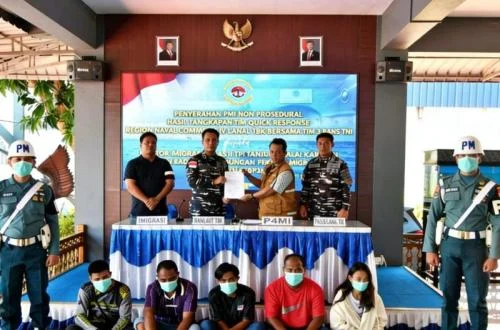
A combined task force comprising elements from the Indonesian Navy (TNI AL) Base in Tanjung Balai Karimun and the Indonesian Armed Forces Strategic Intelligence Agency (BAIS TNI) successfully intercepted a group of undocumented Indonesian migrant workers (PMI) returning from Malaysia via unofficial channels. The apprehension occurred in the early hours of Friday, April 24, along the coastal area of Tanjung Balai Karimun, located in Indonesia’s Riau Islands province, a region frequently identified as a critical transit point for cross-border movements, both legitimate and illicit. This operation underscores Indonesia’s ongoing commitment to enhancing maritime security and upholding immigration laws, particularly in its porous maritime borders.
Detailed Chronology of the Apprehension
The operation commenced as part of routine patrols conducted by the joint team, specifically targeting areas known for their vulnerability to smuggling and illegal entry. At approximately 02:00 AM Western Indonesian Time (WIB), the patrol team initiated its sweep along the coastline of Tanjung Balai Karimun, an area geographically proximate to Malaysia and often exploited by human trafficking syndicates. The strategic importance of this region, with its numerous small islands and intricate waterways, makes it a perennial challenge for law enforcement agencies tasked with border security.
Around 03:00 AM WIB, the patrol unit observed a suspicious black MPV (Multi-Purpose Vehicle) parked by the roadside. Three young men were seen sitting on the sidewalk, intently facing the sea, an unusual sight at that hour. This observation immediately raised suspicion among the vigilant officers, who discreetly maintained surveillance on the vehicle and its occupants. The team recognized the pattern, often associated with ground facilitators awaiting illegal arrivals.
At approximately 03:15 AM WIB, the anticipated event unfolded. A speedboat, notably equipped with a 40 PK engine, was spotted approaching the shore. It swiftly docked, and an individual disembarked. The joint team, having confirmed their suspicions, acted decisively. As the speedboat attempted to quickly pull away and flee the scene, the officers launched a pursuit. During the rapid intervention, the team managed to secure four men and one woman from the disembarking group, all of whom were suspected to be non-procedural Indonesian migrant workers. Simultaneously, one boat crew member, identified by the initial B, was also apprehended.
However, the speed and agility of the speedboat’s driver, often referred to as a ‘tekong’ in local parlance, allowed them to evade capture. Similarly, the three individuals previously observed in the black MPV, believed to be land-based facilitators or ‘jemputan darat,’ also managed to escape, disappearing into the pre-dawn darkness. Despite the escape of these key figures, the operation yielded significant results in terms of intercepting the illegal entrants and gathering crucial evidence.
During the immediate aftermath of the apprehension, the team secured several pieces of evidence. This included the blue speedboat with its 40 PK engine, eight mobile phones, and four backpacks, which presumably contained the personal belongings of the intercepted migrants. A thorough search was conducted on site, and authorities confirmed that no illicit narcotics were found among the confiscated items, focusing the primary concern of the operation on illegal migration.
Context of Irregular Migration Between Indonesia and Malaysia
The phenomenon of irregular migration between Indonesia and Malaysia is a deeply entrenched and multifaceted issue, driven by a complex interplay of economic, social, and geographical factors. Indonesia, with its vast population and sometimes limited domestic job opportunities, particularly in rural areas, serves as a significant source of migrant labor. Malaysia, a more developed economy with a persistent demand for low-skilled labor in sectors such as plantations, construction, manufacturing, and domestic services, acts as a powerful magnet.
The Riau Islands, where Tanjung Balai Karimun is located, plays a critical role in this migration corridor due to its immediate proximity to Peninsular Malaysia. The short sea journey across the Malacca Strait, often just a few hours, makes it an attractive, albeit dangerous, route for those seeking to bypass formal migration channels. These informal routes are frequently chosen because they are perceived as cheaper and faster, circumventing the often-costly and time-consuming official procedures for obtaining work visas and permits. Many migrants may also have overstayed previous visas, making legal re-entry impossible.
The journey itself is fraught with peril. Migrants often travel in overcrowded and unseaworthy vessels, operated by unscrupulous human traffickers who prioritize profit over safety. Maritime accidents, including capsized boats and drownings, are tragically common occurrences in these waters. Furthermore, irregular migrants are highly vulnerable to exploitation, abuse, and even human trafficking upon arrival in Malaysia, lacking the legal protections afforded to documented workers. Cases of withheld wages, confiscation of passports, and forced labor are widely reported.
Statistical Overview of Irregular Migration
While precise figures are difficult to ascertain due to the clandestine nature of irregular migration, estimates suggest that hundreds of thousands, potentially millions, of undocumented Indonesian workers reside in Malaysia. Indonesian government sources, including the Ministry of Manpower and the National Agency for the Protection of Indonesian Migrant Workers (BP2MI), frequently report on the scale of the challenge. For instance, it is estimated that tens of thousands of undocumented migrants are repatriated annually, either through voluntary programs or after being apprehended by Malaysian authorities. The COVID-19 pandemic, in particular, saw a surge in repatriations as economic activities slowed and border controls tightened.
The financial incentive for these illegal operations is substantial. Human trafficking syndicates, often transnational in scope, can charge migrants significant sums for passage, knowing full well the risks involved. The average cost for an irregular crossing can range from several hundred to over a thousand US dollars, a considerable sum for individuals often fleeing poverty. These syndicates operate sophisticated networks, involving recruiters in Indonesia, transporters (tekong), and facilitators in Malaysia.
The Indonesian government has actively pursued various strategies to formalize labor migration, including bilateral agreements with Malaysia, education campaigns on legal pathways, and efforts to streamline the bureaucratic process. However, the allure of immediate work and the perceived ease of irregular channels continue to pose significant challenges to these efforts. The incident in Tanjung Balai Karimun serves as a stark reminder of the ongoing flow of irregular migrants and the persistent efforts of law enforcement to curb it.
Official Responses and Inter-Agency Cooperation
Following the successful interception, Commander of Lanal Karimun, Letkol Laut (P) Samuel Chrestian Noya, reaffirmed the Indonesian Navy’s unwavering commitment to enhancing surveillance and enforcing maritime law in Indonesian waters. He emphasized that such operations are a direct fulfillment of the directives issued by the Chief of Naval Staff (Kasal), Admiral TNI Muhammad Ali, who has consistently stressed the importance of safeguarding national sovereignty and preventing all forms of illegal cross-border activities. Letkol Noya’s statement highlighted the TNI AL’s dedication to maintaining the integrity of Indonesia’s maritime borders against not only illegal migration but also other illicit trades such as smuggling and drug trafficking.
The apprehended individuals were processed according to established legal protocols. The five non-procedural Indonesian migrant workers – identified by their initials S, S, R, KL, and DS – were subsequently handed over to the Regional Agency for the Protection of Indonesian Migrant Workers (BP3MI) in the Riau Islands. BP3MI’s mandate includes providing protection, support, and facilitating the reintegration of Indonesian migrant workers, especially those returning from abroad. For these irregular migrants, BP3MI will likely conduct interviews to understand their circumstances, offer counseling, and assist with their return to their respective hometowns. This process often involves verifying their identities and ensuring their rights are protected, despite their non-procedural status. BP3MI also plays a crucial role in gathering data that helps inform government policies aimed at preventing future irregular migration.
The boat crew member, identified as B, was transferred to the Class II Immigration Office at TPI Tanjung Balai Karimun for further legal processing. Immigration authorities will investigate B’s role in facilitating illegal entry, which could lead to charges under Indonesia’s immigration laws. Such offenses typically carry significant penalties, including imprisonment and fines, designed to deter participation in human trafficking and smuggling networks. The investigation into the tekong and the land-based facilitators who escaped will also be a priority for the relevant law enforcement agencies, aiming to dismantle the broader network.
Beyond the immediate actions, this incident prompts broader responses from various stakeholders. The Ministry of Manpower, for instance, would likely reiterate its calls for prospective migrant workers to utilize official channels, emphasizing the risks associated with irregular migration. The Ministry of Foreign Affairs often engages in bilateral discussions with Malaysian counterparts to address the issue of undocumented workers, seeking cooperative solutions for worker protection, repatriation, and combating human trafficking. From the Malaysian perspective, authorities face their own challenges in managing the large number of undocumented workers, periodically conducting crackdowns and offering amnesty programs, while also relying on foreign labor for key economic sectors.
Broader Implications and Challenges
The apprehension of illegal migrant workers carries several significant implications, touching upon national security, humanitarian concerns, economic factors, and bilateral relations.
National Security: The uncontrolled movement of people across borders poses inherent national security risks. While the primary concern in this case is illegal migration, these same routes can be exploited for other illicit activities, including the smuggling of contraband (drugs, weapons), environmental crimes, and even potential terrorist infiltration. The Riau Islands’ extensive coastline and proximity to international shipping lanes make it a strategic area for vigilance. The TNI AL’s sustained efforts are crucial in projecting state presence and deterring such threats.
Humanitarian Concerns: The vulnerability of irregular migrants to exploitation and abuse is a profound humanitarian issue. They are often victims of deceptive recruitment practices, exorbitant fees, and dangerous travel conditions. Upon arrival, they frequently endure harsh working conditions, low wages, and a constant fear of arrest and deportation. The efforts of BP3MI are vital in providing a safety net for these individuals, but the sheer scale of the problem means many fall through the cracks. This incident serves as a reminder of the urgent need for greater protection mechanisms and public awareness campaigns about the dangers of irregular migration.
Economic Impact: While remittances from Indonesian workers in Malaysia, both legal and illegal, contribute significantly to Indonesia’s economy, the costs associated with irregular migration are also substantial. These include the financial burden of repatriating apprehended migrants, providing social services, and the lost potential of workers who might otherwise contribute more effectively through legal channels. Moreover, the prevalence of irregular labor can depress wages in host countries and create unfair competition for documented workers.
Bilateral Relations: Irregular migration is a recurring point of discussion and occasional friction between Indonesia and Malaysia. Both countries have a vested interest in managing this issue effectively, as it impacts labor markets, social services, and security. Cooperative efforts, including joint patrols, intelligence sharing, and streamlined legal migration processes, are essential for maintaining stable and productive bilateral relations. Incidents like this apprehension underscore the ongoing need for dialogue and collaboration to address the root causes and consequences of irregular migration.
Policy Effectiveness and Future Outlook: The continued flow of irregular migrants, despite sustained enforcement efforts, highlights the need for a multi-pronged approach. This includes:
- Strengthening Border Security: Investing in advanced surveillance technologies (radar, drones), increasing personnel, and enhancing inter-agency coordination.
- Addressing Push Factors: Implementing robust economic development programs in source regions within Indonesia to create local job opportunities and reduce the incentive to seek work abroad illegally.
- Streamlining Legal Pathways: Making official migration processes more accessible, affordable, and efficient to encourage compliance.
- Combating Human Trafficking Syndicates: Aggressive prosecution of tekong and other facilitators, dismantling their networks, and disrupting their financial operations.
- Public Awareness Campaigns: Educating potential migrants about the risks of irregular migration and the benefits of legal channels.
The apprehension in Tanjung Balai Karimun is not an isolated incident but rather a regular occurrence in the ongoing battle against illegal migration. It serves as a testament to the persistent challenges faced by Indonesian authorities in securing its vast maritime borders and protecting its citizens. As regional economic disparities persist and demand for labor in neighboring countries remains high, the imperative for comprehensive, sustained, and cooperative strategies to manage migration flows, both legal and illegal, will only continue to grow. The Indonesian military, particularly the Navy, will remain a critical component of these efforts, safeguarding the nation’s sovereignty and ensuring adherence to its laws in its territorial waters.