Hadi Wijaya
The decision to opt for a childfree lifestyle—a conscious choice to not have children—has transitioned from a fringe social preference to a significant subject of public discourse in Indonesia and globally. Nuzulia Rahma Tristinarum, a prominent family psychologist and practitioner, notes that the motivations behind this decision are multifaceted, often rooted in a combination of conscious reasoning and deep-seated, subconscious psychological drivers. According to Tristinarum, commonly referred to as Lia, these motivations frequently stem from personal experiences that shape an individual’s perception of parenthood and responsibility, often manifesting before the individual is even fully aware of the shift in their perspective.
In recent years, particularly following viral social media discussions in early 2023, the childfree movement has sparked intense debate across various sectors of Indonesian society, including religious institutions, government bodies, and family advocacy groups. While the term is often met with resistance in traditional circles, psychological experts suggest that understanding the "why" behind the choice is essential for a nuanced view of modern family dynamics.
The Psychological Weight of Past Trauma
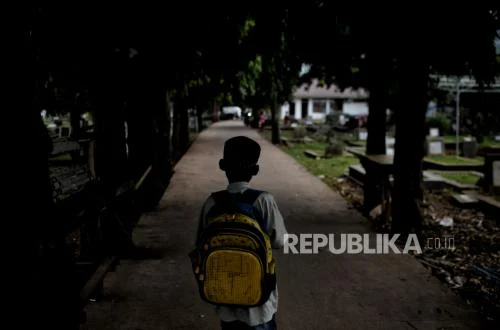
One of the most profound drivers of the childfree decision is the presence of unresolved childhood trauma. Lia highlights that individuals who experienced neglect or abuse during their formative years often carry a "distorted perception" of what it means to be a parent. In one clinical case cited by Lia, a child was frequently left by their parents in the care of a domestic worker who was physically and verbally abusive. This child grew up witnessing a disconnect between the act of having a child and the act of caring for one.
"With such experiences, the individual eventually develops a perception of: ‘Why bring a child into the world only to neglect them?’" Lia explained. For these individuals, the choice to remain childfree is framed as an act of profound responsibility—a protective measure to ensure that no further suffering is inflicted upon a new generation. This psychological mechanism is often a defense against the fear of repeating the cycle of trauma. The decision is not necessarily born of a dislike for children, but rather from deep-seated anger, hurt, and a desire to protect the "inner child" from further perceived failures of the parental role.
Socio-Economic Pressures and the Sandwich Generation
Beyond psychological trauma, the practicalities of modern economics play a pivotal role. The "Sandwich Generation" phenomenon—where middle-aged adults are squeezed between the financial and emotional needs of their aging parents and the potential needs of their own children—is a significant deterrent. Lia points out that many young adults are currently the sole financial backbone for their extended families.
Data from the Indonesian Central Bureau of Statistics (BPS) indicates a shifting economic landscape where the cost of education and healthcare continues to outpace wage growth. For a man or woman already struggling to support their parents, the prospect of adding the financial burden of a child is often viewed as an impossible task. In this context, the childfree choice is a pragmatic response to economic instability. Lia notes that men, in particular, often cite the heavy burden of being the primary breadwinner as a reason for choosing a childfree marriage, fearing they cannot provide the quality of life they believe a child deserves.
Shifting Values and the Influence of Global Trends
The rise of the childfree lifestyle is also inextricably linked to changing societal values and the influence of digital environments. In the past, marriage and procreation were viewed as inseparable milestones. However, Lia observes that modern "values" now prioritize personal fulfillment, career stability, and mental well-being over traditional benchmarks.
The "trend" factor cannot be ignored. With the advent of social media, individuals who previously felt isolated in their desire to remain childfree now find communities that validate their choices. In February 2023, the discourse reached a fever pitch in Indonesia when several high-profile influencers publicly discussed their childfree status. This visibility has encouraged others with similar values or experiences to adopt the lifestyle, transforming a private decision into a public identity.
Debunking the "Eternal Youth" Narrative
A common argument found in some literature and social media circles suggests that many women choose to be childfree to preserve their physical appearance or to remain "forever young." The logic posits that the absence of the physical and hormonal toll of pregnancy and the stress of child-rearing results in a more youthful aesthetic.
However, Lia challenges this oversimplification. While lifestyle choices certainly impact health, she argues that "staying young" is a result of a complex interplay of genetics, hormonal balance, and overall lifestyle habits (such as diet and exercise), rather than simply the absence of children. "It is inaccurate to claim that being childfree is the primary cause of looking youthful. There are many other contributing factors," Lia noted. By debunking this, experts aim to shift the conversation away from superficial motivations toward the deeper psychological and structural reasons why people opt out of parenthood.
The Readiness Factor and Marital Intentions
Another segment of the population chooses the childfree path because they feel emotionally or mentally unready for the lifelong commitment of parenthood, yet they value the companionship and stability of marriage. Lia observes that some couples choose to marry to avoid the social or religious pitfalls of "free sex" or casual relationships, but they do so with the explicit agreement that they will not have children.
This suggests a decoupling of marriage and procreation in the modern mind. For these couples, the marriage is an end in itself—a partnership based on mutual support and intimacy—rather than a means to build a traditional family unit. This shift reflects a broader global trend where the definition of "family" is becoming increasingly fluid.
National Implications and Demographic Shifts
The growing acceptance of the childfree lifestyle has significant implications for Indonesia’s demographic future. According to BPS data, Indonesia’s Total Fertility Rate (TFR) has seen a steady decline over the decades, dropping from 5.6 in the early 1970s to approximately 2.1 in 2022. While a TFR of 2.1 is generally considered the "replacement level" necessary to maintain a stable population, a continued downward trend could lead to an aging population and a shrinking workforce, similar to the crises currently faced by Japan and South Korea.
Government officials and sociologists have expressed concern that if the childfree trend continues to grow among the productive age group, it could hamper the "Golden Indonesia 2045" vision, which relies on a "demographic bonus" of young, productive workers. Conversely, proponents of the childfree choice argue that a smaller, more intentional population could lead to better resource distribution and a higher quality of life per capita.
Official Responses and Societal Reaction
The reaction from Indonesian authorities has been mixed but largely cautious. The Indonesian Ulema Council (MUI) and various religious organizations have generally upheld the view that procreation is a fundamental purpose of marriage in Islam, though they acknowledge that individual circumstances vary. From a psychological and counseling perspective, experts like Lia emphasize that rather than judging the choice, society should focus on the underlying causes—such as improving mental health support for those with trauma and easing the economic burdens on the "Sandwich Generation."
The discourse around childfree living serves as a mirror for the challenges of modern life. It highlights the gaps in the social safety net, the lasting impact of childhood adversity, and the evolving expectations of individual autonomy.
Conclusion: A Multi-Layered Decision
The decision to be childfree is rarely a whim. As Nuzulia Rahma Tristinarum’s analysis suggests, it is a complex outcome of personal history, economic reality, and shifting cultural paradigms. Whether it is a response to the "wounds of the heart" caused by childhood trauma, a strategic move to survive economic pressure, or a conscious alignment with modern values, the phenomenon reflects a significant shift in how individuals perceive their roles in society.
As the conversation continues, the focus for policymakers and mental health professionals alike remains on ensuring that individuals have the support they need—whether they choose to raise the next generation or to contribute to society in other ways. Understanding the psychological roots of the childfree choice is the first step in moving toward a more empathetic and informed public dialogue.