Nila Kartika Wati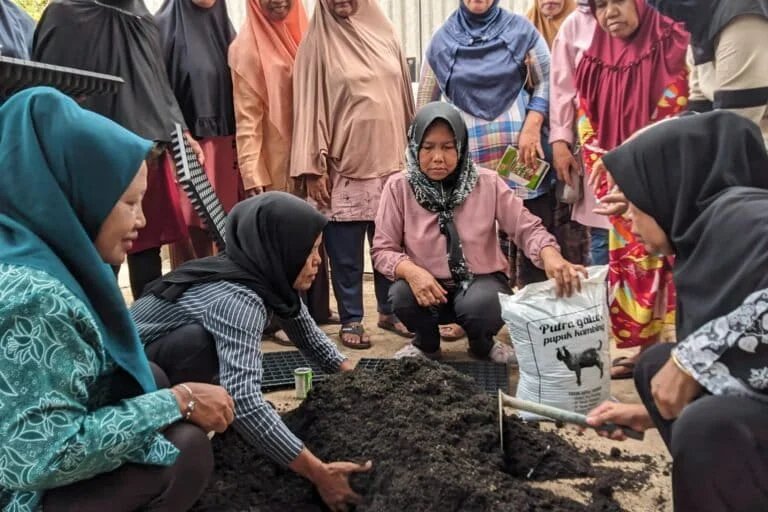
The intersection of gender empowerment, digital innovation, and environmental stewardship is forging a new path for climate resilience in Indonesia as cadres of Aisyiyah, the women’s wing of the Muhammadiyah organization, spearhead transformative projects ranging from digital waste management to community-based solar energy. These initiatives, rooted in local neighborhoods but scaling across provinces, demonstrate a sophisticated understanding of how grassroots movements can address global crises like climate change while simultaneously uplifting the socioeconomic status of women. By integrating technology with traditional community organizing, these leaders are proving that the most effective solutions to the climate crisis often begin at the household level, driven by those most affected by environmental degradation.
The Digitalization of Waste: The Banten Model
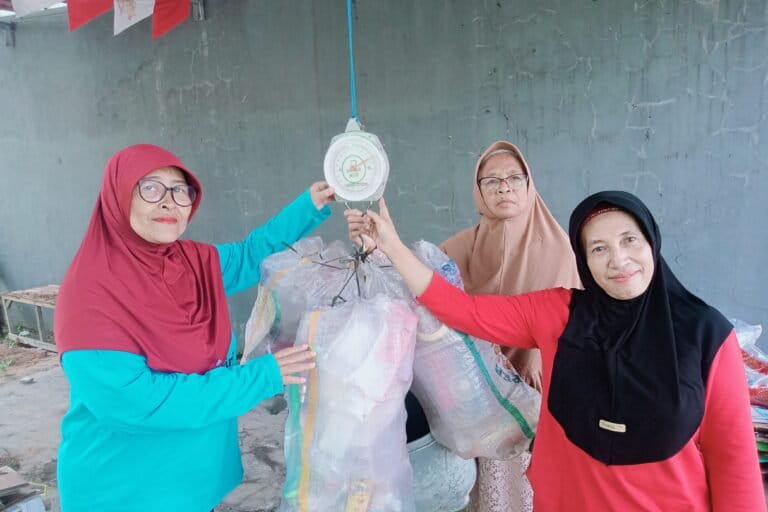
In the province of Banten, the "Sampah Digital Banten" (Santen) platform has emerged as a landmark example of how digital tools can optimize circular economies. Founded by Desty Eka Putri Sari in 2020, the movement began as a small-scale effort within a single neighborhood (Rukun Tetangga or RT). Today, it has expanded into a network of 315 waste banks operating across Serang City, Serang Regency, and Cilegon City. The platform’s core innovation lies in its ability to record, distribute, and manage waste data digitally, ensuring that the lifecycle of refuse is monitored from the point of origin to its final processing.
The motivation behind Santen is rooted in the urgent need to mitigate greenhouse gas emissions. When organic waste is left unmanaged in landfills (TPA), it undergoes anaerobic decomposition—a process that occurs in the absence of oxygen—which releases significant amounts of methane gas (CH4). Methane is a potent greenhouse gas, possessing a global warming potential more than 25 times that of carbon dioxide over a 100-year period. By maximizing the management of organic waste at the smallest communal units, Santen prevents the accumulation of refuse in landfills, thereby directly reducing the regional carbon footprint.
The scale of participation in Banten is a testament to the power of female-led mobilization. Of the approximately 6,800 volunteers involved in the movement, 98% are women. This demographic dominance is not coincidental; Desty’s preliminary research involving 100 households in her local neighborhood revealed that housewives were the group most negatively impacted by waste-related issues, such as odor, pests, and air pollution from illegal burning. Consequently, they were also the most motivated to find sustainable solutions.
Overcoming Resistance Through Micro-Financing and Education
The journey toward a cleaner Banten was not without its hurdles. Initially, Desty faced significant resistance from residents regarding a proposed monthly waste management fee of Rp20,000 (approximately USD 1.25). To many low-income households, this represented an unnecessary additional expense. However, Desty implemented a creative financial strategy by allowing residents to pay in daily installments of just Rp500. This micro-payment approach lowered the barrier to entry, making the service accessible to all.
As the physical environment improved—marked by the disappearance of roadside trash heaps and the cessation of waste burning—the community’s perception shifted. What began as a mandatory fee evolved into a voluntary participation in a digital ecosystem. The Santen platform now manages customer savings totaling approximately Rp900 million. These funds are not merely stagnant capital; they are reinvested into the community through "food barns" (lumbung pangan) and revolving capital loans for small businesses, effectively creating a self-sustaining social safety net powered by recycled waste.
From Waste Management to the Energy Frontier in Sidoarjo
In East Java, the focus has shifted toward the "Just Energy Transition" (JET), led by Syamsudduha Syahrorini, Chairperson of the Aisyiyah Institute for Environment and Disaster Management (LLHPB) in Sidoarjo. A lecturer in Electrical Engineering at the University of Muhammadiyah Sidoarjo, Syamsudduha—commonly known as Rini—has bridged the gap between academic theory and community application. Her work focuses on transitioning communities away from fossil fuels, which she identifies as a primary source of environmental injustice and climate volatility.
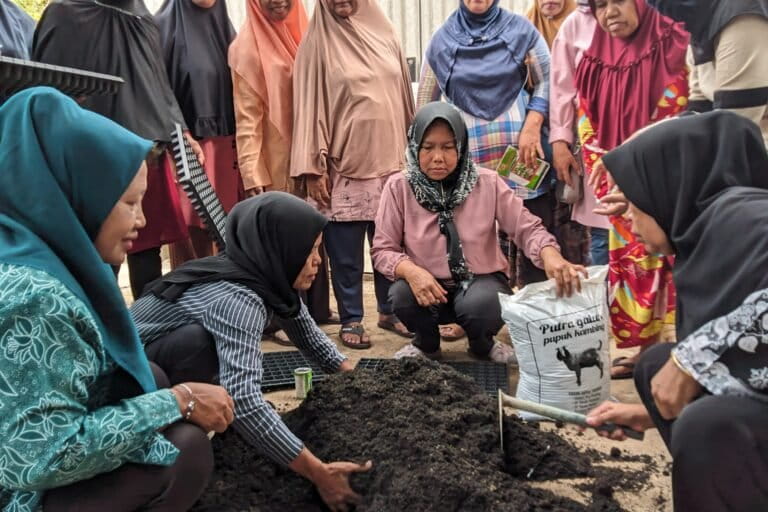
Rini’s initiatives began with the promotion of eco-enzymes—a multipurpose liquid produced from the fermentation of organic kitchen waste, sugar, and water. This simple, low-cost solution allows households to process organic waste at the source, turning potential landfill methane into a natural cleaner, fertilizer, and disinfectant. However, her most ambitious work involves community-based renewable energy.
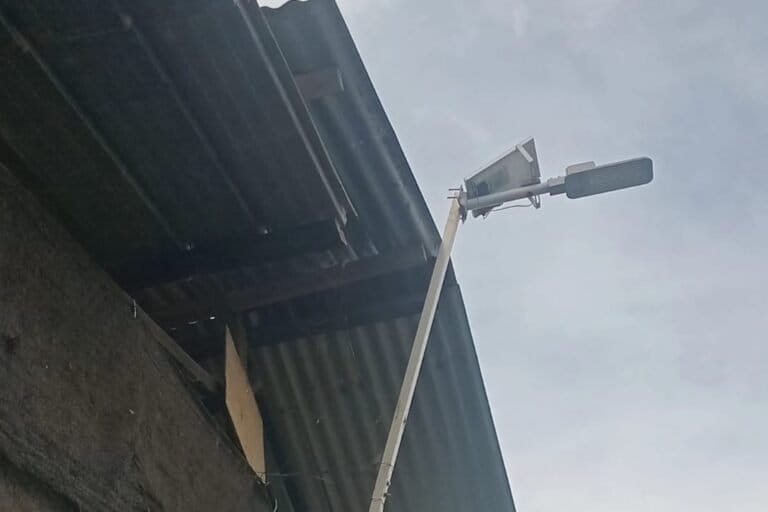
In Kampung Kopi, Jatiarjo Village, Rini spearheaded the installation of solar-powered street lighting. This project served a dual purpose: providing essential infrastructure to a rural area and demystifying renewable energy technology. By demonstrating that solar panels could reduce communal electricity costs for the neighborhood, Rini successfully challenged the prevailing narrative that the energy transition is an expensive or overly complex endeavor reserved for the elite. To complement this physical infrastructure, she developed a mobile application designed to help housewives monitor and predict household electricity consumption, fostering a culture of energy conservation.
Energy Audits and the Push for Systemic Support in Central Java
The movement extends into Central Java, where Deny Ana I’tikafani, Coordinator of the Environment Division for Aisyiyah Central Java, has focused on "energy literacy" through systematic audits. Using carbon footprint calculators developed by the "1,000 Cahaya Muhammadiyah" (1,000 Lights of Muhammadiyah) initiative, her team conducts rigorous assessments of energy use in schools, places of worship, and community centers.
In Jepara, these audits have led to a 20% reduction in monthly electricity costs for participating institutions. By identifying inefficiencies in lighting, cooling, and appliance usage, Aisyiyah is demonstrating that significant carbon reductions can be achieved through behavioral changes and optimized management even before expensive hardware is installed.
Despite these successes, Deny emphasizes that the transition to renewable energy faces a significant bottleneck: capital investment. While the desire to adopt solar power is high among community groups, the upfront cost of panels and battery storage remains prohibitive for many. She argues that for Indonesia to meet its national climate goals, the government must provide targeted funding and subsidies for community-scale energy projects, rather than focusing solely on large-scale industrial utility plants.
Analysis of Implications: A Bottom-Up Framework for Climate Action
The success of these Aisyiyah-led projects offers several critical insights for national and international climate policy. First, it highlights the "Gender-Climate Nexus." Women in Indonesia, particularly those in rural or peri-urban areas, often manage household resources and are the first to experience the impacts of environmental degradation. By positioning them as "actors of mitigation" rather than just "victims of change," these initiatives tap into a highly motivated and effective workforce.
Second, the use of "Bottom-Up" decision-making ensures long-term sustainability. Desty Eka Putri Sari’s insistence on community-based planning and evaluation means that the solutions are tailored to the specific socioeconomic conditions of each district. This contrasts with "Top-Down" government mandates that often fail due to a lack of local buy-in or cultural relevance.
Third, the integration of digital technology—such as the Santen platform and electricity-tracking apps—provides the data transparency necessary for scaling. In the modern era, environmental movements cannot rely on passion alone; they require quantifiable metrics to attract investment and demonstrate impact. The Rp900 million in savings generated in Banten serves as a powerful "Proof of Concept" for the economic viability of the circular economy.
Chronology of the Movement’s Evolution
- 2017–2019: Initial awareness campaigns by Aisyiyah focusing on household waste separation and the introduction of eco-enzymes in East and Central Java.
- 2020: Desty Eka Putri Sari launches the first digital waste bank unit in her RT in Banten during the COVID-19 pandemic, addressing the surge in household waste.
- 2021–2022: The Santen platform expands across three regencies/cities. Simultaneously, Syamsudduha Syahrorini begins implementing solar street lighting in Sidoarjo as part of a university-community partnership.
- 2023: Aisyiyah Central Java formalizes energy audits using the "1,000 Cahaya Muhammadiyah" calculator, achieving documented 20% energy savings in several districts.
- 2024 and Beyond: The focus shifts toward advocating for government integration of community-led models into the National Energy General Plan (RUEN) and seeking international partnerships via the Just Energy Transition Partnership (JETP).
Conclusion: A Model for National Replication
As Indonesia grapples with the complexities of its energy transition and the growing burden of waste management, the cadres of Aisyiyah have provided a blueprint for a decentralized, inclusive, and technologically empowered response. Their work demonstrates that when communities are given the tools to manage their own resources—be it through a digital waste app or a solar-powered street lamp—the results extend far beyond environmental metrics. They foster economic resilience, social cohesion, and a sense of agency among women who have historically been sidelined in environmental discourse.
The challenge now lies in scaling these local successes to the national level. Without significant policy shifts that prioritize community-based funding and technical support, these "islands of excellence" may remain isolated. However, the precedent set by Aisyiyah proves that the transition to a greener future is not only possible but is already being led by the women of Indonesia, one neighborhood at a time.