Eko Sulistyo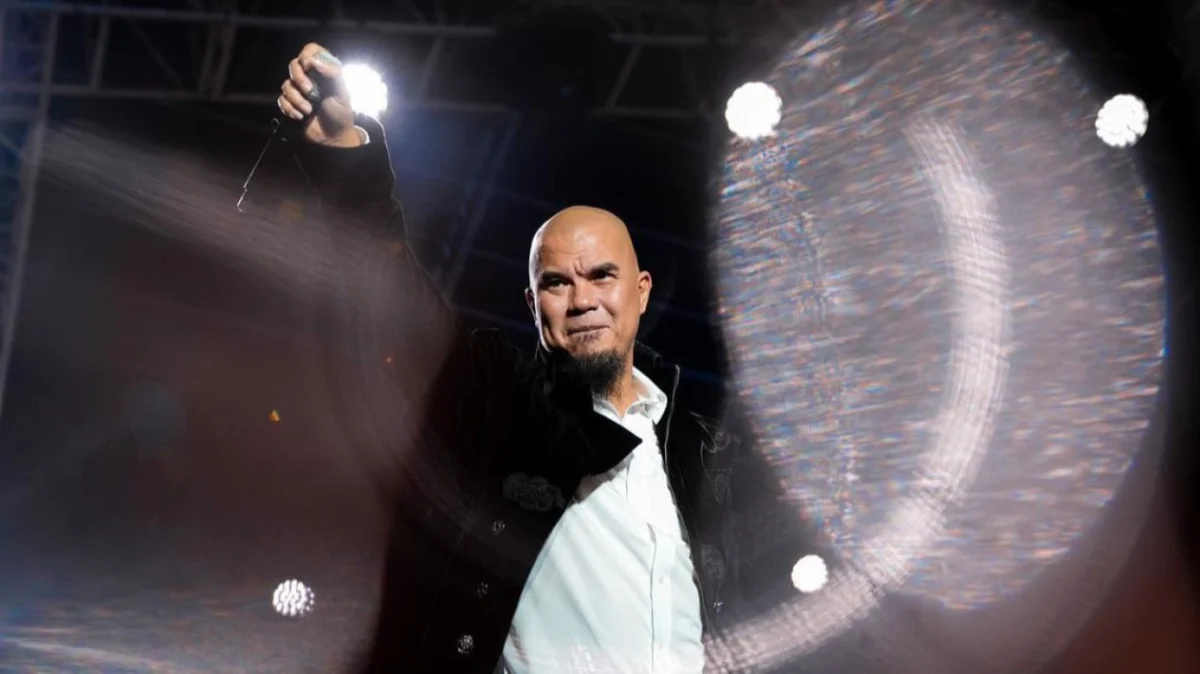
The digital landscape of Indonesian entertainment was set ablaze on Tuesday, May 5, 2026, as the verified Instagram account of Ahmad Dhani, the legendary frontman of the band Dewa 19, officially returned to the platform. After a mysterious three-day absence that triggered widespread speculation among fans and industry observers alike, Dhani wasted no time in utilizing his restored digital pulpit to address long-standing grievances. Rather than offering a standard message of gratitude for the account’s recovery, the musician and political figure immediately pivoted toward a historical controversy, sharing legal documents that he claims prove the falsity of domestic violence (KDRT) allegations made against him nearly two decades ago by his former wife, Maia Estianty.
The return of the @ahmaddhaniofficial account at approximately 19:08 WIB marked the end of a brief but intense period of digital silence. The account had vanished on Saturday, May 2, 2026, leading to theories ranging from a deliberate deactivation by Dhani himself to a coordinated "mass reporting" effort by detractors. The timing of the disappearance was particularly notable, occurring shortly after Dhani had teased the release of "old files" related to his high-profile divorce in the late 2000s.
The Chronology of the Digital Disappearance
The timeline of this incident began on May 2, 2026, when users first reported that Dhani’s profile was no longer searchable. The disappearance occurred in the wake of a series of provocative posts where Dhani expressed a desire to "set the record straight" regarding the collapse of his first marriage. Feeling that his voice was being suppressed, Dhani reportedly took the matter to the authorities.
According to statements gathered prior to the account’s restoration, Dhani had engaged legal counsel to report the disappearance to the Criminal Investigation Agency (Bareskrim) and the Ministry of Communication and Digital (Komdigi). His camp alleged that the account’s removal was not a technical glitch but a targeted attempt by "certain parties" to prevent him from sharing specific documents. The restoration of the account on May 5 suggests that either the technical issues were resolved or the platform’s internal review found no violation of community guidelines that warranted a permanent ban.
Reopening the 2007 Legal Conflict
Immediately upon his return, Dhani posted a photograph of a legal document dating back to 2008. The caption, written in his characteristic bold and unfiltered style, directly challenged the narrative surrounding his 2007 divorce. He specifically targeted the allegations of domestic violence that were a central theme of the media coverage during that era.
"THIS IS ONE OF THE FALSE REPORTS MADE BY MAIA ESTIANTY," Dhani wrote in his caption. He argued that when the reports were initially filed in 2007, the national media provided exhaustive coverage, often painting him in a negative light. However, he lamented that when the investigation allegedly failed to produce evidence of wrongdoing in 2008, the media remained silent. "When the evidence of the hoax came out (2008), the media went quiet," he added.
This post refers to the tumultuous period between 2007 and 2008 when the "Dhani-Maia" divorce was the most consumed news story in Indonesia. At the time, Maia Estianty had filed for divorce and reported Dhani to the police for alleged physical abuse. The legal battle was not only about the dissolution of the marriage but also involved a bitter struggle for the custody of their three sons: Al Ghazali, El Rumi, and Dul Jaelani.
Historical Context: The 2008 SP3 and Legal Resolutions
To understand the weight of Dhani’s recent post, one must look back at the legal conclusion of the 2007 KDRT report. In 2008, the police issued a "Surat Perintah Penghentian Penyidikan" (SP3), which is an official order to stop an investigation. The issuance of an SP3 typically occurs when there is insufficient evidence to proceed to trial or if the reported action does not constitute a criminal offense.
Dhani’s recent assertions rely on this legal outcome. From his perspective, the SP3 serves as a total exoneration and proof that the allegations were fabricated. Conversely, legal experts often note that an SP3 for "insufficient evidence" does not always equate to a "false report" in the eyes of the law, but rather a failure to meet the high evidentiary bar required for criminal prosecution. By bringing this document back into the public eye in 2026, Dhani is attempting to reshape the collective memory of a generation that grew up watching the drama unfold on infotainment television.
Analysis of Media Dynamics and Public Perception
Dhani’s critique of the media highlights a perennial issue in celebrity journalism: the "asymmetry of sensationalism." News outlets often prioritize the initial "shock" of an allegation over the subsequent "quiet" resolution of a legal case. In 2007, the Indonesian media landscape was dominated by infotainment programs like Silet, Cek & Ricek, and Kabar-Kabari, which thrived on the high-conflict divorce of two of the country’s biggest music icons.
By using the term "mingkem" (a Javanese-derived term for remaining silent or shutting one’s mouth), Dhani is accusing the press of complicity in a smear campaign. His return to social media serves as a DIY media platform, allowing him to bypass traditional editorial filters and speak directly to his millions of followers. This move is emblematic of the "Direct-to-Consumer" era of celebrity reputation management, where public figures use archived digital evidence to challenge legacy media narratives.
Public Reaction and Social Media Sentiment
The response to Dhani’s return has been polarized, reflecting the deep-seated loyalties of the Indonesian public. Within hours of the post, thousands of comments flooded the thread. Some netizens expressed exhaustion at the revival of a conflict that is nearly two decades old, with one user commenting, "Lailahaillah, it continues again, Pakde," suggesting a weariness toward the perpetual drama.
Others took a more analytical or critical stance, questioning the timing and the intent. A notable comment pointed out the nuance of legal dismissals: "’INSUFFICIENT EVIDENCE’ does not mean ‘DID NOT HAPPEN’." This highlights the ongoing debate between Dhani’s supporters, who see him as a victim of a coordinated character assassination, and his critics, who view his recent posts as an unnecessary provocation against his former wife, who has since moved on and remarried.
The reaction from Maia Estianty’s camp has historically been one of dignified silence or subtle redirection. As of the afternoon of May 5, there has been no official response from Maia or her representatives. This contrast in communication styles—Dhani’s aggressive transparency versus Maia’s perceived stoicism—has long been a defining feature of their public personas.
Implications for the Digital and Legal Landscape
The involvement of Bareskrim and Komdigi in the disappearance of a social media account underscores the increasing importance of digital identity in modern Indonesia. For a public figure like Ahmad Dhani, an Instagram account is not merely a social tool; it is a political instrument, a marketing channel for Dewa 19, and a personal archive.
From a legal standpoint, Dhani’s decision to post old legal documents could potentially open new avenues for litigation, although the statute of limitations on many claims from 2007 has long since passed. However, the Law on Electronic Information and Transactions (UU ITE) in Indonesia remains a potent tool. If his claims are perceived as defamatory toward his former spouse, or if his allegations against the media are deemed to spread misinformation, the situation could escalate beyond the realm of social media bickering.
Furthermore, the impact on their three children, who are now successful adults in their own right, cannot be ignored. Al, El, and Dul have spent years navigating the complex relationship between their parents. Reopening these specific wounds—particularly those involving allegations of violence—places a renewed spotlight on a family history that the children have often tried to frame in a more reconciliatory light.
Conclusion: The Persistence of Public Memory
Ahmad Dhani’s return to Instagram is a reminder that in the digital age, no conflict is ever truly buried. The "receipts" of the past are only a few clicks away, and for a personality as polarizing and resilient as Dhani, the past is a weapon to be used in the present. By challenging the 2007 narrative, he is not just defending his personal honor; he is asserting his right to control his own history.
As the situation develops, it remains to be seen whether this will lead to a broader legal confrontation or if it will remain a localized explosion on social media. What is clear, however, is that Ahmad Dhani’s digital presence is back with a vengeance, and he has no intention of following a conventional path toward reconciliation. The "old files" he promised are beginning to emerge, and the public, for better or worse, is once again captivated by a story that refuses to reach its final chapter.