Eko Sulistyo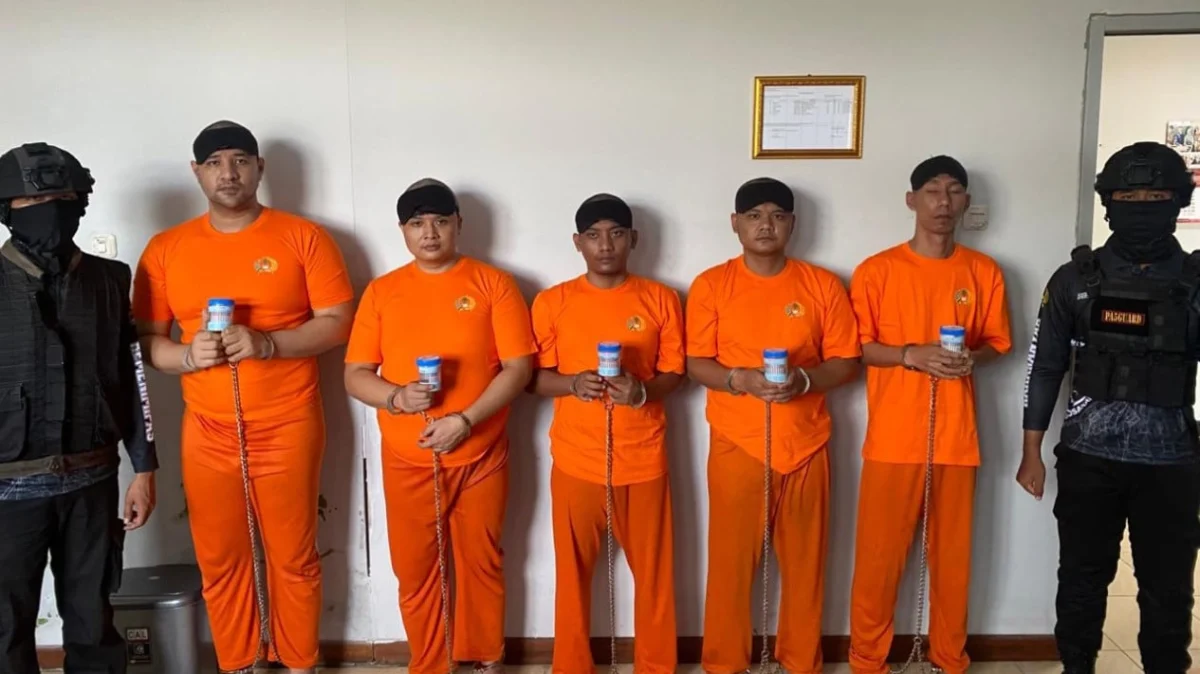
The sudden transfer of Indonesian actor Ammar Zoni to the high-security prison complex of Nusakambangan has sparked significant public concern and a legal firestorm. Reports indicate that the actor, who has faced multiple legal battles related to substance abuse, has suffered severe psychological distress following the relocation. His legal representative, Krisna Murti, has publicly detailed a harrowing account of the actor’s emotional state, describing him as being in a state of deep trauma and frequently breaking into tears upon his return to the notorious island facility. The transfer, which took place in early May 2026, was reportedly executed without prior notification to his legal counsel or his immediate family, leading to allegations of procedural irregularities and a lack of transparency by the correctional authorities.
The Circumstances of the Transfer
According to the legal team, the move to Nusakambangan—often referred to as Indonesia’s "Alcatraz"—was unexpected and abrupt. Krisna Murti revealed that the family and the legal team only became aware of the situation after news of the transfer began circulating in the media. This lack of formal communication has become a central point of contention. Under standard operating procedures for the transfer of high-profile inmates, legal representatives typically expect some form of administrative notice to ensure that the rights of the incarcerated individual are upheld and that family visits or legal consultations can be arranged.
The emotional toll on Ammar Zoni was evident even before the transfer was finalized. His lawyer noted that the actor had expressed a profound fear of the island, which is known for its isolated environment and housing some of the country’s most dangerous criminals, including terrorists and major drug kingpins. Krisna Murti recounted a meeting on Sunday, May 10, 2026, in the Pantai Indah Kapuk (PIK) area, where he described the actor’s state as "broken." He stated that members of his team who had seen Ammar reported that the actor was weeping and visibly shaken by the atmosphere of the facility, which he described as "terrifying" and "menacing" compared to previous detention centers.
A History of Recidivism and Legal Struggles
To understand the gravity of the current situation, it is necessary to examine the chronology of Ammar Zoni’s legal history. The actor’s struggle with narcotics has been a recurring theme in his public life, leading to a series of arrests that have significantly impacted his career and personal relationships.
Ammar Zoni first faced legal repercussions for drug possession in 2017, when he was arrested for the use of marijuana. At that time, he was sentenced to a period of rehabilitation, which many hoped would be a turning point for the young star. However, in March 2023, he was arrested for a second time after being found in possession of methamphetamine (sabu). Following a brief period of incarceration and rehabilitation, he was released in October 2023.
The situation escalated dramatically in December 2023, just two months after his release, when he was arrested for a third time. This arrest involved the possession of both methamphetamine and marijuana. The recurring nature of these offenses has led the Indonesian judiciary and the Ministry of Law and Human Rights to take a progressively stricter stance toward his detention. By 2026, the cumulative weight of these offenses appears to have influenced the decision to classify him for a high-security environment, a move his lawyers are now vigorously contesting.
The Plea for Intervention
The psychological impact of the Nusakambangan environment on Ammar Zoni was further highlighted by a specific plea for help sent to an associate. Dr. Kamelia, a medical professional who has been in contact with the actor, revealed that she received a desperate message from him prior to the completion of the transfer. According to Dr. Kamelia, the message read: "Help me, don’t let me go to NK [Nusakambangan] because I am very traumatized."
This plea underscores the mental health crisis facing the actor. Nusakambangan is not a single prison but a complex of several facilities, some of which are "Super Maximum Security" prisons where inmates are kept in individual cells with minimal human contact and 24-hour surveillance. For an individual whose legal history is characterized by substance addiction rather than violent crime or organized syndicates, the transition to such an environment can be psychologically devastating.
Legal Challenges to "High Risk" Classification
The core of the legal battle now lies in the classification of Ammar Zoni as a "high-risk" inmate. In the Indonesian penal system, the "high-risk" (Risiko Tinggi) status is generally reserved for inmates who pose a significant threat to national security, are involved in international drug trafficking networks, or have a history of violent behavior while incarcerated.
Krisna Murti has raised serious questions regarding the assessment criteria used by the Directorate General of Corrections (Ditjen PAS) to justify this classification. He emphasized that Ammar Zoni has consistently been identified as a drug user—an individual struggling with addiction—rather than a "bandar" (drug lord) or a member of a narcotics cartel.
"We will request the official decision letter that classifies Ammar Zoni as a high-risk ward. On what assessment is this based?" Murti asked during a press briefing. The legal team argues that placing a drug user in a facility designed for kingpins is not only inappropriate but counterproductive to any rehabilitation efforts. They contend that the high-risk status should be backed by empirical evidence of the inmate’s danger to society or the prison system, rather than being used as a punitive measure for recidivism.
The Absence of Official Notification
Another significant grievance cited by the legal team is the total absence of written or verbal notification regarding the transfer. Krisna Murti clarified that, as of mid-May 2026, neither the family nor the lawyers had received a formal "Surat Keputusan" (Decree) or any administrative document detailing the move. This perceived lack of transparency is being viewed as a violation of the inmate’s rights to legal counsel and family support.
In response, the legal team has announced plans to send a formal inquiry to the Ministry of Law and Human Rights and the Directorate General of Corrections. Their goal is to obtain a comprehensive explanation of the legal and administrative grounds for the transfer. They are seeking to understand why the actor was moved so suddenly and why the usual channels of communication were bypassed.
The Reality of Nusakambangan
The reputation of Nusakambangan as a place of severe punishment is well-founded in Indonesian history. Located off the southern coast of Java, the island serves as the final destination for many of the country’s most notorious criminals. The facilities there, such as the Batu and Pasir Putih prisons, utilize advanced technology for monitoring and strictly limit inmate movement.
For someone like Ammar Zoni, the shift from a standard correctional facility to Nusakambangan represents a total isolation from his support system. The island is difficult to access for family members, and the visitation rights are significantly more restricted than in mainland prisons. This isolation is a primary driver of the "trauma" described by his legal team. The psychological pressure of being surrounded by high-level offenders and the strict disciplinary regime of the island can exacerbate pre-existing mental health issues, particularly for those with a history of substance abuse.
Broader Implications for Drug Policy and Inmate Rights
The case of Ammar Zoni brings to the forefront a larger debate regarding the treatment of drug offenders in Indonesia. While the country maintains some of the world’s strictest anti-narcotics laws, there is an ongoing discussion about the efficacy of incarcerating users in high-security prisons versus providing intensive medical and psychological rehabilitation.
Legal experts suggest that if a high-profile figure like Ammar Zoni can be transferred to a maximum-security facility without clear justification or notification, it raises questions about the procedural protections afforded to less prominent inmates. The "High Risk" classification is a powerful administrative tool that can significantly alter the conditions of an individual’s life, and the legal community is calling for more stringent oversight of how these classifications are applied.
Furthermore, the impact on the family cannot be overstated. The reports indicate that Ammar’s family is "shocked and devastated" by the news. The suddenness of the move has left them unable to provide the emotional support that is often crucial for inmates trying to overcome addiction. The lack of communication from authorities has only added to their distress, creating a sense of uncertainty about the actor’s safety and well-being.
Future Legal Actions and Expectations
The legal team’s next steps will be critical. By challenging the "High Risk" status, they are hoping to have Ammar Zoni moved back to a standard correctional facility or a specialized rehabilitation center where his addiction can be treated more effectively. They are expected to file a petition for a judicial review or an administrative appeal against the decision of the Directorate General of Corrections.
As the story continues to develop, the public remains divided. Some argue that his repeated offenses justify the harshest possible detention to serve as a deterrent, while others view the transfer as an excessive and inhumane response to a health-related issue. Regardless of public opinion, the legal battle will likely focus on the adherence to administrative law and the protection of the fundamental rights of the incarcerated.
The situation remains fluid as the legal team awaits a response from the government. The outcome of this case could set a precedent for how recidivist drug offenders are classified and handled within the Indonesian prison system, potentially leading to reforms in the transparency of inmate transfers and the criteria for high-risk designations. For now, Ammar Zoni remains on the isolated island of Nusakambangan, facing an uncertain future as his lawyers fight to bring him back to the mainland.