Paryono Ramadhan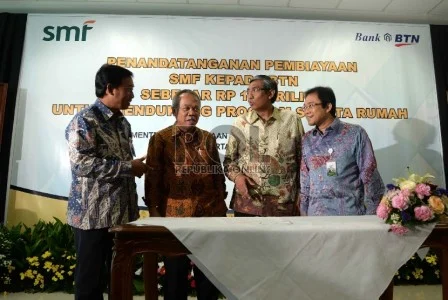
The Indonesian government is marshaling its entire array of resources to ensure the successful realization of the ambitious One Million Houses Program, a flagship initiative aimed at significantly reducing the nation’s persistent housing backlog, particularly for low-income communities. Minister of Public Works and Public Housing (PUPR), Basuki Hadimuljono, underscored this unwavering commitment during a pivotal event in Jakarta last week, where a crucial financial collaboration was formalized. The Minister emphasized, "All our resources are being mobilized in the context of the One Million Houses Program, specifically targeting low-income communities." This declaration accompanied the signing of a strategic partnership between PT Sarana Multigriya Finansial (SMF) and Bank Tabungan Negara (BTN), a move designed to inject substantial liquidity into the program’s financing mechanisms.
The One Million Houses Program, officially launched by President Joko Widodo in 2015, represents a cornerstone of the administration’s social welfare agenda and infrastructure development priorities. Its primary objective is to facilitate access to decent and affordable housing for all Indonesians, with a strong emphasis on addressing the needs of the Masyarakat Berpenghasilan Rendah (MBR), or low-income households. The program seeks to construct one million housing units annually, encompassing both subsidized and non-subsidized categories, to systematically tackle a national housing backlog estimated to be in the millions of units. This backlog is a complex issue driven by rapid urbanization, population growth, and the mismatch between housing supply and the purchasing power of a significant portion of the population. The government recognizes that adequate housing is not merely a basic need but a fundamental component of social stability, economic productivity, and overall human development. It contributes directly to improved public health, educational outcomes, and reduced poverty rates by freeing up household income for other essential expenditures.
Strategic Financial Partnerships Bolster Program Implementation
In a significant step towards reinforcing the financial backbone of the One Million Houses Program, PT Sarana Multigriya Finansial (SMF), a state-owned enterprise (BUMN) acting as a secondary mortgage facility provider, extended a substantial loan of Rp 1.5 trillion (approximately USD 100 million) to Bank Tabungan Negara (BTN). This agreement, formalized recently in Jakarta, is specifically earmarked to support the execution of the One Million Houses Program, with a particular focus on making homeownership more accessible for low-income communities. BTN, another state-owned bank, has historically played a pivotal role in Indonesia’s housing finance sector, especially in the distribution of subsidized mortgages. This collaboration between SMF and BTN is designed to enhance BTN’s capacity to disburse mortgages, thereby increasing the number of eligible beneficiaries who can access affordable housing solutions under the government’s initiative. SMF’s mandate is to develop and deepen the secondary mortgage market in Indonesia, ensuring a sustainable and liquid source of funds for housing finance institutions, while BTN acts as a direct conduit to the public, offering various housing loan products, including those under government subsidy schemes.
Beyond this latest SMF-BTN partnership, Minister Basuki Hadimuljono outlined other critical financing avenues contributing to the One Million Houses Program. These include substantial allocations from various state-backed institutions and direct government budgets. The Workers’ Social Security Agency, BPJS Ketenagakerjaan, is slated to contribute a significant Rp 48.5 trillion. BPJS Ketenagakerjaan manages social security funds for Indonesian workers, and a portion of these funds is strategically invested to support programs beneficial to its members, including housing. This represents a substantial commitment, leveraging social security assets to address a critical national need.
Furthermore, direct government subsidies and allocations play a crucial role. The Fasilitas Likuiditas Pembiayaan Perumahan (FLPP), or Housing Finance Liquidity Facility, is set to provide Rp 5.1 trillion. FLPP is a government-backed scheme that provides interest rate subsidies and liquidity support to banks offering mortgages to low-income individuals, making monthly installments more affordable. This mechanism is vital for bridging the affordability gap for many aspiring homeowners. Additionally, direct allocations from the state budget, through the Daftar Isian Pelaksanaan Anggaran (DIPA) APBN, are projected at Rp 8.1 trillion. These DIPA allocations represent direct government spending for various housing-related projects, including infrastructure development within housing complexes and direct construction initiatives. The multi-faceted funding strategy underscores the government’s comprehensive approach, drawing on diverse financial instruments and institutions to ensure the program’s viability and scale.
Expert Insights: Navigating Implementation Hurdles
While the government demonstrates strong commitment and mobilizes significant financial resources, experts consistently highlight several critical areas that require diligent attention for the One Million Houses Program to achieve its full potential. Indonesia Property Watch, a prominent independent research and consultancy firm specializing in the property sector, has identified five key recommendations that, if effectively implemented, could significantly enhance the program’s success rate. These recommendations address systemic challenges that often impede large-scale housing initiatives in developing economies.

1. Land Availability and Land Banking:
One of the most formidable obstacles to affordable housing development in Indonesia is the soaring cost and scarcity of land, particularly in urban and peri-urban areas. Indonesia Property Watch emphasizes the urgent need for the government to establish and operationalize a robust land bank. A national land bank would enable the government to acquire and hold strategic land parcels, especially those designated for public housing, before market speculation inflates prices. By controlling land prices, the government can shield developers of affordable housing from exorbitant acquisition costs, which often translate directly into higher home prices. Without an effective land banking system, housing prices will continue to be dictated by market mechanisms, making it increasingly difficult to provide truly affordable homes for low-income segments. This involves not only direct acquisition but also potentially reforming land use regulations and streamlining expropriation processes for public interest projects, while ensuring fair compensation for existing landowners.
2. Dedicated Housing Agency:
The complexity and multi-sectoral nature of a program as vast as the One Million Houses initiative necessitate a highly focused and efficient institutional framework. The recommendation for a dedicated agency solely focused on managing "rumah rakyat" (people’s housing) stems from the need for centralized coordination, expertise, and accountability. Such an agency could streamline planning, implementation, monitoring, and evaluation processes that are currently dispersed across various ministries and regional governments. A specialized body would possess the institutional memory, technical know-how, and dedicated personnel to navigate the intricacies of land acquisition, infrastructure development, financing, and community engagement, thereby reducing bureaucratic inefficiencies and accelerating project delivery. It could also act as a single point of contact for private sector developers and financial institutions, fostering greater collaboration.
3. Diverse and Sustainable Funding Mechanisms:
While the government has already demonstrated a multi-pronged funding approach with FLPP, BPJS Ketenagakerjaan, and DIPA APBN, Indonesia Property Watch advocates for even greater diversification and long-term sustainability of funding. This includes exploring innovative financing models, such as public-private partnerships (PPPs) with stronger incentives for private developers, social housing bonds, or leveraging international development funds. The goal is to create a resilient financial ecosystem that can withstand economic fluctuations and ensure a consistent flow of capital for housing development. Furthermore, optimizing the utilization of existing funds and ensuring transparent allocation are paramount to maximize the impact of every rupiah invested. This also entails a continuous evaluation of the effectiveness of current subsidy mechanisms to ensure they reach the intended beneficiaries without leakages.
4. Robust Data and Information Systems:
Effective planning and targeted intervention are impossible without accurate, comprehensive, and up-to-date data. The recommendation for robust data and information systems highlights the need for a granular understanding of the housing deficit across different regions, income brackets, and demographic groups. This includes precise data on the number of households without adequate housing, their income levels, geographic distribution, and specific housing needs. A centralized national housing database, integrated with population data and land registries, would enable policymakers to make evidence-based decisions, prioritize areas with the greatest need, and allocate resources more efficiently. Such a system would also facilitate monitoring of the program’s progress, identifying bottlenecks, and evaluating its overall impact, ensuring accountability and adaptability.
5. Streamlining Bureaucracy and Reducing Costs:
The process of developing housing in Indonesia is frequently hampered by complex and often opaque bureaucratic procedures, leading to significant delays and increased costs. Indonesia Property Watch specifically points to the need for substantial reforms in permitting processes, certification costs, and utility connection fees (e.g., PLN for electricity). Simplifying and expediting the issuance of building permits, environmental impact assessments, and land certificates would drastically reduce the time and financial burden on developers. Furthermore, lowering or subsidizing connection fees for essential utilities like electricity and water for affordable housing projects would directly reduce the final cost to homeowners. These administrative and regulatory reforms are crucial for improving the ease of doing business in the housing sector and incentivizing private sector participation in the One Million Houses Program.
Government’s Holistic Approach and Future Outlook
Minister Basuki Hadimuljono’s statements underscore the government’s recognition of these multifaceted challenges and its commitment to a holistic approach. The mobilization of "all resources" signifies not only financial commitments but also inter-ministerial coordination, regulatory reforms, and active engagement with various stakeholders, including state-owned enterprises, the private sector, and local governments. The success of the One Million Houses Program is seen as vital for achieving broader national development goals, including poverty reduction, social equity, and economic growth. The housing sector has a significant multiplier effect on the economy, stimulating demand for construction materials, labor, and related services.
Looking ahead, the government is expected to continue refining its strategies, adapting to evolving market conditions, and incorporating expert feedback to enhance the program’s effectiveness. The emphasis on partnerships, both financial and operational, is likely to deepen, fostering a collaborative ecosystem where public and private sectors work in concert towards the common goal of ensuring every Indonesian has access to a decent and affordable home. The sustained commitment from key financial players like SMF and BTN, coupled with the strategic deployment of state funds and the implementation of crucial policy reforms, will be instrumental in transforming the ambitious vision of the One Million Houses Program into a tangible reality for millions of Indonesian families. The ongoing efforts reflect a profound understanding that providing stable housing is an investment in the nation’s human capital and its future prosperity.