Paryono Ramadhan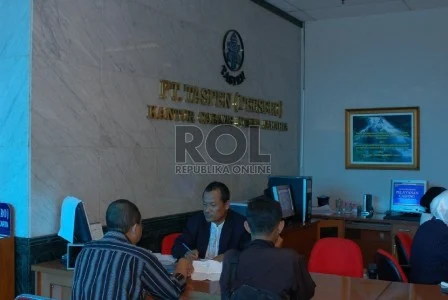
PT Taspen, the state-owned enterprise responsible for managing the pension and social security funds for civil servants in Indonesia, is set to commence the repayment of Tabungan Perumahan Pegawai Negeri Sipil (Taperum PNS) on June 1st. This crucial initiative targets all civil servants who are scheduled to enter retirement starting from that date, with the notable exception of personnel from the Ministry of Defense, the Indonesian National Armed Forces (TNI), and the National Police (Polri), who operate under distinct welfare frameworks. The decision to integrate Taperum repayments into Taspen’s existing services streamlines the process for retirees, ensuring a more convenient and consolidated distribution of their accumulated benefits.
Historical Context and Evolution of Taperum PNS
The Tabungan Perumahan Pegawai Negeri Sipil, or Taperum PNS, was established with the noble objective of assisting Indonesian civil servants in acquiring suitable housing. Historically, access to affordable housing has been a persistent challenge for many public sector employees, particularly those in lower and middle-income brackets. To address this, the government initiated Taperum as a mandatory savings program. Its genesis can be traced back to various presidential decrees, notably Keputusan Presiden (Kepres) Nomor 14 Tahun 1994, which later saw amendments and reinforcement through Kepres Nomor 46 Tahun 1994. These decrees mandated regular contributions from civil servants’ salaries, earmarking these funds specifically for housing-related purposes.
For decades, the management and oversight of Taperum PNS were primarily handled by the Badan Pertimbangan Tabungan Perumahan Pegawai Negeri Sipil (Bapertarum PNS). Bapertarum’s role involved collecting contributions, managing the accumulated funds, and providing housing assistance in various forms, such as down payment subsidies, low-interest housing loans, or direct housing provisions, depending on the prevailing policies and the financial health of the fund. The program was designed to function as a self-sustaining mechanism, where pooled contributions from active civil servants would finance housing support for eligible members, including those approaching retirement. The eventual repayment of the accumulated savings upon retirement was a core tenet of the program, ensuring that civil servants recouped their contributions, often with accrued interest or benefits. This long-standing system underscored the government’s commitment to the welfare of its public servants, recognizing housing as a fundamental need critical to their overall well-being and productivity.
PT Taspen’s Expanded Mandate and the Repayment Mechanism
The current initiative sees PT Taspen taking on a more prominent role in the Taperum repayment process. According to Taspen Company Secretary, Iwan Soeroto, the commencement of these repayments is a direct outcome of a cooperative agreement forged between PT Taspen and Bapertarum PNS. This agreement delineates Taspen’s responsibility in facilitating the repayment of housing savings to eligible civil servants. The strategic collaboration aims to leverage Taspen’s extensive network and established infrastructure for pension and social security disbursements, thereby enhancing efficiency and accessibility for retirees.
The repayment process, slated to begin on June 1st, is designed for maximum convenience. Iwan Soeroto highlighted that the Taperum repayment will be delivered as a single, consolidated package, bundled with the recipient’s first pension payment and their Tabungan Hari Tua (THT) or Old Age Savings. This "one-package" approach means that retirees will not need to navigate separate administrative channels or visit multiple offices to claim their various entitlements. Instead, all due funds will be disbursed simultaneously at Taspen’s numerous branch offices across the archipelago. This integration is expected to significantly reduce bureaucratic hurdles, minimize processing times, and provide a seamless experience for civil servants transitioning into retirement. The streamlining of payments reflects a broader administrative effort to modernize and improve the delivery of public welfare services, ensuring that beneficiaries receive their due entitlements promptly and efficiently.
Understanding Taperum Contribution Rates
Historically, the contribution rates for Taperum PNS were fixed amounts, stipulated by Kepres Nomor 46 Tahun 1994. These rates were differentiated based on the civil servant’s employment "golongan" or category, reflecting the hierarchical structure of the Indonesian civil service and corresponding salary scales. Specifically, civil servants in Golongan I were mandated to contribute Rp 3,000 per month from their salaries. Those in Golongan II contributed Rp 5,000 monthly, while Golongan III civil servants saw a deduction of Rp 7,000. The highest contribution, set at Rp 10,000 per month, was levied on civil servants in Golongan IV.
While these fixed rates were consistent for many years, their adequacy in the face of rising housing costs and inflation became a growing concern. The value of Rp 3,000 or even Rp 10,000 in the 1990s was significantly different from its purchasing power in the 21st century. Consequently, the total accumulated savings from these fixed contributions, even over a career spanning several decades, often proved insufficient to make a substantial impact on housing acquisition in an increasingly expensive real estate market. This disparity between historical contribution values and contemporary housing realities underscored the need for a re-evaluation of the Taperum scheme’s financial structure. The program, while well-intentioned, struggled to keep pace with economic changes, leading to calls for more dynamic and equitable contribution models.
Proposed Future: A Shift Towards Percentage-Based Contributions

Recognizing the limitations of the fixed-rate contribution system, PT Taspen is actively advocating for a significant reform in Taperum’s financial model. The proposed change involves transitioning from the current fixed monthly amounts to a percentage-based contribution system. Taspen is currently working towards implementing a new policy where civil servants would contribute 2.5 percent of their total monthly salary to Taperum.
This proposed shift represents a fundamental re-engineering of the Taperum program, aligning it more closely with modern social security and welfare schemes. A percentage-based contribution system offers several advantages. Firstly, it introduces an element of fairness and equity, as contributions would be proportional to a civil servant’s income. Higher-earning civil servants would contribute more, while lower-earning ones would contribute less, but all would contribute a consistent proportion of their earnings. Secondly, and perhaps more crucially, it provides a built-in mechanism for adjusting to inflation and salary increases. As civil servant salaries rise over time, their Taperum contributions would automatically increase proportionally, ensuring that the accumulated fund retains a more relevant value in relation to prevailing housing costs. This dynamic model is expected to make Taperum a more sustainable and impactful program, better equipped to meet its original objective of providing meaningful housing assistance to civil servants. The discussions and efforts to implement this change signal a forward-looking approach to civil servant welfare, adapting to economic realities and striving for greater financial efficacy.
Exclusions and Alternative Housing Provisions
It is important to note the specific exclusions from this Taperum repayment initiative. Personnel from the Ministry of Defense (Kementerian Pertahanan), the Indonesian National Armed Forces (TNI), and the National Police (Polri) are not included in the scheme managed by Taspen. This exclusion is not an oversight but rather reflects the existence of separate, dedicated housing and welfare programs tailored specifically for these specialized public service sectors.
The military and police forces in Indonesia, due to the unique nature of their duties, operational requirements, and organizational structures, have historically been provided with distinct social security and housing benefits. These often include subsidized housing, barracks, housing allowances, or specific housing loan schemes managed by their respective internal welfare bodies or specialized financial institutions. For instance, the military often provides housing facilities for active personnel and offers specific housing assistance programs for retired members. Similarly, the police force has its own welfare mechanisms. These parallel systems are designed to cater to the particular needs and circumstances of defense and security personnel, which differ significantly from those of general civil servants. Therefore, while Taspen facilitates Taperum repayments for the broader civil service, the defense and security sectors continue to manage their housing welfare provisions through their established, sector-specific channels. This differentiation ensures that all segments of the public service receive appropriate and targeted support for their housing needs.
Broader Implications and Stakeholder Perspectives
The commencement of Taperum PNS repayments by PT Taspen carries significant implications for various stakeholders, extending beyond the immediate beneficiaries.
For Retiring Civil Servants: This initiative provides a welcome financial boost as they transition into retirement. The lump-sum repayment of their housing savings, coupled with their first pension and THT, offers greater financial flexibility. Retirees can utilize these funds for a variety of purposes, including home renovations, purchasing a new residence, clearing existing housing debts, investing, or simply enhancing their overall financial security in their post-employment years. The simplified, bundled payment process is a major convenience, alleviating potential stress and administrative burdens during a critical life transition. It reinforces a sense of trust and appreciation from the government towards its long-serving employees.
For PT Taspen: Assuming responsibility for Taperum repayments expands Taspen’s operational scope and solidifies its position as the central institution for civil servant welfare management. While it presents an administrative challenge requiring robust IT systems, efficient processing capabilities, and coordinated efforts across its branch network, it also enhances Taspen’s mandate and visibility. The success of this integration will further strengthen Taspen’s reputation as a reliable and comprehensive provider of social security services for the public sector. The proposed shift to percentage-based contributions also positions Taspen at the forefront of modernizing welfare schemes, potentially setting a precedent for other public funds.
For the Government and Public Finance: This move underscores the government’s ongoing commitment to the welfare of its civil servants. By ensuring the proper and timely repayment of Taperum funds, the government demonstrates accountability for long-held savings. The reform discussions surrounding the shift to a 2.5 percent salary contribution indicate a strategic long-term vision for making civil servant housing welfare programs more sustainable, equitable, and relevant to contemporary economic realities. Such reforms, if implemented, would contribute to a more robust social security framework for the public sector, potentially improving morale and attracting talent to civil service careers. From a macroeconomic perspective, the disbursement of these lump sums could also provide a minor, localized stimulus as retirees inject funds into the economy through various expenditures.
Economic and Social Impact: The release of these funds, especially if the proposed percentage-based contribution system is adopted, could have a ripple effect. It could potentially increase demand in certain segments of the housing market or related industries (e.g., home improvement, construction). Socially, it contributes to greater financial stability for a significant segment of the elderly population, potentially reducing reliance on family support or other social safety nets. This improved financial security for retirees is a positive indicator of social progress and government effectiveness in managing long-term welfare commitments.
In conclusion, PT Taspen’s initiative to commence Taperum PNS repayments on June 1st marks a significant step forward in the administration of civil servant welfare in Indonesia. By streamlining the repayment process and actively pursuing reforms like the shift to percentage-based contributions, the government, through Taspen, is demonstrating a proactive commitment to enhancing the financial security and housing prospects of its dedicated public servants, ensuring a more dignified and stable retirement for those who have served the nation.