Eko Sulistyo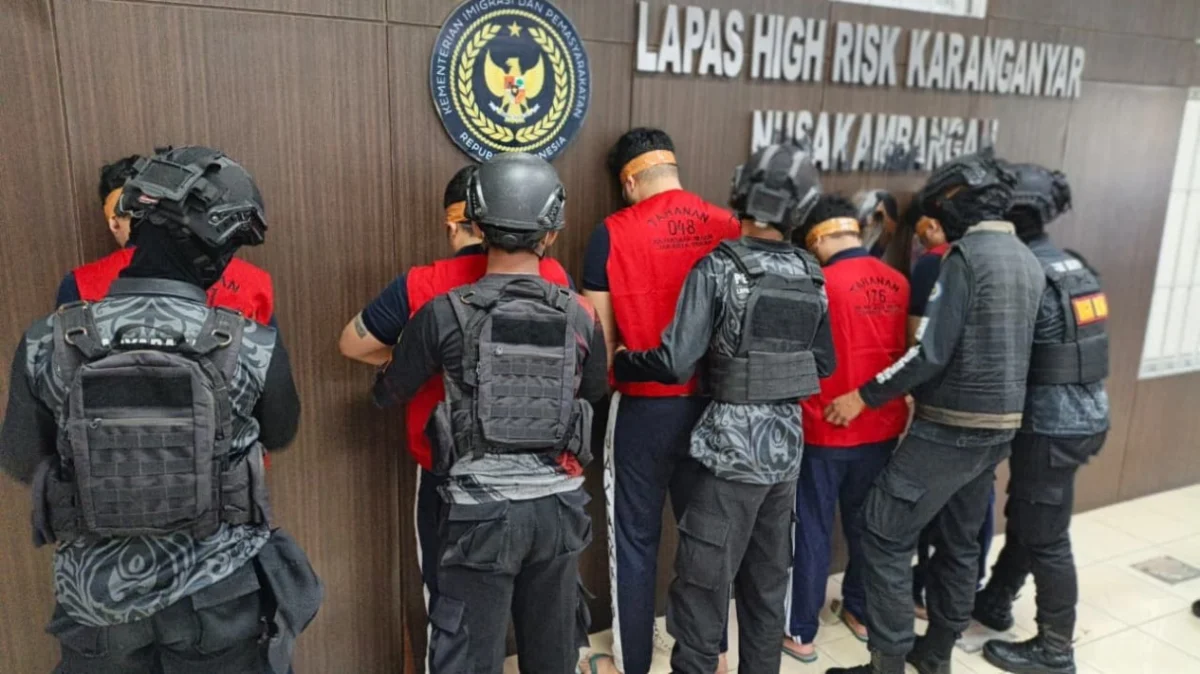
The Indonesian legal landscape and the entertainment industry have once again converged as prominent actor Ammar Zoni was officially transferred back to the Nusakambangan prison island in Cilacap, Central Java. This move follows the conclusion of his latest legal proceedings in Jakarta, where he was sentenced to seven years of imprisonment for his fourth involvement in a narcotics-related case. The transfer, which took place in the early hours of Saturday, May 9, 2026, has reignited public discourse regarding the strictness of Indonesian drug laws, the management of high-profile inmates, and the internal friction within the actor’s legal representation team.
The transfer of Ammar Zoni—a former television star whose career has been systematically dismantled by a cycle of drug arrests—is not merely a routine administrative move but a consequence of his classification as a "high-risk" inmate. According to his longtime attorney, Jon Mathias, the return to Nusakambangan was a procedural necessity following the completion of his trial in Jakarta. While the public often associates Nusakambangan with the nation’s most dangerous criminals, including terrorists and drug kingpins, the specific reasons for Ammar’s placement there offer a glimpse into the complexities of the Indonesian correctional system.
The Procedural Necessity of the Transfer
The recent presence of Ammar Zoni in Jakarta was a temporary arrangement facilitated by the court. Jon Mathias clarified during a press briefing via Zoom that Ammar’s status as a resident of the Nusakambangan correctional facility was already established due to his third narcotics case. He was brought to Jakarta specifically to attend the trial of his fourth case "offline," a request made by his legal team to ensure a more transparent and direct judicial process.
In many high-profile cases in Indonesia, defendants are often tried virtually to minimize logistical risks and costs. However, Mathias and his team successfully lobbied for a face-to-face trial. Once the presiding judges at the West Jakarta District Court delivered their verdict, the legal mandate that allowed Ammar to stay in a Jakarta-based detention center expired. Consequently, the prosecutor’s office was legally obligated to return him to his original place of incarceration to continue serving his previous sentences alongside the new one.
Mathias emphasized that the public should not conflate the 7-year sentence with the immediate reason for the transfer. Instead, the move was a restoration of the status quo that existed before the trial began. Ammar remains a "warga binaan" or a fostered citizen under the jurisdiction of the high-security island, which is often referred to as the "Alcatraz of Indonesia."
The "High-Risk" Classification and Prison Violations
One of the most striking aspects of Ammar Zoni’s incarceration is his classification as a high-risk inmate. This designation is rarely applied to celebrity drug users, who are typically sent to rehabilitation centers or standard prisons. However, Ammar’s history of recidivism and his behavior within the prison system have altered his standing with the Ministry of Law and Human Rights.
Jon Mathias revealed that the decision to move Ammar to Nusakambangan initially stemmed from serious violations of prison regulations during his previous detentions. It was reported that while serving time for his third offense, Ammar was caught attempting to smuggle prohibited items into the facility, including narcotics and a mobile phone. In the Indonesian correctional system, the introduction of contraband—especially drugs—into a prison environment is met with severe disciplinary action, often resulting in a transfer to a maximum-security facility.
The high-risk status is not solely about the nature of the crime committed outside but also about the inmate’s potential to disrupt the order and security of the prison. By repeatedly violating the trust of the correctional authorities, Ammar Zoni effectively forfeited his right to be housed in a standard facility, leading to his isolation on the island of Nusakambangan.
Internal Turmoil: The Dualism of Legal Counsel
The legal proceedings have been further complicated by a growing rift within Ammar Zoni’s inner circle. While Jon Mathias has been the face of Ammar’s defense for a significant period, a new dynamic emerged during the final stages of the trial. Dr. Kamelia, who is identified as Ammar’s current partner, reportedly expressed profound dissatisfaction with the legal strategy employed by Mathias.
This dissatisfaction led to the appointment of a second legal team from the Krisna Murti Lawfirm. This dualism of legal counsel has created a confusing narrative for the public and the media. Krisna Murti’s team was brought in with the hope of securing a more lenient sentence or a focus on rehabilitation, but the court ultimately opted for a heavy custodial sentence.
The friction between the two legal camps highlights the desperation and emotional toll the case has taken on Ammar’s supporters. While Mathias maintains that his approach was grounded in the reality of Ammar’s status as a repeat offender, the new legal team represents an attempt to pivot the narrative toward the actor’s alleged need for medical intervention for addiction rather than purely punitive measures.
A Chronology of Recidivism: The Fall of a Star
To understand the severity of the seven-year sentence and the Nusakambangan transfer, one must look at the timeline of Ammar Zoni’s legal troubles. His journey from a beloved leading man to a maximum-security inmate is a cautionary tale of the struggle with substance abuse.
- July 2017: Ammar Zoni was first arrested for the possession of marijuana. At the time, he was a rising star in the television industry. He was sentenced to one year of rehabilitation, a relatively lenient punishment intended to help him recover.
- March 2023: After several years of seemingly maintaining a stable life and marriage with actress Irish Bella, Ammar was arrested again for the possession of crystal methamphetamine (shabu). He was sentenced to seven months in prison.
- December 2023: Only months after his release, Ammar was arrested for the third time. This arrest was the catalyst for his divorce from Irish Bella and marked the beginning of his "high-risk" classification as authorities realized that previous interventions had failed.
- May 2024 – May 2026: The fourth case, which led to the current seven-year sentence, solidified his status as a chronic recidivist.
The court’s decision to impose a seven-year term, along with a substantial fine of 1 billion IDR (or an additional year of imprisonment if unpaid), reflects the judiciary’s dwindling patience with the actor. Under Indonesian Law No. 35 of 2009 on Narcotics, repeat offenders face significantly harsher penalties, as the law aims to deter both the distribution and the repeated consumption of illegal substances.
The Significance of Nusakambangan
Nusakambangan is not a single prison but a complex of several correctional facilities located on an island off the southern coast of Java. The island serves a specific purpose in the Indonesian justice system: it is where the state sends those who are deemed beyond the help of standard rehabilitation or those whose crimes are so severe that they require total isolation from society.
The prisons on the island, such as the Batu and Besi prisons, utilize "Super Maximum Security" protocols. In these facilities, inmates are often kept in "one-man-one-cell" conditions, with minimal contact with the outside world and limited interaction with other prisoners. For a public figure like Ammar Zoni, who was once accustomed to the adulation of millions, the psychological impact of such isolation is immense.
His return to this island signifies that the Indonesian government is treating his case with the utmost seriousness. It sends a message that celebrity status provides no shield against the consequences of repeated lawbreaking, particularly regarding the country’s "Emergency on Drugs" (Darurat Narkoba) policy.
Reactions and Broader Implications
The news of Ammar Zoni’s return to Nusakambangan has elicited a wide range of reactions. Legal experts point out that the case underscores the limitations of the current rehabilitation-first approach for wealthy or high-profile addicts. While the law technically prioritizes rehabilitation for users, the reality of recidivism often forces the hand of judges to prioritize public order and punishment.
On social media, public opinion is deeply divided. Some express pity for the actor, citing his clear struggle with addiction and the loss of his family life. Others, however, support the harsh measures, arguing that Ammar had multiple opportunities to reform and that his continued violations—especially the smuggling of contraband into prison—warrant the strictest possible response.
From a policy perspective, the case may prompt a review of how high-profile inmates are managed. The fact that a celebrity could allegedly smuggle a mobile phone and drugs into a detention center raises serious questions about the integrity of prison staff and the effectiveness of security protocols in urban jails, justifying the move to the more controlled environment of Nusakambangan.
Conclusion: The Road Ahead
As Ammar Zoni begins his seven-year term on the prison island, the future of his career and personal life remains in total eclipse. The legal battle may continue if his new legal team decides to file an appeal, but the hurdles are significant. An appeal in the Indonesian system carries the risk of an even harsher sentence if the higher court believes the initial punishment was too light.
For now, the actor remains under the strict surveillance of the Nusakambangan authorities. His story serves as a stark reminder of the uncompromising nature of Indonesia’s war on drugs and the personal devastation that follows a cycle of addiction and crime. The legal dualism, the high-risk classification, and the isolation of the island are the new realities for a man who once stood at the pinnacle of Indonesian entertainment. The focus now shifts from the glamour of the television screen to the grim reality of life behind the bars of Indonesia’s most fortified prison.