Bambang Pamungkas
Jakarta, Indonesia – Indonesia has marked a significant transformation in its national fertilizer industry, achieving a dual triumph of expanded global reach and strengthened domestic agricultural support. The nation recorded a new milestone with the inaugural export of urea fertilizer to Australia, an agreement projected to reach a value of approximately Rp7 trillion (around US$450 million). Concurrently, the government has successfully implemented policies that reduced the price of subsidized fertilizer by 20% and substantially increased its volume for national farmers, signaling a robust enhancement of the fertilizer sector from upstream to downstream. This strategic pivot underscores Indonesia’s commitment to both bolstering its agricultural sovereignty and establishing itself as a key player in the global fertilizer market.
A New Era of Fertilizer Diplomacy and Domestic Strength
The maiden shipment, dispatched on Wednesday, May 13, comprised 47,250 tons of urea fertilizer, valued at approximately Rp600 billion (around US$38.5 million). This initial export represents the first phase of a broader cooperative commitment totaling 250,000 tons, with ambitious plans to escalate the volume to 500,000 tons. The overall value of this comprehensive agreement is estimated to reach Rp7 trillion, demonstrating a substantial boost to Indonesia’s export portfolio and foreign exchange earnings. Minister of Agriculture, Andi Amran Sulaiman, heralded this achievement, stating, "Our plan is to export 250,000 tons to Australia, which will then be increased to 500,000 tons." This move signifies not only a major commercial success but also a strategic assertion of Indonesia’s growing industrial capabilities on the international stage. The collaboration with Australia is particularly notable, given Australia’s significant agricultural sector and its reliance on imported fertilizers, positioning Indonesia as a reliable and competitive supplier in the Indo-Pacific region.
Bolstering Domestic Agriculture: Price Cuts and Increased Supply
Simultaneously with its export success, the Indonesian government has made significant strides in fortifying its domestic fertilizer sector. Under the directives of President Prabowo Subianto, a pivotal policy was enacted to reduce the price of subsidized fertilizer by an unprecedented 20%. Crucially, this reduction was achieved without imposing additional burdens on the state budget (APBN), reflecting efficient resource management and fiscal prudence. This policy was further complemented by an increase in the volume of subsidized fertilizer by an additional 700,000 tons, designed to broaden access for farmers across the archipelago. Minister Amran emphasized the profound impact of these measures, noting, "At a time when global geopolitical tensions are escalating, Indonesia, thankfully, has seen a 20% reduction in fertilizer prices. This subsidized fertilizer is for Indonesian farmers. The volume of fertilizer has also increased. This brings happiness to 160 million Indonesian farmers and 115 million rice farmers." This significant intervention aims to mitigate the rising costs of agricultural inputs, thereby enhancing farmers’ profitability and ensuring greater food security for the nation.
The context of these domestic reforms is particularly salient. Global fertilizer prices have been volatile due to supply chain disruptions, energy cost fluctuations, and geopolitical conflicts. By securing lower domestic prices and increasing supply, Indonesia has effectively insulated its agricultural sector from some of these external shocks. This stability is crucial for maintaining productivity, especially for staple crops like rice, which are vital for national food self-sufficiency. The government’s proactive approach signals a deep understanding of the intricate links between fertilizer availability, farmer welfare, and national resilience.
Strategic Reforms Underpinning Success
The twin achievements in export and domestic supply are the culmination of a series of strategic policies and reforms initiated under President Prabowo Subianto’s administration, aimed at overhauling Indonesia’s national fertilizer governance from upstream production to downstream distribution. One of the earliest and most impactful decisions was to significantly increase the allocation of subsidized fertilizer. The previous allocation of approximately 4.55 million tons was nearly doubled to 9.55 million tons. This substantial increase was a direct response to the urgent need to support the acceleration of national food self-sufficiency (swasembada pangan) and ensure that farmers had adequate access to essential inputs. This policy alone extended the reach of benefits to an estimated 160 million individuals directly involved in the agricultural sector.
Beyond increasing supply, the government undertook a comprehensive deregulation effort, repealing 145 inter-ministerial and institutional regulations that had historically hampered fertilizer distribution. This extensive streamlining simplified the supply chain, which was previously plagued by bureaucratic bottlenecks and inefficiencies. The new, more direct distribution model involves a simplified pathway from the Ministry of Agriculture (Kementan) to PT Pupuk Indonesia Holding Company (PIHC), then directly to farmer groups (Gapoktan) or cooperatives, and finally to individual farmers. This optimized system is designed to ensure that fertilizer reaches farmers more swiftly and efficiently, reducing delays and potential for diversion.
Furthermore, a critical reform was implemented in the national fertilizer subsidy mechanism itself. This reform involved systematically eliminating various components of inefficiency that had inflated costs, such as excessive raw material profits, bank interest burdens, and double-taxation through multiple VAT applications. These structural changes are projected to generate substantial savings of up to Rp14 trillion (approximately US$900 million) annually, simultaneously contributing to a reduction in the overall production cost of national fertilizer. This move not only makes fertilizer more affordable but also fosters a more sustainable and economically viable industry.
Revitalizing Indonesia’s Fertilizer Production Backbone
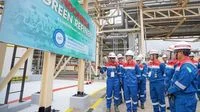
Complementing the policy reforms, the government has also embarked on a massive revitalization program for the national fertilizer industry, backed by significant investments. This ambitious undertaking involves seven strategic projects with a total investment reaching Rp72.84 trillion (approximately US$4.6 billion). Key players in this revitalization include PT Pupuk Indonesia (Persero), the state-owned fertilizer holding company, along with its subsidiaries: PT Pupuk Sriwidjaja Palembang, PT Pupuk Kalimantan Timur, PT Petrokimia Gresik, and PT Pupuk Kujang.
The modernization efforts focus on replacing aging, energy-intensive production facilities with new, state-of-the-art plants that boast greater efficiency and lower environmental impact. This technological upgrade has yielded tangible results, with the cost of producing fertilizer in the new facilities reportedly 26% lower compared to the older plants. This efficiency gain is critical for enhancing the competitiveness of Indonesian fertilizer both domestically and internationally. Through the combined impact of subsidy scheme reforms and industrial revitalization, the government projects long-term savings in fertilizer subsidies of up to Rp112 trillion (approximately US$7.2 billion) by the year 2035. This also includes an estimated annual reduction in potential waste of Rp14.4 trillion (approximately US$920 million), underscoring the profound financial and operational benefits of these integrated strategies.
Expanding Global Footprint and International Collaboration
The success of Indonesia’s fertilizer transformation has not gone unnoticed on the global stage. Minister Amran revealed that several other countries have expressed keen interest in sourcing urea fertilizer from Indonesia. "In addition, the Indian Ambassador has directly contacted me, requesting 500,000 tons, and several other countries are also interested, namely the Philippines, Brazil, Bangladesh, and a few more. We just received reports of countries interested in urea fertilizer from Indonesia. This is what we are grateful for and proud of," he stated. This burgeoning international demand positions Indonesia as an emerging regional and potentially global fertilizer supplier, diversifying its export markets and strengthening its economic ties with key agricultural nations.
The collaboration with Australia has been particularly highlighted by the Deputy Ambassador of Australia to Indonesia, Gita Kamath. She conveyed profound appreciation for the partnership, stating, "On behalf of the Australian Government, I want to express my deepest gratitude to Minister of Agriculture Amran. Australia values its relationship with Indonesia. This cooperation reflects the strong friendship and partnership between Australia and Indonesia, not just with PT Pupuk Indonesia." Kamath further emphasized the direct benefits of this cooperation for strengthening food security in both countries. "Australia is also proud to support food security and value addition in Indonesia. This fertilizer will help Australian farmers produce commodities like wheat, which is used in Indonesia to make various food products. This is a real example of Indonesia and Australia’s cooperation yielding mutual benefits," she added. This reciprocal relationship underscores the strategic importance of agricultural trade and resource sharing in fostering regional stability and shared prosperity.
Vision for National Food Sovereignty
Minister Amran unequivocally stated that all the reforms and enhancements within the fertilizer sector are ultimately geared towards reinforcing national food self-sufficiency, elevating farmer welfare, curbing import dependence, and cultivating an independent national fertilizer industry. "Fertilizer is not just about production and distribution. Fertilizer is a strategic instrument towards national food sovereignty," he asserted. This powerful declaration encapsulates the holistic vision driving Indonesia’s agricultural policies, positioning fertilizer as a foundational pillar for national development and resilience.
The government’s multifaceted approach, encompassing increased allocation, deregulation, subsidy reform, and industrial revitalization, demonstrates a comprehensive and integrated strategy to transform Indonesia’s agricultural landscape. By ensuring accessible, affordable, and efficiently distributed fertilizer, coupled with a robust and modern domestic production capacity, Indonesia is laying a strong foundation for sustainable agricultural growth, enhanced farmer livelihoods, and genuine food independence in an increasingly complex global environment. The Rp7 trillion export deal with Australia and the significant domestic price reductions stand as testament to Indonesia’s renewed ambition and capacity to achieve its long-term strategic agricultural objectives.