Nila Kartika Wati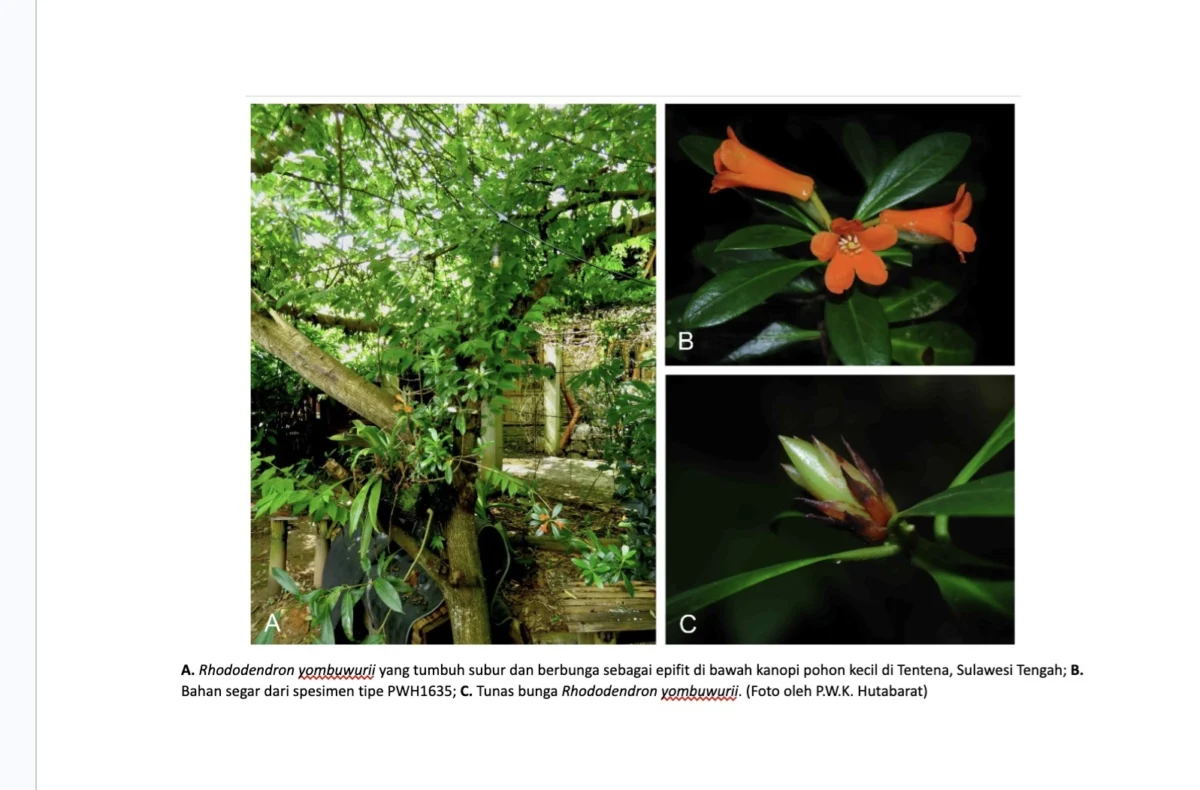
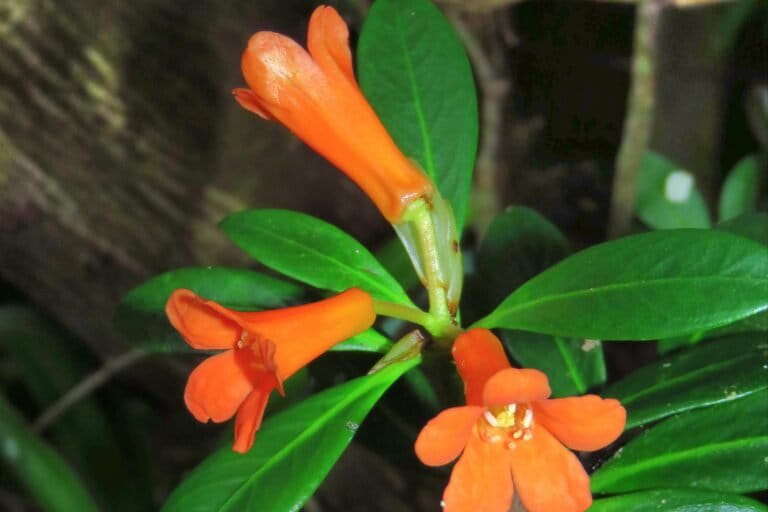
A collaborative team of Indonesian researchers has officially announced the discovery of a vibrant new plant species from the rugged highlands of Central Sulawesi, marking a significant contribution to the botanical catalog of the Wallacea biodiversity hotspot. The species, characterized by its striking orange blossoms, was identified in the Tokorondo Mountain range within the Poso Regency. Formally described as Rhododendron yombuwurii, the plant serves as a living memorial to the late Reverend Yombu Wuri, a revered religious leader and tireless advocate for environmental preservation in the Lake Poso region.
The discovery was detailed in a peer-reviewed study published in the Taiwania International Journal of Biodiversity, titled "Rhododendron yombuwurii (Ericaceae), a new orange-flowered species of subgenus Vireya from Central Sulawesi, Indonesia." The research was spearheaded by a multidisciplinary team including P. W. K. Hutabarat, Zulfadli, K. P. Bandjolu, Basrul, M. R. Hariri, A. Senatama, and S. H. Larekeng. Their findings represent a synthesis of field exploration, comparative morphology, and high-tech microscopic analysis, highlighting the immense untapped biological wealth remaining in Sulawesi’s primary forests.
The Chronology of Discovery and Field Observation
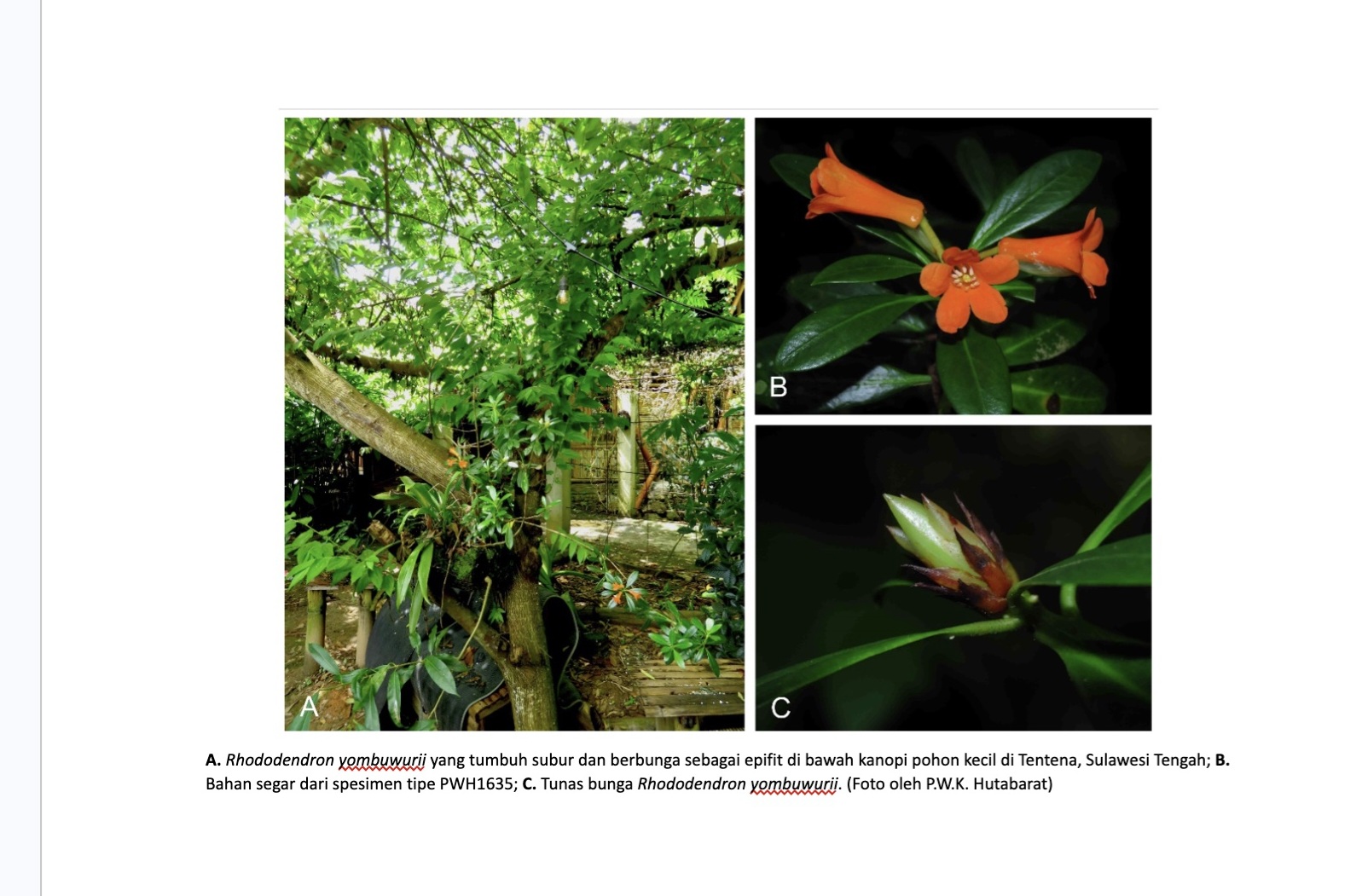
The journey toward identifying Rhododendron yombuwurii began in June 2023 during a field expedition near Tentena, a town situated on the shores of Lake Poso. K. P. Bandjolu, one of the lead researchers, recalled that the team encountered a living specimen of the genus Rhododendron that did not align with any known descriptions of species previously recorded on the island.
The initial specimen was found growing as an epiphyte—a plant that grows upon another plant for physical support but not for nutrients—nested within the roots of an orchid. Interestingly, this discovery did not occur in a pristine forest but in a highly modified landscape near the Saluopa Waterfall, a popular tourist destination. The researchers noted that local residents often cultivate wild-collected plants in their private gardens, and in some instances, native flora from the surrounding mountains are traded as ornamental items.
Because the initial encounter involved a cultivated specimen in a domestic setting, the researchers could not immediately prepare a formal herbarium specimen. The breakthrough came in February 2024, when Bandjolu returned to the area and interviewed local orchid collectors. These sources revealed that the Rhododendron had originally fallen from a massive tree in the Petirorano area, part of the Tokorondo Mountains located northwest of Lake Poso. The original habitat was estimated to be at an elevation of between 1,000 and 1,800 meters above sea level (MASL).
Remarkably, the plant demonstrated significant resilience, surviving its relocation to the significantly lower altitude of 560 MASL near Saluopa Waterfall. By July and November 2024, the researchers were able to collect flowering specimens, which allowed for the rigorous scientific documentation required to declare it a new species.
Taxonomic Classification and Morphological Distinctions
Rhododendron yombuwurii belongs to the subgenus Vireya, a group often referred to as "tropical rhododendrons." This group is highly diverse across Southeast Asia and the Pacific, known for its ability to thrive in montane environments and its often spectacular floral displays.
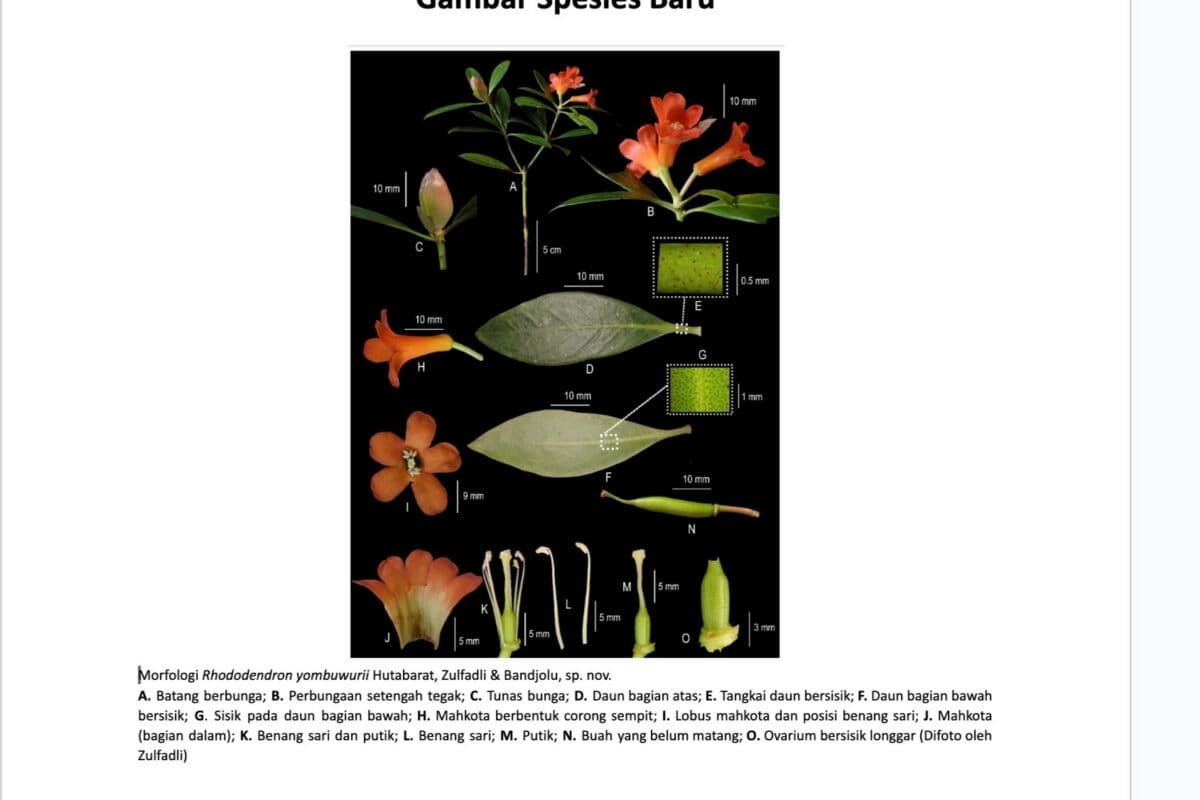
Through meticulous diagnosis, the research team determined that R. yombuwurii is most closely related to Rhododendron celebicum. However, it also shares morphological similarities with R. impressopunctatum and R. vidalii subsp. brachystemon. Despite these similarities, several key diagnostic features set the new species apart:
- Floral Structure: The flowers of R. yombuwurii are significantly smaller than those of its relatives. While R. celebicum typically produces pink to red flowers, the new species produces bright orange blooms.
- Foliage and Veining: The species features prominent midribs and lateral veins on its leaves, which are smaller than those of R. impressopunctatum.
- Inflorescence Orientation: The flower clusters (inflorescences) range from semi-erect to horizontal, whereas related species often exhibit different cluster postures.
- Microscopic Detail: Comparative analysis revealed that the calyx (the outer part of the flower) is glabrous (hairless) on the outside. Furthermore, the filaments—the stalks supporting the pollen-producing anthers—are clustered at the mouth of the corolla rather than protruding outward.
To confirm these findings, the team utilized the state-of-the-art facilities at the National Research and Innovation Agency (BRIN) in Cibinong. They employed stereoscopic microscopy and a focused ion beam (FIB) scanning electron microscope (Aquilos 2) to document minute diagnostic characters. Digital and physical specimens from global institutions, including the Herbarium Bogoriense, the Royal Botanic Gardens, Kew, and the Harvard University Herbaria, were consulted to ensure the uniqueness of the taxon.
A Tribute to Reverend Yombu Wuri
The naming of the species is deeply symbolic, bridging the worlds of natural science and social activism. Reverend Yombu Wuri, a prominent cultural and religious figure of the Pamona tribe, passed away on May 20, 2024. Throughout his life, he was a staunch defender of the Lake Poso ecosystem and the ancestral lands of the Pamona people.
Reverend Wuri was known for integrating messages of peace, environmental stewardship, and cultural preservation into his sermons and musical compositions. He frequently campaigned against the destruction of local biodiversity and the encroachment of industrial activities that threatened the delicate balance of the region’s ecology. By naming this orange-flowered Rhododendron after him, the researchers aimed to immortalize his legacy of conservation.
"It is our hope that the struggle and the legacy of the late Reverend Yombu Wuri will be preserved through the name of this species," the research team stated in their publication. The gesture highlights an increasing trend in modern taxonomy to recognize the contributions of local communities and indigenous leaders in protecting the habitats where new species are discovered.
Conservation Status and Environmental Implications
Despite the excitement surrounding the discovery, the conservation outlook for Rhododendron yombuwurii is clouded by uncertainty. The International Union for Conservation of Nature (IUCN) has tentatively classified the species as "Data Deficient" (DD). This status indicates that scientists currently lack sufficient information regarding the species’ total population, geographical range, and specific threats to make a definitive assessment of its extinction risk.
Bandjolu emphasized that while the species is known to originate from the Petirorano area, researchers have yet to observe a population in its natural, undisturbed habitat. "The discovery site near Saluopa Waterfall is a modified forest environment affected by tourism. Because the distribution appears limited and we have not yet conducted systematic exploration in the deeper interior forests, the species remains vulnerable," he explained.

Field surveys conducted since 2020 have been restricted to areas near accessible roads and trails. The rugged terrain of the Tokorondo Mountains remains largely unexplored botanically, suggesting that more individuals or even unknown populations may exist in the dense canopy of the primary forest.
The discovery also highlights a recurring issue in Indonesian conservation: the trade of wild-collected plants. The fact that the first specimen was found in a private garden underscores the pressure that local flora faces from the ornamental plant market. Researchers are now calling for urgent ex-situ conservation efforts—preserving the plant outside its natural habitat, such as in botanical gardens—to safeguard its genetic diversity.
Institutional Collaboration and Future Research
The successful identification of Rhododendron yombuwurii is the result of a broad collaborative effort. The partnership included the Research Center for Biosystematics and Evolution at BRIN, the Yayasan Tumbuhan Asli Nusantara (Native Plants of the Archipelago Foundation), the Perkumpulan Konservasi Membumi, Lentera Matia Ndano, the University of Lampung, and Hasanuddin University.
This synergy between government research bodies, non-governmental organizations, and academic institutions is seen as a model for future biodiversity studies in Indonesia. With Sulawesi being home to a high percentage of endemic species—plants and animals found nowhere else on Earth—such collaborations are essential for documenting the island’s flora before it is lost to land-use changes.
The research team noted that R. yombuwurii naturally flowers twice a year, typically in June–July and again in November, with fruiting periods in January and August. This predictable cycle offers a window for future seed collection and propagation efforts.
As the global scientific community continues to grapple with the "biodiversity crisis," discoveries like that of Rhododendron yombuwurii serve as a reminder of the intricate connections between local culture, environmental advocacy, and scientific progress. The bright orange flowers now blooming in the highlands of Poso stand not only as a new entry in the annals of botany but as a vibrant testament to a man who dedicated his life to the protection of the natural world. Continued exploration and a commitment to habitat preservation will be required to ensure that this new species, and the legacy it carries, does not fade into obscurity.